
When Parents Grow Old and the Fear of Separation
There comes a moment in life that arrives quietly, without warning.

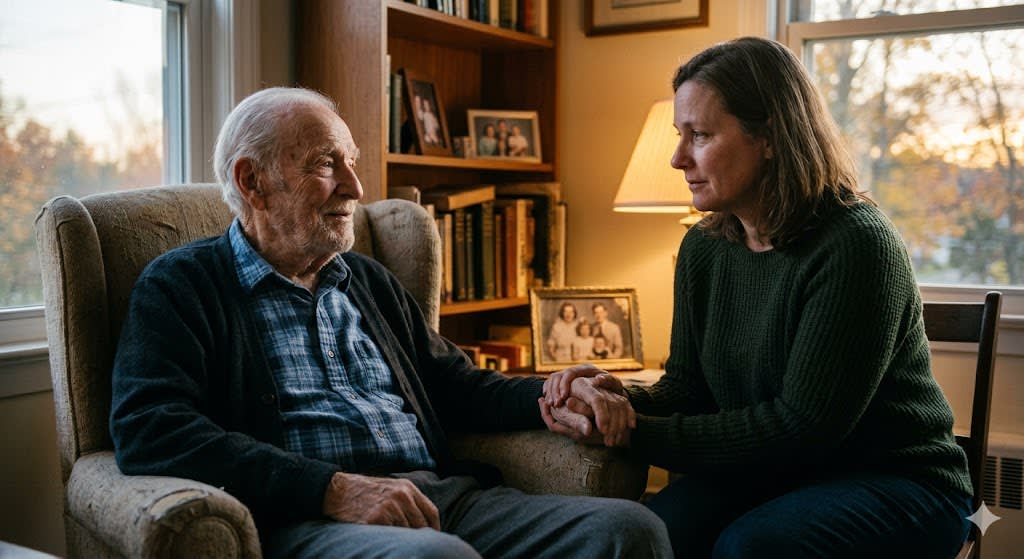
One day, we look at our parents and notice something that has always been there, yet something we never truly wanted to see: they are growing old.
For years, we saw them as strong figures capable of solving problems, making difficult decisions, and holding the family together through challenging times. They were the ones who took our hands when we were afraid. But as time passes, those roles begin to shift. Their hair turns gray, their movements become slower, and their energy is no longer what it once was. It is then that a deep and often unspoken emotion emerges: the fear of separation.
A Fear Rooted in Love
The fear of losing our parents is not simply a fear of death. More often, it is the fear of losing a part of ourselves.
Our parents are woven into our identity. They are the keepers of our earliest memories, the witnesses to our childhood, and the people who knew us before anyone else did. When we imagine a future without them, it can feel as though part of our personal history might disappear as well.
That is why many people experience sadness, anxiety, or even guilt when they begin to notice their parents aging. These feelings are not signs of weakness. They are natural emotional responses to one of life's most profound realities.
The Illusion That They Will Always Be There
For much of our lives, we live with a comforting psychological illusion. Even though we know intellectually that our parents are mortal, emotionally we often act as if they will always be there.
This unconscious belief allows us to focus on building our own lives, pursuing careers, raising families, and planning for the future. But when the signs of aging become impossible to ignore, that illusion begins to fade.
A medical appointment, a health scare, a fall, or even a simple conversation about growing older can suddenly make us aware of something we have long avoided: time is moving forward.
At that moment, many people experience a mixture of emotions. They want to cherish every moment with their parents, yet they also feel afraid of confronting a reality they would rather not face.
The Guilt of Not Being Present Enough
One of the most common emotions during this stage of life is guilt.
Many adult children find themselves thinking about phone calls they never made, visits they postponed, or family gatherings they missed because work and responsibilities seemed more urgent at the time. As they watch their parents age, they begin reviewing the past through a different lens.
"I should have spent more time with them."
"I should have listened more carefully."
"I should have visited more often."
Psychologically, guilt often arises because we judge our past choices using the knowledge and emotions we have today. At the time, we were simply living our lives, managing our own responsibilities and challenges.
Constant self-blame serves little purpose. What matters most is not what we failed to do years ago, but what we choose to do now.
When Children Become Caregivers
Another significant emotional shift occurs when children begin taking on a protective role toward their parents.
Gradually, we start worrying about their medications, medical appointments, nutrition, safety, and overall well-being. The people who once cared for us begin to need some of our care in return.
This transition can be emotionally complicated. Some people experience it with gratitude and tenderness, while others feel exhaustion, sadness, or frustration. All of these reactions are normal.
Accepting that our parents are no longer as strong as they once were often involves a form of grief. Not because they are gone, but because we are saying goodbye to a chapter of life that will never return.
Anticipatory Grief
Psychologists use the term anticipatory grief to describe the sorrow that arises before an actual loss occurs.
As we watch our parents age, we may begin imagining future illnesses, farewells, or absences that have not yet happened. These thoughts can create real sadness and anxiety even while our parents are still present in our lives.
The challenge is that we can become so focused on what might happen tomorrow that we stop appreciating what is happening today.
While we worry about the future, we may overlook simple moments that are still available to us: a conversation over coffee, a shared meal, a family story told for the hundredth time.
Many mental health professionals encourage people to focus less on the uncertainty ahead and more on the meaningful time that remains.
The Importance of Saying What We Feel
In many families, expressing deep emotions does not come easily.
There are sons and daughters who love their parents deeply but rarely say it out loud. Others feel gratitude, admiration, or even a desire to apologize for old conflicts, yet they postpone those conversations because they assume there will always be another opportunity.
Aging reminds us that time is limited.
This does not mean living in constant fear or having dramatic conversations every day. It simply means recognizing the value of expressing love while we still can.
A phone call, an unexpected visit, an old photograph shared together, or a simple thank-you can have a profound emotional impact on both parents and children.
Learning to Live with Uncertainty
One of the greatest psychological challenges of adulthood is accepting that we cannot control everything.
We cannot stop aging. We cannot completely prevent illness. We cannot guarantee how long our loved ones will remain with us. Trying to control the uncontrollable often increases anxiety rather than reducing it.
A healthier approach is to develop a different relationship with uncertainty.
Accepting life's limitations does not mean becoming pessimistic. Instead, it encourages us to appreciate what we have while we still have it.
Paradoxically, when we stop fighting against the reality of time, we often become more present and grateful for everyday experiences.
The Hidden Gift of Growing Old
Although aging often brings fear and sadness, it can also offer something valuable.
It reminds us of the importance of family, presence, and meaningful relationships. It encourages us to slow down and pay attention to the people who have shaped our lives in countless ways.
Our parents' later years can become an opportunity to reconnect with them from a new perspective. No longer as children seeking protection, but as adults capable of offering companionship, understanding, and love.
The fear of separation never completely disappears because it comes from a place of deep affection. Yet it can be transformed into something meaningful: a reason to be present.
In the end, none of us can stop time. But we can choose how we spend the moments we still have with the people we love. And perhaps that is the most powerful response to the fear of separation—not to resist it, but to let it remind us to cherish every shared moment while it is still ours.
About the Creator
Jona Neutron
Writer and web designer: diseño web and amigos valencia and esquelas cantabria and mundo anuncio
Enjoyed the story? Support the Creator.
Subscribe for free to receive all their stories in your feed.
Comments
There are no comments for this story
Be the first to respond and start the conversation.