
The Best Evidence For God
It has nothing to do with apologetics

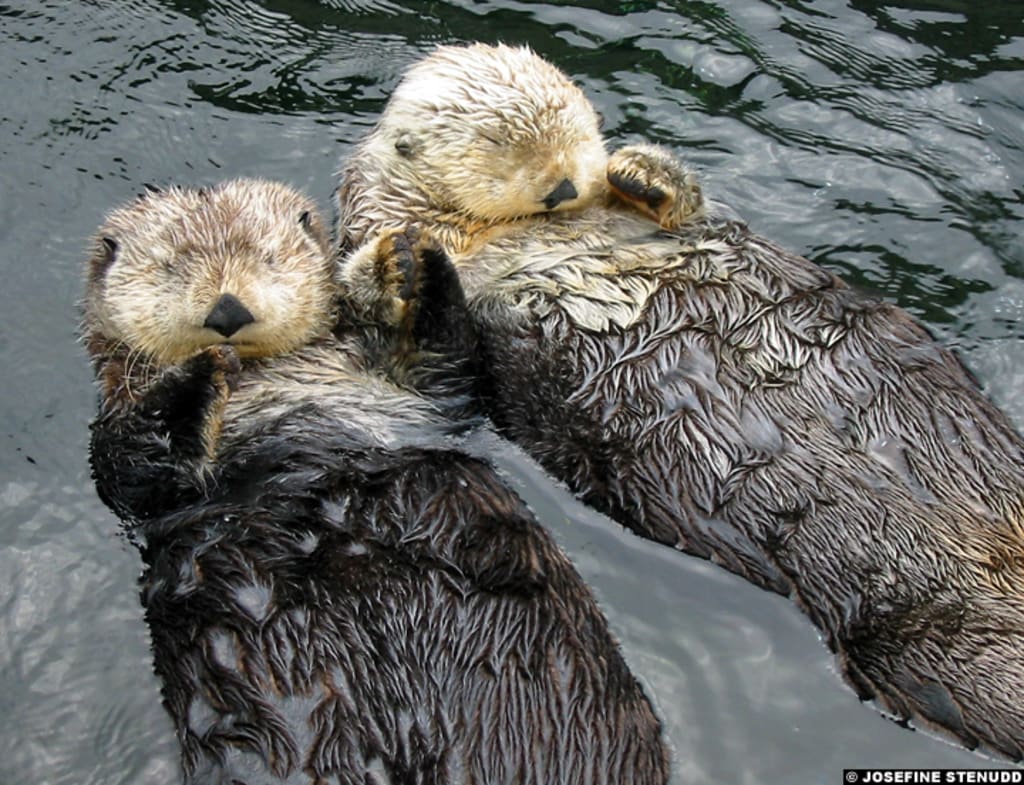
I want to kick off this article with a few incredible facts. Check these out…
- Did you know that cows have best friends?
- In Switzerland, it’s considered animal abuse to have only one guinea pig because they are such social creatures.
- Otters hold each other’s hands when they sleep, so they don’t drift away.
- Rats love playing hide and seek. They squeal for joy when they are found or find someone.
- Seahorses aren’t great swimmers, so they intertwine themselves with a mate for life to boost their chances of survival.
- Male Adélie penguins are known to gift a pebble as part of the courting process for finding a female. If she accepts it, she will use it to build the nest for the baby penguins they will have together.
- According to German forester and author Peter Wohlleben, there is growing evidence that trees communicate with each other.
Amazing, huh?
There are probably others you can think of.
All these facts have one thing in common, though. Did you pick up the thread that runs through them? I think that these facts point to a truth: Everything in existence has the fingerprint of relationality on it.
No one is an island.
From time to time, I hear people say to others, “Nobody can help you except you,” as if doing things alone is the natural state of human beings. I reckon British author Johann Hari is absolutely 100% correct when he says that this idea is a denial of human history and a denial of human nature, leading us to misunderstand our most basic instincts.
In fact, I see Hari, a professed atheist, as a secular prophet. He has an insight into the deep human need for belonging and connection that many people seem to miss — Christians especially. That’s not so much of a blight on Christians as it is evidence that no matter what we believe, we are all human; we are all wired the same way. We all need love, relationship and connection.

The human cry
Many years ago, the singer, Sheila Walsh, sang, “Love me, love me is the human cry. Love me, love me, never say goodbye.” It’s the cry of every human heart to belong.
We are made for connection. This is why I believe in the relational concept of the Trinity. Larry Crabb called God the Eternal Community. And Rublev’s Icon shows the eternal relational nature of all three elements of the Trinity.
When the scientist, Francis Collins, speaks about his main reason for being a Christian, he talks about what he refers to as the Moral Law inside every human. It’s the sense of altruism we have, of giving to others even when it doesn’t benefit us in an evolutionary sense. It benefits us in other ways, of course, as it gives us the life and meaning we so deeply crave.
The older I get, the more I see and sense the need for love and meaning in my life. And the more I get it through healthy interaction and relationship with people.
When I was in the US in the middle of 2022, I was with people from the time I got up in the morning to the time I went to bed at night. I didn’t feel down for the whole month I was there — that was despite my 30-year struggle with depression and anxiety. I was connected during that whole time in the US. I actually reduced my anti-depressant medications when I was there.
It was the same when I was at a men’s retreat in Queensland in August of 2023. For that week, I was totally and unconditionally accepted by the people I was with. As the week went on, I felt more free to be myself and lose the inhibitions I had.
When we feel loved unconditionally, we come to believe that we are actually loved just as we are. We don’t need to perform. That’s when we flourish and become the best versions of ourselves that we can be.
Everything we do in life is ultimately an attempt to live for love, acceptance, and meaning. I’ve mentioned previously that every time a man knocks on the door of a brothel, he is there looking for God. The sexual act is not just addictive because it feels so intensely pleasurable. It is a desire for the ultimate connection.

The imprint in our DNA
The examples of the non-human creation above show that the need for love and connection is imprinted in our very DNA. We need each other, not just as humans, but as a whole creation.
This is why dealing with a changing climate is a central Gospel issue. It goes to the very heart of what makes us human, of our survival. It’s why the saying by Cree Indians, that when the last tree is cut down, the last fish eaten, and the last stream poisoned, you will realize that you cannot eat money, is so true. Brian McLaren calls the Western, individualist way of living the “suicide machine”. Our way of life is literally killing us. Johann Hari says that we are the first society in human history to actively dismantle our tribes.
If COVID-19 showed us anything, it was what really matters in life. When everything has been stripped away, and we can’t live our normal lives, we see more clearly our need for connection. One of the main long-lasting effects of the pandemic, of course, was its enormous impact on mental health. Counselors I know are still booked up for many months seeing clients who are struggling with the trauma that the pandemic-induced isolation caused.
I’m convinced that the deepest need for love and connection is among the best evidence for a relational and loving Creator. And it’s why I find the non-human creation endlessly fascinating.
About the Creator
Nils von Kalm
I'm a writer from Melbourne, Australia. I write about the links between Christian faith and culture.
Find me elsewhere online via my Linktree: linktr.ee/nilsvonkalm
Enjoyed the story? Support the Creator.
Subscribe for free to receive all their stories in your feed. You could also become a paid subscriber, letting them know you appreciate their work.
Comments
There are no comments for this story
Be the first to respond and start the conversation.