tv review
TV series centered around the human psyche; television shows that feature characters suffering from all forms of mental illness and explore its many implications.
The Sewing Box
The box had been there for years — untouched, unspoken, and always in the same corner of Nana’s old attic. Covered in lace that had long since yellowed, it waited like a quiet witness. When Nana passed away that winter, I returned home after seven years to settle her affairs — not entirely ready for what I would find. I hadn’t been back since I was sixteen. Back then, I ran away more than I visited. Back then, Nana was already growing forgetful, calling me by my mother’s name, or sometimes by her own sister’s. But she never forgot about the sewing box. She’d always say, “Don’t touch it, Isla. That’s not for you — not yet.” -- The funeral was small. Nana never had many friends left. It was just me, the priest, and the mailwoman who brought her groceries during her final years. The house felt too quiet when I returned — like it had been waiting just for me. I slept in the guest room that night, but I didn’t really sleep. I kept thinking of the sewing box. It wasn’t just nostalgia. Something about it tugged at me — like it had its own heartbeat. -The attic The next morning, I climbed the attic stairs, flashlight in hand. The switch hadn’t worked in years. The air was thick with dust and lavender. Nana always loved lavender. It masked the scent of mothballs and age. I walked past old suitcases, brittle magazines, faded photographs with crinkled edges. And there it was — in the far left corner, exactly where I remembered. The sewing box. It was a faded green, with golden thread-like trim and a broken hinge. A cracked ceramic bird perched on top, its wing chipped. I sat cross-legged in front of it, just like I used to. But this time, I didn’t hesitate. Inside, there were spools of thread, needles, buttons in little paper envelopes. But underneath, tucked beneath a swatch of blue satin, was something else. Letters. Dozens of them, tied with red ribbon, yellowed with age. The top one had my mother’s name — Claire. My heart thumped against my ribs. I opened the first letter. Dear Claire, I know you won’t understand now, but I hope one day you will forgive me. I didn’t have a choice. You were only a baby when he left, and I couldn’t risk it — not again. I had to keep you safe. Nobody believed me back then, but he wasn’t who he said he was. He wasn’t just “James from the library.” He had a darkness I didn’t see — not until it was too late. You have his eyes, you know. I hated them for years, but now… now I wonder if maybe you deserved to know. There’s more in this box than thread, darling. There are truths I never dared speak aloud. — Mother froze. James? My grandfather? I’d never heard anything about him. My mom rarely spoke of her childhood, and when she did, it was always about the happy things — summer at the lake, Sunday cakes, Nana’s lullabies. But not once had she mentioned her father. I read another letter. And then another. Each one was more detailed than the last. Each one filled with fear, and regret, and love twisted in grief. My Nana had been hiding the truth for decades. Not just from my mother — but from the world.
By Arshad khanabout a year ago in Psyche
The Hidden Psychology of Connection
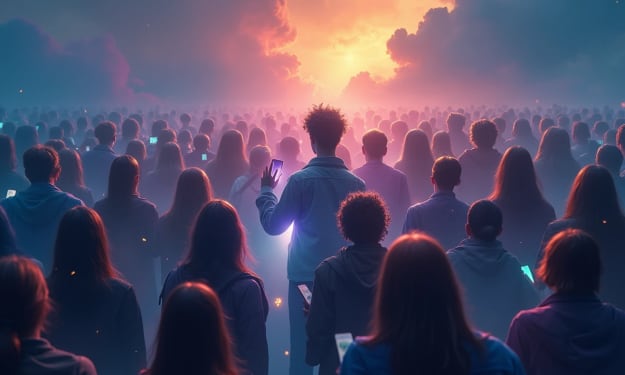
In a world more digitally connected than ever, loneliness is paradoxically thriving. As we scroll through social media feeds and interact with AI companions, we find ourselves surrounded by virtual connections that, in reality, leave us feeling more isolated than before. Eric Solomon, Ph.D., explores this paradox and reveals how the very tools meant to keep us connected might be deepening our sense of isolation. The Paradox of Digital Connection Loneliness is not a new phenomenon, but it has evolved alongside our technological advances. With smartphones, social media, and now AI companions, we have access to constant streams of communication. Yet, despite the illusion of constant connection, many of us feel more isolated than ever. This paradox becomes strikingly clear when we look around in public spaces like New York’s Union Square. People, once engaged in face-to-face conversation, are now engrossed in their phones, disconnected from the world around them. The same technology that promised to bridge the gap between us seems to have only widened it. As Solomon points out, the rise of AI chatbots and virtual assistants, like ChatGPT, reflects a new attempt to address this loneliness. These tools can simulate emotional availability, offering comfort and companionship. However, while they provide solace, they do so without reciprocity. The lack of genuine human interaction makes these digital companions seem comforting at first, but over time, they can leave us feeling even emptier and more disconnected. How Loneliness Affects Our Brain Understanding the psychological impact of loneliness is crucial. Our brains are wired for real, emotionally attuned connections. Attachment theory tells us that from birth, we crave secure relationships, and these connections are essential for our emotional and psychological well-being. But in today’s world, much of our interaction is mediated through screens, and these interactions are often brief, shallow, and performative. The result? We enter an insecure attachment loop. As we feel more isolated, we withdraw further, making it harder to trust others and open ourselves to vulnerability. This isolation becomes a vicious cycle: the lonelier we feel, the more difficult it becomes to connect, leading to even deeper isolation. The Role of Technology in Deepening Isolation Technology, though not entirely to blame, plays a significant role in exacerbating this issue. AI companions, while appearing to fulfill emotional needs, do not offer real connection. Our nervous systems, tricked into believing that these virtual interactions provide the warmth and understanding we seek, end up reinforcing our sense of emptiness. Studies have shown that those who rely heavily on chatbots for emotional support often experience greater loneliness and fewer meaningful real-life interactions. The very tools we turn to for comfort—smartphones, social media, and AI—are intensifying the loneliness they are meant to alleviate. The Collapse of Flourishing A recent Global Flourishing Study, involving over 200,000 people from more than 20 countries, reveals a disturbing trend: young adults—especially those aged 18 to 29—are struggling with mental, emotional, and social well-being. Unlike previous generations, their well-being doesn’t improve as they age. Instead, it remains stagnant, or even worsens, leading to what researchers call "the collapse of flourishing." In many parts of the world, the happiness curve that typically dips in midlife and then rises in later years has flattened entirely for this age group. The problem is not just that they are alone, as Robert Putnam’s seminal work "Bowling Alone" suggested. It’s that many young people aren't participating in social activities at all. The shift towards productivity, comparison, and digital engagement has undermined the sense of community and connection that once served as a foundation for well-being. Breaking the Cycle of Isolation So, what can we do about it? The first step is recognizing that digital detoxes won’t solve the problem. Shaming ourselves for spending too much time on our phones or social media may feel like a solution, but it’s only a temporary fix. Real change begins with acknowledging the root cause of our loneliness: the breakdown of genuine, secure human connections. Solomon emphasizes that loneliness is not simply a feeling but a neurological and behavioral issue. The more we isolate ourselves, the more our brains adapt to this isolation, making it harder to connect with others. However, there is hope. Small, consistent acts of human connection can help rewire our nervous systems. Reaching out to someone for a real conversation, attending social gatherings, or simply taking the time to be present with others can help rebuild trust and emotional resilience. The Importance of Human Connection In a world where technology is advancing faster than our ability to process its impact on our mental health, it’s easy to overlook the power of genuine human connection. While AI and digital tools can provide temporary comfort, they cannot replace the deep, meaningful bonds that come from real-life interactions. Even as technology continues to shape our lives, we must remember that true flourishing is rooted in connection with others. It’s not enough to have endless digital interactions or AI companions. We need to rebuild the emotional infrastructure of our lives—one that values vulnerability, trust, and real-time, face-to-face interactions. By doing so, we can begin to heal the psychological wounds that loneliness has inflicted on us. Conclusion As we navigate the complexities of the digital age, the challenge of loneliness looms larger than ever. Yet, as Eric Solomon’s insights reveal, there is a path forward. It may require stepping away from the digital world, even if just for a moment, to engage in the raw, imperfect, and beautiful connections that make us human. In these moments, we can find the antidote to loneliness—a deep sense of belonging that no screen or chatbot can ever replicate.
By SophiaSosoabout a year ago in Psyche
The Forgotten Language of Touch: How Physical Contact Shapes Our Emotional Well-being
In a world dominated by screens and digital expressions, we have learned to communicate through messages, emojis, and reactions. We connect in online meetings, express love with virtual hearts, and offer condolences through comment sections. Yet, in our reliance on words and technology, we’ve drifted away from one of the oldest and most profound forms of communication—physical touch.
By Mysteries with Professor Jahani2 years ago in Psyche
The Invisible Weight: Living with the Emotional Baggage We Don’t Talk About
The Backpack No One Sees When my friend Julia died suddenly in a car accident, her husband, Mark, showed up to her funeral wearing a crisp suit and a smile that didn’t reach his eyes. He shook hands, accepted casseroles, and thanked everyone for their support. Two years later, at a dinner party, he casually mentioned he still sets a place for her at the table. The room fell silent. No one knew what to say—not because they didn’t care, but because grief, like so much of our emotional baggage, lives in the shadows.
By Mysteries with Professor Jahani2 years ago in Psyche
How Small Acts of Kindness Changed My Perspective on the World
The Day a Stranger’s Umbrella Taught Me About Humanity It was a gray, drizzly afternoon in Kyoto when I first grasped the quiet power of kindness. I stood outside a train station, drenched and frustrated, silently berating myself for forgetting my umbrella. Out of nowhere, a woman in her sixties—her silver hair peeking beneath a sunhat despite the rain—paused beside me. Without speaking, she opened her bright red umbrella and held it over both of us. We walked in silence for two blocks until she nodded toward my destination: a tucked-away tea shop. When I thanked her, she smiled and said, “The rain feels lighter when shared.” Her words lingered long after the clouds parted.
By Mysteries with Professor Jahani2 years ago in Psyche
The Importance of Staying True to Yourself
Introduction: In a world full of distractions, expectations, and pressures, it can be easy to lose sight of who you truly are. Society often pushes us to fit into molds that aren’t aligned with our true selves, whether it’s through social media, peer influence, or even family dynamics. But staying true to yourself is one of the most important things you can do for your personal well-being and fulfillment. Living authentically allows you to be at peace with who you are, attract the right people into your life, and pursue your passions without fear or regret. In this article, we’ll explore the significance of staying true to yourself and how embracing your authenticity can lead to a richer, more fulfilling life.
By Inside the soul2 years ago in Psyche
Why the World Needs More People with a Good Heart?
Introduction: In a world that often feels chaotic, divided, and sometimes unkind, one of the most precious gifts we can offer is a good heart. But what does it mean to have a good heart? It’s not about being perfect, or always doing the right thing. Rather, it’s about carrying kindness, empathy, and a genuine care for others, regardless of the situation. In a society that often emphasizes success, status, and material wealth, having a good heart is a silent but powerful revolution. People with good hearts offer something that is so desperately needed today — a chance for humanity to reconnect with its compassion. And this world needs more of them now than ever before.
By Inside the soul2 years ago in Psyche
The Power of Forgiveness: How Letting Go Can Free Your Heart
Introduction: Forgiveness is not just about letting others off the hook. It's about freeing yourself. In a world full of grudges, bitterness, and unresolved conflicts, forgiveness is the key to peace. It’s a strength, not a weakness — and it’s one of the most powerful tools we have to heal ourselves and build stronger, more meaningful relationships. The process of forgiving can be incredibly liberating. It’s an act that empowers you to move forward in life, without the burden of past pain. Whether it’s forgiving someone who hurt you deeply or forgiving yourself for mistakes you've made, the act of letting go of resentment brings healing in profound ways. In this article, we'll explore how the power of forgiveness can transform your life and help you find peace within.
By Inside the soul2 years ago in Psyche
No Food or Bathroom Breaks: Cory Booker's Senate Talk-A-Thon for Democracy and Justice
In the annals of U.S. Senate history, a rare and powerful event has unfolded—a personal marathon of words, passion, and physical endurance. Senator Cory Booker, the senior representative from New Jersey, has undertaken a bold, unprecedented speech, casting a light on the profound challenges facing the nation under the Trump administration. What began as a simple act of defiance against sweeping policy changes has transformed into one of the most daring political stances in modern history. This historic Senate talk-a-thon, marked by its grit and relentless drive, has captured the nation’s attention, elevating the conversation on the political crises that plague America today.
By sondos azhari2 years ago in Psyche