trauma
At its core, trauma can be thought of as the psychological wounds that persist, even when the physical ones are long gone.
Good or Bad Isn’t an Explanation
by Annam M Gordon When people describe others as good or bad, they usually think they are explaining behavior. They are not. They are making a moral judgment. That judgment may be understandable, justified, or socially useful, but it is not the same thing as a psychological explanation.
By Annam M Gordon8 months ago in Psyche
The Night I Stayed Awake
Most nights pass quietly and without much thought. We finish our daily routines, turn off the lights, and drift into sleep, hoping to wake up refreshed for another day. But sometimes there are nights that feel different. Nights when sleep refuses to come. Nights when the mind becomes louder than the world around it. For me, it was the night I stayed awake, staring at the ceiling while countless thoughts moved through my mind. When Sleep Refuses to Come It began like any ordinary evening. I finished dinner, spent some time on my phone, and prepared to go to bed. The house was quiet, and the lights were off. Normally, this is the moment when my mind begins to slow down. But that night, something felt different. I turned off the lamp beside my bed and closed my eyes, expecting sleep to arrive within minutes. Instead, my mind began replaying the entire day. Small conversations. Things I should have said differently. Tasks I had postponed. Worries about the future. The more I tried to ignore these thoughts, the louder they became. The Silence of the Night There is something unique about the middle of the night. During the day, life moves quickly. There are distractions everywhere—phones, work, conversations, and responsibilities. These distractions keep our minds busy and prevent us from thinking too deeply. But at night, when everything becomes quiet, those thoughts return. As the hours passed, the silence in my room felt heavier. I could hear the faint ticking of the clock on the wall and the occasional sound of a car passing outside. It felt like the world had paused. But my mind hadn’t. Thinking About Life Lying awake in the darkness gives you a strange perspective on life. Without the distractions of the day, you begin to think about things you usually ignore. Questions appear that you don’t normally ask yourself. Am I moving in the right direction? Am I making the most of my time? Am I appreciating the people around me enough? These questions are not always comfortable, but they are important. That night, I realized how rarely we allow ourselves to pause and reflect on our lives. The Weight of Worries Part of what kept me awake that night was worry. Everyone carries some level of worry—about work, family, finances, or the uncertainty of the future. Most of the time, we push these worries aside because we are busy dealing with daily responsibilities. But when the world becomes quiet, those worries often return. The challenge is learning how to face them without letting them control us. As I lay there staring at the ceiling, I slowly began to understand that worrying endlessly doesn’t solve anything. It only steals the peace of the present moment. A Different Kind of Night Eventually, I stopped trying to force myself to sleep. Instead, I sat up in bed and looked out the window. The street outside was calm, illuminated only by a few distant lights. For a moment, everything felt still. And in that stillness, something unexpected happened. My thoughts began to settle. The worries that had seemed overwhelming earlier now felt smaller, almost manageable. Sometimes the mind simply needs time to process everything it has been carrying. A Lesson From a Sleepless Night That night taught me something valuable. Sleep is important, of course. But occasionally, a sleepless night can also offer a rare opportunity for reflection. It allows us to step away from the noise of daily life and reconnect with our thoughts. It gives us the chance to examine our worries, our goals, and the direction we are heading. In a strange way, that quiet night helped me feel more clear about my life than many busy days ever had. Morning Arrives Eventually, the sky outside began to brighten. The first light of morning slowly filled the room, and the world started waking up again. Birds began to chirp, and distant sounds of early traffic appeared. Ironically, that was the moment when sleep finally began to arrive. But by then, I didn’t feel frustrated anymore. Instead, I felt calm. Final Thoughts We often think of sleepless nights as something negative, something to avoid at all costs. And while rest is essential for our health, not every restless night is meaningless. Sometimes, those quiet hours allow us to reflect on our lives in ways we rarely do during the day. The night I stayed awake reminded me that life is not only about rushing from one task to another. Sometimes, it’s about pausing, listening to our thoughts, and learning from the silence. And occasionally, the lessons we discover in the quiet darkness of the night stay with us long after the sun rises.
By Shoaib Afridi8 months ago in Psyche
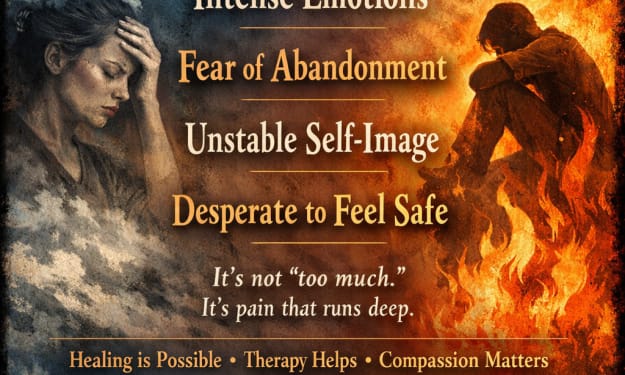
BPD: When the Nervous System Lives at the Edge
A compassionate reflection on Borderline Personality Disorder that explores emotional intensity, unstable self-image, fear of abandonment, and the possibility of healing through understanding, support, and treatment.
By Flower InBloom8 months ago in Psyche
When Does a Woman Feel Safe?
Not because this is another relationship article… but because what you’re about to read might explain a mystery that ruins countless relationships without anyone noticing. Many men think a woman feels safe when she hears “I love you.” Many women think they should feel safe simply because someone promises loyalty. But here’s the uncomfortable truth: A woman doesn’t feel safe because of words. She feels safe because of patterns. Patterns of behavior. Patterns of respect. Patterns that quietly tell her, “You don’t have to protect your heart around me.” This story begins with someone who didn’t understand that. --- Chapter 1: The Question That Changed Everything Daniel believed he was a good partner. He didn’t cheat. He worked hard. He texted often. Yet something always felt slightly distant between him and Maya. Maya smiled. She laughed. She stayed. But sometimes Daniel noticed a hesitation in her eyes — a small pause before she shared something personal. One evening they sat at a quiet café. Rain tapped softly against the glass windows. Daniel finally asked the question that had been sitting in his chest for months. “Why do I feel like you’re still holding something back from me?” Maya looked down at her coffee. Not angry. Not defensive. Just thoughtful. Then she said something simple, but it hit Daniel like lightning. “I like you, Daniel. But feeling safe with someone… takes more than liking them.” Daniel frowned. “Safe? I’ve never done anything to hurt you.” Maya nodded. “I know. But safety in a relationship isn’t just about avoiding harm. It’s about creating comfort.” That night Daniel went home confused. But that confusion would soon turn into understanding. --- Chapter 2: The Invisible Need Many people misunderstand emotional safety. They think it’s dramatic — something related to betrayal, lies, or big conflicts. But most of the time, emotional safety is built in small moments. Moments like: How someone reacts when you admit a mistake How someone listens when you share a fear How someone treats you when you’re not at your best For women especially, emotional safety is deeply connected to trust and vulnerability. A woman may appear strong, confident, independent. But inside, she is constantly evaluating a quiet question: “Is this someone I can relax around… or someone I must protect myself from?” When the answer becomes relax, that’s when safety begins. --- Chapter 3: What Makes a Woman Feel Safe Daniel started paying attention. Not to what he thought mattered. But to what Maya actually responded to. And slowly he began noticing something powerful. Safety wasn’t about grand gestures. It was about consistency. Here are the lessons he learned. --- 1. A Woman Feels Safe When She Is Truly Heard Many people listen just to reply. But feeling heard means something deeper. When Maya talked about her stressful day, Daniel used to jump straight into solutions. “Just ignore your boss.” “You should quit that job.” “Don’t worry about it.” But one day he tried something different. He simply listened. No interruption. No advice. Just attention. At the end Maya said something surprising: “Thank you for listening.” Daniel realized something important. Sometimes the greatest form of safety is simply being understood. --- 2. Consistency Creates Security Grand romantic gestures are exciting. But consistency is comforting. A woman feels safe when she knows what version of you she will meet tomorrow. Not someone loving today and distant next week. Not someone calm today and explosive tomorrow. Consistency tells the nervous system: “This person is predictable. You can relax.” Daniel began showing up in small reliable ways: Keeping promises Being emotionally present Communicating honestly These quiet actions slowly built trust. --- 3. Emotional Reactions Matter More Than You Think One night Maya told Daniel something vulnerable. She confessed she sometimes felt insecure about her career progress. This was a critical moment. If Daniel dismissed her feelings or joked about them, a wall would appear instantly. Instead he said: “That must feel heavy. I’m glad you told me.” Her shoulders relaxed. Why? Because emotional safety grows when someone respects your feelings instead of minimizing them. --- 4. Respect Is the Foundation of Safety Respect isn’t only about politeness. It’s about how someone treats your boundaries, your opinions, and your individuality. A woman feels safe when she knows: Her voice matters Her boundaries will be honored Her thoughts won’t be mocked Daniel began asking for Maya’s perspective more often. Not out of obligation. But genuine curiosity. That changed everything. --- Chapter 4: What Breaks a Woman’s Sense of Safety Just as safety can be built slowly, it can also be broken quickly. There are patterns that silently damage emotional trust. Here are the most common ones. --- Inconsistency Hot today. Cold tomorrow. This emotional unpredictability makes someone feel unstable inside the relationship. --- Dismissive Communication Statements like: “You’re overreacting.” “It’s not a big deal.” “You’re too sensitive.” These phrases tell someone their feelings are invalid. And when feelings aren’t safe, vulnerability disappears. --- Lack of Emotional Presence You can be physically present but mentally absent. Scrolling your phone during conversations. Ignoring subtle emotional cues. Over time this makes someone feel invisible. --- Broken Promises Trust isn’t broken by one huge lie most of the time. It’s broken by dozens of small broken promises. And once trust weakens, safety disappears with it. --- Chapter 5: The Moment Daniel Finally Understood Months passed. The relationship between Daniel and Maya felt different. Lighter. Warmer. One evening they walked through a quiet park. The sun was setting, painting the sky in orange and soft purple. Maya suddenly said something that Daniel would never forget. “I feel calm around you.” Daniel smiled slightly. “That’s good, right?” She nodded. “Yes. It means I feel safe.” That moment wasn’t loud. No fireworks. No dramatic confession. Just peace. And that’s the real secret. When a woman feels safe, love grows naturally. --- Chapter 6: Practical Advice for Anyone Who Wants to Build Emotional Safety Whether you’re in a relationship now or hope to build one someday, these principles matter. Be emotionally available People feel safe with those who are present — not distant. Listen more than you speak Understanding builds connection. Be consistent Your behavior should match your words. Validate feelings Even if you don’t fully understand them. Respect individuality Love should never feel like control. --- Chapter 7: The Hidden Reward Here’s something many people don’t realize. When a woman feels emotionally safe, she becomes more open, more affectionate, and more supportive. Not because she is obligated. But because she no longer needs to guard her heart. Safety unlocks the most authentic version of love. And that kind of love is rare. --- Final Thought If you remember nothing else from this story, remember this: A woman feels safe not when she hears beautiful words… but when she experiences consistent care. Not perfection. Just sincerity, respect, and presence. Those quiet things create the strongest relationships. --- If this story made you pause and think for a moment, you’re already ahead of most people. ❤️ If something here resonated with you, leave a like so more people can discover it. 💬 Share your thoughts in the comments — when do you think someone truly feels safe in a relationship? 🔔 And if you enjoy thoughtful stories like this, follow along. There are many more ideas worth exploring together. Because sometimes a few minutes of reading can change how we understand the people we care about.
By Ahmed aldeabella8 months ago in Psyche
Stop - Just Stop it right now
"Each one of us has lived through some devastation, some loneliness, some weather superstorm or spiritual superstorm; when we look at each other, we must say, I understand. I understand how you feel because I have been there myself. We must support each other and empathize with each other because each of us is more alike than we are unalike."
By Elizabeth Woods8 months ago in Psyche
8 Subtle Signs You’re Dissociated, According to Therapists
Have you ever driven somewhere and suddenly realized you don’t remember the last few minutes of the journey? Or maybe you were in a conversation but felt mentally “far away.” These experiences might seem normal, but therapists say they can sometimes be signs of dissociation.
By Shahid Zaman8 months ago in Psyche