trauma
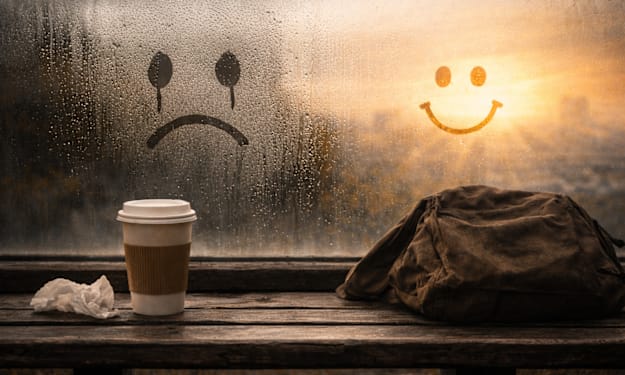
At its core, trauma can be thought of as the psychological wounds that persist, even when the physical ones are long gone.
The Loneliness Epidemic
Why Governments Are Treating Isolation Like a Public Health Crisis THE SURGEON GENERAL'S WARNING 🏥 In May 2023, United States Surgeon General Dr. Vivek Murthy issued an advisory declaring loneliness and social isolation a public health epidemic, comparing the health impact of chronic loneliness to smoking fifteen cigarettes daily and warning that the increasing disconnection of American society was producing health consequences as severe and as deadly as the most recognized public health threats, and this advisory which represented the first time the nation's top public health official had identified loneliness as a crisis requiring urgent coordinated response reflected the culmination of decades of research showing that social isolation is not merely an emotional discomfort but a physiological condition that damages the cardiovascular system, suppresses the immune system, accelerates cognitive decline, increases inflammation throughout the body, and shortens lifespan by an estimated twenty-six percent compared to people with strong social connections 📋
By The Curious Writer7 months ago in Psyche
The Memory You Think You Have Is a Lie
YOUR BRAIN IS THE WORLD'S BEST STORYTELLER 📖 The memory you are most certain about, the one you would swear on your life is accurate down to the last detail, the childhood birthday party or the first kiss or the moment you heard devastating news, is almost certainly wrong in ways that would shock you if you could compare your memory to a recording of what actually happened, because human memory does not function like a video camera recording events faithfully for later playback but rather like a novelist who takes real events and rewrites them each time they are recalled, adding details that were not there, removing details that were, shifting timelines, combining separate events into single memories, and incorporating information learned after the event into the memory of the event itself until the story your brain tells you about your past is a sophisticated fiction that feels indistinguishable from truth because your brain is the author, the editor, and the only reader, and it has no incentive to fact-check its own work 🧠
By The Curious Writer7 months ago in Psyche
Your Dreams Are Warning You 💤
THE DREAM THAT SAVED MY LIFE 🌙 The night before the accident I dreamed about driving on a wet highway and watching a red truck drift across the center line toward me in slow motion, and the dream was so vivid and so specific that when I woke up I could remember the exact stretch of road, the exact color of the truck, the exact moment of impact, and the sensation of spinning that followed, and I dismissed it as anxiety because I had a long drive ahead of me that day and my subconscious was probably just processing my standard driving-related nervousness into narrative form as brains do during REM sleep when they organize daily concerns into dream scenarios 😴
By The Curious Writer7 months ago in Psyche
When “I’m Good” Isn’t Good Enough
This is not an argument against hope, gratitude, or trying to stay grounded when life gets hard. It is about the pressure people put on themselves and each other to act okay when they are not okay. There is a difference between real resilience and forced positivity, and that difference is more important than some of us like to admit.
By Annam M Gordon7 months ago in Psyche
We Have Fooled Ourselves
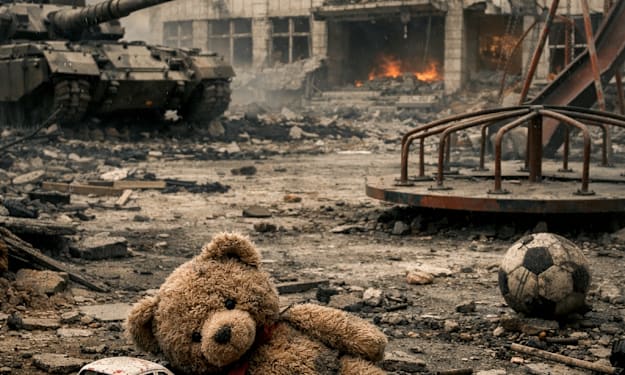
I have been writing, in recent months, about human suffering. Not because I enjoy thinking about it, but because I believe that to look away from it, to convert it into abstraction, is itself a kind of complicity. I wrote about a feeling I was not supposed to have. I wrote about the price paid by those who never chose the conflict that consumes them. And now I find myself returning again, pulled back by images I cannot stop seeing.
By Hashem Koohy7 months ago in Psyche
The Power of Presence
When “Good Parenting” Became a Feeling In modern parenting conversations, “good” has increasingly come to mean emotionally warm, verbally affirming, and immediately comforting. A good parent is expected to soothe distress quickly, validate feelings consistently, and minimize discomfort whenever possible. These traits are treated as obvious indicators of healthy parenting, reinforced by cultural messaging, therapeutic language, and social reward structures. When a child feels better in the moment, the parenting decision is assumed to have been correct, and when discomfort persists, the decision is often framed as a failure of care rather than a necessary part of development.
By Peter Thwing - Host of the FST Podcast7 months ago in Psyche
The Only Son. Content Warning.
The Only Son I find it sad that a little boy who was taught to do everything by his parents words and allow them to make decisions for him till 3rd semester of senior decides to be strong and nice for those around him he isn't really good at making decisions on his own now but he is very nice to those around him he has 2 sisters a older one and a younger one he loves both of them dearly and he's really close to the younger one their practically besties but time comes for this boy to graduate except he doesn't know what to do after graduation he doesn't know what comes next his mother and father didn't make decisions for him up till now... the father says something along the lines "you're Man now you figure it out" the mother she doesn't say anything but her smile is the type of smile that says "she trusts you to figure it out."
By Kenny HeartFilia7 months ago in Psyche