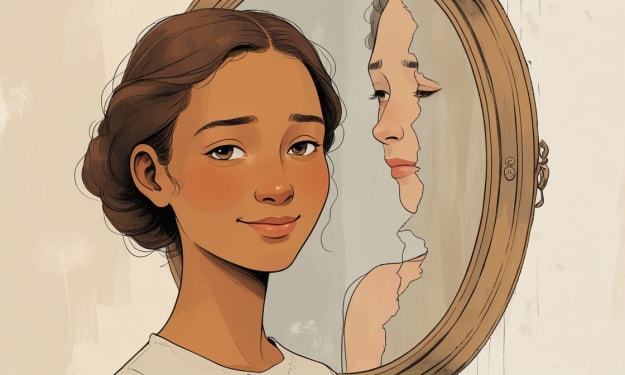
selfcare
The importance of self-care is paramount; enhance your health and wellbeing, manage your stress, and maintain control under pressure.
When Your Thoughts Become Your Enemy
I've never been physically harmed by another person. But for thirty years, I've carried an abuser with me everywhere I go—a voice in my head that knows exactly how to destroy me, that never sleeps, never relents, never runs out of ammunition. The cruelest part? That voice is mine.I'm staring at a text I've rewritten seventeen times.It's just a simple message to a friend—casual, friendly, nothing important. But my mind has turned it into a minefield. Each version gets scrutinized, dissected, rejected.Too enthusiastic. She'll think you're desperate.Too casual. She'll think you don't care.That emoji is childish. She'll think you're immature.No emoji looks cold. She'll think you're mad at her.An hour passes. The text remains unsent. I give up, delete the entire thread, and spend the next three hours convinced I'm a social failure who can't even send a normal text message like a functioning adult.This is what it's like when your thoughts become your enemy. Every moment is a battle you can't win, because the opponent knows every weakness, every insecurity, every past failure. The opponent is you.The Voice That Never StopsI can't remember when the voice started. It feels like it's always been there, a constant narrator providing running commentary on everything I do, say, think, or feel.But it's not a kind narrator. It's a critic. A judge. A prosecutor building a case for why I'm fundamentally defective.You're so awkward. Everyone noticed.That was a stupid thing to say. They're all judging you.You'll never be good enough. Why do you even try?Look at everyone else succeeding while you struggle. What's wrong with you?The voice sounds like me—my tone, my vocabulary, my speech patterns. But it says things I would never say to another person. Things so cruel, so cutting, so relentlessly negative that if someone else spoke to me that way, I'd recognize it as abuse.But because the voice is mine, because it lives inside my own head, I accepted it as truth. For decades, I believed that this constant stream of self-criticism was just realistic self-assessment. I thought everyone's internal dialogue was this harsh.I didn't realize I was being psychologically tortured by my own mind.The Architecture of Self-HatredThe voice didn't appear randomly. It had architects.My father, who responded to every mistake with disappointment and disdain. "Is that really the best you can do?" he'd ask, even when I'd tried my hardest. Nothing was ever good enough.My mother, who loved me but constantly compared me to others. "Why can't you be more like your sister? She never has these problems."The kids at school who found my differences—my quietness, my sensitivity, my interests—worthy of mockery. "You're so weird. No wonder no one wants to hang out with you."Each voice, each message, each moment of criticism got internalized. They became the foundation of my inner dialogue. By the time I was twelve, I'd built an entire internal system dedicated to constant self-surveillance and judgment.I thought this was normal. I thought everyone had a voice telling them they weren't enough, weren't right, weren't acceptable. I didn't realize I'd essentially installed an abuser inside my own head.The Daily AssaultLiving with a hostile internal voice is exhausting in ways that are hard to explain to people who don't experience it.Every action gets evaluated and found wanting. Making breakfast: You're eating too much. You have no self-control. Going to work: Everyone there knows you're incompetent. You're fooling no one. Talking to colleagues: They're just being polite. They don't actually like you.Every interaction gets replayed obsessively, dissected for evidence of failure. A conversation that seemed fine in the moment becomes, under the voice's scrutiny, proof of my social inadequacy. A work presentation that went well becomes evidence that I'm a fraud who somehow tricked people into thinking I'm competent.The voice excels at worst-case scenarios. A friend doesn't text back immediately? They're done with you. You said something wrong. You always do. A minor mistake at work? You're going to get fired. Everyone will know you're a failure.It's like having a terrorist living in your brain, constantly threatening catastrophe, constantly predicting doom, constantly ensuring you never feel safe or secure or good enough.The Isolation of Internal WarThe cruelest aspect of this kind of suffering is how invisible it is.People would tell me I seemed confident, capable, successful. They had no idea that inside, I was being shredded by my own thoughts every moment of every day. They couldn't hear the voice telling me I was worthless even as I smiled and nodded in conversation.I couldn't explain it. How do you tell someone, "I'm being abused by my own mind"? How do you articulate that you're in constant psychological pain from a source no one else can see or hear?I tried once, to explain to my partner why I'd been quiet and withdrawn. "My thoughts are really mean to me," I said, and immediately felt ridiculous. It sounded childish, trivial. He looked confused."So... just think different thoughts?" he suggested, genuinely trying to help.If only it were that simple.You can't just "think different thoughts" when your entire neural architecture is wired for self-attack. It's like telling someone with a broken leg to "just walk normally." The system itself is damaged.So I stopped trying to explain. I suffered alone, in my head, where the voice could continue its assault without witnesses, without intervention, without mercy.The Breaking PointThe crisis came on an ordinary Tuesday morning.I was getting ready for work, and the voice was particularly vicious. Criticizing my appearance, my clothes, my body, my hair, my face. Nothing was right. Everything was wrong. I looked in the mirror and heard:You're disgusting. No wonder no one could ever really love you. You're fundamentally unlovable. You should just give up.And something in me broke. Not dramatically—there was no sudden decision or moment of clarity. I just... couldn't anymore. I couldn't carry this voice one more day. I couldn't live in a head that hated me. I couldn't survive this internal war.I called in sick to work, made an emergency appointment with a therapist, and said the words I'd never said out loud before: "I think my thoughts are trying to kill me."Understanding the EnemyMy therapist didn't look surprised. She'd heard this before. She had a name for it: "toxic internal critic" or what some call the "inner critic gone rogue.""It's a part of you that developed to protect you," she explained. "When you were young and facing criticism or rejection, this voice internalized those messages to help you avoid future pain. If it criticized you first, you'd be prepared for others' criticism. If it kept you small and controlled, you'd avoid rejection."The voice had started as a misguided protector. But over decades, it had become a tyrant.She taught me about cognitive distortions—the ways anxious and depressed brains systematically distort reality to confirm negative beliefs. My internal voice used all of them:All-or-nothing thinking: "If you're not perfect, you're a complete failure."Catastrophizing: "One mistake means everything will fall apart."Mind reading: "Everyone is judging you negatively."Personalization: "Everything bad that happens is your fault."Understanding these patterns didn't make the voice stop. But it helped me recognize that the voice wasn't telling truth—it was filtering reality through the lens of trauma, fear, and distorted thinking.
By Ameer Moavia9 months ago in Psyche
How Childhood Trauma Shapes Adult Fear
I can trace almost every fear I have as an adult back to a specific moment in childhood.My fear of abandonment? It started the night my mother packed a suitcase during a fight with my father and said, "I'm leaving, and I'm never coming back." She came back three hours later, but seven-year-old me didn't know she would. Seven-year-old me spent those hours convinced that mothers could just disappear, that love could evaporate without warning.My hypervigilance in relationships? It began during the years I spent walking on eggshells around my father's unpredictable rage, learning to read the tension in his shoulders, the tone of his voice, the weight of his footsteps. By the time I was ten, I could predict his moods with frightening accuracy. I had to—my safety depended on it.My inability to accept help or show vulnerability? That crystallized the day I fell off my bike and came home bleeding and crying, only to have my father tell me to "stop being a baby" and send me back outside. I learned: pain is something you handle alone. Needing someone makes you weak.I thought I'd left that childhood behind. I thought becoming an adult meant those old wounds would stop mattering.I was wrong.The Architecture of FearChildhood trauma doesn't stay in childhood. It doesn't remain a bad memory you can file away and move past. It becomes the foundation upon which you build your entire adult life—your relationships, your career choices, your capacity for trust, your sense of safety in the world.A child's brain is exquisitely designed to learn from experience, to adapt to their environment, to develop strategies for survival. When that environment is unpredictable, frightening, or emotionally unsafe, the child's brain learns accordingly.It learns: people are dangerous. Love is conditional. The world is threatening. You are alone.These aren't conscious thoughts. They're pre-verbal conclusions that get encoded into your nervous system, your implicit memory, your automatic responses. They become the operating system that runs in the background of your adult life, influencing decisions you think you're making rationally.My therapist explained it to me this way: "The child you were is still inside you, and that child is still afraid. When you encounter situations as an adult that resemble your childhood trauma—even loosely—that frightened child takes over. You stop responding from your adult self and start reacting from your child self."That's why I, a competent professional, would have panic attacks when authority figures got angry. That's why I'd sabotage relationships the moment they got too close. That's why I couldn't relax, couldn't trust, couldn't let my guard down.I wasn't living my adult life. I was defending against my childhood.The Invisible InheritanceThe most insidious thing about childhood trauma is how normal it feels.Growing up, I didn't think my childhood was traumatic. We weren't homeless. I wasn't physically abused. My parents stayed together. We had food, shelter, the basics. Compared to kids who had it worse, I thought I had nothing to complain about.But trauma isn't a competition. You don't need the worst childhood to be affected by it. Emotional neglect is trauma. Unpredictable parental moods are trauma. Witnessing conflict you couldn't control is trauma. Being taught that your feelings don't matter is trauma.I grew up in a home where anger exploded without warning, where love felt conditional on good behavior, where emotional needs were treated as inconvenient. That was my normal. I didn't know any different.So I carried those patterns into adulthood without recognizing them as problems. I thought everyone felt anxious all the time. I thought everyone struggled to trust people. I thought everyone had a voice in their head constantly scanning for danger, preparing for catastrophe.It wasn't until my marriage started falling apart that I realized: the way I experienced the world wasn't universal. It was specific to me, to my history, to the child I'd been who'd learned some very effective but ultimately damaging survival strategies.The Patterns We RepeatMy husband was nothing like my father. He was gentle, stable, emotionally available. Everything my child-self had desperately wanted.But I couldn't receive it. Every time he got close, I'd push him away. Every time he tried to comfort me, I'd shut down. Every time he expressed frustration—normal, healthy frustration—I'd interpret it as rage and disappear emotionally for days.I was replaying my childhood, casting him in roles he never auditioned for, reacting to threats that didn't exist in our relationship but had very much existed in my family of origin."Why do you do this?" he asked after one particularly painful fight. "Why do you run every time things get hard?"I didn't have an answer then. But in therapy, I found one: I ran because running had kept me safe as a child. I withdrew because withdrawal had protected me from my father's anger. I expected abandonment because I'd learned that love was temporary and conditional.I was forty years old, but in my marriage, I was still that seven-year-old girl, using the only tools she'd ever learned.
By Ameer Moavia9 months ago in Psyche
The Night I Understood Football
I didn’t go to the game expecting hope. It was a cold November Thursday. My brother had just lost his job. My nephew hadn’t spoken in days after a school incident. The world felt heavy, and the last thing I wanted was to watch a mismatch—our hometown team facing a dynasty that hadn’t lost in months.
By KAMRAN AHMAD9 months ago in Psyche
Society Often Teaches Us to Suppress Our Sad Feelings, Branding Them as Negative.. Top Story - January 2026. Content Warning.
Allow yourself the time to feel, process, and let go. What a journey we’ve traveled together. You can relate to that pain that appears out of nowhere and wants to linger in our minds. Once fear moves in, it takes root—spreading doubt, loneliness, and confusion It’s that kind of pain that overtakes your mental health, gradually making a home within you. Your thoughts can create a space filled with fear, a feeling that we often cling to because it’s the one our minds use against us—leading to a fierce battle between your thoughts and your feelings. It’s a struggle no one wants to lose, yet losing yourself feels like an ever-present threat. Isn’t that a trick life plays on us?
By Johana Torres9 months ago in Psyche
The Year She Forgot How to Be Around People
Emma had been alone for 347 days when she realized she'd forgotten how to have a conversation.It wasn't intentional isolation. It started with the pandemic—everyone retreated into their separate spaces, and Emma's one-bedroom apartment became the entire universe. Then her remote job eliminated the casual water cooler chats. Her best friend moved across the country. Her weekly book club dissolved. One by one, the threads connecting her to other humans frayed and snapped.And Emma told herself she was fine. She had video calls sometimes. She texted people. She scrolled through social media seeing everyone else's lives. She wasn't truly alone.But when her neighbor knocked on her door to ask about a package delivery, Emma opened her mouth to respond and the words came out wrong. Stilted. Like she'd forgotten the rhythm of human speech."I... yes. The package. It's... I haven't..." She couldn't form a complete sentence. Her neighbor looked at her with concern, and Emma felt a wave of panic. What was happening to her?After he left, Emma sat on her couch and tried to remember the last real conversation she'd had. Not a transactional exchange with a delivery person or a scripted work call, but an actual spontaneous human interaction.She couldn't remember. And when she tried to imagine having one now, her brain short-circuited. The social scripts she'd once known automatically—how to read facial expressions, when to laugh, how to know when it was her turn to talk—felt like a foreign language she'd once been fluent in but had somehow forgotten.Emma wasn't just lonely anymore. Loneliness had physically changed her brain. And she had no idea how to change it back.The Neuroscience of IsolationHere's what Emma didn't know: her brain had been rewiring itself during those 347 days, adapting to a world without human connection. And those adaptations, while meant to protect her, were actually making social connection harder.Dr. John Cacioppo, who spent his career studying the neuroscience of loneliness, discovered that chronic loneliness doesn't just hurt emotionally—it fundamentally alters brain structure and function. After months of isolation, the brain begins operating in what he called "self-preservation mode."When Emma was socially connected, her brain's default mode network—the regions active during social cognition—stayed well-exercised. She could easily read facial expressions, interpret tone, predict others' responses. Her mirror neurons fired constantly, helping her empathize and connect.But during 347 days of isolation, those neural pathways had atrophied from disuse. Meanwhile, other pathways had strengthened: the ones associated with threat detection, hypervigilance, and social anxiety.Research using fMRI scans shows that after prolonged loneliness, the brain starts interpreting social situations as threats rather than rewards. The amygdala—Emma's threat-detection system—had become hyperactive. When her neighbor knocked, her brain didn't register "potential connection." It registered "danger."This is why Emma's words came out wrong. Her nervous system was in fight-or-flight mode during what should have been a casual interaction. Her prefrontal cortex—the region that helps with language and social cognition—was being hijacked by her amygdala's panic response.Dr. Stephanie Cacioppo's continuation of this research revealed something even more concerning: lonely brains show increased activity in regions associated with vigilance for social threats and decreased activity in regions associated with reward and pleasure from social contact.Emma's brain had literally forgotten that human connection feels good. It now registered other people as potential threats to be managed rather than sources of joy to be approached.She wasn't losing her mind. Her mind was adapting to the reality she'd been living. The problem was that those adaptations were now making it nearly impossible to escape that reality.The Physical Pain of Social HungerTwo weeks after the awkward conversation with her neighbor, Emma forced herself to go to a coffee shop. Just to be around people. She didn't even need to talk to anyone—just being in proximity to human activity would help. Or so she thought.She ordered her coffee—that transaction went fine, she'd practiced it—and sat down with her laptop. Around her, people chatted, laughed, lived their normal social lives.And Emma felt physical pain.Not metaphorical emotional pain. Actual, physical pain in her chest. Her heart rate spiked. Her hands shook. She felt nauseated. After twenty minutes, she had to leave, her coffee barely touched.Walking home, Emma felt like she was losing her mind. How could being around people—something she desperately wanted—cause physical pain?Dr. Naomi Eisenberger's research on social pain reveals why: the brain processes social pain using the same neural circuits as physical pain. When Emma sat in that coffee shop after months of isolation, watching connection she couldn't access, her anterior cingulate cortex—the region that processes physical pain—was lighting up intensely.Her brain was experiencing "social hunger"—a state where you're simultaneously desperate for connection and terrified of it. Like being starving but finding all food nauseating. The thing you need most becomes the thing that triggers the most intense threat response.Research on prolonged isolation shows that after months of loneliness, the brain's stress response system becomes chronically activated. Cortisol levels remain elevated. Inflammation increases throughout the body and brain. The hippocampus—crucial for memory and emotion regulation—actually shrinks.Emma wasn't imagining the difficulty. Her brain's architecture had changed. Regions associated with social reward had weakened. Regions associated with threat and anxiety had strengthened. She'd developed what neuroscientists call a "lonely brain"—one that desperately needs connection but has been rewired to find connection threatening.The Paranoia That Grows in SilenceEmma started noticing something disturbing: she was becoming suspicious of everyone.When a coworker sent a friendly email, Emma spent an hour analyzing it for hidden criticism. When her sister called to check in, Emma was convinced she was calling out of obligation, not genuine care. When someone smiled at her in the grocery store, Emma assumed they were judging her or laughing at something wrong with her appearance.She'd never been paranoid before. But now, every social interaction felt loaded with potential rejection.Dr. Cacioppo's research explains this phenomenon: chronic loneliness increases activity in brain regions associated with social threat detection while decreasing activity in regions that process social rewards. The result is a cognitive bias called "hypervigilance to social threats."Emma's brain was scanning every interaction for signs of rejection, criticism, or danger. And because the human brain has a negativity bias—we notice threats more readily than rewards—she found what she was looking for.A neutral facial expression looked like disapproval. A delayed text response felt like abandonment. An ambiguous comment was interpreted as an insult. Her brain, trying to protect her from further social pain, was interpreting everything through a lens of threat.This created a vicious cycle: Emma's hypervigilance made her interpret neutral or positive social cues as negative. She'd respond defensively or withdraw. Others, confused by her reactions, would pull back. Emma would interpret their pullback as confirmation that people didn't like her. The cycle would repeat.Neuroscience research shows that this isn't paranoia in the clinical sense—it's the brain's threat-detection system working overtime after prolonged social deprivation. Like how starvation makes you hyperfocused on food, loneliness makes you hyperfocused on social threats.But knowing the neuroscience didn't help Emma feel less crazy. She was trapped inside a brain that had been rewired by isolation to make connection nearly impossible.
By Ameer Moavia9 months ago in Psyche
When Silence Hurts More Than Words
Mia grew up in a quiet house. Her parents never screamed. Never threw things. Never called each other names or slammed doors. To anyone looking from the outside, they were the picture of civility—calm, controlled, perfectly composed.
By Ameer Moavia9 months ago in Psyche
Why Some People Feel Alone Even in Relationships
Lena woke up next to her husband of seven years and felt like a stranger was sleeping beside her. Not because Tom had changed. But because somewhere between the wedding and this Tuesday morning, they'd stopped being two people who knew each other and become two people who lived in the same house.
By Ameer Moavia9 months ago in Psyche
The Psychology of Losing Yourself While Pleasing Others
The Woman Who Forgot Her Own Name Rachel stood in the grocery store for eleven minutes, staring at yogurt. Her husband preferred strawberry. Her daughter liked vanilla. Her son would only eat the kind with cartoon characters on the lid. Her mother-in-law, visiting this weekend, had mentioned she was trying to eat more protein.
By Ameer Moavia9 months ago in Psyche