recovery
Your illness does not define you. It's your resolve to recover that does.
Behavioral Health vs Mental Health:. AI-Generated.
Many people use the terms behavioral health and mental health interchangeably, but there is a clear distinction between the two. Understanding the difference between mental health and behavioral health can lead to more effective care, treatment planning, and better overall outcomes.
By Orange Coast Psychiatryabout a year ago in Psyche
The Masterful Lie We Tell Ourselves That Prevents Us From Reaching Our Potential. Top Story - August 2025.
As Humans, We are Incredibly Good at Lying to Ourselves. When you look at the Psychophysiology of it, you'll discover that it is a Fascinating Magic Trick that We Play on Our Brain.
By H.E. Dr. Cody Dakota Wooten, COIE, DFM, DHMabout a year ago in Psyche
The Happiness Trap: How the Pursuit of Joy Can Leave You Empty
Introduction: The Paradox of Pursuing Happiness In a culture that glorifies positivity, happiness has become a modern obsession. Scroll through social media and you’ll see endless smiling faces, inspirational quotes, and promises that bliss is just a mindset—or a product—away. Self-help gurus insist that happiness is our natural state, and if we’re not constantly feeling good, something must be wrong. But what if this relentless chase is actually making us more miserable? Welcome to The Happiness Trap—a psychological paradox where the harder we try to be happy, the more it slips out of reach. Instead of creating joy, the pursuit often leads to anxiety, comparison, and emotional burnout. So why does this happen, and how do we find real, lasting contentment?
By Shoaib Afridiabout a year ago in Psyche
I’m the One Who Never Falls Apart—Until I Did
By Nadeem Shah I’ve always been “the strong one.” You know the type—the person who listens at 2 a.m. when someone needs to vent, who holds space for tears that aren’t their own, who never seems to crack no matter how heavy the storm gets. That was me.
By Nadeem Shah about a year ago in Psyche
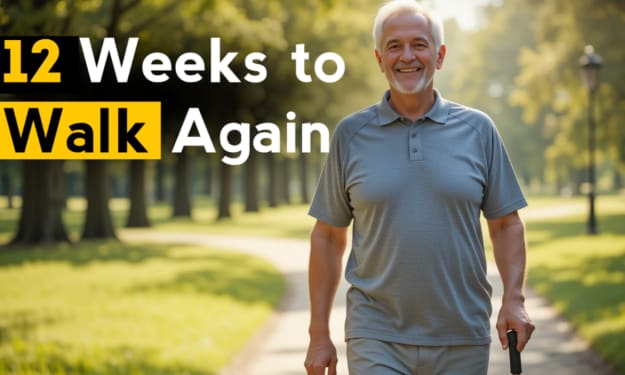
How I Dodged Knee Surgery—And Walked Pain-Free Again After 12 Weeks
How I Dodged Knee Surgery—And Walked Pain-Free Again After 12 Weeks Written by Raza Iqbal I still remember the way my right knee throbbed every time I tried to climb stairs. The pain was deep, stubborn, and had grown from a nagging discomfort to a full-blown problem that interrupted every part of my daily life. At 49, I wasn't ready to accept that knee surgery might be in my near future. But that’s exactly what the orthopedic specialist suggested: arthroscopic surgery, followed by six months of recovery. I walked out of that clinic both terrified and determined to find another way. Spoiler alert: I did. And today, twelve weeks later, I walk without pain, hike with my son again, and even jog occasionally. Here’s how I got there. Week 1-2: Facing the Diagnosis and Doing My Research After my doctor told me that my knee showed signs of early osteoarthritis and a torn meniscus, I went home and cried. For years I’d prided myself on staying active—walking, biking, gardening. The thought of surgery, and losing my independence even temporarily, was terrifying. So I did what I always do when I’m afraid: I researched. I looked into success rates for knee surgeries, and found that while many people recover well, complications and long recovery times are common. I also discovered countless stories of people who had delayed or even avoided surgery with physical therapy, diet changes, supplements, and alternative treatments. I decided to give myself three months to try a completely natural and non-invasive approach. If I didn’t see any improvement, I’d reconsider surgery. But I wanted to try. Week 3-4: Physical Therapy and the Power of Movement I scheduled a session with a physical therapist who specialized in joint rehab. She told me something I’ll never forget: "Movement is medicine. The right kind of movement can heal." For someone who had been limping and sitting for days, those words gave me hope. We focused on strengthening the muscles around my knee—specifically the quads, hamstrings, and glutes. I started with basic exercises: clamshells, leg lifts, step-ups, and wall sits. Every rep felt difficult. But by the end of Week 4, something changed: I could walk up the stairs without wincing. I began daily stretching routines as well, especially focusing on hamstrings and calves, to relieve pressure on my knee joint. Week 5-6: Nutrition and Supplements After diving deep into the connection between inflammation and joint pain, I started adjusting my diet. I cut out processed sugar, refined carbs, and most dairy. Instead, I filled my plate with anti-inflammatory foods: salmon, leafy greens, turmeric, ginger, blueberries, olive oil, and walnuts. I also started taking supplements: Glucosamine and chondroitin Collagen peptides Turmeric with black pepper extract Omega-3 fish oil
By Moonlit Lettersabout a year ago in Psyche
Xanax Detox: More Than Just Irritability . Top Story - July 2025.
I was prescribed Xanax for severe Generalized Anxiety Disorder. It helped me function at first. But early on—and I mean right away—my doctor prescribed me 8 mg of extended release Xanax per day. That’s not a dosage I slowly worked up to. That was the starting point.
By Annie Edwards about a year ago in Psyche
The Silence Between Us
By Nadeem Shah It had been 472 days since we last spoke. Not that I was counting—at least, not anymore. In the beginning, I counted everything. The days since the argument. The hours since I thought about calling. The number of messages I typed and never sent. The seconds I stood outside your door that one night… and turned away.
By Nadeem Shah about a year ago in Psyche
When You Start Feeling Like a Stranger to Yourself… That’s When the Story Begins
When You Start Feeling Like a Stranger to Yourself… That’s When the Story Begins I used to think I knew myself. I knew what made me happy, what frustrated me, and what I believed in.
By subah alenziabout a year ago in Psyche
Once A Child . Content Warning.
From the moment we open our eyes—crying in a cold, sterile hospital— the conditions of love begin to blossom. Living and growing in our mother’s bellies only holds a safe place for nearly a year before we were quite literally ejected into chaos we didn’t ask for. From that point on there are conditions to the amount of love and respect we receive. From birth when we are “good babies” in the nursery, the nurses praise us for our cooperation, whereas fussy babies, while still looked at as precious cute creations, are deemed more difficult. Though this example is rather vague and lacks depth into the true meaning of conditional love, it is a pivotal reminder of how we enter and leave this world. Alone.
By The Darkest Sunriseabout a year ago in Psyche