humanity
Mental health is a fundamental right; the future of humanity depends on it.
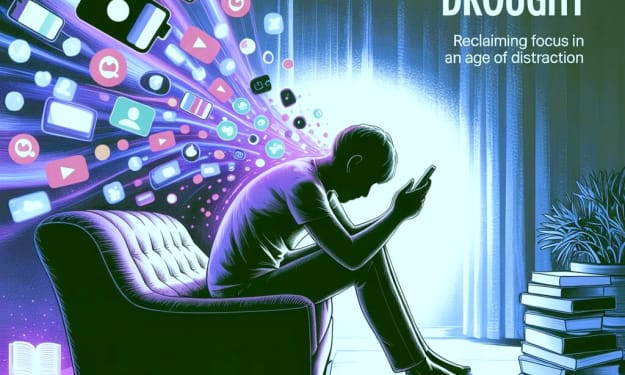
The Dopamine Drought
In the digital age, our brains are being rewired. Constant notifications, endless scrolling, and algorithmic content designed for maximum engagement are draining our attention spans and reshaping how we process pleasure. We’re always stimulated, yet rarely satisfied. Welcome to what psychologists and neuroscientists are calling the dopamine drought—a growing epidemic of mental fatigue, focus loss, and overstimulation.
By shoaib khan2 years ago in Psyche
"The Gentle Path to Healing"
It sounds like you've shared a really thoughtful piece about healing and self-care. Here are a few ways to reword it, focusing on slightly different angles: Option 1 (Focus on the Turning Point): > Her presence was a turning point. She didn't judge or try to solve my problems; she simply offered support when I needed it most. Shortly after, I started therapy, which felt daunting at first. Expressing my inner turmoil was a challenge, but with consistent effort, I began to understand myself better. Healing wasn't a quick fix, but reaching out for help was the crucial first step in rediscovering my true self. > > Learning to set boundaries became an act of self-love. I used to say "yes" to everything, fearing I'd disappoint others or appear difficult. I mistakenly believed I was being helpful, but in reality, I was neglecting my own needs. Each time I agreed to something that didn't align with my well-being, I was denying myself the chance to nurture my own happiness. Saying "no" wasn't about becoming cold; it was about valuing my own capacity and limits. Surprisingly, establishing these boundaries didn't disrupt things – instead, it felt like an act of self-care. > > The path to healing isn't a straight line. Some days bring lightness and hope, while others feel heavy with old stresses. I used to think feeling down meant I was failing, that healing was a final destination. But the truth is, healing is a winding, uneven journey with forward steps, backward steps, and sideways moments. The important thing is to keep returning to yourself, to keep making choices that support your healing, even when it feels impossible. Now, when darkness returns, I can meet it with calm and acceptance, knowing it's part of the process. > > In conclusion, remember that whatever you're facing, you are not broken – you are human. It's perfectly okay to step back, rest, or seek support. It takes courage to acknowledge your limits and ask for help. Sometimes, our lowest points can lead to profound personal growth, as they did for me. When I felt like I had hit rock bottom, I was actually beginning a slower, more authentic life, one I can finally be proud of. As you navigate your own journey, remember that the light will return. It comes in moments, big and small, reminding you that you are here, and that you matter. > Option 2 (Focus on Self-Compassion): > The simple presence of a supportive person, who offered understanding without judgment, encouraged me to seek therapy soon after. Initially, therapy felt intimidating, as I struggled to articulate my inner world. However, with time and persistence, I began to gain clarity about my experiences. Healing wasn't instantaneous; it was the act of asking for help that initiated my journey back to my authentic self. > > Learning to establish boundaries became an essential act of self-compassion. My tendency to always say "yes" stemmed from a fear of disappointing others or appearing selfish. I mistakenly believed I was doing the right thing by agreeing to everything, even when it conflicted with my own needs. In reality, I was betraying myself. Each time I overextended myself, I was denying myself the opportunity to nurture my own well-being and happiness. Saying "no" wasn't about becoming unkind; it was about recognizing and honoring my own limits. I was surprised to find that setting boundaries didn't create chaos; instead, it felt like a profound act of self-love. > > The journey of healing is rarely linear. There will be days filled with lightness and hope, and others when old feelings resurface. I used to interpret these low points as setbacks, believing that healing meant reaching a permanent state of well-being. However, healing is a fluid process, characterized by progress that isn't always consistent. There will be forward steps, backward steps, and detours. The crucial element is to continually return to yourself, to keep making choices that support your healing, even when it feels incredibly challenging. Now, when difficult feelings arise, I can approach them with a sense of calm, allowing myself to feel them and remembering that they are a natural part of the journey. > > Ultimately, please remember that whatever you are experiencing, you are not flawed; you are human. It is perfectly acceptable to need to withdraw, take a break, or seek support. It requires courage to acknowledge your limits and ask for help. Often, our most challenging moments can pave the way for significant personal transformation, as they did for me. When I felt like I had lost everything, I was actually beginning to embrace a more intentional and genuine way of living, a life I now value deeply. As you navigate your own path, hold onto the understanding that the light will return. It finds you in moments, both big and small, reminding you of your presence. You are here, and that is significant. > Option 3 (More Concise): > Her non-judgmental support led me to therapy, which was initially scary as I didn't know how to express myself. Over time, I began to understand my inner world. Healing wasn't immediate; asking for help was the start of my journey back to myself. > > Setting boundaries became an act of self-love. My "yes-saying" came from a fear of disappointing others, but it was a betrayal of my own needs. Saying "no" wasn't cold; it was valuing my limits and surprisingly kept things running smoothly. > > Healing isn't linear, with good days and bad days. I used to think feeling low was a failure, but healing is an uneven process. The key is to keep returning to yourself and making choices that aid healing, even when it's hard. Now, I meet darkness with calm, knowing it's part of the journey. > > Remember, you're not broken, just human. Needing breaks or support is normal and takes courage. Breakdowns can lead to growth, as mine did. When I felt I'd lost everything, I began a slower, more real life I'm proud of. Know that the light returns in moments, big and small, reminding you that you are here and that you matter. > Let me know if you'd like me to try rephrasing it in a different way or focusing on a specific aspect!
By Nasir Khan2 years ago in Psyche
You’re Allowed to Outgrow People — Even If You Love Them
We don’t talk enough about the grief that comes from outgrowing people you thought would be in your life forever. It’s a quiet kind of heartbreak. No big fight. No betrayal. Just… distance. Misalignment. A slow unraveling of what used to feel like home. And still, it hurts. But here’s the truth you need to hear today: **Outgrowing people doesn’t make you cold. It makes you honest.** --- ### 1. Growth Doesn’t Always Look Like Togetherness We assume that love means forever. That real friendship means sticking through everything. That loyalty means never letting go. But sometimes, the path forward doesn’t include the people you started with. Not because they’re bad. Not because you’re better. But because your growth is pulling you in different directions. That’s not betrayal. That’s life. Trees shed their leaves to survive the winter. You’re allowed to shed relationships to survive your becoming. --- ### 2. You’re Not Meant to Stay Who You Were There’s a version of you they connected with. Maybe the “yes” version. The people-pleaser. The version that didn’t speak up. The one who played small to make others comfortable. But now you’re changing. You’re setting boundaries. You’re dreaming bigger. You’re healing. And that version of you no longer fits the mold they expect. You don’t need to apologize for evolving. You’re not meant to stay in the same emotional room forever. --- ### 3. Love Can Exist Without Longevity We think if something ends, it failed. But not all endings are failures. Some are just transitions. You can love someone deeply… and still let them go. You can carry beautiful memories… and still choose distance. You can honor the role someone played in your past… and still close the chapter. That’s not bitterness. That’s maturity. It takes strength to walk away from what no longer aligns — especially when you still care. --- ### 4. Just Because They Knew You, Doesn’t Mean They Know You Now Some people will try to keep you in the version of yourself they’re most comfortable with. - “You’ve changed.” - “You’re so different now.” - “You’re not the same person I used to know.” They’ll say it like it’s a bad thing. But what they really mean is: **You’ve grown beyond their expectations — and that makes them uncomfortable.** You are not obligated to stay stagnant to keep someone else at ease. You’re allowed to become unrecognizable to the people who never truly saw you. --- ### 5. Distance Doesn’t Mean Disrespect Sometimes, you don’t need closure. Sometimes, you don’t need a dramatic exit. Sometimes, you just need space — and peace. It’s okay to unfollow quietly. To stop replying. To move in silence. To protect your energy without sending a press release. Boundaries aren’t walls to shut people out. They’re doors to protect your inner peace. --- ### 6. New Chapters Require New Characters You’re entering a new season. One with higher standards. Deeper self-love. Greater clarity. And not everyone is meant to come with you. That doesn’t mean you’re heartless. It means you’re focused. Letting go of someone who no longer aligns with your growth is not cruelty — it’s courage. You are not abandoning them. You are choosing *you* — maybe for the first time. -- -- -- -- -- -- ### Final Thoughts: Let It Hurt, Then Let It Heal Losing people — even quietly, even naturally — still hurts. Let yourself grieve. Let yourself remember. Let yourself feel everything. But when the time comes, release them with love. Not for revenge. Not for pride. But for peace. Because at the end of the day: You are allowed to outgrow people. Even the ones you prayed would stay forever. Even the ones who once saved you. Growth isn’t cruel. It’s sacred. And if the cost of becoming your most whole, healed self is losing who you used to hold close? ** It’s still worth it. **
By SHADOW-WRITES2 years ago in Psyche
You Weren’t Ready for It — But You Will Rise Again
You weren’t ready for it. The betrayal. The breakup. The loss. The failure. That one thing you never thought would happen — but it did. And now you’re on the floor, gasping for air, wondering: **“How do I come back from this?”** Let me tell you something you might not believe right now: **You will rise.** Not because it’s easy. Not because you’re not hurting. But because there’s still something in you that refuses to stay broken. --- ### 1. Your Rock Bottom Is Not the End It feels final, doesn’t it? Like this is where the story ends. Like the worst thing has happened, and now you’ll never be the same. But what if… that’s the point? What if the person you were wasn’t built for the next chapter — and this pain is the process of becoming someone stronger? Rock bottom isn’t the end. It’s the place where new foundations are laid. It’s where illusions are broken, masks fall off, and you finally meet the real version of yourself. --- ### 2. Feel It — But Don’t Live There You don’t have to pretend you’re okay. Cry. Scream. Break down. Stay in bed if you need to. But here’s the key: **Visit the pain. Don’t unpack and live in it.** Let yourself feel everything — but remember, emotions are **weather**, not a permanent forecast. They pass. And when they do, you’ll still be here — standing. The fact that you’re feeling this much? It means you cared. It means you were all-in. And that’s something to honor, not hide. --- ### 3. Ask Better Questions Pain makes us ask: - “Why me?” - “What did I do to deserve this?” - “Is this my fault?” But those questions won’t set you free. Try this instead: - “What is this trying to teach me?” - “Who can I become through this?” - “What would healing look like for me right now?” Better questions don’t erase the pain — they give it **purpose**. They help you shift from victim to survivor, and eventually, to **creator**. --- ### 4. You’ve Survived Before This isn’t your first storm. It might be the worst — but it’s not the first. Look back. Really look. Remember the moments you thought would break you… but didn’t? The nights you cried silently, and still got up the next day? The times you kept going when you had no idea how? That’s not weakness. That’s **resilience**. And it still lives inside you — even if it’s quiet right now. --- ### 5. You Don’t Need to Have It All Together Healing is not linear. You’ll feel better one day — and shattered the next. You’ll laugh at a joke… then cry at a memory. This doesn’t mean you’re failing. It means you’re human. You don’t need to “be strong” all the time. You just need to keep showing up — exactly as you are. Even in pieces. Even confused. Even exhausted. You are still worthy of healing. You are still worthy of love. You are still enough — especially now. --- ### 6. One Step Is Enough You don’t have to fix everything today. You don’t need a 10-year plan. Sometimes, strength is just: - Brushing your teeth - Drinking water - Answering one message - Getting through the next 10 minutes Don’t underestimate small steps. They’re how mountains are moved — one inch at a time. One step leads to another. And slowly, without realizing it, you’re building momentum, rebuilding identity, reclaiming power. --- ### Final Thoughts: This Is Not Where Your Story Ends I don’t know what you’re facing. But I know this: You are not broken beyond repair. You are not stuck forever. You are not alone. You are in a chapter — not the whole book. And this chapter? It might be painful… but it’s not powerless. Because people who rise from the hardest places? They don’t just survive. **They become unshakable.**
By SHADOW-WRITES2 years ago in Psyche
Reset Your Mind: 10 Daily Habits That Will Transform Your Psychological Health
Introduction In today’s fast-paced, high-pressure world, taking care of our psychological health is just as important as maintaining physical fitness. Often, we pay attention to our bodies — hitting the gym, eating right — but neglect the well-being of our minds. Psychological health affects how we think, feel, act, and handle stress. It influences every decision, relationship, and dream we chase.
By Umar Khattak2 years ago in Psyche
It's time to revisit Erich Fromm: Why his ideas are more relevant than ever. Top Story - May 2025.
Erich Fromm doesn’t come up in conversation outside of academic circles related to psychology, psychoanalysis, or maybe sociology. This wasn’t always true. Fromm was a widely known and discussed figure in his day. His seminal work, “Escape from Freedom” (1941), and his international best seller, “The Art of Loving” (1956), made him and his ideas popular beyond academia. Having recently reread _Escape from Freedom_, I realized how relevant his ideas remain, not only in the U.S. but throughout the world.
By G. A. Botero2 years ago in Psyche
**How to Handle Street Fights — This Is Lifesaving**
Most people think they’ll never be in a street fight. Until they are. Maybe it’s a random drunk at a bar. A stranger on the street. Or someone who mistakes you for a threat. It happens fast. No rules. No referees. No second chances. That’s why street fights aren’t about “winning.” They’re about *surviving* — and staying safe enough to walk away. Here’s what you need to know to handle yourself if things ever go sideways in the real world. --- ### 1. The Best Fight Is the One You Avoid Let’s get this straight: If you can walk away, do it. Real strength isn’t about proving how tough you are. It’s about knowing when to avoid danger. Your ego might want to stand your ground. But your *life* wants you to stay alive. - Don’t argue with loud, unstable strangers. - Don’t try to “win” an insult battle. - Don’t escalate something you can walk away from. Fights you avoid are the ones you survive. Period. --- ### 2. Always Be Aware of Your Surroundings Most people walk around like they’re half-asleep. That’s why attackers look for distracted targets. They’re not picking a fight with someone *ready*. They’re picking someone *unaware*. Train yourself to: - Keep your head up. - Stay off your phone in public. - Scan your surroundings when walking at night or in isolated places. Confidence and awareness often *prevent* a fight before it starts. --- ### 3. Stay Calm — Panic Gets You Hurt If a situation begins to escalate, your number one job is to **stay calm**. Why? Because adrenaline will hit hard. Your hands shake. Your vision narrows. Your thinking gets foggy. But panic is what gets people injured. Breathe. Focus on staying centered. Back away slowly if possible. Speak with a steady voice. Even if someone wants to fight, they might back off if you don’t escalate. --- ### 4. Learn Where to Hit — and Where Not To If you *have* to defend yourself, forget fancy martial arts. Street fights are fast, chaotic, and unforgiving. You don’t have time for style. You need *impact.* Target areas: - **Nose** — A palm strike or elbow can break it and cause disorientation. - **Eyes** — A quick jab can give you time to run. - **Groin** — Classic for a reason. Can disable most attackers instantly. - **Throat** — Dangerous, but effective if your life is at risk. Never aim for the knuckles-to-jaw punch you see in movies. You’ll break your hand before you break their face. Use elbows, palms, knees — parts of your body designed for impact. --- ### 5. Get Out Fast — Don’t Stay and Fight Your goal isn’t to knock someone out. Your goal is to survive. If you land a hit and they back off — **run**. If they fall — **leave**. The longer a fight lasts, the more danger you’re in. They might have friends nearby. They might pull a weapon. You might slip and fall — and then you’re the vulnerable one. Get to safety. Call someone. Report it. --- ### 6. Carry Yourself Like Someone Not to Mess With Predators look for easy targets. That means scared body language. Distracted eyes. Nervous energy. Practice walking like someone who’s confident. Not aggressive — just alert and solid. - Shoulders back - Eyes forward - Calm pace - Controlled breath You don’t need to look intimidating. You just need to look *ready*. --- ### Final Thoughts: Surviving Beats Winning No one really “wins” a street fight. Even if you walk away, you might end up with injuries, trauma, or legal issues. So train smart. Think fast. And whenever you can — walk away. Because real power isn’t in your fists. It’s in your ability to stay in control when everything else goes wild. --- **Have you ever faced a dangerous situation?** Drop it in the comments — and I’ll write something to help you stay stronger, smarter, and safer next time.
By SHADOW-WRITES2 years ago in Psyche
The Hidden Game: How Politicians, Influencers, and Celebrities Secretly Control Your Mind, Wallet, and Emotions Without You Realizing It
In today’s digital jungle, power isn’t about guns or armies — it’s about attention, influence, and perception. From TikTok trends to political campaigns, a handful of powerful politicians, influencers, and celebrities are quietly pulling strings behind the scenes, shaping what you think, feel, buy, and even fight for.
By Umar Khattak2 years ago in Psyche