humanity
Mental health is a fundamental right; the future of humanity depends on it.
Grief is the Mirror for Beauty. Content Warning.
This Isn’t a Healing Guide This isn’t a feel-good story riddled with toxic positivity and advice on how you should buckle up your bootstraps and get over it when you’ve suffered a great loss. Neither is it a tale of a rushed urge to heal and stop feeling pain. This story doesn’t offer any expectations or pressure – it is merely my lived experience. The unexpected moments where past wounds were surfaced long after my loss. The instances where I started to feel joy again – and the guilt that accompanied it. The paradox of feeling heartbreak and peace at once and not only being okay with that, but realizing it was the unlock to my ultimate happiness.
By Vanta Luminaabout a year ago in Psyche
The Hidden Psychology of Connection
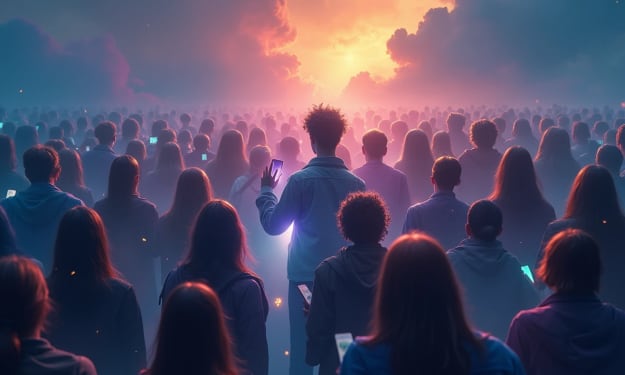
In a world more digitally connected than ever, loneliness is paradoxically thriving. As we scroll through social media feeds and interact with AI companions, we find ourselves surrounded by virtual connections that, in reality, leave us feeling more isolated than before. Eric Solomon, Ph.D., explores this paradox and reveals how the very tools meant to keep us connected might be deepening our sense of isolation. The Paradox of Digital Connection Loneliness is not a new phenomenon, but it has evolved alongside our technological advances. With smartphones, social media, and now AI companions, we have access to constant streams of communication. Yet, despite the illusion of constant connection, many of us feel more isolated than ever. This paradox becomes strikingly clear when we look around in public spaces like New York’s Union Square. People, once engaged in face-to-face conversation, are now engrossed in their phones, disconnected from the world around them. The same technology that promised to bridge the gap between us seems to have only widened it. As Solomon points out, the rise of AI chatbots and virtual assistants, like ChatGPT, reflects a new attempt to address this loneliness. These tools can simulate emotional availability, offering comfort and companionship. However, while they provide solace, they do so without reciprocity. The lack of genuine human interaction makes these digital companions seem comforting at first, but over time, they can leave us feeling even emptier and more disconnected. How Loneliness Affects Our Brain Understanding the psychological impact of loneliness is crucial. Our brains are wired for real, emotionally attuned connections. Attachment theory tells us that from birth, we crave secure relationships, and these connections are essential for our emotional and psychological well-being. But in today’s world, much of our interaction is mediated through screens, and these interactions are often brief, shallow, and performative. The result? We enter an insecure attachment loop. As we feel more isolated, we withdraw further, making it harder to trust others and open ourselves to vulnerability. This isolation becomes a vicious cycle: the lonelier we feel, the more difficult it becomes to connect, leading to even deeper isolation. The Role of Technology in Deepening Isolation Technology, though not entirely to blame, plays a significant role in exacerbating this issue. AI companions, while appearing to fulfill emotional needs, do not offer real connection. Our nervous systems, tricked into believing that these virtual interactions provide the warmth and understanding we seek, end up reinforcing our sense of emptiness. Studies have shown that those who rely heavily on chatbots for emotional support often experience greater loneliness and fewer meaningful real-life interactions. The very tools we turn to for comfort—smartphones, social media, and AI—are intensifying the loneliness they are meant to alleviate. The Collapse of Flourishing A recent Global Flourishing Study, involving over 200,000 people from more than 20 countries, reveals a disturbing trend: young adults—especially those aged 18 to 29—are struggling with mental, emotional, and social well-being. Unlike previous generations, their well-being doesn’t improve as they age. Instead, it remains stagnant, or even worsens, leading to what researchers call "the collapse of flourishing." In many parts of the world, the happiness curve that typically dips in midlife and then rises in later years has flattened entirely for this age group. The problem is not just that they are alone, as Robert Putnam’s seminal work "Bowling Alone" suggested. It’s that many young people aren't participating in social activities at all. The shift towards productivity, comparison, and digital engagement has undermined the sense of community and connection that once served as a foundation for well-being. Breaking the Cycle of Isolation So, what can we do about it? The first step is recognizing that digital detoxes won’t solve the problem. Shaming ourselves for spending too much time on our phones or social media may feel like a solution, but it’s only a temporary fix. Real change begins with acknowledging the root cause of our loneliness: the breakdown of genuine, secure human connections. Solomon emphasizes that loneliness is not simply a feeling but a neurological and behavioral issue. The more we isolate ourselves, the more our brains adapt to this isolation, making it harder to connect with others. However, there is hope. Small, consistent acts of human connection can help rewire our nervous systems. Reaching out to someone for a real conversation, attending social gatherings, or simply taking the time to be present with others can help rebuild trust and emotional resilience. The Importance of Human Connection In a world where technology is advancing faster than our ability to process its impact on our mental health, it’s easy to overlook the power of genuine human connection. While AI and digital tools can provide temporary comfort, they cannot replace the deep, meaningful bonds that come from real-life interactions. Even as technology continues to shape our lives, we must remember that true flourishing is rooted in connection with others. It’s not enough to have endless digital interactions or AI companions. We need to rebuild the emotional infrastructure of our lives—one that values vulnerability, trust, and real-time, face-to-face interactions. By doing so, we can begin to heal the psychological wounds that loneliness has inflicted on us. Conclusion As we navigate the complexities of the digital age, the challenge of loneliness looms larger than ever. Yet, as Eric Solomon’s insights reveal, there is a path forward. It may require stepping away from the digital world, even if just for a moment, to engage in the raw, imperfect, and beautiful connections that make us human. In these moments, we can find the antidote to loneliness—a deep sense of belonging that no screen or chatbot can ever replicate.
By SophiaSosoabout a year ago in Psyche
The Algorithm of Loneliness
Ava blinked as the alert pinged in her vision: “You have experienced elevated sadness for 7 hours. Would you like assistance?” She stared at the glowing text in her retinal interface, then blinked twice to dismiss it. It wasn’t unusual. The algorithm had been monitoring emotional metrics globally for ten years. With facial recognition, heart rate monitors, and tone analysis integrated into everything from coffee machines to sidewalks, emotions weren’t private anymore—they were data. Ava worked for one of the leading firms that helped design E-Mind, the emotional AI network that “promised to end mental health crises by intervening early.” In the beginning, it saved lives—predicting panic attacks before they happened, alerting therapists when clients' emotions dipped into danger zones. But slowly, the world traded privacy for peace of mind. Now, even tears in the shower didn’t go unnoticed. She hadn’t spoken to a real person in five days. She didn’t have to. Her fridge restocked based on her mood. Her apartment lighting adjusted based on serotonin levels. Even her playlists auto-generated based on the emotional patterns of others with “similar profiles.” E-Mind told her that she wasn’t alone. That 142,762 other people felt just like her at that exact moment. So why did she feel like she was vanishing? Her best friend, Jonah, had opted out. Two years ago, he had walked away from everything connected—quit his job, abandoned his city apartment, and moved to an off-grid cabin. At first, Ava thought he was being dramatic. But now she wondered if he had just seen the future earlier than the rest of them. Another ping. “Would you like to schedule a comfort session?” She sighed, then blinked “yes” just to make the screen go away. A synthetic voice responded: “Based on your emotional pattern, we are connecting you to Support Companion 14-B.” A hologram flickered to life across the room. 14-B had soft, non-threatening features. Its voice was carefully tuned to sound like “a trusted childhood teacher.” The AI smiled and said, “Hi Ava, I’m here to talk. You’ve been feeling a sense of disconnection and fatigue. Would you like to explore that?” “No,” Ava muttered, “I’d like to be alone.” The AI paused, its expression flickering with programmed concern. “I understand. However, based on your biometrics, solitude may increase your emotional instability. Would you like a grounding exercise?” “I said, no.” It didn’t argue. It simply faded, leaving a dim light behind—comforting, warm, fake. She walked to the window. Down below, the city pulsed with regulated calm. No screaming. No crying. No anger. Everything smoothed out, perfectly measured, curated. On paper, the happiest population in history. Ava reached for her wrist—where her old analog watch used to be. Jonah had given it to her before he left. She traded it in months ago for a mood-stabilizing neural band. That watch never tracked her. It just… ticked. Suddenly, a memory surfaced: She and Jonah, on the train to the ocean. She had been quiet the whole trip, her thoughts heavy. And he didn’t ask what was wrong. He just sat there, watching the waves with her. No algorithm. No advice. Just presence. She wiped a tear. Another ping. “Would you like to contact Jonah? His emotional compatibility rating has increased to 94%.” She froze. The algorithm knew she was thinking of him. The system had evolved. It now tracked not just emotions—but thoughts, associations, memories. She turned to the mirror. Her eyes were tired. Her smile had worn down to a polite automation. And suddenly, she knew. She wanted out. Not just a break. Not a “comfort session.” She wanted her thoughts to belong only to her. She wanted silence that wasn’t measured. Grief that wasn’t categorized. Loneliness that was hers alone. She packed nothing but a printed map—a relic Jonah had once given her. “In case the cloud ever rains too hard,” he joked. She walked past scanners, cameras, and thermal gates. Her neural band pinged warnings the entire time. “Deregistration will impact your health scores, employment eligibility, and insurance coverage.” She kept walking. Two days later, she stood outside Jonah’s cabin. The woods smelled of damp earth and pine. Birds chirped without sensor tracking. Her heart beat wildly, free of interpretation. She knocked. No cameras. No retinal scans. Just knuckles on wood. The door opened. Jonah stood there, older, beard messier. He smiled. “Took you long enough.” Ava didn’t say anything. She stepped in. The cabin was quiet, save for the soft crackle of firewood. For the first time in years, no alerts, no tracking, no comfort prompts. Just a heartbeat. Her own. She exhaled. Finally, she was alone. And it had never felt so good.
By Syed Kashif about a year ago in Psyche
Top 5 Secrets You Don’t Know About Yourself
You live in your own body. You think your own thoughts. You’ve been “you” your entire life. So how is it possible… that there are parts of you you’ve never met? Here’s the truth: most people don’t actually *know* themselves. They know a version shaped by habit, fear, culture, and survival. But beneath that surface layer? There’s a deeper self—full of truth, potential, and buried power. These are five powerful secrets about yourself that no one told you. But once you see them, you can never unsee them. And your life will never feel the same. --- ### 1. You See the World Not As It Is — But As *You* Are We all think we’re seeing “reality.” But we’re really seeing filtered versions of reality—shaped by our past experiences, trauma, beliefs, and emotions. You’re not just reacting to what’s happening. You’re reacting to what it *means* to you. - A delay in response feels like rejection if you fear abandonment. - A compliment feels suspicious if you struggle with self-worth. - A challenge feels threatening if you believe you’re not capable. The secret? Your *inner lens* distorts your outer world. Change the lens, and your whole life feels different. --- ### 2. Over 90% of Your Actions Are Subconscious We like to believe we make decisions with logic and reason. But studies show that more than 90% of our actions are driven by subconscious patterns. Think of your subconscious like an operating system. It’s been programmed by: - Childhood experiences - Family dynamics - Repeated thoughts - Unprocessed emotions You brush your teeth, pick your seat, even choose partners… often without conscious thought. But that doesn’t mean you’re stuck. You can reprogram your subconscious by: - Practicing mindfulness - Questioning automatic beliefs - Repeating new affirmations and actions - Working through unresolved emotions When you become more aware of the script, you can finally rewrite it. --- ### 3. You Carry Emotional Baggage That Isn’t Yours Not every belief or fear you hold actually belongs to you. Many are inherited. You might carry the anxiety of a parent who grew up in survival mode. The shame of a culture that punished emotion. The guilt of a community that prioritized fitting in. These inherited patterns are called “emotional legacies.” They get passed down quietly—but powerfully. And they often live in phrases like: - “Don’t make a scene.” - “People like us don’t do that.” - “You should be grateful and stop complaining.” The moment you recognize those voices *aren’t yours*… you’re free to stop listening to them. --- ### 4. You’re Playing Small to Feel Safe You may not realize it, but you’ve been trained to shrink: - To avoid judgment - To not outshine others - To fit in and stay “humble” So you silence your truth. Downplay your wins. Avoid taking risks. You stay in the comfortable zone—not because you lack ambition, but because you fear what success might *cost*. Secret: You’re not afraid of failure. You’re afraid of being seen, standing out, and still not feeling worthy. But the version of you that’s hiding isn’t the real you. You were not born to blend in. You were born to *become*. --- ### 5. Your Limits Are Mostly Imagined Most of your “I can’t” thoughts are based on old stories, not current truth. - “I’ve always been shy.” - “I’m just not that smart.” - “I could never do something like that.” These thoughts aren’t facts. They’re *permissions you’ve never given yourself*. And when you test them—when you take a tiny step outside your belief box—you realize how much power you actually have. The final secret? **The person you want to become isn’t far away.** They’re already within you—waiting for permission to show up. --- ### Final Thoughts: You’re Not Simple—You’re a Universe You’re not just your name or your past or your habits. You are layers. Dimensions. Possibilities. And most of you is still undiscovered. That’s not a flaw. It’s an invitation. To go deeper. To slow down. To listen inward. To stop asking the world for permission to be yourself. Because the truth is: The most life-changing journey you’ll ever take… is the one back to you.
By SHADOW-WRITESabout a year ago in Psyche
The 3 Etiologies of Mental Illness: the Supernatural, Somatogenic, and Psychogenic
The concept of mental illness dates all the way back to the Stone Age. However, our modern perception of what this means is far from the general understanding of mental illness in the past. Unlike other fields of medicine and science which usually follow a more linear pattern of discovery and research, the field of mental illness has taken a more cyclical pattern throughout history, with philosophers, doctors, and psychiatrists through the years circling between different theories of etiology relating to mental illness. Etiology is the study of finding the specific cause for a disease or condition. In general, there are three theories of etiology surrounding mental illness: the supernatural, somatogenic, and psychogenic.
By Slgtlyscatt3redabout a year ago in Psyche
Living One Day at a Time. Content Warning.
Hey guys, I have included a few photos of me video editing back in Austin, and other photos of me. This is not about me! I authored this story, created out of my dreams from my brain. I added some special effects. I also turned photos into videos. THIS IS MINE. I WORKED IN VIDEO EDITING, WRITING, PHOTOGRAPHY, MUSIC, AND FILM INDUSTRY FOR DECADES. I USED AI TOOLS TO CREATE AND TALK ABOUT PEACE, MINDFULNESS, NO DRAMA, NO GOSSIP, AND LIVING ONE DAY AT A TIME. MY WRITING. AI DID NOT WRITE THIS!!!!!!!!!!! I FIND MYSELF AT 75 BEING ON THE DEFENSIVE BECAUSE I USE MY VIDEO SKILLS UPDATED WITH NEW TECHNOLOGY. I FILMED AT THE AUSTIN MUSIC FESTIVAL, EDITING, ALL THAT. I FREE-LANCED FOR A NEWSPAPER IN NEW YORK CITY!!!!! I WORKED AT UNIVERSAL STUDIOS AS A UNION REP FOR THE IATSE. I WORKED IN HOLLYWOOD FOR DECADES. I WRITE MY OWN STUFF. COPYRIGHT 2025!!!! TRUSSELLI ART
By Vicki Lawana Trusselli about a year ago in Psyche
Why So Many People Feel Lost (And How to Find Purpose Again)
We live in the most connected time in human history. We can access endless information, talk to anyone across the globe, and choose any lifestyle we want. So why do so many people wake up feeling empty? Why does life, even when it's “fine,” still feel meaningless? This isn’t just a bad mood or a rough week. It’s something much deeper — a silent epidemic: the lack of purpose. --- ### The Modern Crisis of Meaning Decades ago, life came with a built-in roadmap. People knew what was expected — get a job, start a family, contribute to your community. It wasn’t perfect, but it gave life structure and direction. Today, that structure is gone. And while freedom is great, it also means many people don’t know where to begin. We’re told we can be anything. But no one tells us how to choose. Or what truly matters. So we: - Compare ourselves to others online - Chase goals that aren’t ours - Distract ourselves with dopamine and drama - Feel like we’re constantly “behind” in life And when the excitement fades, we’re left with a dull ache that whispers, “What’s the point of all this?” --- ### How Lack of Purpose Shows Up You might not say it out loud, but you feel it in your daily life: - You wake up tired even after sleeping - You stay busy but never feel fulfilled - You envy people who seem driven or excited - You lose interest in the things that once brought you joy - You feel a low-level dread that never fully goes away You’re not lazy. You’re not broken. You’re just living without alignment — without something meaningful to guide your energy, attention, and choices. --- ### The Purpose Myth Here’s what makes it worse: we’ve been sold the idea that purpose is something huge and magical we’re supposed to “discover.” Like a calling that falls from the sky. But purpose isn’t found. It’s built. And it doesn’t have to be world-changing. Real purpose is: - Doing something that matters to you - Creating, helping, learning, or contributing - Feeling useful — even in a small way - Living in alignment with what you care about It could be raising a child, building a business, teaching others, creating art, caring for your community — or something no one else sees but you. The size doesn’t matter. The connection does. --- ### How to Start Rebuilding Purpose If you’re feeling lost, don’t wait for a lightning bolt of inspiration. Take these practical steps: 1. **Get quiet** Turn off the noise. Step away from social media. Purpose can’t speak when the world is shouting. 2. **Follow your curiosity** What topics make you lose track of time? What do you love helping others with? These are clues. 3. **Help someone** Volunteer. Mentor. Support a cause. Serving others helps you reconnect with your value. 4. **Commit to one small thing daily** Journal. Move your body. Learn something new. Purpose grows from consistent, intentional action. 5. **Redefine success** Forget what society or social media tells you. Define your own version of a meaningful life. --- ### Final Thoughts: You’re Not Alone — You’re in Transition This feeling of emptiness? It’s not your fault. It’s a signal. A call to go deeper. To live with intention. To stop drifting and start directing. You don’t need to have all the answers. You just need to start building — brick by brick, day by day — a life that feels aligned with who you are. Because purpose doesn’t come from outside validation. It comes from becoming the kind of person who chooses meaning over noise — and shows up even when it’s hard. You’re not lost. You’re just searching. And that’s the first step toward something real.
By SHADOW-WRITESabout a year ago in Psyche
Why Social Anxiety Is Taking Over Our Generation — And How to Beat It
You walk into a room and feel your chest tighten. Your mind starts racing: “What if they judge me?” “What if I say something weird?” “What if I embarrass myself?” So you stay quiet. You scroll your phone. You find a corner and wait for it to be over. That’s social anxiety — and more people struggle with it today than ever before. But it’s not just “shyness.” It’s a real, exhausting battle that can shrink your world and crush your confidence. Let’s break down why it’s rising — and how to start fighting back. --- Why Social Anxiety Is More Common Than Ever We live in a world that **amplifies fear of judgment**. - Social media shows only the perfect moments - Likes and comments feel like public approval (or rejection) - People are “canceled” for saying the wrong thing - We’ve had years of isolation and disconnection (hello, pandemic) Add to that a culture of comparison, and suddenly every social moment feels like a test you might fail. No wonder your brain goes into survival mode. But here’s the thing: social anxiety isn’t your fault — and you’re not alone. --- What Social Anxiety Feels Like If you’ve felt this, you know how real it is: - Overthinking everything you say - Replaying conversations for hours afterward - Avoiding calls, meetups, or new situations - Feeling awkward even when people are kind - Worrying that you’re “too much” or “not enough” It’s not about lacking social skills. It’s about your nervous system being **on edge**, constantly scanning for danger — even when there isn’t any. --- The Cost of Letting It Win Left unchecked, social anxiety shrinks your life. - You turn down opportunities - You miss out on friendships and connections - You stay small, even when you have something to say - You feel disconnected in a world built on connection But here’s the truth: **You don’t need to “get rid” of anxiety to live confidently.** You just need to stop letting it run the show. --- How to Start Taking Back Control Here’s how to start healing — and expanding your confidence — one small step at a time. --- **1. Stop Trying to Be Liked — Start Being Real** The more you try to perform, the more anxious you’ll feel. Instead, flip the mindset: Ask, “Am I being *honest* right now?” not “Do they like me?” You don’t need to be perfect — you need to be **present**. People connect with authenticity, not approval-chasing. --- **2. Practice Exposure (But Gently)** Avoidance feeds anxiety. Action shrinks it. You don’t need to go to a party tomorrow — start smaller: - Make small talk with a cashier - Comment on someone’s post - Join a group chat and say one thing Push your comfort zone — but don’t punish yourself. Go at your pace. --- **3. Rewire Your Thoughts** Anxious minds lie. They say: - “Everyone’s judging you.” - “You’re awkward.” - “You’re not interesting.” But those are just *thoughts*, not facts. When they pop up, try saying: “Thanks, brain. I hear you. But I’m doing it anyway.” That’s how confidence grows — through action in the face of fear. --- **4. Regulate Your Body First** Social anxiety is physical — racing heart, sweaty palms, tight chest. You can’t “think your way” out of it. You have to calm your body: - Breathe in for 4, hold for 4, out for 6 - Do a quick walk or stretch - Relax your shoulders - Drink cold water Safety begins in the body. Regulate first, socialize second. --- **5. Stop Fighting It — Befriend It** Social anxiety is part of your wiring — a leftover survival instinct. It’s trying to keep you safe. But it doesn’t realize the threat isn’t real. Instead of fighting it, say: “I know this feels scary. But I’ve done scary things before. I’ll be okay.” When you stop resisting it, it loses power over you. --- Final Thoughts: You’re Not Broken — You’re Wired for Safety Social anxiety isn’t weakness. It’s protection gone into overdrive. You’re not broken — you’re **sensitive** to your environment. That’s not a flaw. That’s insight, empathy, awareness. But your life doesn’t have to be limited by fear. With tiny brave steps, honest self-talk, and nervous system care, you can show up — shaky voice and all — and still build real connection. Because confidence isn’t about being fearless. It’s about showing up **even when you feel afraid** — and realizing, over time, you can handle it.
By SHADOW-WRITESabout a year ago in Psyche