humanity
Mental health is a fundamental right; the future of humanity depends on it.
Why Some People Feel Everything So Deeply (And It’s Not a Flaw)
Some people walk through life and feel... everything. They cry at movie trailers. They get anxious before sending a text. They can sense when someone else is hurting — even if that person is silent. And sometimes, they wonder: “What’s wrong with me? Why can’t I just let things go like everyone else?” Here’s the truth : Nothing is wrong with you. Feeling deeply isn’t a flaw. It’s a trait — one that comes with both power and weight. Here’s why some people feel everything so deeply… and why the world needs them. --- ### (1. You’re Wired With High Emotional Sensitivity) It’s real. Some brains are built differently. You process emotions more thoroughly than most. This means you notice the tiniest shifts — in tone, in energy, in facial expressions. You don’t just hear what someone says. You feel what they *don’t* say. That’s not overthinking. That’s sensitivity — and it’s powerful. --- ### (2. You Carry an Empath’s Heart) You can walk into a room and *feel* the tension. You know when someone is off, even if they smile. You carry other people’s emotions like they’re your own. Yes, it’s exhausting. But it’s also a gift — a quiet superpower most don’t understand. --- ### (3. You Were Probably Labeled “Too Much” Growing Up) “Stop crying.” “Don’t take it so personally.” “You’re too emotional.” Sound familiar? People who feel deeply are often told to shrink their feelings. To toughen up. To numb out. But that only teaches you to bottle emotions — not heal them. Your depth isn’t drama. It’s honesty. --- ### (4. You Reflect More Than Others Do) You don’t just feel things — you *analyze* them. You revisit conversations in your head. You wonder what you could’ve done differently. You feel guilt, even when it’s not yours to carry. This kind of reflection can feel heavy. But it also means you grow faster than most. You learn. You evolve. You rise. --- ### (5. You Have a Strong Sense of Justice and Truth) Deep feelers often react strongly to unfairness. Lies hurt you more. Betrayal cuts deeper. That’s because your soul doesn’t tolerate emotional dishonesty. You want things to be real, raw, and right. You feel conflict not as annoyance — but as actual pain. --- ### (6. You Love Intensely — But Few Can Match That Energy) You don’t do casual. When you love, you love with your entire being. You show up. You remember the small details. You give more than you receive. But here’s the challenge: not everyone loves like you do. And when you don’t get that same energy back, it hurts — deeply. --- ### (7. Your Nervous System Needs More Rest Than Others) Feeling everything also means you burn out faster. Social settings tire you. Loud places drain you. Even joyful moments can be overwhelming. You’re not antisocial. You’re just emotionally full — and your nervous system needs time to catch up. --- ### (8. You Find Beauty in Things Others Miss) A sunset makes you pause. A song lyric makes you cry. A random act of kindness restores your faith in the world. Deep feelers live in high-definition. The world cuts deeper — but it also glows brighter. - - - - - # # # 🌿 Final Thought If you feel everything deeply, you might wonder if you’re broken. You’re not. You’re just built to *notice*. To *care*. To *carry meaning* where others walk right past it. Yes, it’s hard. Yes, it’s heavy. But it’s also rare. And sacred. Don’t harden. Don’t shrink. Learn to protect your heart — but never stop using it. The world doesn’t need less feeling. It needs more people like *you* — honest, raw, and beautifully deep. ( . . . ) And if you’re reading this and nodding quietly to yourself? You already know: your depth is not your weakness. It’s your quiet strength.
By SHADOW-WRITESabout a year ago in Psyche
Sensory Toys and Spaces
As more awareness about neurodiversity becomes available, so too does understanding and acceptance of places and things to accommodate it. As an autistic person, I have watched places grow and develop new programs and services for the neurodivergent community as I have grown up. They were rare to unheard of when I was growing up in rural California. Particularly libraries were pioneers in creating these spaces or allowing check-outs of fidget and sensory toys. But as time progresses and I'm seeing more and more acceptance, I have started to see such spaces pop up in festivals and conventions as well. There will, in these cases, usually be a quiet room filled with sensory toys and/or weighted blankets.
By Minte Staraabout a year ago in Psyche
ADHD Unmasked: What Science Tells Us About the Distracted Mind
Introduction In recent decades, Attention Deficit Hyperactivity Disorder (ADHD) has moved from the periphery of clinical discussions to the forefront of psychological research, media conversations, and social awareness. Once regarded as a childhood issue characterized mainly by hyperactivity, ADHD is now understood as a complex neurodevelopmental condition that affects individuals across the lifespan. Yet, despite its growing recognition, ADHD remains widely misunderstood. This article delves into the psychological and neuroscientific foundations of ADHD, explores how it manifests in everyday life, and addresses common myths and misconceptions.
By Siria De Simoneabout a year ago in Psyche
The Productivity Paradox: Working Less to Achieve More
Introduction In a society that often glorifies hustle culture and equates busyness with success, the notion of working less to achieve more seems counterintuitive. However, a growing body of psychological and neuroscientific research supports what some might call a radical idea: reducing work hours, implementing rest periods, and respecting personal boundaries can actually enhance productivity, creativity, and long-term well-being.
By Siria De Simoneabout a year ago in Psyche
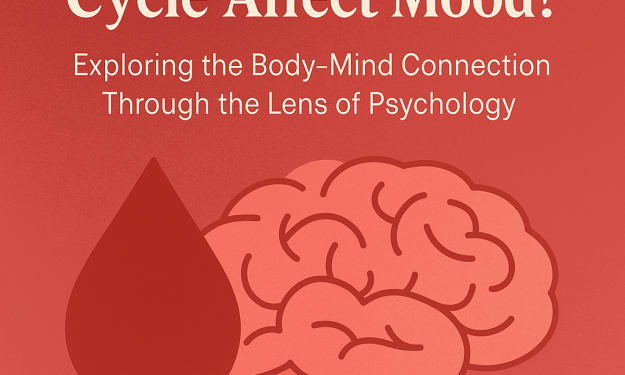
Does the Menstrual Cycle Affect Mood?
Introduction In recent years, the scientific community has increasingly acknowledged the profound connection between physiological processes and psychological wellbeing. One area where this connection is particularly apparent, yet often misunderstood or overlooked, is the relationship between the menstrual cycle and mood. Many women report mood fluctuations that align with different phases of their cycle, ranging from mild irritability to severe emotional distress. Yet, cultural taboos and misinformation continue to cloud our understanding of this important psychophysiological topic.
By Siria De Simoneabout a year ago in Psyche
The Psychology of Bullying: What Drives Aggression and How We Can Break the Cycle
Introduction: Why Understanding Bullying Matters Bullying is more than just a series of isolated incidents of aggression or cruelty. It is a psychological, social, and sometimes systemic phenomenon that has lasting effects on both the victims and the perpetrators. While often associated with childhood and adolescence, bullying can persist into adulthood and manifest in workplace dynamics, online interactions, and social hierarchies.
By Siria De Simoneabout a year ago in Psyche
I Tried to Meditate and Accidentally Summoned a Panic Attack
The Great Meditation Experiment (Or: How I Learned to Stop Worrying and Love the Chaos) Let me set the scene: It’s 3 AM. I’ve just watched a YouTube video titled "10 Minutes to Inner Peace!" featuring a man who looks like he’s never once stressed-eaten an entire pizza while crying over a spreadsheet. Inspired, I sit cross-legged on my floor, close my eyes, and prepare to ascend to a higher plane of existence.
By Just One of Those Thingsabout a year ago in Psyche
Logos and Labels: The Psychology Behind Status Signaling in Different Social Classes
Introduction In modern consumer culture, logos are everywhere: stitched across jackets, emblazoned on handbags, and printed on shoes. But an intriguing paradox emerges upon closer inspection: luxury brands with large, conspicuous logos are often more popular among consumers from lower socioeconomic backgrounds, while the wealthiest individuals tend to favor high-end, logo-free fashion. This pattern is not accidental. It reflects deep psychological and sociocultural dynamics that shape the ways people express identity, seek validation, and signal status.
By Siria De Simoneabout a year ago in Psyche
She Grew Anyway - part 2
Before starting...... Missed Part 1? Click Here So Now Priscilla was one year old left all alone. Her grandmother came forward to take care of her. After her mother's death, her grandfather stopped drinking alcohol, and by that time he almost wasted all his wealth on drinking alcohol and gambling. Both grandparents loved her very much as they saw their daughter in her. When she was nine years old, they celebrated her birthday in very grand manner. Priscilla did not know how her mother look like and she did not have any memory of her. In those days photos also were very uncommon, so she really knew nothing about her mother. She considered her grandparents were her own parents. She was enjoying life happily ignoring her past. She thought she was really blessed having that life.
By ann prasanna gogireddyabout a year ago in Psyche