humanity
Mental health is a fundamental right; the future of humanity depends on it.
The Essence of Faith and the Evolution of Religion
Faith is the anchor of the human spirit, a guiding light that gives purpose and meaning to our existence. Without something to believe in—be it a person, a philosophy, a concept, or a deity—life risks becoming aimless, hollow, and, as Friedrich Nietzsche warned, a descent into the state of the "last man." The last man, as Nietzsche described, is a person who lives without aspiration, content with mere survival, trapped in a cycle of comfort and apathy. This is a dangerous and painful state, one I have personally navigated. From my own journey, I’ve come to believe that faith is not just desirable but essential. It provides a foundation, a sense of direction, and something to entrust our hopes to.
By Whitestone Yongabout a year ago in Psyche
Why Your Soul Craves Silence — Even When You’re Not Sad
Silence doesn’t always mean sadness. Sometimes it means healing. Recharging. Breathing. And if you’ve ever found yourself craving quiet — not because you’re upset, but because noise feels too loud for your soul — you’re not broken. You’re human. Here’s why some people crave silence even when everything seems “fine” on the outside. --- ### (1. Your Nervous System Is Tired) Not tired like “take a nap.” Tired like “I’ve been in fight-or-flight for years.” Your body doesn’t just need rest — it needs *calm.* Silence becomes a way to self-soothe. To finally step out of survival mode. To feel safe in your own skin again. --- ### (2. You’re an Emotional Absorber) You don’t just listen — you *absorb.* People come to you with their problems. And even if you don’t speak, you carry their weight quietly. Silence becomes your detox. A sacred space where other people’s emotions stop leaking into your own. --- ### (3. Noise Feels Like Pressure) Social media. Group chats. “Let’s hang out.” Even when it’s well-meaning, constant connection can feel like pressure. To reply. To be “on.” To perform your best self. Silence removes the performance. It lets you just *be.* Without filters. Without replies. Without expectations. --- ### (4. You Think in Layers — Not Just Surface Thoughts) Some people speak to think. You think before speaking. You feel before reacting. Silence gives your mind the space to process your depth. To untangle emotions. To create meaning out of the chaos. Your soul doesn’t fear silence — it thrives in it. --- ### (5. Your Inner World Is Richer Than Most People’s Outer One) You don’t get bored easily. You daydream. Reflect. Imagine. Conversations are fun — but silence is *nourishing.* It’s where you create. Where you find clarity. Where your truth speaks loudest. --- ### (6. You’ve Been Hurt By Noise Before) Maybe people used their words to hurt you. Mock. Dismiss. Overwhelm. Noise became associated with stress, conflict, or manipulation. So now, silence feels safer. Not because you’re running from people — but because you’re finally running *toward* peace. --- ### (7. Silence Is How You Return To Yourself) In the noise of the world, it’s easy to forget who you are. You play roles. Wear masks. Perform strength. But in the quiet — your real self whispers back. She says, “You’re doing better than you think.” “You don’t have to prove anything.” “You can rest now.” --- ### (8. You’re Sensitive to Energy — And Silence Filters the World) Some people walk into a room and feel nothing. You walk in and *feel everything.* Tension. Vibes. Unspoken thoughts. Silence helps you filter it out. Reclaim your space. And come back to center. --- ### (9. Silence Isn’t Loneliness — It’s Luxury) Most people avoid silence because it forces them to face themselves. But you’ve made peace with solitude. You understand that being alone isn’t the same as being lonely. In fact — it’s often the most honest place to be. --- ### (10. You’re Not Shutting the World Out — You’re Rebuilding Your Inner One) Silence isn’t rejection. It’s renovation. You’re not ignoring people — you’re listening to *yourself.* You’re not cold — you’re conserving your energy. You’re not distant — you’re deeply *present* with your own needs. - - - - - - - - - - - - - - ### 🌿 Final Thought Some people need noise to escape themselves. Others need silence to *return to* themselves. If your soul craves quiet — honor it. Let the world move fast without you. Let the calls go unanswered. Let the silence stretch. Because in those sacred gaps, you’re not falling behind — **You’re finally catching up to yourself.** And that’s not isolation. That’s *alignment.*
By SHADOW-WRITESabout a year ago in Psyche
Persecutory-Onset Psychotic Disorder: Understanding the Fracture Between Mind and Reality
Introduction Persecutory-onset psychotic disorder represents a serious clinical condition, often sudden in its onset, in which the individual develops false and unjustified beliefs of being threatened, watched, or harmed by others. These beliefs—known as persecutory delusions—can emerge in individuals who previously showed no clear signs of psychological distress. The disorder drastically alters the person’s worldview, erodes trust in others, and makes daily functioning extremely difficult, both for the individual and for those close to them.
By Siria De Simoneabout a year ago in Psyche
Empaths vs Overthinkers: Who’s Really Reading the Room?
In a world full of loud voices and fast opinions, there’s a quiet power that often goes unnoticed: the ability to truly read the room. You’ve probably seen someone walk into a tense environment and immediately know something is off — or someone who senses when someone’s sad, even behind a smile.
By DR. Allama iqbalabout a year ago in Psyche
You Weren’t Too Sensitive — They Were Just Too Insensitive
“You’re so sensitive.” “You always take things personally.” “You need to toughen up.” If you’ve heard these words — especially from the people closest to you — this article is for you. Let’s break a truth wide open: You were never too sensitive. You were surrounded by people who were *too careless with your heart.* --- ### (1. You Felt Everything Because You Noticed Everything) Your gift was never a weakness. You noticed tone changes. Body language. Energy shifts in a room. You saw when someone’s smile didn’t reach their eyes. You heard pain in voices others ignored. That wasn’t oversensitivity — it was *empathy.* And empathy is a strength — not a flaw. --- ### (2. They Didn’t Like That You Saw Through Them) Your sensitivity didn’t just notice moods. It noticed lies. Deflection. Manipulation. It picked up on things people tried to hide. And that made them uncomfortable. So instead of taking accountability, they labeled *you* as “dramatic.” But what they called sensitivity was actually *truth they didn’t want to face.* --- ### (3. You Asked For Respect — Not Attention) You weren’t asking for special treatment. You were asking not to be interrupted. Not to be mocked. Not to be dismissed. You wanted space for your feelings — and they treated it like an inconvenience. That’s not on you. That’s on their inability to hold space for real connection. --- ### (4. You Felt Deeply — Because You Loved Deeply) You cried when others didn’t. You cared when others stayed cold. You remembered little things. Gave without keeping score. And when people hurt you — you didn’t just “get over it.” You processed. You felt. You healed. Slowly. And that’s not wrong. That’s human. --- ### (5. They Made You Feel Like You Had to Shrink to Be Accepted) So you stayed quiet. Laughed things off. Stopped sharing how you really felt. Because the world taught you that being “easy to be around” was more important than being *authentically you.* But here’s what they don’t tell you: You weren’t hard to love. You were just surrounded by people who weren’t willing to love deeply. --- ### (6. You’re Not Broken — You’re Brave) It takes *real courage* to keep your heart open after being labeled. To feel everything and still choose love. To walk into rooms knowing you might be misunderstood — and still show up. Your sensitivity isn’t a curse. It’s the light this world desperately needs more of. --- ### (7. One Day, Someone Will Call Your Sensitivity a Gift) They won’t tell you to tone it down. They’ll admire the way you care. They’ll thank you for noticing what others miss. They’ll feel seen by you — and they’ll *see you* in return. Until then, stop shrinking for people who don’t have the emotional range to meet you. You don’t need to get tougher. You just need to get *more protective of your peace.* - - - - - - - - - - - - - - - - - - - - - - - - - - - - - - - - - - - - - - - - - - - - - - - - - - - - - - - ### 🌿 Final Thought Being sensitive in a harsh world is not a weakness — it’s a rebellion. It means your heart still works. It means you haven’t gone numb. It means you choose love over indifference, presence over passivity, truth over silence. (. . .) So next time they say, “You’re too sensitive” — Say this, gently but firmly: **“No. I’m just no longer tolerating emotional laziness.”** Because your feelings were never the problem. Their inability to handle them was.
By SHADOW-WRITESabout a year ago in Psyche
The Sewing Box
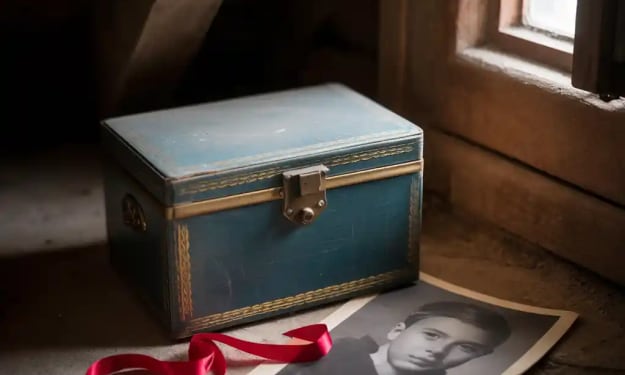
The box had been there for years — untouched, unspoken, and always in the same corner of Nana’s old attic. Covered in lace that had long since yellowed, it waited like a quiet witness. When Nana passed away that winter, I returned home after seven years to settle her affairs — not entirely ready for what I would find. I hadn’t been back since I was sixteen. Back then, I ran away more than I visited. Back then, Nana was already growing forgetful, calling me by my mother’s name, or sometimes by her own sister’s. But she never forgot about the sewing box. She’d always say, “Don’t touch it, Isla. That’s not for you — not yet.” -- The funeral was small. Nana never had many friends left. It was just me, the priest, and the mailwoman who brought her groceries during her final years. The house felt too quiet when I returned — like it had been waiting just for me. I slept in the guest room that night, but I didn’t really sleep. I kept thinking of the sewing box. It wasn’t just nostalgia. Something about it tugged at me — like it had its own heartbeat. -The attic The next morning, I climbed the attic stairs, flashlight in hand. The switch hadn’t worked in years. The air was thick with dust and lavender. Nana always loved lavender. It masked the scent of mothballs and age. I walked past old suitcases, brittle magazines, faded photographs with crinkled edges. And there it was — in the far left corner, exactly where I remembered. The sewing box. It was a faded green, with golden thread-like trim and a broken hinge. A cracked ceramic bird perched on top, its wing chipped. I sat cross-legged in front of it, just like I used to. But this time, I didn’t hesitate. Inside, there were spools of thread, needles, buttons in little paper envelopes. But underneath, tucked beneath a swatch of blue satin, was something else. Letters. Dozens of them, tied with red ribbon, yellowed with age. The top one had my mother’s name — Claire. My heart thumped against my ribs. I opened the first letter. Dear Claire, I know you won’t understand now, but I hope one day you will forgive me. I didn’t have a choice. You were only a baby when he left, and I couldn’t risk it — not again. I had to keep you safe. Nobody believed me back then, but he wasn’t who he said he was. He wasn’t just “James from the library.” He had a darkness I didn’t see — not until it was too late. You have his eyes, you know. I hated them for years, but now… now I wonder if maybe you deserved to know. There’s more in this box than thread, darling. There are truths I never dared speak aloud. — Mother froze. James? My grandfather? I’d never heard anything about him. My mom rarely spoke of her childhood, and when she did, it was always about the happy things — summer at the lake, Sunday cakes, Nana’s lullabies. But not once had she mentioned her father. I read another letter. And then another. Each one was more detailed than the last. Each one filled with fear, and regret, and love twisted in grief. My Nana had been hiding the truth for decades. Not just from my mother — but from the world.
By Arshad khanabout a year ago in Psyche
Reputation Burnout: Why Managing Your Image Is Draining Your Soul. AI-Generated.
In the era of personal branding, authenticity is sacrificed at the altar of perfection. It starts with a profile picture. Not just any photo, but one taken from the right angle, under the right lighting, filtered just enough to say, "I woke up like this," without revealing the hours of staging it actually took. Then comes the bio. Short, witty, confident. You want to seem competent but not boastful. Unique, but not weird. Approachable, yet aspirational.
By Ahmet Kıvanç Demirkıranabout a year ago in Psyche
The Science of a Mother's Kiss
When a mother kisses her child, it may seem like a fleeting, ordinary act. A moment of tenderness that slips by unnoticed in the rhythm of everyday life. But behind that simple gesture is a powerful force. One that science is only now beginning to understand. A mother’s kiss is not just love — it is biology. It is the way nature designed emotional bonding, trust, and safety to begin. This soft touch between mother and child activates deep parts of the brain, calms the body, and builds emotional strength that can last a lifetime. It is a small act that leaves a lifelong imprint. What Happens in the Mother’s Brain When a mother kisses her baby, her brain responds in extraordinary ways. Studies using brain scans show that areas linked to reward, emotion, and bonding become highly active. The nucleus accumbens, which controls pleasure and motivation, lights up. This region releases dopamine, the chemical that creates feelings of joy and satisfaction. The kiss, in essence, rewards the mother emotionally, making her feel good and reinforcing her instinct to care. The amygdala and hypothalamus — brain regions responsible for emotion and survival behaviors — are also activated. These areas heighten the mother’s sense of connection and drive her to protect and nurture. Then comes oxytocin. This powerful hormone floods the body during moments of love and closeness. Often called the “love hormone,” oxytocin increases trust, lowers stress, and strengthens emotional bonds. During a kiss, both the mother and child experience a rise in oxytocin, creating a sense of calm and connection. The Child’s Response: A Foundation of Security Although a baby may not consciously understand a kiss, their body recognizes its power. The soft touch of a mother’s lips to their skin is more than comfort. It signals that they are safe, that they are loved, and that they are not alone. This signal travels directly to the child’s brain and nervous system. It lowers cortisol levels, calming the child’s stress response. It activates the parasympathetic nervous system, which slows the heart rate and supports rest, digestion, and healing. In short, a kiss teaches the child’s body how to relax. These physical responses are essential for healthy brain development. Over time, repeated acts of gentle affection help build the brain’s ability to regulate emotion. The prefrontal cortex — the area responsible for emotional control, empathy, and decision-making — becomes stronger. This allows the child to feel more secure, more balanced, and better able to handle stress later in life. A Language Beyond Words Long before a child can speak or understand language, they understand touch. A kiss becomes their first language of love. It is a message spoken in warmth and skin. It tells the child they are valued and protected. Even without words, the child’s brain stores these messages. The feeling of being soothed, of being held and kissed, creates emotional memory. It lays down patterns the child will carry into future relationships. It helps shape how they connect with others, how they seek comfort, and how they view themselves. Children who receive frequent affectionate contact tend to develop secure attachment. This means they grow up feeling that the world is safe, that people can be trusted, and that love is real. A Timeless Expression of Love and Safety The power of a mother’s kiss is ancient. Long before science could explain it, mothers around the world instinctively knew to hold, kiss, and comfort their babies. This instinct is deeply rooted in human biology. In the animal kingdom, we see similar behaviors. Mammals lick, nuzzle, and care for their young in ways that mirror our own. These actions are not just symbolic. They help regulate temperature, stimulate brain development, and ensure survival. In humans, a kiss serves the same purpose. It is not only emotional. It is essential to healthy growth. The Invisible Legacy of a Kiss As the child grows, they may not remember every kiss. But their body will. Their nervous system, shaped by early experiences, will hold onto the calm, the safety, and the love that each kiss delivered. That kiss becomes part of their emotional foundation. It influences how they respond to stress, how they handle relationships, and how they understand love. It gives them an inner voice that says, “I am loved. I am safe. I matter.” Even in adulthood, the effects remain. Studies show that people who experienced loving touch in childhood are more emotionally balanced, better able to trust others, and more capable of forming meaningful relationships. Love Written in Biology In today’s fast-paced world, it’s easy to overlook the quiet power of a kiss. But science now confirms what every loving parent already knows. A kiss is not just affection. It is a powerful biological signal that builds the emotional foundation for life. It activates the brain, soothes the body, and strengthens the bond between parent and child. It leaves traces in the mind that last far beyond childhood. And it teaches the child something no words ever could: that they are loved, deeply and unconditionally. So the next time you see a mother kiss her child, pause for a moment. In that brief, beautiful touch, a miracle is taking place. A kiss is not just a kiss. It is love, security, and protection — quietly shaping a future that begins with a single touch.
By DigitalAddiabout a year ago in Psyche
Flawed, Fierce, and Full of Glitter: A Story of Reclamation
There’s a special kind of audacity required to reclaim your worth when the world has spent years convincing you you shouldn’t. It’s like walking into a party you weren’t invited to, grabbing the mic, and belting out a power ballad while maintaining unbroken eye contact with everyone who ever doubted you. Which, let’s be honest, is exactly the kind of energy we should all be cultivating.
By Beautiful Disasterpieceabout a year ago in Psyche