humanity
Mental health is a fundamental right; the future of humanity depends on it.
The Loneliness Vending Machine: How We Started Paying for Connection. AI-Generated.
I. A Machine for Love Last month, I rented a friend. Not metaphorically. I paid $29.99 for a one-hour video call with someone who promised to listen to me, validate me, and laugh at my jokes. The app was clean, the interface sleek, and the calendar surprisingly full. My session started with a smiling young woman named Emma—probably not her real name—who said, “So, how was your day?” with the kind of warmth you’d expect from someone you’ve known since high school. Except we hadn’t.
By Ahmet Kıvanç Demirkıranabout a year ago in Psyche
Once A Child . Content Warning.
From the moment we open our eyes—crying in a cold, sterile hospital— the conditions of love begin to blossom. Living and growing in our mother’s bellies only holds a safe place for nearly a year before we were quite literally ejected into chaos we didn’t ask for. From that point on there are conditions to the amount of love and respect we receive. From birth when we are “good babies” in the nursery, the nurses praise us for our cooperation, whereas fussy babies, while still looked at as precious cute creations, are deemed more difficult. Though this example is rather vague and lacks depth into the true meaning of conditional love, it is a pivotal reminder of how we enter and leave this world. Alone.
By The Darkest Sunriseabout a year ago in Psyche
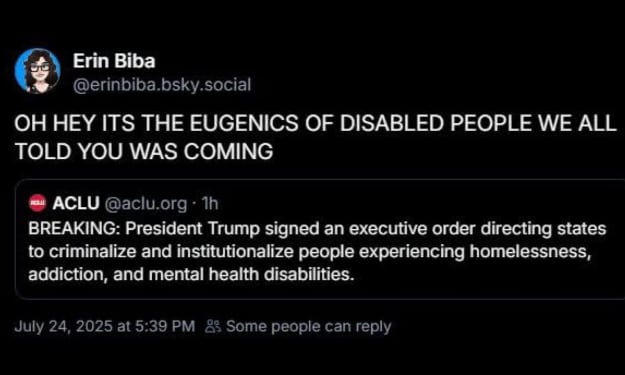
Asylum Warehousing: Again?
The recent discourse surrounding "mental health disabilities" and their societal ramifications carries a chilling echo of a past many hoped had been left behind: the era of asylum warehousing. While framed as a solution to complex social issues, policies that empower the state to institutionalize individuals deemed in need, even those already housed, threaten to unravel decades of progress in mental healthcare and civil liberties. This approach risks re-establishing a system where individual autonomy is sacrificed for perceived public order, potentially leading to widespread human rights abuses and the erosion of fundamental freedoms.
By Sai Marie Johnsonabout a year ago in Psyche
The Day I Stopped Apologizing for Existing
By Asadullah Azimi I used to say “sorry” for everything — and I mean everything. If someone bumped into me on the street, I apologized. If my food order came out wrong, I apologized. If I laughed too loud, cried too easily, took up space in a room, or simply had a different opinion, I apologized — as though existing in my own skin required permission.
By Asadullah Azimi about a year ago in Psyche
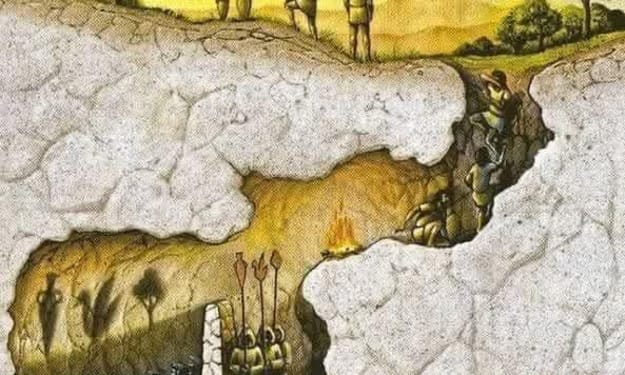
Shadows on the Wall: Escaping the Illusion of Truth
Shadows on the Wall: Escaping the Illusion of Truth Once upon a time, in a forgotten land, there existed a deep, dark cave hidden beneath the earth. Inside this cave, a group of people had been imprisoned since birth. They had never seen the light of day. Chained by their legs and necks, they could not move or turn their heads. All they could see was the rough, blank wall in front of them.
By Furqan Elahiabout a year ago in Psyche
“He Told Me I Was Too Broken to Be Loved—So I Made It My Mission to Prove Him Wrong”
I remember the exact moment the words left his mouth. We were standing in the living room of the apartment we had shared for nearly two years. It was supposed to be just another fight — one of many that week — but this time, he didn’t hold back. He looked me dead in the eyes, as if what he was about to say would somehow free him of responsibility. “You’re too broken to be loved,” he said. “And honestly, I’m tired of trying to fix you.” Time stopped. My ears rang. My breath caught in my throat. Too broken to be loved. He didn’t yell it. He didn’t even say it with malice. He said it like it was a fact, like telling someone the sky is blue or that winter follows fall. Like he was doing me a favor by finally admitting what he “knew” all along. What he didn’t know is that those words would stay with me—not to haunt me, but to drive me. The Girl Who Survived Long before I met him, life had taught me how to survive. I was raised in a house where silence was louder than screams and love had conditions. My father left when I was eight. My mother battled addiction and depression, often leaving me to parent myself. I learned early how to stay small, unnoticed, and how to fake a smile so adults wouldn't ask too many questions. By the time I turned 18, I’d been through more than most people twice my age. I wore my trauma like invisible armor—never asking for help, always pretending I was fine. But the cracks were there. You just had to look closely. He did. When I met him, he made me believe I could finally take that armor off. He told me I was strong, mysterious, and deep. He said he saw light in me. And I wanted so badly to be seen that I let myself believe he was the one person who could handle my chaos. In the beginning, he was gentle. Patient. Kind. He asked questions no one had ever asked before. He held me during panic attacks and whispered promises of forever. I mistook all of it for unconditional love. But love, I’ve learned, doesn’t vanish when things get hard. His did. The Shift Things changed slowly. Subtly. First came the sighs when I cried. Then the eye rolls. Then the subtle jabs masked as jokes. “You’re always so dramatic.” “Why can’t you just be normal?” “If you didn’t have so many issues, maybe I’d be happier.” Eventually, his warmth turned cold. He stopped holding me. He stopped asking how I was. He grew distant, emotionally unavailable—until one night, when I brought up how lonely I felt, he dropped the sentence that would become a turning point in my life. “You’re too broken to be loved.” And with that, he walked out of my life. Hitting Rock Bottom I won’t lie and say I immediately bounced back. I didn’t. For weeks, I replayed that sentence in my mind like a toxic mantra. I started to believe it. Maybe he was right. Maybe I was too broken. Too complicated. Too much. I isolated myself. Skipped work. Ate almost nothing. I’d wake up and wonder how I could fill the hours until sleep would take me away again. My therapist called it situational depression. I called it drowning. But somewhere in that fog, something inside me stirred. It wasn’t rage. It wasn’t revenge. It was something quieter. It was hope. The Rebuild I decided I was going to do the one thing he never believed I could: I was going to love myself. Not the Instagram version of self-love—the bubble baths and positive affirmations. I mean real, painful, deep work. The kind that requires staring your demons in the face and refusing to let them define you. I went back to therapy, this time not just to survive, but to heal. I unpacked my childhood trauma. I journaled. I cried. I screamed. I forgave my parents—not because they deserved it, but because I did. I built a morning routine that grounded me. I filled my apartment with plants and poetry and anything that made me feel alive. I cut out people who only saw my flaws, and surrounded myself with those who saw my fight. Slowly, I stopped seeing myself as someone who needed fixing. I wasn’t broken. I was rebuilding. Love, Unexpected A year later, I met someone new. He wasn’t flashy or full of grand gestures. He was soft-spoken, with kind eyes and a quiet strength. From the beginning, I was honest about my past. I told him about my trauma, my therapy, my journey. I held nothing back. I expected him to flinch. He didn’t. One night, as we sat on my couch eating takeout, I told him about the man who said I was too broken to be loved. He looked at me, shook his head gently, and said, “That man didn’t know what love was.” It hit me then—true love doesn’t fix you. It holds space for all your pieces. It doesn’t run from your pain; it learns how to hold it with you. The Mission Today, I live not to prove that man wrong, but to prove myself right. I am not broken. I never was. I was bruised. Wounded. Hurt by people who didn’t know how to love what they didn’t understand. But I’ve learned that healing isn’t about becoming perfect—it’s about embracing yourself exactly as you are and finding peace in your own skin. If you’ve ever been told you’re too much, too emotional, too complicated—let me tell you something: You are not too broken to be loved. You are human. You are worthy. You are the story someone else needs to hear. And sometimes, the most beautiful love story is the one you write with yourself. This story is personal, but it isn’t just mine. It’s for every person who’s ever been made to feel unlovable. It’s for the survivors, the fighters, the ones still finding their way. You are not alone. And you are never, ever too broken to be loved.
By Soul Draftsabout a year ago in Psyche
Jim Morrison was right, people are strange!
Jim Morrison was right, people are strange! What is it about humans that we seem to “want” to attract drama into our lives?! Feelings of animosity are never enjoyable so why on earth do we so often not only entertain them but willingly attract them into our sphere of being?!
By Feral La Femmeabout a year ago in Psyche
Mentality: The Flight Beyond the Wound
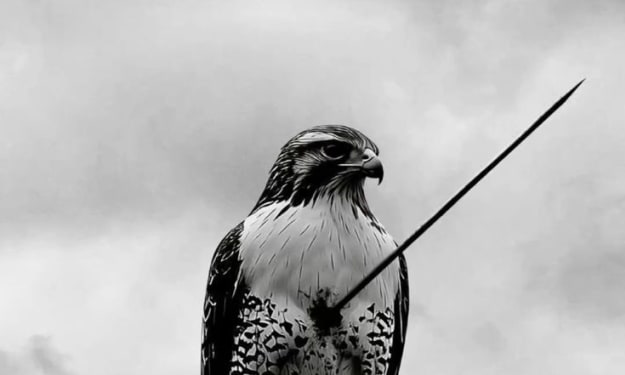
The sky was a quiet battlefield that morning—clouds thick with the weight of storm and silence. Wind rustled with whispers, not yet fierce, but not forgiving either. Upon a single taut wire strung between two crooked poles, a hawk perched—majestic, wounded, and still. An arrow pierced its chest, deep and final. Any creature, lesser in spirit, would have already surrendered. But not the hawk. Not this one. It wasn’t just a bird. It was the embodiment of mentality. --- The Arrow That Didn't Kill The villagers below noticed the hawk days ago. No one knew exactly where the arrow came from, nor who had loosed it. Perhaps a careless hunter. Perhaps a missed target. Either way, the arrow was real—and yet, so was the hawk’s refusal to fall. Every morning, as the sun clawed over the hills, the hawk returned to the same wire, bleeding, breathing, unbroken. Its feathers were ruffled, sure. Its wings bore the tremor of silent screams. But in its eyes was a fire untouched by pain. The children whispered stories. “It's a warrior,” said one. “A ghost,” another offered. But an old man, who once served in war, simply said, “No. It’s mentality.” --- What Does It Mean to Endure? The hawk had a choice: surrender to the wound, or live as if the arrow meant nothing. It chose the latter. Day by day, it adjusted its perch. It adapted its breathing. It moved slower, but with precision. Pain became part of the rhythm. It did not cry out. It did not seek pity. And it certainly did not stop watching the horizon. Some might think the arrow made it weaker. But that arrow, still lodged within, became a mark of unmatched endurance. The hawk didn’t just survive—it defined survival. --- The Hunter Returns One twilight, a man with a bow came near the field. His gaze followed the wire to the bird, and a flicker of guilt rippled across his face. He knew. He had fired that arrow weeks ago, at a blur in the sky, not expecting it to hit. But it had. And yet, that same blur now stared back at him—alive. He raised his bow again. Slowly. Not to shoot, but to honor. He lowered it just as fast. He understood now: he hadn’t just missed the kill—he had struck something stronger than death. Something the arrow couldn't claim. --- Mentality Is Not Just Strength—It's Strategy The hawk didn’t just resist pain. It studied it. It learned to live within it. It didn't waste energy flailing or fighting what could not be undone. Instead, it focused on what remained—its sight, its balance, its breath. Where others would spiral into darkness, the hawk adjusted its wings to catch the wind just enough to float. It chose not to give up airspace. Not to leave its perch. Not to abandon the storm. That’s the lesson of mentality. It’s not the absence of wounds—it’s the ability to soar despite them. --- Flight Beyond the Wound One final day, just as dawn broke golden across the grey, the hawk tilted its head, adjusted its talons, and spread its wings. The wire shook beneath its feet, but it didn’t falter. It leapt. Not high, not far—but with intent. The arrow shifted in its chest, but did not stop the motion. The hawk rose slowly into the sky, where clouds parted and light poured through like revelation. Below, the villagers stood frozen, hands over hearts. Not because a bird flew—but because a miracle endured. It was never about the arrow. It was always about the mind that ignored it. --- The Wire Stays Empty From that day on, the wire remained unclaimed. Birds came and went, but none stayed. The air around it held a kind of reverence—like the ground beneath an ancient battlefield. No blood stained it, but memory did. People began to say: “You either have the hawk’s mentality—or you don’t.” It became a quiet phrase of courage. A whisper parents gave to their children. A phrase written on mirrors, stitched onto uniforms, etched into the hearts of the broken. --- In the End, a Legacy The hawk may have never returned. But it had already won. Its strength wasn’t in its body—it was in its choice. Its refusal to fall. Its ability to rise, not despite pain, but through it. So, whenever you feel the weight of your own arrow—whatever it may be—remember the hawk on the wire. The wound may stay. The pain may never leave. But mentality? That is your flight. That is your weapon. That is what keeps you above the fall.
By The Pen of Farooq about a year ago in Psyche