family
Family can be our support system. Or they can be part of the problem. All about the complicated, loving, and difficult relationship with us and the ones who love us.
Shock Study: Children of Divorced Parents Are at Higher Risk of Having a Stroke
Introduction Divorce can be an emotionally taxing experience for families, but its effects extend far beyond temporary emotional turmoil. A groundbreaking study has revealed that children of divorced parents face a higher risk of developing severe health problems later in life, including an increased likelihood of having a stroke. This discovery underscores the profound impact that early childhood experiences can have on lifelong health. But what exactly ties parental divorce to such a critical health outcome? Let’s dive deeper into this study to understand its findings and implications.
By kavinda ranabahu2 years ago in Psyche
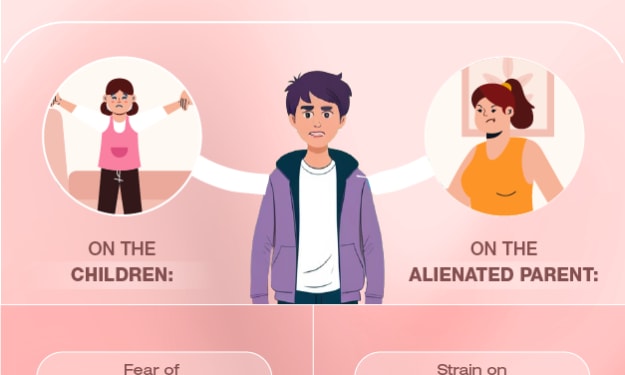
Effects of Parental Alienation Syndrome
Parental alienation is the intentional attempt by one parent to weaken the bond between their child and the other parent. This can significantly impact both the parents and the child and typically occurs during challenging divorces or separations.
By Gaba Telepsychiatry2 years ago in Psyche
Psychology of Kindness: How Small Acts Create Big Changes
Psychology of Kindness: How Small Acts Create Big Changes Kindness can be a strong force that has the potential of changing an individual, communities and even the whole society. In their quest, psychologists have done deep research studies on how kind acts bring along mental well-being and social connection accompanied by happiness. From the neuroscience of empathy basis to the wave effect of doing small acts, research keeps opening up profound impact of showing people kindness. We will go down the rabbit hole of the psychology of kindness and take a closer look at how even such minor acts have the capability to modify the givers and the receivers. It's time for us to walk on the science of kindness so that we can understand how a few more positive actions of kindness create a world that is prettier, intertwined. # Effects of Kindness on Mental Health ## Exploring How Kindness Shapes Mental Health Outcomes Being kind to someone is not only a way to brighten their day but also has a secret ingredient for elevating one's mental well-being. Showing kindness causes your brain to emit such feel-good chemicals as oxytocin and serotonin, and the result is this natural high commonly referred to as the "helper's high." ## How Acts of Kindness Impact Mood and Happiness Levels Ever noticed how opening the door for someone or helping your friend feels like a happiness boost? That's not a coincidence. Small acts of kindness are shown to increase happiness, reduce stress, and even improve overall well-being. Go ahead, spread that positivity! # Neurological Basis of Kindness and Empathy ## Exploring Brain Regions Involved in Kindness Kindness isn't all warm fuzzies-it's rooted in our brain's complex network. It has been observed that parts of the brain, such as the prefrontal cortex, used for decision-making and empathy, light up when we perform acts of kindness. So, next time you are being kind, thank your brain for the assist! ## The Link Between Kindness and Mirror Neurons Mirror, mirror on the wall. or rather, mirror neurons in your brain! These interesting cells fire up not only when you perform an act but also if you watch a person performing an identical action. That is what science says behind empathetic feeling and our capability of being connected via kindness. # Social Benefits of Practicing Kindness ## Acts of Kindness Enhance Relationships It will hold people together with social glue; that is where the warmth feels good, and it makes it feel safe to stay with you. The impact of kindness surely brings positive waves in terms of being close together to make this a better place in the community. Not to mention, who wouldn't like having a good friend? ## Kindness-Driven Positive Social Environment Imagine a world where only kindness reigns supreme. Performing kindness every day makes you part of a kinder and more empathetic society. Whether you open the door for a stranger or listen, your small gestures can make huge changes in the world. # Kindness as Self-care and Stress Relief ## Kindness to Self: Self-compassion and Self-care Don't forget to sprinkle a little kindness upon yourself. It is part of the art of self-being, that of treating one self with as much care, of being kind to one self as one is to others, which can invite self-esteem, resilience, and generally good feelings. Now go on being that best friend for yourself! ## Practicing Kindness to Reduce Stress and Anxiety Stressed out? Worried? Can't think straight? Then, perhaps, what you need is a shot of kindness! Acts of kindness - whether toward others or yourself - will reduce stress and increase feelings of happiness. There is added purpose, of course. Next time you feel overwhelmed, remember that kindness is your superpower.
By Bella berren2 years ago in Psyche
"Trapped by Love? How to Spot Love Addiction and Break Free"
Love addiction may sound like a beautiful concept, but it can be a real problem. It’s an obsessive emotional dependence on love, affection, or relationships that typically creates adverse cycles.” Although love itself is delightful, love addiction can leave people feeling depleted, anxious, or even stuck in toxic patterns. In this post, we'll discuss the signs of love addiction, its consequences for mental health, and actionable ways to take back emotional freedom. Understanding Love Addiction: More Than Just Love Love addiction is distinguishable from love or having fun within a relationship. It’s a psychological reliance on the peak experiences of love and intimacy. People with love addiction can: Focus obsessively on a partner or potential partner. Cannot be complete without a romantic relationship. Be afraid of being alone. Unlike healthy love, which evolves over time and incorporates mutual respect, love addiction almost always that involves idealizing someone or a relationship while neglecting to see red flags. The Impact of Love Addiction on Mental Health Love addiction can all look a bit different, but here are some common signs: Constant Need for Reassurance You seek so much affirmation from your partner fear that they don’t love you enough. Fear of Being Alone You are terrified of being single, even if the relationship is not right. Obsessing Over Love Since you spend too much time fantasizing about a relationship or your loved one. Depression You see a cycle of toxic or codependent relationships but can’t find your way out. Ignoring Your Own Needs You sacrifice your own happiness for the sake of Several factors may lead to love addiction, including: Why Does Love Addiction Happen? Several factors may lead to love addiction, including: Childhood Experiences: If we were raised in an environment where love or approval was conditional, we may be looking for affirmation constantly. Low Self-Value: When you perceive yourself as unlovable, you become dependent on your external validation. Fear of Abandonment: A fear of abandonment makes some people cling to unhealthy relationships. Media and Cultural Influences: Romantic movies and novels depict love as a salve, fueling impossible ideals. Breaking Free from Love Addiction Love addiction is a challenge, but with time, effort, and support, it can be overcome. Here are some steps to take to help you begin your journey: Acknowledge the Problem Have we lost connection to love and the relationships with it? Break the cycle: self-awareness is the key. Focus on Self-Love Focus on building your self-esteem rather than seeking external validation. Be kind to yourself, challenge yourself, and remember to reward yourself. Set Healthy Boundaries The ability to say no and set boundaries that safeguard our emotional health. Those are an associated sentiment to healthy relationships, which should be mutually respectful and balanced. Acknowledge the Problem Have we lost connection to love and the relationships with it? Break the cycle: self-awareness is the key. Focus on Self-Love Focus on building your self-esteem rather than seeking external validation. Be kind to yourself, challenge yourself, and remember to reward yourself. Set Healthy Boundaries The ability to say no and set boundaries that safeguard our emotional health. Those are an associated sentiment to healthy relationships, which should be mutually respectful and balanced. Healthy Love vs. Love Addiction It’s important to differentiate between healthy love and love addiction: Healthy Love: Features respect, trust, and growth. You and your partner are in full support of one another’s independence and happiness. Love Addiction: Based on fear, neediness, and otherwise excessive validation. Instead of focusing on breaking unhealthy habits, we help the individual find meaningful and healthy patterns of connectedness. Final Thoughts: Embrace Emotional Freedom Love addiction can feel consuming, but it’s not forever. Being aware of the signs it creates, the effects it has, and why it occurs empowers you to escape maladaptive processes and regain your emotional freedom. Self-love is the gateway to true love. Focusing on your happiness and well-being inevitably draws good relationships into your life that add to it, rather than If you are having a hard time, please seek help. A brighter, healthier future is attainable, one step at a time.
By Aakanksha Ramawat2 years ago in Psyche
Car Number 121. Content Warning.
Imagine a nice, mild wintery day on a country road. There's some snow on the wide, open fields, but not too much. It's cool as opposed to cold, so a nice, warm jacket will do. There are no leaves on any trees; no shrubs or tall grass. And it's sunny because there are very few clouds in the sky.
By Richard Soulliere2 years ago in Psyche
Fragile Narcissists Are More Dangerous Than The Grandiose.
"A narcissist's criticism is their autobiography" - M. Wakefield. Grandiose or Vulnerable? You can easily identify a grandiose narcissist (GN) after a while, but a fragile/vulnerable narcissist (VN) goes the extra mile to disguise the false-self because their self-worth is so diminished that even the slightest risk of exposure sets them on a tailspin.
By writemindmatters2 years ago in Psyche
Why do people fear the truth?
In a world overflowing with information, the truth stands as a beacon, illuminating the paths we traverse. Yet, paradoxically, many of us find ourselves shying away from it. Why is that? Why does the very essence of truth evoke such trepidation? To understand this, we must delve into the intricate layers of our psyche, recognizing that our fears are often rooted in deeper emotional landscapes. At the heart of this fear lies vulnerability. Embracing the truth requires us to confront our own realities, both the beautiful and the painful. It invites us to strip away the comforting layers of denial we’ve carefully constructed around ourselves. We fear that by acknowledging the truth, we may expose our weaknesses, our failures, and our insecurities. It’s a daunting proposition, one that can leave us feeling naked in the face of judgment. Moreover, the truth can disrupt the delicate balance of our lives. It can shatter the illusions we’ve built, forcing us to reevaluate our relationships, our choices, and even our identities. This upheaval can be unsettling. We often cling to familiar narratives, even if they are laced with falsehoods, because they provide a sense of stability. Change can feel like stepping into a storm, where the winds of uncertainty threaten to sweep us off our feet. Additionally, societal conditioning plays a significant role in our fear of truth. From a young age, we are often taught to prioritize harmony over honesty. We learn that telling a white lie can spare someone’s feelings, or that avoiding uncomfortable conversations is preferable to facing them head-on. This cultural narrative reinforces the idea that truth can be dangerous, leading us to equate honesty with conflict. As we internalize these lessons, we become adept at sidestepping the truth, opting instead for the path of least resistance. Fear of judgment is another powerful factor that keeps us at arm’s length from the truth. In a world where opinions are readily shared and scrutinized, the thought of revealing our authentic selves can be paralyzing. We worry about how others will perceive us, fearing that our truths may not align with societal expectations. This fear can lead us to wear masks, presenting curated versions of ourselves to the world while hiding our true emotions and experiences. However, it is essential to recognize that this fear, while deeply rooted, can also be transformed into a source of strength. Embracing the truth can lead to profound personal growth and empowerment. When we confront our realities, we gain clarity and insight that can guide our decisions. We learn to navigate the complexities of life with resilience, developing a deeper understanding of ourselves and our place in the world. Moreover, when we choose to speak our truths, we not only liberate ourselves but also create space for others to do the same. Our courage can inspire those around us to shed their own fears and embrace their authenticity. In this way, truth becomes a collective journey, one that fosters connection and understanding among us. Ultimately, the fear of truth is an inherent part of the human experience. It is a reflection of our vulnerabilities, our conditioning, and our desire for acceptance. Yet, as we learn to confront and embrace the truth, we discover that it holds the power to transform our lives in ways we never imagined. By stepping into the light of truth, we not only free ourselves but also illuminate the paths for others, creating a ripple effect of authenticity and courage in our communities.
By Laney Matthews2 years ago in Psyche