family
Family can be our support system. Or they can be part of the problem. All about the complicated, loving, and difficult relationship with us and the ones who love us.
**“10 Surprising Facts About Girls’ Psychology That Most People Don’t Know”**. AI-Generated.
When it comes to psychology, the female mind is one of the most fascinating and often misunderstood topics. While every individual is unique, certain psychological patterns and traits tend to be more common among girls and women due to a mix of biological, social, and emotional influences. Whether you're looking to better understand a partner, a friend, or even yourself, these insights into girls’ psychology might just surprise you—and help you connect on a deeper level.
By MD RUMAN HOSSAINabout a year ago in Psyche
Why Do People Like Music?
The Enduring Allure of Music: A Universal Language Music, an art form as ancient as humanity itself, transcends borders, languages, and eras to unite people in a shared experience of joy, sorrow, and connection. From the gentle lullabies soothing infants to the vibrant anthems echoing through stadiums, music weaves itself into the fabric of human existence. Its profound impact stems from a remarkable interplay of science, psychology, culture, and emotion, making it one of the most cherished forms of expression. But what is it about music that captivates us so deeply? The answer lies in its multifaceted ability to engage the mind, stir the heart, and foster unity.
By MAROOF KHANabout a year ago in Psyche
Seven Myths About Mental Illness
People living with mental illness experience stigma everywhere. We are often faced with stigma at home, in the workplace, at school, in hospitals and doctors offices, and in public settings. People living with mental illness struggle with discrimination in a world that is largely still unaccepting of mental illness diagnoses, even today.
By Slgtlyscatt3redabout a year ago in Psyche
Sigmund Freud: The Father of Psychoanalysis and His Impact on Psychology
Sigmund Freud, an Austrian neurologist born in 1856, is widely recognized as one of the most influential and controversial figures in the history of psychology. As the founder of psychoanalysis, Freud revolutionized how we think about the human mind, behavior, and mental health. His theories have had a profound and lasting impact not only on psychology but also on art, literature, and popular culture.
By Bobi Dutchabout a year ago in Psyche
The Hidden Psychology of Connection
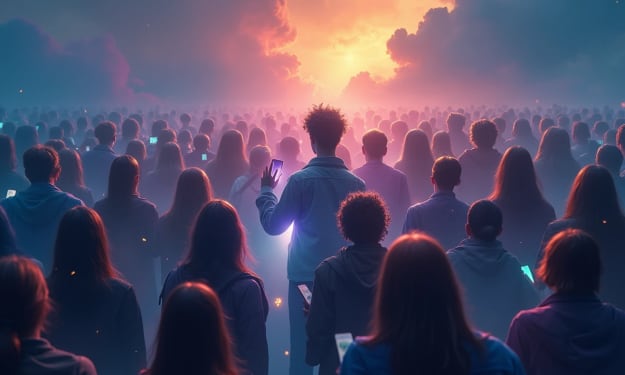
In a world more digitally connected than ever, loneliness is paradoxically thriving. As we scroll through social media feeds and interact with AI companions, we find ourselves surrounded by virtual connections that, in reality, leave us feeling more isolated than before. Eric Solomon, Ph.D., explores this paradox and reveals how the very tools meant to keep us connected might be deepening our sense of isolation. The Paradox of Digital Connection Loneliness is not a new phenomenon, but it has evolved alongside our technological advances. With smartphones, social media, and now AI companions, we have access to constant streams of communication. Yet, despite the illusion of constant connection, many of us feel more isolated than ever. This paradox becomes strikingly clear when we look around in public spaces like New York’s Union Square. People, once engaged in face-to-face conversation, are now engrossed in their phones, disconnected from the world around them. The same technology that promised to bridge the gap between us seems to have only widened it. As Solomon points out, the rise of AI chatbots and virtual assistants, like ChatGPT, reflects a new attempt to address this loneliness. These tools can simulate emotional availability, offering comfort and companionship. However, while they provide solace, they do so without reciprocity. The lack of genuine human interaction makes these digital companions seem comforting at first, but over time, they can leave us feeling even emptier and more disconnected. How Loneliness Affects Our Brain Understanding the psychological impact of loneliness is crucial. Our brains are wired for real, emotionally attuned connections. Attachment theory tells us that from birth, we crave secure relationships, and these connections are essential for our emotional and psychological well-being. But in today’s world, much of our interaction is mediated through screens, and these interactions are often brief, shallow, and performative. The result? We enter an insecure attachment loop. As we feel more isolated, we withdraw further, making it harder to trust others and open ourselves to vulnerability. This isolation becomes a vicious cycle: the lonelier we feel, the more difficult it becomes to connect, leading to even deeper isolation. The Role of Technology in Deepening Isolation Technology, though not entirely to blame, plays a significant role in exacerbating this issue. AI companions, while appearing to fulfill emotional needs, do not offer real connection. Our nervous systems, tricked into believing that these virtual interactions provide the warmth and understanding we seek, end up reinforcing our sense of emptiness. Studies have shown that those who rely heavily on chatbots for emotional support often experience greater loneliness and fewer meaningful real-life interactions. The very tools we turn to for comfort—smartphones, social media, and AI—are intensifying the loneliness they are meant to alleviate. The Collapse of Flourishing A recent Global Flourishing Study, involving over 200,000 people from more than 20 countries, reveals a disturbing trend: young adults—especially those aged 18 to 29—are struggling with mental, emotional, and social well-being. Unlike previous generations, their well-being doesn’t improve as they age. Instead, it remains stagnant, or even worsens, leading to what researchers call "the collapse of flourishing." In many parts of the world, the happiness curve that typically dips in midlife and then rises in later years has flattened entirely for this age group. The problem is not just that they are alone, as Robert Putnam’s seminal work "Bowling Alone" suggested. It’s that many young people aren't participating in social activities at all. The shift towards productivity, comparison, and digital engagement has undermined the sense of community and connection that once served as a foundation for well-being. Breaking the Cycle of Isolation So, what can we do about it? The first step is recognizing that digital detoxes won’t solve the problem. Shaming ourselves for spending too much time on our phones or social media may feel like a solution, but it’s only a temporary fix. Real change begins with acknowledging the root cause of our loneliness: the breakdown of genuine, secure human connections. Solomon emphasizes that loneliness is not simply a feeling but a neurological and behavioral issue. The more we isolate ourselves, the more our brains adapt to this isolation, making it harder to connect with others. However, there is hope. Small, consistent acts of human connection can help rewire our nervous systems. Reaching out to someone for a real conversation, attending social gatherings, or simply taking the time to be present with others can help rebuild trust and emotional resilience. The Importance of Human Connection In a world where technology is advancing faster than our ability to process its impact on our mental health, it’s easy to overlook the power of genuine human connection. While AI and digital tools can provide temporary comfort, they cannot replace the deep, meaningful bonds that come from real-life interactions. Even as technology continues to shape our lives, we must remember that true flourishing is rooted in connection with others. It’s not enough to have endless digital interactions or AI companions. We need to rebuild the emotional infrastructure of our lives—one that values vulnerability, trust, and real-time, face-to-face interactions. By doing so, we can begin to heal the psychological wounds that loneliness has inflicted on us. Conclusion As we navigate the complexities of the digital age, the challenge of loneliness looms larger than ever. Yet, as Eric Solomon’s insights reveal, there is a path forward. It may require stepping away from the digital world, even if just for a moment, to engage in the raw, imperfect, and beautiful connections that make us human. In these moments, we can find the antidote to loneliness—a deep sense of belonging that no screen or chatbot can ever replicate.
By SophiaSosoabout a year ago in Psyche
Learning Without Teaching
Child: Uncle... can I ask you something? Man: Of course, little one. What is it? Child: Why do people lie? Man: Hmm… that’s a big question. Why do you ask? Child: I lied today… and I don’t even know why I did it. Man: Oh? What did you lie about? Child: My teacher asked if I broke the chalk… I said no. But I did. Man: Did you feel bad after that? Child: I did… but also confused. I didn’t know I could even lie. Man: You found out today, didn’t you? Child: Yes. I didn’t even know what lying was until she asked me that question. Man (softly): “Are you lying to me?” she asked, right? Child: Yes! How do you know? Man: Because… that’s how it usually starts. When someone asks a child, "Are you lying?"—that’s when the child learns that he can lie. Child: So… I didn’t mean to lie? Man: No, you just reacted. You were scared. You wanted to be safe. That’s what children do. Child: Then why do grown-ups get angry? Man: Because they forget how it feels to be a child. They expect too much, too soon. Child (quietly): She said I was a bad boy. Man: You’re not bad. You made a mistake. That’s very different. Child: But… what should I do next time? Man: You don’t need to be asked if you’re lying. If you do something wrong, tell the truth. And if someone does something wrong to you, tell someone you trust. Child: Will I get punished? Man: Maybe. But truth is always better than lying. And if someone understands your heart, they’ll help you, not hurt you. Child (after a pause): Uncle… I fought with my best friend today too. Man: Oh… what happened? Child: He pushed me. I pushed him back. Then we both cried. Man (smiling): And now? Child (grinning): We’re playing again. We even shared candy. Man: That’s what makes children special. You don’t hold grudges like adults. Child: What’s a grudgy? Man: Grudge. It means keeping anger in your heart for a long time… sometimes even for years. Child (eyes wide): Years? That’s too long! Man (laughs): I agree. But sadly, some adults do that. Child: That’s silly. I just forget and play again. Man: That’s a gift, child. Never lose that. Child (quietly): Uncle… when my grandpa died, I didn’t cry. I feel bad now. Man: That’s okay. When we are young, we don’t always understand what death means. As we grow, we feel things more deeply. Child: I miss him now… but I didn’t know how to cry back then. Man: Your heart feels it now. That’s what matters. Child: I remember I laughed really loudly once in the mosque. Everyone looked at me weird. Man: Yes, that happens. But you didn’t care, did you? Child (giggles): No! I was just happy. Man: That’s another thing adults forget—how to enjoy the moment. Child: Grown-ups are always thinking about tomorrow. Man: Yes… but you believe food will come, joy will return, the toy will be found again. That hope is rare in adults. Child: But I always lose my toys… Man: And you still ask for new ones. Child: Because I think there will always be more! Man: Exactly. That’s called trust. Children have it. Adults… lose it along the way. Child: Uncle… do you like children? Man: Very much. You remind me what’s important in life. Child: What’s that? Man (smiling): Truth. Forgiveness. Hope. And joy in little things. Child: I like you, Uncle. You don’t shout. Man: That’s because I listen. Child (hugging him): Thank you for telling me I’m not bad. Man (hugging back): You’re not bad. You’re learning. And that’s what makes you beautiful. Child: Uncle… when I grow up, will I be like you? Man: If you keep your heart kind and your mind open… then yes, maybe even better.
By Taj Muhammad about a year ago in Psyche