eating
Dispel judgement, debunk the myths and correct the misconceptions you hold about eating disorders.
Why Most People Feel Lost in Their 20s
Feeling lost in your 20s is more common than people admit. On the surface, this decade is often painted as the “best years of your life”—a time of freedom, discovery, and endless possibilities. But for many, it feels more like confusion, pressure, and uncertainty than excitement. You’re no longer a teenager, but you’re not fully settled into adulthood either. You exist in a strange in-between space where expectations are high, but clarity is low.
By Story Prism6 months ago in Psyche
The Memory You Think You Have Is a Lie
YOUR BRAIN IS THE WORLD'S BEST STORYTELLER 📖 The memory you are most certain about, the one you would swear on your life is accurate down to the last detail, the childhood birthday party or the first kiss or the moment you heard devastating news, is almost certainly wrong in ways that would shock you if you could compare your memory to a recording of what actually happened, because human memory does not function like a video camera recording events faithfully for later playback but rather like a novelist who takes real events and rewrites them each time they are recalled, adding details that were not there, removing details that were, shifting timelines, combining separate events into single memories, and incorporating information learned after the event into the memory of the event itself until the story your brain tells you about your past is a sophisticated fiction that feels indistinguishable from truth because your brain is the author, the editor, and the only reader, and it has no incentive to fact-check its own work 🧠
By The Curious Writer6 months ago in Psyche
The Power of Presence
When “Good Parenting” Became a Feeling In modern parenting conversations, “good” has increasingly come to mean emotionally warm, verbally affirming, and immediately comforting. A good parent is expected to soothe distress quickly, validate feelings consistently, and minimize discomfort whenever possible. These traits are treated as obvious indicators of healthy parenting, reinforced by cultural messaging, therapeutic language, and social reward structures. When a child feels better in the moment, the parenting decision is assumed to have been correct, and when discomfort persists, the decision is often framed as a failure of care rather than a necessary part of development.
By Peter Thwing - Host of the FST Podcast6 months ago in Psyche
He Loved Her Madly… Until He Realized She Only Loved Him When She Needed Him
The quiet pain of being someone’s comfort… but never their choice --- Ethan never believed in half-love. To him, love was absolute. It was presence, sacrifice, patience, and an unspoken promise to stay—even when things became inconvenient. He didn’t fall easily, but when he did, he fell completely. That’s why when he met Lina, everything about her felt like something out of a story he didn’t know he had been waiting to live. She wasn’t loud or overly charming. She didn’t try to impress anyone. In fact, she carried a certain distance in her eyes—as if she had seen too much, felt too deeply, and learned to keep parts of herself hidden. And that’s exactly what pulled him in. --- It started simply. A conversation that lasted longer than expected. A shared laugh that lingered. Messages that turned into late-night talks. The kind where silence felt just as meaningful as words. Lina had a way of opening up slowly—just enough to keep him close, but never enough to fully understand her. At first, Ethan didn’t notice. He only saw what he wanted to see: the moments she chose him. --- “Can I call you?” she would text, usually late at night. And he always said yes. No matter what he was doing. No matter how tired he was. No matter if he had work early the next morning. Because when Lina needed him… he felt important. He felt chosen. --- Their conversations were deep, emotional, sometimes heavy. She would talk about her past. About people who left. About how hard it was for her to trust. About the loneliness she carried even when surrounded by others. Ethan listened. Not just with his ears, but with his whole being. He wanted to be different from the others. He wanted to be the one who stayed. --- “Why are you always there for me?” she once asked. He smiled, even though she couldn’t see it. “Because I care about you.” There was a pause. Then she said softly, “You’re different.” And that was enough to make his heart believe everything. --- Weeks turned into months. Ethan started building his life around her presence. He memorized the way her voice changed when she was sad. The way she avoided certain topics. The exact timing of her messages. But there was something he ignored. Something small at first. Something easy to justify. --- She only reached out when she needed him. --- On her good days, she disappeared. No messages. No calls. No “How are you?” It was as if he didn’t exist. At first, he told himself she was busy. Then he told himself she needed space. Then he told himself… this is just how she is. --- But every time she came back, it was the same pattern. “Hey… I had a rough day.” “Can you talk?” “I feel really alone right now.” And every single time… he was there. Without hesitation. Without question. --- One night, after a long silence from her, Ethan decided to test something. He didn’t text her. He didn’t check in. He waited. A day passed. Then another. Then three. Nothing. --- That’s when the first crack appeared in his heart. Not loud. Not dramatic. Just a quiet realization: If I don’t reach out… she won’t either. --- But still, when her message finally came, everything inside him softened instantly. “Hey… I really need you right now.” And just like that… he forgot the silence. --- That was the beginning of his confusion. Because love, to him, wasn’t supposed to feel like this. It wasn’t supposed to feel one-sided. It wasn’t supposed to make him question his worth. --- One evening, he gathered the courage to ask. “Do you ever think about me… when you don’t need something?” There was a long pause. Longer than usual. “I don’t know how to answer that,” she said. And in that moment, Ethan felt something shift. --- He wasn’t her person. He was her comfort. Her escape. Her emotional safety net. --- And the worst part? She didn’t even realize she was doing it. --- Ethan started noticing everything he had once ignored. How she never asked about his day unless it related to her. How she changed the subject when things got too focused on him. How her affection only appeared when she was hurting. --- It wasn’t that she didn’t care. She just didn’t care the way he did. --- And that realization is one of the most painful things a person can experience. Because it’s not betrayal. It’s not rejection. It’s something quieter. Something harder to explain. --- It’s being almost loved. --- Ethan tried to pull away. Not dramatically. Just… slowly. He stopped replying instantly. He stopped being available all the time. He tried to create space. --- But something strange happened. The more he pulled back… the more she reached out. --- “I feel like you’re distant lately.” “Did I do something wrong?” “I miss you.” --- Those words hit him harder than anything. Because they sounded like love. But they didn’t feel like it. --- He realized something important: She didn’t miss him. She missed what he gave her. --- And that broke him in a way he wasn’t prepared for. --- The final moment came quietly. No fight. No drama. Just clarity. --- She called him again late at night. Crying. Needing comfort. Needing someone to hold her through words. --- And for the first time… Ethan hesitated. --- Not because he didn’t care. But because he finally cared about himself too. --- “I can’t do this anymore,” he said softly. There was silence. “What do you mean?” --- He took a deep breath. “I love you… but only when you need me isn’t enough for me.” --- Another silence. He could almost hear her trying to process it. --- “I didn’t know you felt that way,” she whispered. And that hurt the most. --- Because it meant she never really saw him. --- “I know,” he replied. “That’s the problem.” --- He didn’t wait for a response. He didn’t try to explain more. Because sometimes… the strongest thing you can do is walk away without trying to be understood. --- That night, Ethan felt two things at once: Pain. And peace. --- Pain… because he lost someone he loved deeply. Peace… because he finally stopped losing himself. --- And that’s the hidden truth many people don’t talk about: Sometimes, the hardest relationships to leave… are the ones that were never fully real to begin with. --- Ethan didn’t stop loving her overnight. He still thought about her. Still wondered if she was okay. Still missed the version of her he had created in his mind. --- But slowly… he began to understand something deeper. --- Love is not proven by how much you give. It’s proven by how much is returned. --- And being needed… is not the same as being loved. --- Months later, when his life felt quieter and more stable, Ethan realized something that changed him forever: He didn’t regret loving her. He regretted forgetting to love himself in the process. --- Because real love doesn’t only show up in your lowest moments. It stays. It chooses. It sees you. Even when it doesn’t need you. --- And that’s the kind of love he promised himself he would never settle without again.
By Ahmed aldeabella7 months ago in Psyche
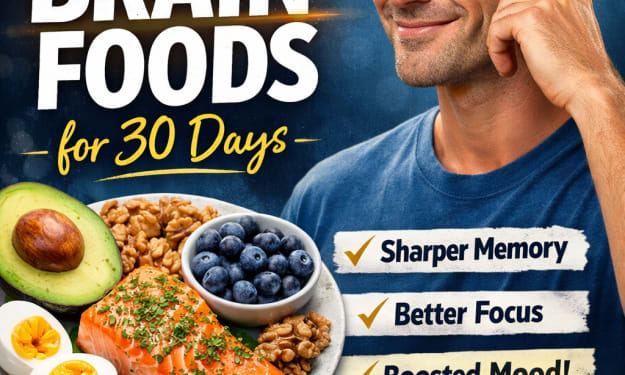
I Ate the Best Brain Foods for 30 Days — Here’s What Happened
We spend years trying to improve our focus, memory, and productivity. Some people buy expensive productivity apps, others try complicated routines. But neuroscientists often point to something much simpler: what we eat. So I decided to run a personal experiment. For 30 days, I only ate foods that researchers commonly describe as “brain foods.” These are foods known to support memory, concentration, and mental clarity. No junk food. No sugary snacks. Just foods that supposedly fuel the brain. I didn’t expect dramatic results. But by the end of the month, I noticed some surprising changes.
By Shahid Zaman7 months ago in Psyche
Before You Knock on My Door, Look Inside Yourself
A story about a psychologist who helps his patients reclaim their dignity. This Might Be the Truth You’ve Been Avoiding What if the problem you’ve been blaming on the world… was never really the world? What if the reason relationships fail, confidence collapses, and life feels unfair isn’t always because people betrayed you, ignored you, or misunderstood you? What if the uncomfortable truth is this: Sometimes the door you keep knocking on isn’t locked… you’re just afraid to look inside yourself first. That realization is painful. Because blaming others is easy. Looking inward requires courage. But one psychologist made it his mission to help people do exactly that. Not by fixing their lives for them. But by helping them rediscover something many had forgotten: Their dignity. --- Chapter 1: The Door with a Strange Sign In a quiet street stood a small therapy clinic. Nothing about it looked extraordinary. Except for one thing. On the door of Dr. Adrian Malik’s office was a small sign that confused almost everyone who saw it. It read: “Before you knock on my door, look inside yourself.” Some patients smiled at it. Others frowned. A few even felt offended. “What does that even mean?” they would mutter. But once they stepped inside the office, they slowly began to understand. Because Dr. Malik wasn’t like other therapists. He didn’t simply listen and nod. He challenged people to confront the truths they had been avoiding. --- Chapter 2: The First Patient One afternoon, a young man named Karim walked into the office. His shoulders were tense. His eyes looked tired. The moment he sat down, frustration poured out of him. “My life is full of unfair people,” he said. “My boss disrespects me. My friends take advantage of me. And every relationship I’ve had ends the same way.” Dr. Malik listened quietly. He didn’t interrupt. When Karim finished speaking, he asked a simple question. “Tell me something,” the doctor said gently. “Why do you keep allowing people to treat you this way?” Karim looked confused. “I don’t allow it,” he replied defensively. “It just happens.” Dr. Malik leaned forward slightly. “No,” he said calmly. “It continues because somewhere, you believe you deserve it.” Silence filled the room. It was the first time anyone had suggested that Karim’s lack of boundaries might be part of the problem. --- Chapter 3: The Hidden Enemy of Dignity Many people believe dignity is something others give us. Respect from colleagues. Love from partners. Recognition from society. But Dr. Malik taught something different. Dignity begins with self-respect. If someone does not value themselves internally, they often tolerate treatment they should never accept. They apologize too often. They remain silent when they should speak. They accept behavior that slowly erodes their confidence. Karim realized something painful during that session. He had spent years trying to please everyone around him. But he had never protected his own dignity. --- Chapter 4: Why People Lose Their Sense of Worth Dr. Malik explained that many people lose their sense of dignity gradually. Not through one dramatic moment. But through repeated small experiences. Criticism during childhood. Toxic relationships. Fear of rejection. Constant comparison with others. Over time, these experiences create an invisible belief: “I am not enough.” And once that belief takes root, people begin making decisions that reinforce it. They accept disrespect. They avoid confrontation. They shrink themselves to make others comfortable. But Dr. Malik’s goal was simple: Help people challenge that belief. --- Chapter 5: The Mirror Exercise One day Dr. Malik gave Karim an unusual assignment. “I want you to stand in front of a mirror every morning,” he said. Karim laughed awkwardly. “That sounds strange.” “Maybe,” the doctor replied. “But tell me—when was the last time you truly looked at yourself?” The exercise was simple. Every morning Karim had to ask himself three questions: 1. Did I respect myself yesterday? 2. Did I allow anyone to cross my boundaries? 3. What can I do today to protect my dignity? At first the exercise felt uncomfortable. But after a few weeks, something began to change. Karim started noticing his patterns. And awareness is always the first step toward transformation. --- Chapter 6: The Power of Boundaries One of the most important lessons Dr. Malik taught his patients was about boundaries. Many people fear boundaries because they worry about losing relationships. But the doctor explained something powerful: The relationships that disappear when you set boundaries are the ones that were harming you. Healthy people respect limits. Toxic people resist them. Karim slowly began applying this lesson. He started speaking up at work. He stopped overcommitting to people who drained his energy. For the first time, he felt something unfamiliar. Control. --- Chapter 7: Another Patient’s Story One evening a woman named Laila entered the clinic. Her voice trembled as she spoke. “I feel invisible,” she said. “My partner never listens to me. My family dismisses my opinions. I feel like I don’t matter.” Dr. Malik asked her a question that surprised her. “When was the last time you listened to yourself?” Laila hesitated. “I don’t understand.” The doctor explained: “If you constantly ignore your own needs to satisfy others, people learn that your voice is optional.” It was a difficult realization. But an important one. Respect from others often begins with self-respect. --- Chapter 8: Reclaiming Personal Dignity Dr. Malik’s approach focused on rebuilding dignity through simple but powerful actions. Here are some of the principles he taught. Speak honestly Silence often protects conflict but damages self-respect. Expressing your thoughts respectfully strengthens your identity. Protect your time Time is a reflection of priorities. When you constantly sacrifice your time for others, you unintentionally signal that your needs are less important. Stop seeking approval Approval feels good. But depending on it makes you vulnerable to manipulation. Confidence grows when you make decisions aligned with your values. Accept imperfection Many people lose dignity because they fear mistakes. But mistakes are not proof of failure. They are proof of growth. --- Chapter 9: The Transformation Months passed. Karim returned to the clinic with a different energy. His posture was straighter. His voice calmer. “My life isn’t perfect,” he said. “But something feels different.” “What changed?” Dr. Malik asked. Karim smiled slightly. “I stopped blaming everyone else… and started taking responsibility for how I allow people to treat me.” The doctor nodded. That was the lesson he hoped every patient would discover. Not guilt. Not self-blame. But awareness. --- Chapter 10: The Meaning Behind the Sign One evening, as Karim prepared to leave the clinic for the last time, he looked again at the sign on the door. “Before you knock on my door, look inside yourself.” This time the words felt different. They weren’t a warning. They were an invitation. An invitation to self-reflection. Because real change doesn’t begin with advice from others. It begins with honest conversations with yourself. --- Final Reflection Many people spend years knocking on doors hoping someone else will fix their lives. A partner. A friend. A therapist. But the most important door you will ever open is the one within yourself. Inside it lives something powerful: Your self-respect. Your dignity. Your ability to choose how the world treats you. And once you reconnect with that inner strength, something incredible happens. You stop begging for respect. And you start living in a way that commands it naturally. --- If this story made you pause and reflect, you’re not alone. ❤️ If you found something meaningful here, leaving a like helps this message reach others who might need it. 💬 I’m curious — what do you think is the most important step in reclaiming personal dignity? Share your thoughts in the comments. 🔔 And if you enjoy thoughtful stories that explore psychology, relationships, and personal growth, follow along. Because sometimes a single idea can open a door inside us we didn’t even realize was locked.
By Ahmed aldeabella7 months ago in Psyche
When Does a Woman Feel Safe?
Not because this is another relationship article… but because what you’re about to read might explain a mystery that ruins countless relationships without anyone noticing. Many men think a woman feels safe when she hears “I love you.” Many women think they should feel safe simply because someone promises loyalty. But here’s the uncomfortable truth: A woman doesn’t feel safe because of words. She feels safe because of patterns. Patterns of behavior. Patterns of respect. Patterns that quietly tell her, “You don’t have to protect your heart around me.” This story begins with someone who didn’t understand that. --- Chapter 1: The Question That Changed Everything Daniel believed he was a good partner. He didn’t cheat. He worked hard. He texted often. Yet something always felt slightly distant between him and Maya. Maya smiled. She laughed. She stayed. But sometimes Daniel noticed a hesitation in her eyes — a small pause before she shared something personal. One evening they sat at a quiet café. Rain tapped softly against the glass windows. Daniel finally asked the question that had been sitting in his chest for months. “Why do I feel like you’re still holding something back from me?” Maya looked down at her coffee. Not angry. Not defensive. Just thoughtful. Then she said something simple, but it hit Daniel like lightning. “I like you, Daniel. But feeling safe with someone… takes more than liking them.” Daniel frowned. “Safe? I’ve never done anything to hurt you.” Maya nodded. “I know. But safety in a relationship isn’t just about avoiding harm. It’s about creating comfort.” That night Daniel went home confused. But that confusion would soon turn into understanding. --- Chapter 2: The Invisible Need Many people misunderstand emotional safety. They think it’s dramatic — something related to betrayal, lies, or big conflicts. But most of the time, emotional safety is built in small moments. Moments like: How someone reacts when you admit a mistake How someone listens when you share a fear How someone treats you when you’re not at your best For women especially, emotional safety is deeply connected to trust and vulnerability. A woman may appear strong, confident, independent. But inside, she is constantly evaluating a quiet question: “Is this someone I can relax around… or someone I must protect myself from?” When the answer becomes relax, that’s when safety begins. --- Chapter 3: What Makes a Woman Feel Safe Daniel started paying attention. Not to what he thought mattered. But to what Maya actually responded to. And slowly he began noticing something powerful. Safety wasn’t about grand gestures. It was about consistency. Here are the lessons he learned. --- 1. A Woman Feels Safe When She Is Truly Heard Many people listen just to reply. But feeling heard means something deeper. When Maya talked about her stressful day, Daniel used to jump straight into solutions. “Just ignore your boss.” “You should quit that job.” “Don’t worry about it.” But one day he tried something different. He simply listened. No interruption. No advice. Just attention. At the end Maya said something surprising: “Thank you for listening.” Daniel realized something important. Sometimes the greatest form of safety is simply being understood. --- 2. Consistency Creates Security Grand romantic gestures are exciting. But consistency is comforting. A woman feels safe when she knows what version of you she will meet tomorrow. Not someone loving today and distant next week. Not someone calm today and explosive tomorrow. Consistency tells the nervous system: “This person is predictable. You can relax.” Daniel began showing up in small reliable ways: Keeping promises Being emotionally present Communicating honestly These quiet actions slowly built trust. --- 3. Emotional Reactions Matter More Than You Think One night Maya told Daniel something vulnerable. She confessed she sometimes felt insecure about her career progress. This was a critical moment. If Daniel dismissed her feelings or joked about them, a wall would appear instantly. Instead he said: “That must feel heavy. I’m glad you told me.” Her shoulders relaxed. Why? Because emotional safety grows when someone respects your feelings instead of minimizing them. --- 4. Respect Is the Foundation of Safety Respect isn’t only about politeness. It’s about how someone treats your boundaries, your opinions, and your individuality. A woman feels safe when she knows: Her voice matters Her boundaries will be honored Her thoughts won’t be mocked Daniel began asking for Maya’s perspective more often. Not out of obligation. But genuine curiosity. That changed everything. --- Chapter 4: What Breaks a Woman’s Sense of Safety Just as safety can be built slowly, it can also be broken quickly. There are patterns that silently damage emotional trust. Here are the most common ones. --- Inconsistency Hot today. Cold tomorrow. This emotional unpredictability makes someone feel unstable inside the relationship. --- Dismissive Communication Statements like: “You’re overreacting.” “It’s not a big deal.” “You’re too sensitive.” These phrases tell someone their feelings are invalid. And when feelings aren’t safe, vulnerability disappears. --- Lack of Emotional Presence You can be physically present but mentally absent. Scrolling your phone during conversations. Ignoring subtle emotional cues. Over time this makes someone feel invisible. --- Broken Promises Trust isn’t broken by one huge lie most of the time. It’s broken by dozens of small broken promises. And once trust weakens, safety disappears with it. --- Chapter 5: The Moment Daniel Finally Understood Months passed. The relationship between Daniel and Maya felt different. Lighter. Warmer. One evening they walked through a quiet park. The sun was setting, painting the sky in orange and soft purple. Maya suddenly said something that Daniel would never forget. “I feel calm around you.” Daniel smiled slightly. “That’s good, right?” She nodded. “Yes. It means I feel safe.” That moment wasn’t loud. No fireworks. No dramatic confession. Just peace. And that’s the real secret. When a woman feels safe, love grows naturally. --- Chapter 6: Practical Advice for Anyone Who Wants to Build Emotional Safety Whether you’re in a relationship now or hope to build one someday, these principles matter. Be emotionally available People feel safe with those who are present — not distant. Listen more than you speak Understanding builds connection. Be consistent Your behavior should match your words. Validate feelings Even if you don’t fully understand them. Respect individuality Love should never feel like control. --- Chapter 7: The Hidden Reward Here’s something many people don’t realize. When a woman feels emotionally safe, she becomes more open, more affectionate, and more supportive. Not because she is obligated. But because she no longer needs to guard her heart. Safety unlocks the most authentic version of love. And that kind of love is rare. --- Final Thought If you remember nothing else from this story, remember this: A woman feels safe not when she hears beautiful words… but when she experiences consistent care. Not perfection. Just sincerity, respect, and presence. Those quiet things create the strongest relationships. --- If this story made you pause and think for a moment, you’re already ahead of most people. ❤️ If something here resonated with you, leave a like so more people can discover it. 💬 Share your thoughts in the comments — when do you think someone truly feels safe in a relationship? 🔔 And if you enjoy thoughtful stories like this, follow along. There are many more ideas worth exploring together. Because sometimes a few minutes of reading can change how we understand the people we care about.
By Ahmed aldeabella7 months ago in Psyche
The Chocolate Addiction We Don’t Talk About: Surviving the Final Days of a Job Sweetly
It does not matter as to whether or not you are a chocolate aficionado, or a sweet tooth seems to be genetically ingrained in you; or you can't stand chocolate, whether or not you are addicted to this popular cocoa indulgence that was once a form of currency (fun fact); the binge sessions (despite healthy magnesium levels) takes over at least a couple of days before ending a long tenure at a job, whether working for yourself on a freelance or contract arrangement, or for others.
By Justine Crowley8 months ago in Psyche
When Reflection Feels Like Accomplishment
There is a subtle experience many people recognize but struggle to name: the feeling of having done something meaningful without having actually changed anything. It often follows long periods of thinking, talking, organizing, or refining ideas. The mind feels clearer. Tension feels reduced. There is a sense of closure or completion. And yet, when examined closely, nothing in the external world has moved. No decision has been enacted. No behavior has shifted. No responsibility has been embodied. What changed was internal orientation, not external reality.
By Peter Thwing - Host of the FST Podcast8 months ago in Psyche
She Chose the Soft Life — And Love Finally Felt Safe
She stopped chasing. Stopped proving. Stopped begging for clarity. And the moment she chose peace over passion… Love stopped feeling like survival. And started feeling like home. --- Chapter 1: The Woman Who Was Tired of Fighting for Love She used to believe love had to be intense. If it wasn’t dramatic, it wasn’t real. If it didn’t hurt a little, it wasn’t deep. If she wasn’t anxious, it wasn’t passionate. So she stayed in: Relationships that felt unstable Connections that kept her guessing Situationships that drained her Conversations that never gave clarity And she told herself it was chemistry. It wasn’t chemistry. It was chaos. --- Chapter 2: The Moment She Realized She Was Exhausted It wasn’t heartbreak that changed her. It was burnout. Burnout from: Over-explaining herself Over-giving emotionally Overthinking messages Overanalyzing silence She was tired of loving like it was a job. Tired of proving she was worthy of effort. Tired of earning basic respect. And one night, she asked herself a question that changed everything: “What if love isn’t supposed to feel this hard?” --- Chapter 3: The Rise of the Soft Life Woman In 2026, something shifted. Women stopped glorifying struggle. They stopped romanticizing emotional labor. They stopped believing that patience meant endurance. The “Soft Life Woman” emerged. Not weak. Not passive. Just intentional. She chose: Peace over adrenaline Stability over chaos Clarity over mystery Self-worth over attachment And that shift changed who she attracted. --- Chapter 4: What Soft Life Really Means in Love Soft life isn’t about luxury. It’s about emotional safety. It’s: Not arguing over basics Not guessing where you stand Not begging for consistency Not shrinking for comfort Soft life in love means your nervous system feels calm. Not triggered. Not hyper-alert. Just… regulated. --- Chapter 5: The Pattern She Broke She used to confuse intensity with compatibility. Butterflies with destiny. Push-pull dynamics with romance. But butterflies are often anxiety. And push-pull is often attachment wounds. She realized something hard: She wasn’t addicted to love. She was addicted to uncertainty. --- Chapter 6: The First Time She Walked Away Early He was charming. Charismatic. Slightly inconsistent. The old version of her would’ve stayed. Would’ve tried harder. Would’ve convinced herself it would improve. But the new version of her noticed the early signs: Delayed communication Avoided clarity Vague future talk And instead of negotiating… She left. Not angrily. Not dramatically. Just calmly. And that calm felt powerful. --- Chapter 7: Why Soft Women Are Often Misunderstood People think soft life women are: High maintenance Unrealistic Expecting perfection But what they’re actually doing is: Refusing to carry the emotional weight alone. They’re not asking for more. They’re asking for mutual effort. And mutual effort feels threatening to people used to minimal investment. --- Chapter 8: The Nervous System Shift Before, love felt like: Racing thoughts. Tight chest. Constant checking. Now, love felt like: Steady breathing. Consistent communication. Predictable presence. And at first, she thought it was boring. Because chaos had been her normal. But calm isn’t boring. It’s healthy. --- Chapter 9: The Man Who Matched Her Softness He didn’t overwhelm her. He didn’t love bomb her. He didn’t future-fake. He was steady. He called when he said he would. He showed up on time. He listened when she spoke. And when she expressed needs… He didn’t mock them. He met them. That was new. --- Chapter 10: The Power of Emotional Boundaries Soft life doesn’t mean tolerating less. It means tolerating nothing that disrupts peace. She stopped: Explaining why consistency matters Convincing someone to communicate Accepting half-effort Boundaries became quiet filters. And only aligned people stayed. --- Chapter 11: Why Soft Life Attracts Secure Partners Secure people don’t chase chaos. They value clarity. They respect calm energy. They appreciate standards. When she stopped chasing intensity… She stopped attracting avoidance. Energy attracts similar energy. And peace attracts peace. --- Chapter 12: The Internal Work Soft life wasn’t just external choices. It was internal healing. She worked on: Regulating emotional triggers Releasing fear of abandonment Building self-trust Sitting with discomfort without reacting She stopped outsourcing validation. And started sourcing stability within herself. --- Chapter 13: The Difference Between Soft and Settling Soft life is not settling. Settling says: “I’ll accept less to avoid being alone.” Soft life says: “I’d rather be alone than unsettled.” It’s confidence disguised as calm. --- Chapter 14: Why Chaos Is No Longer Attractive Drama once felt intoxicating. Now it feels exhausting. Inconsistency once felt exciting. Now it feels immature. Silence once felt mysterious. Now it feels avoidant. Growth changes attraction patterns. And that’s evolution. --- Chapter 15: The Social Media Illusion Online, chaos looks passionate. Grand gestures. Jealous fights. Dramatic reconciliations. But offline? It drains. Soft love doesn’t trend loudly. It builds quietly. And quiet stability is underrated. --- Chapter 16: The Soft Life Standards She now requires: Clear communication Emotional accountability Respect for time Defined intentions Mutual vulnerability Not because she’s demanding. But because she’s done negotiating her worth. --- Chapter 17: The Relationship That Felt Like Peace With him, there were no guessing games. No emotional rollercoasters. No anxiety spikes. They had disagreements. But not power struggles. They had conversations. Not silent treatments. She realized: Love isn’t supposed to activate survival mode. It’s supposed to feel safe. --- Chapter 18: The Soft Life Isn’t Trendy — It’s Transformative It’s not aesthetic. It’s not performative. It’s not curated. It’s intentional. Choosing softness requires strength. Because chaos is easier. Chaos feels familiar. Peace requires healing. --- Chapter 19: The Final Realization She didn’t change to attract him. She changed to protect herself. And the right love met her there. Soft life didn’t make her less powerful. It made her selective. And selectivity creates alignment. --- Final Message You don’t need to be harder to be loved. You don’t need to be colder to be respected. You don’t need to struggle to deserve depth. Choose peace. Choose clarity. Choose softness. And the right love will feel like home — not survival. If this resonated, save it as a reminder. Comment what soft life means to you in relationships. Follow for more modern love psychology insights. We’re building a community that chooses peace over chaos. And that’s powerful.
By Ahmed aldeabella8 months ago in Psyche
She Wasn’t “Too Much” — She Was Just Anxiously Attached
They didn’t leave her because she was needy. They left her because she felt everything deeply — and no one had taught her how to feel safely. She wasn’t “too much.” She was just loving from a nervous system that never felt secure. --- Chapter 1: The Girl Who Loved Intensely She loved quickly. Not recklessly — intentionally. When she cared, she showed up fully. She texted back fast. She remembered small details. She planned thoughtful surprises. She wanted clarity. And somehow… that always became the problem. “You’re overthinking.” “You’re too emotional.” “You need reassurance all the time.” Eventually, she began to believe it. Maybe she was too much. --- Chapter 2: The Modern Dating Trap In 2026, emotional detachment is marketed as confidence. “Don’t double text.” “Match their energy.” “Act unbothered.” “Let them chase.” But what if your natural instinct isn’t detachment? What if you actually want connection? She didn’t want games. She wanted safety. But instead of safety, she kept finding avoidance. --- Chapter 3: The Cycle She Couldn’t Break Every relationship followed the same pattern: 1. Intense beginning 2. Emotional closeness 3. She starts to care deeply 4. He pulls back 5. She panics 6. He distances further Then it ends. She’d tell herself: “Next time I’ll be cooler.” But love isn’t meant to be performed. And performing calm while feeling anxiety is exhausting. --- Chapter 4: What Anxious Attachment Actually Feels Like It’s not obsession. It’s fear of losing connection. It’s: Reading tone changes in texts Noticing delayed replies Feeling shifts in energy Wanting reassurance Craving clarity It’s hyper-awareness. Not weakness. And most people don’t understand that difference. --- Chapter 5: The Origin She didn’t wake up anxious. She learned it. Growing up, love felt unpredictable. Sometimes warm. Sometimes distant. Sometimes overwhelming. So she learned to monitor. To anticipate. To adjust. Love wasn’t consistent. So she became hyper-attuned to change. That pattern followed her into adulthood. --- Chapter 6: Why She Attracted Avoidant Partners Opposites feel magnetic. Her depth attracted men who struggled with depth. Her need for closeness triggered their fear of closeness. Her vulnerability felt intense to someone who avoided vulnerability. And the dance began. Anxious + Avoidant. One pursues. One withdraws. Both hurt. --- Chapter 7: The Night Everything Shifted It wasn’t dramatic. He simply didn’t reply for hours. Her chest tightened. Her thoughts spiraled: “Did I say too much?” “Is he losing interest?” “Should I apologize for something?” Then something new happened. Instead of texting him again… She paused. And asked herself: “What am I actually afraid of right now?” The answer surprised her. Not losing him. Losing stability. --- Chapter 8: The Nervous System Reality Anxious attachment isn’t about drama. It’s about regulation. When connection feels threatened, the body reacts like danger. Heart rate increases. Cortisol spikes. Thoughts race. It’s biological. Not dramatic. And until she understood that… She kept blaming her personality for her nervous system responses. --- Chapter 9: The Lie She Believed “If I were more secure, I wouldn’t care so much.” But caring isn’t insecurity. Caring without boundaries is. She didn’t need less emotion. She needed better emotional safety. --- Chapter 10: Learning Self-Soothing Instead of: Checking his last seen Re-reading conversations Imagining worst-case scenarios She began to: Breathe through the spike Journal the fear Delay reactive texting Separate facts from assumptions She realized: Anxiety shrinks when you don’t feed it. --- Chapter 11: The Hardest Truth She wasn’t anxious because she was broken. She was anxious because she kept choosing emotionally inconsistent people. Secure partners don’t trigger chronic anxiety. They create stability. And stability feels calm. Not addictive. Not chaotic. Calm. --- Chapter 12: The First Secure Connection When she met him, she felt confused. There were no butterflies. No adrenaline rush. No obsession. He replied consistently. He planned ahead. He expressed emotions clearly. And part of her felt bored. Because chaos had become familiar. Peace felt unfamiliar. But unfamiliar doesn’t mean wrong. --- Chapter 13: Rewiring the Pattern Instead of chasing intensity, she chose consistency. Instead of testing him, she communicated directly. Instead of assuming rejection, she asked questions. And something shifted. Her anxiety decreased. Not because she suppressed it. But because she wasn’t constantly triggered. --- Chapter 14: What Healing Looks Like Healing isn’t becoming emotionless. It’s: Communicating needs without panic Asking for reassurance calmly Choosing partners who respond Walking away from inconsistency She didn’t become less emotional. She became more regulated. --- Chapter 15: The Misunderstood Strength Anxiously attached people love deeply. They notice details. They invest fully. They care intensely. That’s not weakness. It’s power — when paired with boundaries. --- Chapter 16: The Difference Between Needy and Self-Aware Needy says: “Don’t leave me.” Self-aware says: “I feel anxious right now. Can we talk?” The difference is ownership. She stopped blaming him for her emotions. But she also stopped accepting inconsistency. Balance. --- Chapter 17: Why Modern Dating Amplifies Anxiety Dating apps create: Constant comparison Unlimited options Delayed replies Mixed signals Ambiguity feeds anxious attachment. Clarity calms it. And most people avoid clarity. Because clarity requires emotional maturity. --- Chapter 18: The Breakthrough Moment One night, she noticed something new. He hadn’t replied yet. And she wasn’t spiraling. She felt… neutral. Because she knew: If he pulls away, I’ll survive. Security begins when abandonment stops feeling fatal. --- Chapter 19: She Was Never “Too Much” She was just asking for: Consistency Communication Emotional presence And the right person doesn’t call that too much. They call it reasonable. --- Final Message If you’ve been told you’re: Too sensitive. Too emotional. Too attached. Pause. Maybe you’re not too much. Maybe you’re just loving from a place that never felt safe. And once you learn to regulate that fear… You won’t need to shrink. You’ll just choose better. If this resonated, save it. Comment your experience with anxious attachment or overthinking in love. Follow for deeper relationship psychology insights. We’re building a space where emotional depth is strength — not weakness.
By Ahmed aldeabella8 months ago in Psyche