depression
It is not just a matter of feeling sad; discover an honest view of the mental, emotional and physical toll of clinical depression.
The Hidden Battle of Anxiety No One Ever Talks About. AI-Generated.
It started like any other Tuesday. I had a full schedule ahead—back-to-back meetings, deadlines, a lunch I had agreed to weeks ago and had been dreading ever since. From the outside, I looked like I had it all under control: perfectly ironed shirt, coffee in hand, a polite smile plastered across my face. But inside, I was breaking. That day, anxiety didn’t just whisper in the background like it usually did—it screamed, clawed, and thundered through my chest until I could no longer ignore it.
By fatih agri2 years ago in Psyche
Perverted sexual desires
Perverted sexual desires Research has shown that these sexual desires are often accompanied by other mental illnesses. About 70% of these patients suffer from depression, 40% from drug addiction, 38% from severe stress, and about 35% from hyperactivity and attention deficit disorder in childhood.
By Rohitha Lanka2 years ago in Psyche
Hyperbaric Oxygen Therapy in Colorado Springs: Benefits and Applications
Colorado Springs has always attracted people with its fresh air and beautiful landscapes. Lately, there’s been a new kind of buzz around oxygen — one that’s not about mountain hikes but about healing inside a pressurized chamber. Hyperbaric Oxygen Therapy is no longer something reserved for deep-sea divers or rare medical emergencies. More locals are discovering its many benefits, from clearer thinking to easing COVID-19 symptoms.
By Keron Rowskey2 years ago in Psyche
The Silent Epidemic of Hyper-Connected Loneliness
How Hyper-Connected Loneliness Is Stealing Our Happiness in the Digital Age Have you ever wondered how we can feel so alone when we’re more connected than ever? Welcome to the paradox of our time: hyper-connected loneliness. We live in an age where sending a message across the globe takes mere seconds. We can watch a sunrise in Paris while lounging on our couches in New York. We can see a stranger’s breakfast in Tokyo without even saying hello to our own neighbor. And yet, loneliness has never felt more profound. Hyper-connected loneliness is a silent epidemic spreading faster than any virus, and it’s time we stop scrolling long enough to notice.
By Bubble Chill Media 2 years ago in Psyche
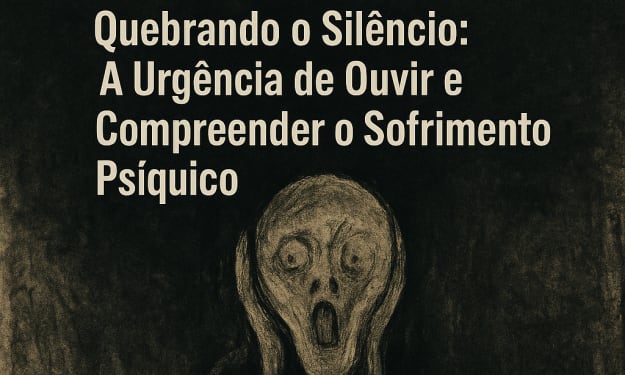
The Scream That No One Hears: Reflections on Suicide and the Invisibility of Psychic Pain in Contemporary Society. Content Warning.
Abstract: This article proposes a reflection on suicide based on statistical data, sociocultural analysis, and the observation of the silent signs emitted by people in psychic suffering. Although the alarming numbers are widely known, society still maintains negligent attitudes toward mental pain. The goal is to discuss how emotional invisibility and the trivialization of depression contribute to the continuation of a phenomenon that, in many cases, could be prevented. The analysis is based on data from the World Health Organization (WHO), studies in social psychology, and media reports about public figures who have revealed their own vulnerabilities. It concludes that there is an urgent need to change paradigms regarding mental health, fostering empathy, active listening, and welcoming attitudes.
By Bruno Bernardo2 years ago in Psyche
Why Overthinking is Ruining Your Happiness (And How to Stop It)
Have you ever found yourself stuck in a loop of thoughts, worrying about every little detail of your day or your future? You think, "What if this goes wrong?" or "What if I fail?" These constant, uncontrollable thoughts can often steal away our peace of mind and our happiness. You might be aware that you’re overthinking, but sometimes, it feels impossible to stop. The truth is, overthinking is a silent destroyer of joy. It affects your mental health, your relationships, and your ability to live in the present. If you find yourself constantly trapped in cycles of overthinking, it’s time to understand how it’s hurting you and what you can do to stop it. What is Overthinking? Overthinking is when you excessively analyze or dwell on your thoughts. It often revolves around worry, doubt, or regret. It's like your mind constantly replays scenarios, looking for a way to make sense of them, but in reality, this just creates more confusion. Instead of helping, overthinking brings unnecessary stress and anxiety into your life. It could be worrying about an event that hasn’t happened yet, like a presentation or a meeting, or it could involve replaying a conversation you had days ago, wondering if you said something wrong. You might even start thinking about every possible scenario and what could go wrong. Why Overthinking is Bad for Your Happiness The problem with overthinking is that it’s never really about solving a problem. It’s more about creating new ones. It’s about imagining worst-case scenarios that might never happen and torturing yourself with hypothetical situations. This constant mental churn keeps you from fully experiencing life in the present moment. Here’s how overthinking ruins your happiness: 1. It Creates Stress When you overthink, your body goes into a stress mode. You might start feeling anxious, tense, or even physically drained. The constant stress takes a toll on your emotional well-being and your ability to enjoy life. 2. It Increases Self-Doubt When you overthink, you often question your decisions, your worth, and your abilities. You might ask yourself, "Did I make the right choice?" or "What if I fail?" This self-doubt can paralyze you from taking action or pursuing your dreams. 3. It Steals Your Time Time spent overthinking is time taken away from actually living. You can waste hours thinking about something that doesn't even matter, or that you can't control. This leads to regret later when you realize how much you could have done in that time. 4. It Ruins Relationships Overthinking doesn’t just affect your own mind. It can spill over into your relationships. You might second-guess everything your friends, family, or partner say or do. You may misinterpret messages or feel insecure about your interactions. This leads to unnecessary conflict and stress in your relationships. Why Do We Overthink? Overthinking is often driven by underlying fears and emotions. Some of the most common reasons people overthink include: Fear of Failure: You’re scared of making the wrong choice or failing in some way. You think that if you overanalyze every decision, you can avoid making a mistake. Desire for Control: Sometimes, we overthink because we want to have complete control over every situation. We feel that if we think enough about something, we can predict the outcome. Past Experiences: If you've experienced a difficult situation in the past, such as a failure or a disappointment, it can cause you to overthink future events out of fear they will turn out the same way. Low Self-Esteem: Overthinking often comes from a lack of confidence. When you don’t trust yourself, you second-guess everything you do. How to Stop Overthinking The good news is that overthinking can be controlled. It takes awareness, effort, and practice, but with time, you can train your mind to stop overthinking and start living more freely. Here are some tips to help you stop overthinking: 1. Recognize When You’re Overthinking The first step to stopping overthinking is being aware of when it’s happening. When you find yourself stuck in a loop of negative thoughts or unnecessary worry, pause and acknowledge it. Ask yourself, "Is this thought helping me, or am I just overanalyzing?" This awareness alone can break the cycle. 2. Focus on the Present Moment Overthinking usually happens when we dwell on the past or worry about the future. One of the best ways to stop overthinking is to focus on what’s happening right now. Practice mindfulness by paying attention to the present moment. Take a deep breath, look around you, and ground yourself in the here and now. 3. Make Quick Decisions One of the best ways to prevent overthinking is to make decisions quickly. If you’re faced with a choice, don’t dwell on it for too long. Trust yourself and make a decision, even if it’s small. Practice taking action rather than letting uncertainty keep you stuck in your thoughts. 4. Set Time Limits for Problem-Solving If you need to think about something, give yourself a set time limit. For example, tell yourself, "I will spend 10 minutes thinking about this issue, and then I’m going to move on." Setting a time limit for thinking will prevent you from spiraling into endless analysis. 5. Practice Self-Compassion Don’t be hard on yourself for overthinking. Everyone does it from time to time. Be kind to yourself and remind yourself that it’s okay to make mistakes. You’re only human, and perfection is not the goal. Learn to accept that sometimes things are out of your control. In Conclusion Overthinking is a trap that steals your happiness, confidence, and peace of mind. But it’s not a trap you have to stay in forever. By recognizing the signs of overthinking and practicing mindfulness, self-compassion, and decisive action, you can free yourself from the cycle. Life is too short to spend it overthinking every moment. Embrace the present, trust your instincts, and let go of unnecessary worry. The more you practice this, the easier it will become, and soon you’ll find that happiness is not something you have to search for—it’s something you create.
By HerGlowJournal2 years ago in Psyche
Shadows of Obsession
The Beginning of Darkness Eva was always unique, a girl whose thoughts teetered on the brink of reality and madness. Born beneath a tempestuous sky, she entered the world silently, her initial cries overshadowed by the roar of thunder. Her parents, weighed down by their own challenges, were unable to offer the affection she yearned for. Tragically, when she was merely an infant, a devastating car accident took their lives, leaving her without family. The state subsequently placed her in a succession of foster homes, each more fleeting than the previous one. Although she yearned for love and security, Eva found comfort solely in her rich imagination—crafting realms filled with characters who cherished her. However, as she matured, her dreams took a darker turn, descending into obsession and paranoia.
By Imon Mridha2 years ago in Psyche
Mental Exhaustion vs Depression: How to Tell Them Apart
In today’s fast-paced world, it’s not uncommon to feel tired, stressed, or overwhelmed. But when that tiredness persists, affects your mood, and starts to interfere with your daily life, it might be more than just a need for rest.
By Richard Bailey2 years ago in Psyche
When Your Mind Stops
When Your Mind Stops and Can’t Function: What’s Really Going On? Have you ever felt like your brain just… stopped? Like no matter how hard you tried, you couldn’t think clearly, remember simple things, or make basic decisions? Maybe your mind felt blank, foggy, or even like it was frozen in place. If so, you’re not alone.
By Gabriela Tone2 years ago in Psyche