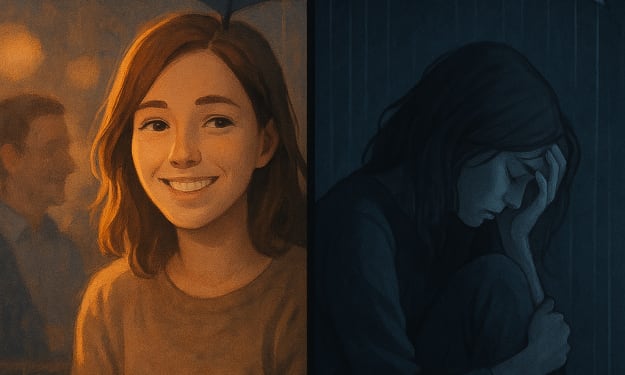
depression
It is not just a matter of feeling sad; discover an honest view of the mental, emotional and physical toll of clinical depression.
The Price of Obsession
In the charming town of Eldridge, where mysteries are hidden beneath the cobblestone pathways, resided a girl named Jessica. At seventeen, she possessed wide, inquisitive eyes that twinkled like the stars overhead. However, despite her vibrant spirit, Jessica was enveloped in sorrow. She had fallen profoundly and impulsively in love with Ethan, a boy whose laughter echoed within her being. Unfortunately, Ethan's affections were directed towards another: a girl named Lily, whose grace and beauty shone like a brilliant sun, casting Jessica into darkness.
By Imon Mridha2 years ago in Psyche
"The Gentle Path to Healing"
It sounds like you've shared a really thoughtful piece about healing and self-care. Here are a few ways to reword it, focusing on slightly different angles: Option 1 (Focus on the Turning Point): > Her presence was a turning point. She didn't judge or try to solve my problems; she simply offered support when I needed it most. Shortly after, I started therapy, which felt daunting at first. Expressing my inner turmoil was a challenge, but with consistent effort, I began to understand myself better. Healing wasn't a quick fix, but reaching out for help was the crucial first step in rediscovering my true self. > > Learning to set boundaries became an act of self-love. I used to say "yes" to everything, fearing I'd disappoint others or appear difficult. I mistakenly believed I was being helpful, but in reality, I was neglecting my own needs. Each time I agreed to something that didn't align with my well-being, I was denying myself the chance to nurture my own happiness. Saying "no" wasn't about becoming cold; it was about valuing my own capacity and limits. Surprisingly, establishing these boundaries didn't disrupt things – instead, it felt like an act of self-care. > > The path to healing isn't a straight line. Some days bring lightness and hope, while others feel heavy with old stresses. I used to think feeling down meant I was failing, that healing was a final destination. But the truth is, healing is a winding, uneven journey with forward steps, backward steps, and sideways moments. The important thing is to keep returning to yourself, to keep making choices that support your healing, even when it feels impossible. Now, when darkness returns, I can meet it with calm and acceptance, knowing it's part of the process. > > In conclusion, remember that whatever you're facing, you are not broken – you are human. It's perfectly okay to step back, rest, or seek support. It takes courage to acknowledge your limits and ask for help. Sometimes, our lowest points can lead to profound personal growth, as they did for me. When I felt like I had hit rock bottom, I was actually beginning a slower, more authentic life, one I can finally be proud of. As you navigate your own journey, remember that the light will return. It comes in moments, big and small, reminding you that you are here, and that you matter. > Option 2 (Focus on Self-Compassion): > The simple presence of a supportive person, who offered understanding without judgment, encouraged me to seek therapy soon after. Initially, therapy felt intimidating, as I struggled to articulate my inner world. However, with time and persistence, I began to gain clarity about my experiences. Healing wasn't instantaneous; it was the act of asking for help that initiated my journey back to my authentic self. > > Learning to establish boundaries became an essential act of self-compassion. My tendency to always say "yes" stemmed from a fear of disappointing others or appearing selfish. I mistakenly believed I was doing the right thing by agreeing to everything, even when it conflicted with my own needs. In reality, I was betraying myself. Each time I overextended myself, I was denying myself the opportunity to nurture my own well-being and happiness. Saying "no" wasn't about becoming unkind; it was about recognizing and honoring my own limits. I was surprised to find that setting boundaries didn't create chaos; instead, it felt like a profound act of self-love. > > The journey of healing is rarely linear. There will be days filled with lightness and hope, and others when old feelings resurface. I used to interpret these low points as setbacks, believing that healing meant reaching a permanent state of well-being. However, healing is a fluid process, characterized by progress that isn't always consistent. There will be forward steps, backward steps, and detours. The crucial element is to continually return to yourself, to keep making choices that support your healing, even when it feels incredibly challenging. Now, when difficult feelings arise, I can approach them with a sense of calm, allowing myself to feel them and remembering that they are a natural part of the journey. > > Ultimately, please remember that whatever you are experiencing, you are not flawed; you are human. It is perfectly acceptable to need to withdraw, take a break, or seek support. It requires courage to acknowledge your limits and ask for help. Often, our most challenging moments can pave the way for significant personal transformation, as they did for me. When I felt like I had lost everything, I was actually beginning to embrace a more intentional and genuine way of living, a life I now value deeply. As you navigate your own path, hold onto the understanding that the light will return. It finds you in moments, both big and small, reminding you of your presence. You are here, and that is significant. > Option 3 (More Concise): > Her non-judgmental support led me to therapy, which was initially scary as I didn't know how to express myself. Over time, I began to understand my inner world. Healing wasn't immediate; asking for help was the start of my journey back to myself. > > Setting boundaries became an act of self-love. My "yes-saying" came from a fear of disappointing others, but it was a betrayal of my own needs. Saying "no" wasn't cold; it was valuing my limits and surprisingly kept things running smoothly. > > Healing isn't linear, with good days and bad days. I used to think feeling low was a failure, but healing is an uneven process. The key is to keep returning to yourself and making choices that aid healing, even when it's hard. Now, I meet darkness with calm, knowing it's part of the journey. > > Remember, you're not broken, just human. Needing breaks or support is normal and takes courage. Breakdowns can lead to growth, as mine did. When I felt I'd lost everything, I began a slower, more real life I'm proud of. Know that the light returns in moments, big and small, reminding you that you are here and that you matter. > Let me know if you'd like me to try rephrasing it in a different way or focusing on a specific aspect!
By Nasir Khan2 years ago in Psyche
You’re Allowed to Outgrow People — Even If You Love Them
We don’t talk enough about the grief that comes from outgrowing people you thought would be in your life forever. It’s a quiet kind of heartbreak. No big fight. No betrayal. Just… distance. Misalignment. A slow unraveling of what used to feel like home. And still, it hurts. But here’s the truth you need to hear today: **Outgrowing people doesn’t make you cold. It makes you honest.** --- ### 1. Growth Doesn’t Always Look Like Togetherness We assume that love means forever. That real friendship means sticking through everything. That loyalty means never letting go. But sometimes, the path forward doesn’t include the people you started with. Not because they’re bad. Not because you’re better. But because your growth is pulling you in different directions. That’s not betrayal. That’s life. Trees shed their leaves to survive the winter. You’re allowed to shed relationships to survive your becoming. --- ### 2. You’re Not Meant to Stay Who You Were There’s a version of you they connected with. Maybe the “yes” version. The people-pleaser. The version that didn’t speak up. The one who played small to make others comfortable. But now you’re changing. You’re setting boundaries. You’re dreaming bigger. You’re healing. And that version of you no longer fits the mold they expect. You don’t need to apologize for evolving. You’re not meant to stay in the same emotional room forever. --- ### 3. Love Can Exist Without Longevity We think if something ends, it failed. But not all endings are failures. Some are just transitions. You can love someone deeply… and still let them go. You can carry beautiful memories… and still choose distance. You can honor the role someone played in your past… and still close the chapter. That’s not bitterness. That’s maturity. It takes strength to walk away from what no longer aligns — especially when you still care. --- ### 4. Just Because They Knew You, Doesn’t Mean They Know You Now Some people will try to keep you in the version of yourself they’re most comfortable with. - “You’ve changed.” - “You’re so different now.” - “You’re not the same person I used to know.” They’ll say it like it’s a bad thing. But what they really mean is: **You’ve grown beyond their expectations — and that makes them uncomfortable.** You are not obligated to stay stagnant to keep someone else at ease. You’re allowed to become unrecognizable to the people who never truly saw you. --- ### 5. Distance Doesn’t Mean Disrespect Sometimes, you don’t need closure. Sometimes, you don’t need a dramatic exit. Sometimes, you just need space — and peace. It’s okay to unfollow quietly. To stop replying. To move in silence. To protect your energy without sending a press release. Boundaries aren’t walls to shut people out. They’re doors to protect your inner peace. --- ### 6. New Chapters Require New Characters You’re entering a new season. One with higher standards. Deeper self-love. Greater clarity. And not everyone is meant to come with you. That doesn’t mean you’re heartless. It means you’re focused. Letting go of someone who no longer aligns with your growth is not cruelty — it’s courage. You are not abandoning them. You are choosing *you* — maybe for the first time. -- -- -- -- -- -- ### Final Thoughts: Let It Hurt, Then Let It Heal Losing people — even quietly, even naturally — still hurts. Let yourself grieve. Let yourself remember. Let yourself feel everything. But when the time comes, release them with love. Not for revenge. Not for pride. But for peace. Because at the end of the day: You are allowed to outgrow people. Even the ones you prayed would stay forever. Even the ones who once saved you. Growth isn’t cruel. It’s sacred. And if the cost of becoming your most whole, healed self is losing who you used to hold close? ** It’s still worth it. **
By SHADOW-WRITES2 years ago in Psyche
Smiling Through the Storm
You wouldn’t know it by looking at me. That’s the strange thing about silent battles—they don’t always leave visible scars. I laughed at the right moments. I replied to messages. I showed up for birthdays. I smiled in photos. I looked okay. Sometimes, I even convinced myself I was.
By BILAL KHAN2 years ago in Psyche
You Weren’t Ready for It — But You Will Rise Again
You weren’t ready for it. The betrayal. The breakup. The loss. The failure. That one thing you never thought would happen — but it did. And now you’re on the floor, gasping for air, wondering: **“How do I come back from this?”** Let me tell you something you might not believe right now: **You will rise.** Not because it’s easy. Not because you’re not hurting. But because there’s still something in you that refuses to stay broken. --- ### 1. Your Rock Bottom Is Not the End It feels final, doesn’t it? Like this is where the story ends. Like the worst thing has happened, and now you’ll never be the same. But what if… that’s the point? What if the person you were wasn’t built for the next chapter — and this pain is the process of becoming someone stronger? Rock bottom isn’t the end. It’s the place where new foundations are laid. It’s where illusions are broken, masks fall off, and you finally meet the real version of yourself. --- ### 2. Feel It — But Don’t Live There You don’t have to pretend you’re okay. Cry. Scream. Break down. Stay in bed if you need to. But here’s the key: **Visit the pain. Don’t unpack and live in it.** Let yourself feel everything — but remember, emotions are **weather**, not a permanent forecast. They pass. And when they do, you’ll still be here — standing. The fact that you’re feeling this much? It means you cared. It means you were all-in. And that’s something to honor, not hide. --- ### 3. Ask Better Questions Pain makes us ask: - “Why me?” - “What did I do to deserve this?” - “Is this my fault?” But those questions won’t set you free. Try this instead: - “What is this trying to teach me?” - “Who can I become through this?” - “What would healing look like for me right now?” Better questions don’t erase the pain — they give it **purpose**. They help you shift from victim to survivor, and eventually, to **creator**. --- ### 4. You’ve Survived Before This isn’t your first storm. It might be the worst — but it’s not the first. Look back. Really look. Remember the moments you thought would break you… but didn’t? The nights you cried silently, and still got up the next day? The times you kept going when you had no idea how? That’s not weakness. That’s **resilience**. And it still lives inside you — even if it’s quiet right now. --- ### 5. You Don’t Need to Have It All Together Healing is not linear. You’ll feel better one day — and shattered the next. You’ll laugh at a joke… then cry at a memory. This doesn’t mean you’re failing. It means you’re human. You don’t need to “be strong” all the time. You just need to keep showing up — exactly as you are. Even in pieces. Even confused. Even exhausted. You are still worthy of healing. You are still worthy of love. You are still enough — especially now. --- ### 6. One Step Is Enough You don’t have to fix everything today. You don’t need a 10-year plan. Sometimes, strength is just: - Brushing your teeth - Drinking water - Answering one message - Getting through the next 10 minutes Don’t underestimate small steps. They’re how mountains are moved — one inch at a time. One step leads to another. And slowly, without realizing it, you’re building momentum, rebuilding identity, reclaiming power. --- ### Final Thoughts: This Is Not Where Your Story Ends I don’t know what you’re facing. But I know this: You are not broken beyond repair. You are not stuck forever. You are not alone. You are in a chapter — not the whole book. And this chapter? It might be painful… but it’s not powerless. Because people who rise from the hardest places? They don’t just survive. **They become unshakable.**
By SHADOW-WRITES2 years ago in Psyche
Reset Your Mind: 10 Daily Habits That Will Transform Your Psychological Health
Introduction In today’s fast-paced, high-pressure world, taking care of our psychological health is just as important as maintaining physical fitness. Often, we pay attention to our bodies — hitting the gym, eating right — but neglect the well-being of our minds. Psychological health affects how we think, feel, act, and handle stress. It influences every decision, relationship, and dream we chase.
By Umar Khattak2 years ago in Psyche
The Hidden Battle: Understanding and Overcoming Inferiority Complex
Introduction Every individual, at some point in life, experiences moments of self-doubt. It’s a natural part of being human. However, when these feelings become constant and deeply rooted, they can give rise to what psychologists call an inferiority complex. This condition goes beyond occasional insecurity, impacting a person’s self-esteem, relationships, and life choices. In this article, we will explore what an inferiority complex is, its causes, how it affects people, and practical strategies for overcoming it.
By Umar Khattak2 years ago in Psyche
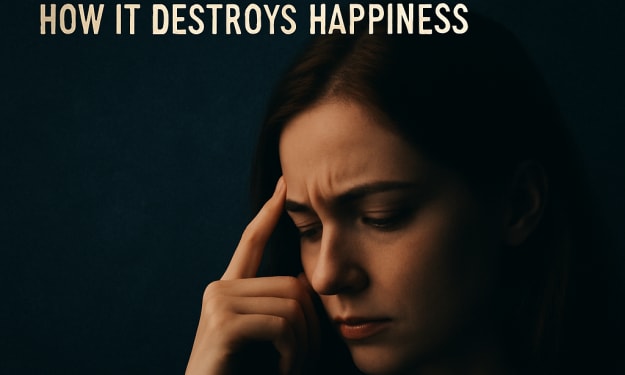
The Dark Side of Overthinking: How It Destroys Happiness
We’ve all been there—lying in bed, staring at the ceiling, replaying that one conversation from earlier, wondering if we said something wrong. Or obsessing over a decision we made, doubting ourselves even when the facts say we’re fine. This is overthinking, a mental habit that quietly creeps into our lives, often disguised as caution or carefulness. But while being thoughtful is good, overthinking is not the same as thinking clearly. It’s a destructive loop that can sabotage our peace, confidence, and most dangerously—our happiness. What Is Overthinking? Overthinking means dwelling excessively on your thoughts, problems, past mistakes, or potential outcomes. Unlike healthy reflection, which involves learning and problem-solving, overthinking traps you in endless loops of “what ifs,” “should haves,” and worst-case scenarios. There are two main types of overthinking: 1. Ruminating – Reliving the past and beating yourself up over what you did or didn’t do. 2. Worrying – Fearing what might happen in the future, often with no solid basis. While both seem harmless on the surface, they can cause real emotional and mental damage if left unchecked. --- How Overthinking Destroys Happiness 1. It Amplifies Stress and Anxiety When you constantly analyze every situation, your brain stays in a state of alertness. You start imagining problems that don’t exist and inflate the importance of small issues. This leads to chronic stress and anxiety, making you feel mentally exhausted even if you haven’t done anything physically demanding. Over time, overthinking conditions your brain to respond to normal situations with panic, fear, and hesitation—robbing you of inner peace. 2. It Traps You in the Past or Future Happiness lives in the present moment. But overthinkers rarely live in the now. They either replay the past, wishing they’d done something differently, or fear the future, assuming the worst. This mental time-travel means you miss out on real joy—whether it's a family dinner, a walk in the park, or a quiet evening. Your body may be present, but your mind is somewhere else. And that’s how happiness slips away unnoticed. 3. It Erodes Self-Confidence Overthinking makes you second-guess yourself constantly. “Did I sound stupid?” “Should I have said that?” “Am I even good enough for this?” These doubts can become a daily internal monologue, slowly killing your self-esteem. When you don’t trust your own decisions, you begin to hesitate, avoid challenges, and even fear success. This creates a life full of missed opportunities and regret. 4. It Paralyzes Decision-Making Ironically, the more you think, the harder it gets to make decisions. Overthinkers analyze every outcome, obsess over potential consequences, and fear making the wrong choice. This leads to decision paralysis, where you do nothing at all. Life is a series of choices. When you’re stuck in limbo, you’re not moving forward—which is the opposite of growth, satisfaction, and happiness. --- The Physical Effects of Overthinking Many people don't realize that overthinking also affects the body. The mind-body connection is powerful, and when your thoughts are in chaos, your body responds: Poor sleep from racing thoughts at night Headaches or muscle tension from mental stress Digestive issues due to anxiety Weakened immune system from chronic cortisol release Happiness isn't just emotional—it's physical too. And overthinking takes a toll on both. --- Why Do We Overthink? There’s no single reason, but several common factors include: Fear of failure or rejection Childhood conditioning (e.g., overly critical environments) Perfectionism Past trauma or unresolved guilt Low self-worth Overthinking is often a misguided attempt to stay safe or avoid mistakes. But instead of protecting us, it isolates us from joy and genuine living. --- How to Break the Overthinking Habit Thankfully, overthinking isn’t permanent. Like any habit, it can be unlearned and replaced with healthier thinking patterns. Here are some effective strategies: 1. Practice Mindfulness Mindfulness means being present—right here, right now. You can train your mind to stay grounded by focusing on your breath, your senses, or what you're doing. Meditation, yoga, or even mindful walking can bring your attention away from stressful thoughts and into the peace of the moment. 2. Set Time Limits for Thinking Give yourself a time limit (e.g., 10 minutes) to reflect on a problem. Once that time is up, take action or let it go. This prevents you from spiraling into endless thought loops. 3. Challenge Negative Thoughts Ask yourself: Is this thought based on facts or fear? Is there a more positive or realistic way to see this? Will this matter a year from now? This helps weaken irrational beliefs and trains your brain to focus on solutions rather than worry. 4. Distract Yourself with Purposeful Activity Sometimes the best way to stop overthinking is to do something else. Engage in a hobby, read a book, go for a walk, or help someone. Shifting your focus gives your mind a break and often brings clarity. 5. Talk to Someone Whether it's a friend or a therapist, talking things out can help organize your thoughts and provide a new perspective. You’re not alone, and sometimes just expressing your worries out loud helps deflate their power. --- Final Thoughts Overthinking may feel like being responsible or careful, but in reality, it’s a silent happiness killer. It magnifies your fears, distorts reality, and keeps you stuck in a cycle of worry and regret. Breaking free starts with awareness. Once you recognize the pattern, you can begin to change it—step by step. You deserve peace, clarity, and joy—not a mind that’s always at war with itself. Let go of the illusion that thinking more always helps. Sometimes, the real wisdom lies in thinking less—and living more.
By Senan Khan2 years ago in Psyche