depression
It is not just a matter of feeling sad; discover an honest view of the mental, emotional and physical toll of clinical depression.
Understanding Emotional Awareness: A Key to Managing Depression
In today’s fast-paced and highly demanding world, mental health has become a topic of increasing concern. Stress, social pressures, and the constant connectivity of modern life can take a toll on our emotional well-being. Among the myriad of psychological challenges that individuals face, depression stands out as one of the most pervasive and debilitating mental health conditions.
By Richard Bailey2 years ago in Psyche
Are Your Attachments Blocking True Soul Connections?
Attachments can feel like invisible strings. They pull you back. They keep you from feeling free. Most people want real soul connections. They want to feel close to others and live from the heart. But attachments often sneak in and block the way. They hang on without you even seeing them. You might feel stuck, lonely, or upset, and not know why.
By Light Divine2 years ago in Psyche
How to Find the Right Depression Therapist: A Step-by-Step Guide
Finding the right therapist for depression can be a life-changing step. With thousands of licensed professionals out there, it can feel overwhelming to know where to begin. This guide will walk you through each step of the process—from understanding your needs to evaluating qualifications and making the first appointment. Whether you're new to therapy or switching therapists, this comprehensive resource will help you find the support you need.
By Richard Bailey2 years ago in Psyche
Living with High-Functioning Anxiety
From the outside, I looked like I was thriving. I never missed a deadline. My calendar was perfectly color-coded. I showed up early, answered emails within minutes, and never forgot a birthday. People called me "organized," "motivated," and "reliable." I wore those words like armor.
By shoaib khan2 years ago in Psyche
Why Do We Always Feel Tired, Depressed, Anxious, and Overthink?
In today’s fast-paced, hyperconnected world, an alarming number of people find themselves constantly feeling exhausted, mentally drained, anxious, and trapped in loops of overthinking. You might wake up feeling tired despite a full night’s sleep or experience a deep sense of emptiness even when life seems “fine” on the surface. Anxiety creeps in, overthinking follows, and you end up stuck in a cycle that feels impossible to break.
By Umar Khattak2 years ago in Psyche
When Time Stopped for Me
There was a time in my life when every second felt heavier than the last. I lived in a place that was not defined by walls or borders, but by memories. Painful memories. I carried them everywhere, inside me. My mind became a mirror that only showed the past. Every reflection was a wound I couldn’t forget.
By Leesh lala2 years ago in Psyche
Radiance Over Stress
In the fast rhythm of modern life, stress has become a silent companion for many, quietly influencing our bodies, minds, and even our reflection in the mirror. While most recognize its emotional toll, fewer understand how deeply stress affects our outer beauty. Behind the tired eyes, the dull skin, or sudden breakouts lies a cascade of biological reactions that unfold whenever we feel overwhelmed. For the community of PSYCHE, where emotional balance and self-care matter deeply, understanding this connection is the first step toward reclaiming peace—and radiance.
By Leesh lala2 years ago in Psyche
Fromm’s Legacy in 2025: Freedom, Anxiety, and the Modern Soul
Back to Fromm: The Humanist Thinker We Desperately Need Now In a world torn by anxiety and division, his call for human connection and ethical responsibility feels urgent once again. In an era overwhelmed by political disillusionment, technological overload, and emotional numbness, revisiting the ideas of Erich Fromm feels not only relevant—it feels necessary. A psychoanalyst and philosopher who lived through the rise of fascism and the trauma of world wars, Fromm saw more clearly than most how the modern world strips individuals of connection, meaning, and moral clarity. What he offered wasn’t just critique—it was a deeply human vision for how we might live better, fuller, more connected lives. Alienation in the Age of Connection Fromm warned that modern societies create “automatons” rather than fully alive individuals. We are taught to conform, to compete, to consume—but rarely to feel deeply or think independently. In The Sane Society, he argued that the emotional alienation produced by capitalism and bureaucracy leads to a dangerous form of apathy. People become disconnected not only from one another but from themselves. Fast forward to 2025, and this warning reads like a description of our daily lives. Despite an endless stream of digital communication, we’re lonelier than ever. Social media amplifies division while masquerading as community. Mental health crises surge globally, particularly among youth. Even in the face of global challenges like climate change and war, many people retreat into numbness, distraction, or polarized ideologies. Fromm's diagnosis: we’ve lost the ability to live authentically, and in doing so, we've surrendered our capacity to love, to reason, and to act with moral courage. The Ethical Act of Being Human What sets Fromm apart from many modern commentators is that he believed in human potential—not as a given, but as a responsibility. He saw freedom not simply as the absence of restraint, but as the ability to choose one's own path with awareness and care. Freedom, in Fromm’s view, required maturity, ethical development, and the courage to stand apart from the herd. In Man for Himself, he argued that we must create an ethical framework rooted in human needs and values, rather than in obedience to authority or pursuit of profit. “The task we must set for ourselves is not to feel secure, but to be able to tolerate insecurity,” he wrote. In a world increasingly shaped by fear—fear of others, of economic instability, of cultural change—Fromm’s message is a counterbalance: grow up, look inward, and choose love over fear. At the core of his thinking was the conviction that love, responsibility, and self-awareness are acts of will and discipline. They are practices we must learn, nurture, and defend—not just for ourselves, but for the health of society as a whole. In that sense, Fromm offers not just an analysis of what’s wrong, but a roadmap for how we might begin to heal. Why We Need Fromm Now Erich Fromm’s ideas help explain why we see rising authoritarianism, growing extremism, and widespread social withdrawal in many parts of the world today. When people feel isolated, powerless, and afraid, they don’t often respond with compassion—they seek security in the form of rigid belief systems, charismatic leaders, or the deadening comfort of distraction. Fromm understood that well before the internet, smartphones, or the rise of populist politics. What he offers us now is a challenge: to rehumanize our world. That means fostering relationships that are built on real understanding, not transactional gain. It means rethinking education to cultivate empathy and ethical reflection, not just technical skills. And it means holding our political systems accountable not just for results, but for their effect on the soul of society. In many ways, Fromm’s legacy is one of hope—but not an easy or naïve one. It is a hope grounded in work: the work of becoming fully human in a world that constantly tempts us to become less.
By Kaleem Ullah2 years ago in Psyche
Microbial Minds
When we talk about intelligence, we often picture brains—human, animal, perhaps even artificial. But what if some of the most intelligent systems on Earth are microscopic, brainless, and over 3 billion years old? Recent scientific discoveries are revealing that bacteria—yes, the same single-celled organisms responsible for infections and fermentation—may possess a surprising form of intelligence.
By shoaib khan2 years ago in Psyche
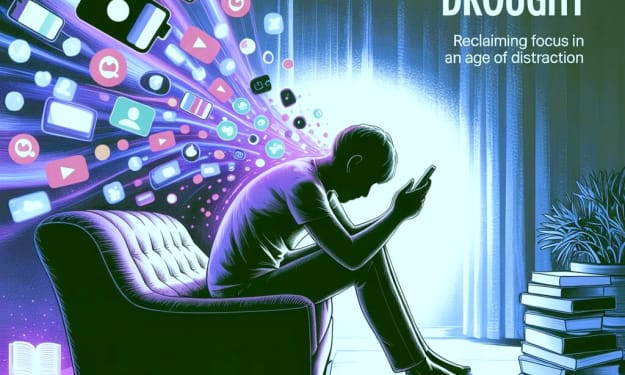
The Dopamine Drought
In the digital age, our brains are being rewired. Constant notifications, endless scrolling, and algorithmic content designed for maximum engagement are draining our attention spans and reshaping how we process pleasure. We’re always stimulated, yet rarely satisfied. Welcome to what psychologists and neuroscientists are calling the dopamine drought—a growing epidemic of mental fatigue, focus loss, and overstimulation.
By shoaib khan2 years ago in Psyche