depression
It is not just a matter of feeling sad; discover an honest view of the mental, emotional and physical toll of clinical depression.
The Psychology Behind Ghosting—and Why It Haunts Us
It starts with silence. Not the kind that comes after a long day or the quiet that settles between people who are comfortable with each other. This is different. This silence feels like a missing person case you weren’t prepared to file. One day, they’re texting you goodnight, and the next, your messages go unanswered like they were swallowed whole by something nameless and cold.
By Noman Khan about a year ago in Psyche
Ketamine for Depression at Home: Is Telehealth Treatment Safe and Legal?
In recent years, the landscape of mental health treatment has undergone a quiet revolution. Among the most talked-about breakthroughs is the use of ketamine for depression, a method that, once confined to clinics and hospitals, is now being offered remotely, delivered right to patients’ homes.
By Richard Baileyabout a year ago in Psyche
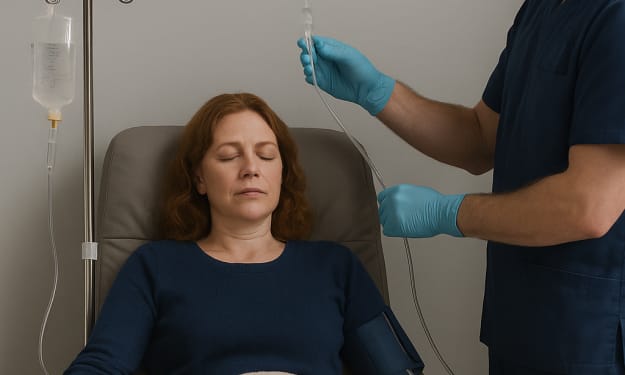
What to Expect During Your First Ketamine Infusion for Depression
When depression becomes relentless and traditional medications fail to offer relief, ketamine therapy may present a new path forward. It’s not a miracle cure, but for many, it opens a door that had long felt sealed shut. If you're preparing for your first ketamine infusion, it's normal to feel uncertain—even anxious. Understanding what to expect can ease your mind and help you step into the experience with greater confidence.
By Richard Baileyabout a year ago in Psyche
Psychology of Fight or Flight. Content Warning.
I was getting ready to record a paranormal podcast. Upon speaking with my spirit friends, I found this and decided to re-write and edit this prose story. We spoke about the bullies in DC and everywhere. We agreed this should be re-written, created, and published. 2025, a year of bullies, hate, greed, craziness, destruction, and genocide. Other than that, I am eating lollipops and singing in the rain in Southern California.
By Vicki Lawana Trusselli about a year ago in Psyche
The Worst Thing in This World: Depression — And How to Break Free
There’s a kind of pain the world doesn’t understand. It doesn’t leave bruises. It doesn’t cry out in public. It doesn’t always look like sadness. Sometimes, it looks like silence. Like sleeping too much. Like staring at the ceiling at 3AM feeling nothing at all. That pain is called depression — and it’s the worst kind of suffering because it makes you believe the lie that you’re alone in it. But here’s the truth: you’re not. - - - - - ### Depression Is Not Just Sadness Sadness has a cause. It comes, and eventually, it goes. But depression? Depression is like fog inside your brain. You forget who you were before it arrived. You stop feeling joy in things that used to make you smile. Even getting out of bed becomes a victory. You look okay on the outside. You might still go to work, post online, or laugh at someone’s joke. But inside? It’s a daily battle to stay afloat. - - - - - ### The Lies Depression Tells You Depression has a voice — and it’s cruel. It whispers: - “You’re not good enough.” - “You’re a burden.” - “Nothing will ever get better.” And the worst part? You start to believe it. But those thoughts are symptoms — not truths. Depression lies. Every single time. - - - - - ### How to Break Free — Slowly, Gently, Relentlessly There’s no magic button. No perfect formula. But there *are* steps. Tiny ones. That lead to something real. - - - - - ** 1. Speak the Words: “I’m Not Okay”** The hardest part of healing is admitting you need help. But silence is depression’s best friend. Break the silence. Even if it’s just to one person. Even if it’s in a whisper. Talk to a friend. A therapist. A support group. A journal. Speak — and let someone hear you. - - - - - ** 2. Choose Progress Over Perfection** Don’t aim to be instantly “happy.” Just aim to **move**. - Open the window. - Drink a glass of water. - Take a walk, even for 5 minutes. - Take a shower even if it feels pointless. Small actions matter. They remind your brain you’re still in control — even when it doesn’t feel like it. - - - - - ** 3. Stop Romanticizing Isolation** Depression wants you alone. It wants you to pull away. But healing often begins in connection. Reach out, even when you don’t feel like it. Message someone. Sit in a room with people, even silently. Just let yourself be around *life* again. - - - - - ** 4. Write a Letter to Yourself From the Future** Imagine a version of you who survived this — because many do. What would they tell you now? Maybe this: > “I know it feels like the end. But it isn’t. I’m you — just a little further down the road. I still struggle sometimes. But I also laugh again. I feel things again. And you will too. Just hold on a little longer.” Write it. Reread it when things get dark. - - - - - ** 5. Understand That Healing Isn’t Linear** Some days you’ll feel okay. Others will knock the air out of you. That’s normal. That’s progress. You’re not failing — you’re learning to swim in deeper waters. - - - - - ### Final Thought: You Are Still Here — And That Is Enough If you’re reading this, it means you’ve survived 100% of your darkest days so far. That’s not weakness. That’s strength of a kind most people will never understand. Depression doesn’t define you. You are not your lowest moment. You are not your thoughts. You are not broken. You are human. Healing. Becoming. And that is more than enough. Keep going. Because somewhere in the future, there’s a version of you that’s proud you didn’t give up today.
By SHADOW-WRITESabout a year ago in Psyche
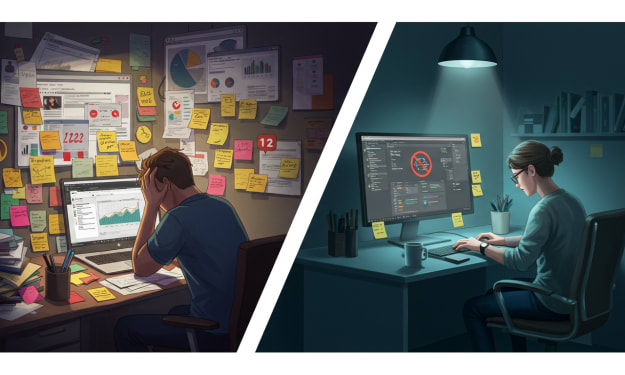
Focus Isn't About Trying Harder: It's About Friction
In the age of constant notifications, open tabs, background noise, and infinite scrolling, we've come to believe that focus is a matter of willpower. If we just tried a little harder, eliminated laziness, and summoned more discipline, we could finally sit down and get things done. But what if this assumption is wrong?
By Nikesh Lagunabout a year ago in Psyche
Ketamine vs. SSRIs: Which Works Faster for Depression?
Depression is more than just feeling down. It can crush motivation, ruin relationships, and dull every part of life. For millions, antidepressants offer a path back—but not all antidepressants work the same way, and not all of them work quickly. When someone is deep in the grip of depression, especially with suicidal thoughts, time becomes a critical factor.
By Richard Baileyabout a year ago in Psyche
The Second Floor Needs to Be Submerged
In a world where we often think about rising above challenges, what if sometimes the solution lies beneath the surface—literally? The phrase “The second floor needs to be submerged” may sound like a strange directive, but it can be unpacked on multiple levels—literal, metaphorical, and even philosophical. Whether taken as a literal architectural challenge or as a symbol for transformation, submerging the second floor invites us to rethink stability, change, and adaptation.
By Anees Kaleemabout a year ago in Psyche
Dopamine Nation – Living in a Culture That Rewards Overstimulation
Dopamine Nation – Living in a Culture That Rewards Overstimulation In today’s fast-paced digital world, it’s easy to feel like you’re constantly chasing something—more likes, more notifications, more excitement. But have you ever wondered why it's so hard to put your phone down or why silence feels uncomfortable? The answer lies in one powerful chemical: dopamine.
By shoaib khanabout a year ago in Psyche
Smiling Hurts Sometimes: The Hidden Pain Behind “I’m Fine”
“I’m fine.” Two words. So small, so easy to say — and so often a lie. A mask. A shield. A desperate way to keep the world from asking too many questions. We say it automatically. At school, at work, with friends, even at home. “I’m fine” becomes a reflex, not a reflection of how we actually feel. Because admitting the truth — “I’m overwhelmed,” “I’m breaking,” “I’m not okay” — feels too heavy. Too vulnerable. Too much. So we smile instead. We go through our days holding it together. We show up. We perform. We keep things light, crack a joke, take selfies, respond to texts. But underneath it all, there’s a version of us that’s exhausted. An inner self screaming, “I don’t want to pretend anymore.” ### Why We Fake It It’s not that we want to be dishonest. It’s that we’ve been taught — by society, by culture, sometimes even by our families — that *emotions are messy*. That being vulnerable is weak. That breaking down is something you do in private, not in public. And so we build emotional armor. We learn how to laugh while hurting. How to keep conversations surface-level. How to avoid eye contact when someone asks, “Are you really okay?” Because we don’t want to burden anyone. We don’t want to be seen as dramatic. We don’t want to unravel. But slowly, pretending becomes painful. ### The Weight of the Mask The truth is, smiling when you’re hurting is exhausting. It drains you. It creates a disconnect between who you are and who you present to the world. And over time, that gap grows so wide, you forget which version is the real you. You start to feel invisible — not because no one is looking, but because no one is seeing what’s *real*. And then comes the guilt. “Why can’t I just be grateful?” “Other people have it worse.” “I should be stronger.” That inner voice becomes cruel. And yet, we keep smiling. ### The Cost of Constant Performance You might be the one who always checks in on others. The listener. The “strong” one. The one everyone turns to for advice or comfort. But when was the last time someone asked *you* how *you* were — and meant it? This emotional performance comes with a price: - You feel emotionally burnt out - You start avoiding people or social events - You struggle to connect deeply - You cry randomly when you’re alone - You feel like you're losing yourself, slowly You begin to wonder: If I stopped pretending, would anyone still stick around? ### The Power of Dropping the Act What if — just once — you answered honestly? What if, when someone said, “How are you?” you paused and said, “I’m struggling, but I’m here.” Or “I’m tired, but thank you for asking.” That small shift cracks open the door to something real. Something healing. You don’t have to spill everything. You don’t have to collapse into someone’s arms. But you deserve a space where you don’t have to act. Where your feelings are safe. Where your pain isn’t something to hide. ### Start With One Safe Person You don’t need an audience. Just one person who can sit with your truth. A best friend. A therapist. A sibling. Or even *yourself* — through journaling, through reflection. Say the words out loud: “I’m not okay.” You might be surprised at how powerful it feels. The more you speak your truth, the lighter the burden becomes. And the less you’ll have to hide behind that fragile smile. ### You Deserve To Be Seen If no one’s told you this lately, let me say it: You don’t have to perform for love. You don’t have to be “okay” to be worthy. You’re allowed to struggle. You’re allowed to feel. And you’re allowed to be human. Some days, the bravest thing you can do is take off the mask and let someone see the pain behind the smile. Because healing begins not with pretending — but with honesty.
By SHADOW-WRITESabout a year ago in Psyche