bipolar
Bipolar disorder; understanding the highs, the lows and the in between.
Inattentional Blindness
Kristen was an eight-year-old child. He was sitting on a park bench, sad. There was worry, fear and depression on his face. It was evening walk time. The park was full of people. People used to come near him, look at him and quietly move on. A couple also passed by. The couple saw that there were posters about the child in the park. The woman passed near the child. She looked at him carefully. She went ahead and stopped near the poster stuck on the tree. The poster had written in bold letters that this child is missing. Below it, the child's age, height, weight, facial color and name were written and also a photo. The woman read the poster carefully. She came to the child again. She also looked at him carefully and when she was sure that it was the same child, she shrugged her shoulders and moved on. She also did not try to contact the phone number written on the poster. The child sat on the bench for two hours but no one paid attention to him or called the number written on the poster. Did the park even become deserted?
By shahkar jalal11 months ago in Psyche
Why Women Fall In Love With Married Men
Although falling in love with a married man is one of the most confusing and emotionally complicated affairs a woman can experience, it still happens more often than people admit. There’s something about married men that seems to draw certain women in, even when they know it’s risky and morally complex.
By Zeeshan Ahmad11 months ago in Psyche
Routines Keep the Mood Clean. Content Warning.
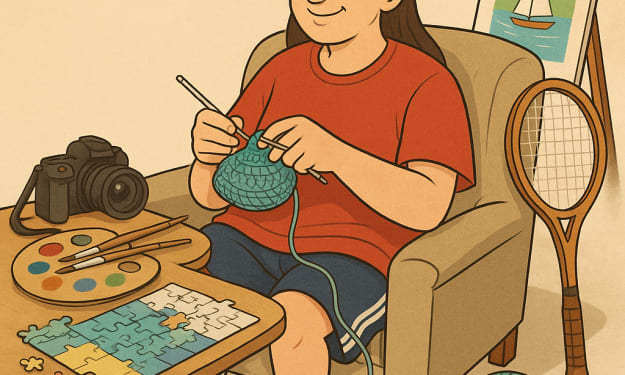
Routines can help keep the mood clean—well, cleaner. I struggle with Bipolar Disorder, and if you do too, then welcome. This is a place to learn something and own it with a great attitude. I won’t lie—it’s hard. The highs, the lows, the mania-fueled spending sprees, and the drawer full of half-baked hobbies. You know the one. Mine is packed with crochet equipment, resin art, an unopened puzzle, and a very expensive art set I bought during a spending spree. I call it my “Kate Middleton Drawer” so many hobbies all the while being a princess —except I look more like Adam Sandler when I’m doing any of those things. (Comfort > couture, every time.)
By Jessica Higginbotham11 months ago in Psyche
The Weight of Labels
I did not get angry because I was attacked. I got angry because I felt invisible. That is what labeling does. It reduces a human being—a soul with thoughts, experiences, and convictions—into a set of categories that can be dismissed before they even speak.
By Peter Thwing - Host of the FST Podcast12 months ago in Psyche
Stupid, stupid love?. Content Warning.
Inside the crackling fire, pictures of our past burned as though a vengeful spirit was blowing over it. The chilly harmattan dawn did nothing to quell it‘s hunger. Up with the rising smoke, I prayed vehemently - that memories of you would be gone with it.
By Ewura Ekua Acquah12 months ago in Psyche
8 Things That Women Notice In Men (That Men Don't Realize)
When it comes to attraction, most men focus on the obvious looks, style, or how to make the first move. But the truth is, women often pick up on subtle cues that go far deeper than appearance. These little details reveal who you are beneath the surface, and they often shape her first and lasting impression of you.
By Zeeshan Ahmad12 months ago in Psyche
How Women Manipulate Through Silence
Silence can speak louder than words and sometimes, it’s used as a tool of control. While both men and women use silence to protect themselves or communicate indirectly, women often employ it as a form of emotional strategy. It’s not always intentional or malicious; sometimes, it’s a defense mechanism. But in other cases, silence becomes a subtle form of manipulation designed to shift emotional power, trigger guilt, or make someone chase for attention or validation.
By Zeeshan Ahmad12 months ago in Psyche
Riding the Middle Wave
Ever notice how people love to pick sides? It’s like we’re constantly asked to choose between two waves: you're either riding left or right, red or blue, good or bad. But here's the thing—life doesn’t work in black and white. It's mostly paddling through gray. And that’s where the trouble starts when we fall into a sneaky little brain trap called dichotomous thinking.
By Tony Martelloabout a year ago in Psyche
Keeping the Mind Young: Science-Backed Ways to Slow Brain Ageing
As we age, we often expect wrinkles, weaker bones, or slower movement — but what truly worries most people is the ageing of the mind. Forgetting names, losing focus, or feeling mentally fatigued can be frightening signs that our brain is changing. Yet, science is uncovering hopeful news: the brain is not a machine doomed to wear out. It’s a living, adaptable organ capable of renewal, repair, and growth at any age — if we give it the right conditions.
By Esther Sunabout a year ago in Psyche
My Anxiety is a Bad Roommate
My Anxiety is a Bad Roommate We moved in together out of necessity, not choice. I don’t even remember signing a lease, but Anxiety has been my live-in roommate for as long as I can recall. And let me tell you, they are a nightmare to share a head with. The day doesn’t start with an alarm; it starts with them. A sudden, sharp jab to my ribcage, a internal gasp that yanks me from the warm nothingness of sleep. “You’re awake,” they whisper, their voice like static from a dead channel. “You know that thing you said to your boss yesterday? Let’s replay that on a loop for the next hour.” I groan, burying my face in the pillow. “It’s 6 a.m.,” I think-say, the words mushy in my own skull. “Perfect time to catalog every single social misstep of the last decade!” Anxiety chirps, already buzzing with a corrosive energy. They’re not a visual presence, not really. They’re a pressure behind my eyes, a knot in my stomach, a constant, humming current in my limbs. If I had to picture them, they’d be all sharp angles, wearing my clothes without permission, and leaving a trail of psychic clutter everywhere they go. By the time I stumble into the kitchen, the mess is already there. It’s not physical dirt—though they’d never do the dishes—it’s the mental debris they leave lying around. A cold, sticky puddle of dread about an unanswered email. The faint, smoky smell of a future argument I’m sure is coming. A towering, precarious stack of "what-ifs" about my health, my job, my relationships, threatening to topple over at any moment. I reach for the coffee, my hand slightly trembling. “Careful,”Anxiety hisses, leaning over my shoulder. “Your hand is shaking. People will think you’re unstable. Or an alcoholic. Maybe both.” I ignore them, a practiced skill I’m only marginally good at. The first sip of coffee is a temporary blanket of warmth, but it doesn't last. “So, the presentation is today,” they announce, as if I’d forgotten. They’ve been “helping” me prepare for it for weeks, which means running through every conceivable worst-case scenario until my throat is tight and my palms are slick. “What if the projector fails? What if you forget your words? What if they all look at you and just… know you’re a fraud?” “I’m prepared,” I mutter aloud, the sound strange in the quiet kitchen. “Prepared for humiliation, maybe,” they snort. “Let’s practice your opening line again. You’ll probably stammer.” This is their specialty: unsolicited, destructive feedback. They’re the worst kind of critic, one who lives in your own home and has access to all your insecurities. They feed on them, growing fatter and louder with every fear they can validate. The day unfolds as a series of skirmishes. Getting dressed, Anxiety holds up every item like a prosecutor. “This shirt makes you look like you’re trying too hard. Those pants highlight everything you had for dinner last week.” I end up wearing a safe, boring outfit that feels like a uniform of surrender. On the commute, they’re a backseat driver from the depths of my own mind. “That car is too close. We’re going to be late. Why is your heart beating so fast? Everyone in this train car can probably hear it. They’re judging you for it.” They paint vivid, catastrophic pictures of fender benders and public failures until the world outside the window feels like a threat. At work, during the presentation, they are at their most vicious. As I stand before my colleagues, my notes feel flimsy and useless. Anxiety is pacing at the back of my mind, a director panicking on opening night. “Your voice is too high,” they whisper. “You’re speaking too fast. Now you’re too slow. They’re bored. See? Sarah just checked her phone. It’s over. You’ve lost them.” My palms sweat. My heart hammers against my ribs, a frantic bird trying to escape the cage they’ve built. For a terrifying moment, my mind goes blank. It’s not empty; it’s filled with the roaring static of their panic. But then, I remember the boundary I’ve been trying to build. It’s a flimsy thing, more like a curtain than a wall, but it’s something. I take a slow, deliberate breath, the kind my therapist taught me. I feel the solid floor beneath my feet. I look at a friendly face in the crowd and focus on that. “What are you doing?” Anxiety demands, their voice shrill. “Stop that! Pay attention to me! Something bad is happening!” “Not right now,” I think, pushing the words through the static. “You don’t get to run the show right now.” It’s not a victory. It’s a truce. The presentation continues. I find my words. The world does not end. Back home, exhausted, the adrenaline recedes, and Anxiety slinks out of the shadows. They’re quieter now, but they’ve made a mess of the place. The air is thick with the spent energy of the day’s panic. I can’t relax. They’ve left their "what-ifs" all over the couch. “They were just being nice,” they murmur as I scroll through post-presentation compliments on my phone. “They feel sorry for you. Tomorrow, they’ll talk about how awkward you were.” I don’t have the energy to fight. Some days, the best I can do is acknowledge their presence and try to live around them. I order food instead of cooking because the thought of cleaning another mess is too much. I put on a familiar, comforting show, something they’ve seen a hundred times, to lull them into a sense of routine. As I try to fall asleep, they’re still there, tidying up the day’s events into a narrative of failure and brewing tomorrow’s worries. “You need to sleep,” they say, their voice deceptively soft. “If you don’t get eight hours, tomorrow will be a disaster. You’ll probably get sick. What if you lose your job because you’re too tired to function?” I sigh in the dark. They’re a terrible roommate. They’re chaotic, messy, critical, and they’ll never, ever move out. But I’m learning. I’m learning to label their comments as "junk mail" instead of gospel. I’m learning to build flimsy curtains and, sometimes, even solid walls. I’m learning that the space inside my head is mine, and even on the worst days, when they’ve trashed the place, I am still the tenant in charge. It’s a daily struggle, a grind of eviction notices and messy cohabitation. But it’s my home. And I’m not leaving.
By Abdul Muhammad about a year ago in Psyche