advice
Advice and tips on managing mental health, maintaining a positive outlook and becoming your happiest self.
The Silent Epidemic of Hyper-Connected Loneliness
How Hyper-Connected Loneliness Is Stealing Our Happiness in the Digital Age Have you ever wondered how we can feel so alone when we’re more connected than ever? Welcome to the paradox of our time: hyper-connected loneliness. We live in an age where sending a message across the globe takes mere seconds. We can watch a sunrise in Paris while lounging on our couches in New York. We can see a stranger’s breakfast in Tokyo without even saying hello to our own neighbor. And yet, loneliness has never felt more profound. Hyper-connected loneliness is a silent epidemic spreading faster than any virus, and it’s time we stop scrolling long enough to notice.
By Bubble Chill Media about a year ago in Psyche
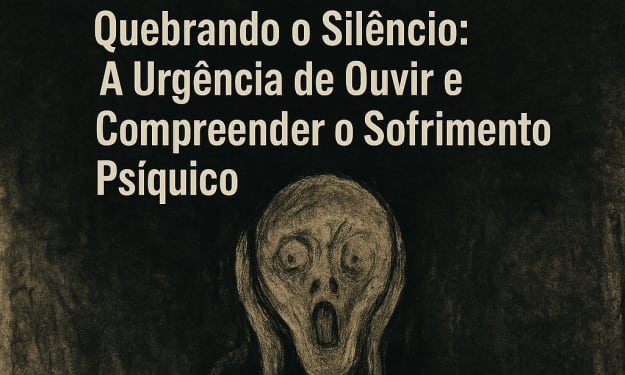
The Scream That No One Hears: Reflections on Suicide and the Invisibility of Psychic Pain in Contemporary Society. Content Warning.
Abstract: This article proposes a reflection on suicide based on statistical data, sociocultural analysis, and the observation of the silent signs emitted by people in psychic suffering. Although the alarming numbers are widely known, society still maintains negligent attitudes toward mental pain. The goal is to discuss how emotional invisibility and the trivialization of depression contribute to the continuation of a phenomenon that, in many cases, could be prevented. The analysis is based on data from the World Health Organization (WHO), studies in social psychology, and media reports about public figures who have revealed their own vulnerabilities. It concludes that there is an urgent need to change paradigms regarding mental health, fostering empathy, active listening, and welcoming attitudes.
By Bruno Bernardoabout a year ago in Psyche
Why Overthinking is Ruining Your Happiness (And How to Stop It)
Have you ever found yourself stuck in a loop of thoughts, worrying about every little detail of your day or your future? You think, "What if this goes wrong?" or "What if I fail?" These constant, uncontrollable thoughts can often steal away our peace of mind and our happiness. You might be aware that you’re overthinking, but sometimes, it feels impossible to stop. The truth is, overthinking is a silent destroyer of joy. It affects your mental health, your relationships, and your ability to live in the present. If you find yourself constantly trapped in cycles of overthinking, it’s time to understand how it’s hurting you and what you can do to stop it. What is Overthinking? Overthinking is when you excessively analyze or dwell on your thoughts. It often revolves around worry, doubt, or regret. It's like your mind constantly replays scenarios, looking for a way to make sense of them, but in reality, this just creates more confusion. Instead of helping, overthinking brings unnecessary stress and anxiety into your life. It could be worrying about an event that hasn’t happened yet, like a presentation or a meeting, or it could involve replaying a conversation you had days ago, wondering if you said something wrong. You might even start thinking about every possible scenario and what could go wrong. Why Overthinking is Bad for Your Happiness The problem with overthinking is that it’s never really about solving a problem. It’s more about creating new ones. It’s about imagining worst-case scenarios that might never happen and torturing yourself with hypothetical situations. This constant mental churn keeps you from fully experiencing life in the present moment. Here’s how overthinking ruins your happiness: 1. It Creates Stress When you overthink, your body goes into a stress mode. You might start feeling anxious, tense, or even physically drained. The constant stress takes a toll on your emotional well-being and your ability to enjoy life. 2. It Increases Self-Doubt When you overthink, you often question your decisions, your worth, and your abilities. You might ask yourself, "Did I make the right choice?" or "What if I fail?" This self-doubt can paralyze you from taking action or pursuing your dreams. 3. It Steals Your Time Time spent overthinking is time taken away from actually living. You can waste hours thinking about something that doesn't even matter, or that you can't control. This leads to regret later when you realize how much you could have done in that time. 4. It Ruins Relationships Overthinking doesn’t just affect your own mind. It can spill over into your relationships. You might second-guess everything your friends, family, or partner say or do. You may misinterpret messages or feel insecure about your interactions. This leads to unnecessary conflict and stress in your relationships. Why Do We Overthink? Overthinking is often driven by underlying fears and emotions. Some of the most common reasons people overthink include: Fear of Failure: You’re scared of making the wrong choice or failing in some way. You think that if you overanalyze every decision, you can avoid making a mistake. Desire for Control: Sometimes, we overthink because we want to have complete control over every situation. We feel that if we think enough about something, we can predict the outcome. Past Experiences: If you've experienced a difficult situation in the past, such as a failure or a disappointment, it can cause you to overthink future events out of fear they will turn out the same way. Low Self-Esteem: Overthinking often comes from a lack of confidence. When you don’t trust yourself, you second-guess everything you do. How to Stop Overthinking The good news is that overthinking can be controlled. It takes awareness, effort, and practice, but with time, you can train your mind to stop overthinking and start living more freely. Here are some tips to help you stop overthinking: 1. Recognize When You’re Overthinking The first step to stopping overthinking is being aware of when it’s happening. When you find yourself stuck in a loop of negative thoughts or unnecessary worry, pause and acknowledge it. Ask yourself, "Is this thought helping me, or am I just overanalyzing?" This awareness alone can break the cycle. 2. Focus on the Present Moment Overthinking usually happens when we dwell on the past or worry about the future. One of the best ways to stop overthinking is to focus on what’s happening right now. Practice mindfulness by paying attention to the present moment. Take a deep breath, look around you, and ground yourself in the here and now. 3. Make Quick Decisions One of the best ways to prevent overthinking is to make decisions quickly. If you’re faced with a choice, don’t dwell on it for too long. Trust yourself and make a decision, even if it’s small. Practice taking action rather than letting uncertainty keep you stuck in your thoughts. 4. Set Time Limits for Problem-Solving If you need to think about something, give yourself a set time limit. For example, tell yourself, "I will spend 10 minutes thinking about this issue, and then I’m going to move on." Setting a time limit for thinking will prevent you from spiraling into endless analysis. 5. Practice Self-Compassion Don’t be hard on yourself for overthinking. Everyone does it from time to time. Be kind to yourself and remind yourself that it’s okay to make mistakes. You’re only human, and perfection is not the goal. Learn to accept that sometimes things are out of your control. In Conclusion Overthinking is a trap that steals your happiness, confidence, and peace of mind. But it’s not a trap you have to stay in forever. By recognizing the signs of overthinking and practicing mindfulness, self-compassion, and decisive action, you can free yourself from the cycle. Life is too short to spend it overthinking every moment. Embrace the present, trust your instincts, and let go of unnecessary worry. The more you practice this, the easier it will become, and soon you’ll find that happiness is not something you have to search for—it’s something you create.
By HerGlowJournalabout a year ago in Psyche
Boundaries or Freedom? Finding Peace in Topic Separation
Topic separation: a boundary, but also a liberation. When I was in college, I met a senior who was truly herself. But she wasn't the kind of person who simply did things her own way and looked down on others. Instead, she lived with remarkable clarity and freedom. Her confidence and composure inspired genuine admiration.
By Emily Chan - Life and love sharingabout a year ago in Psyche
Mental Exhaustion vs Depression: How to Tell Them Apart
In today’s fast-paced world, it’s not uncommon to feel tired, stressed, or overwhelmed. But when that tiredness persists, affects your mood, and starts to interfere with your daily life, it might be more than just a need for rest.
By Richard Baileyabout a year ago in Psyche
When Your Mind Stops
When Your Mind Stops and Can’t Function: What’s Really Going On? Have you ever felt like your brain just… stopped? Like no matter how hard you tried, you couldn’t think clearly, remember simple things, or make basic decisions? Maybe your mind felt blank, foggy, or even like it was frozen in place. If so, you’re not alone.
By Gabriela Toneabout a year ago in Psyche
An untamed mind
Two minds, like ships passing in the night, collide in the vastness of the space within which dreamers dream... One is older, hair slightly graying...mature, wise and beautiful...The other is young, youthful**filled with the confidence of a life yet unlived...
By Antoni De'Leonabout a year ago in Psyche
ADHD and Emotional Dysregulation: What No One Tells You
When most people think about Attention Deficit Hyperactivity Disorder (ADHD), they often associate it with distractibility, hyperactivity, and impulsiveness. However, one of the most challenging and least talked about aspects of ADHD is emotional dysregulation.
By Richard Baileyabout a year ago in Psyche