addiction
The realities of addition; the truth about living under, above and beyond the influence of drugs and alcohol.
Love, Fear, and Security: The Hidden Power of Attachment on Mental Well-Being . AI-Generated.
In the quiet corners of our hearts, where memories whisper and feelings echo, our earliest connections with those who cared for us shape the very fabric of our emotional lives. From the tender moments of a mother’s embrace to the unspoken promises in a father’s smile, love—wrapped in the dual threads of comfort and vulnerability—lays the foundation for our sense of security and, ultimately, our mental well-being.
By The Last Love2 years ago in Psyche
The Hidden Pain of Heartbreak: What Love Takes from Us and How to Rebuild. AI-Generated.
Why We Love, Why We Hurt: The Psychology Behind Romantic Bonds and Breakups Love is one of the most intense emotions a human can experience. It has the potential to make us feel heights that we would think are unattainable while it sends us into a downfall of hopelessness. From the rush of euphoria to the pain of heartbreak, romantic relationships mold our lives and we usually don't get to understand it. Why do we love so deeply? And why does it hurt so much when love is lost? The answer lies in the intricate workings of psychology, emotion, and the very fabric of human connection.
By The Last Love2 years ago in Psyche
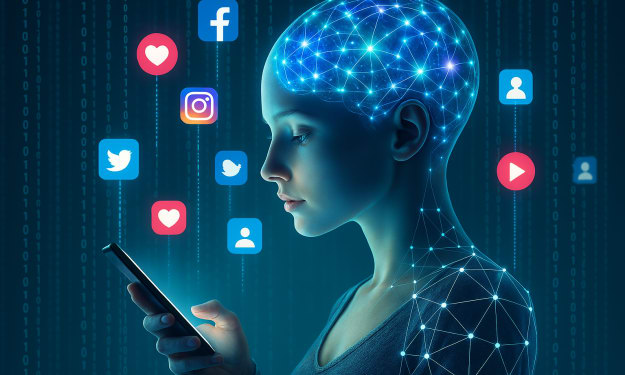
How Social Media Controls Your Thoughts Without You Realizing It
I’ve spent years studying psychological manipulation, and social media is one of the most powerful brainwashing tools ever created. Every time you scroll, algorithms don’t just track you, they shape how you think, feel, and see the world. Or should I say, they increase the chances that you think the way they want.
By Beyond The Surface2 years ago in Psyche
Inauspicious Face Or Inauspicious MindSet? . AI-Generated.
Inauspicious Face or Inauspicious Mindset? A man in a kingdom became infamous for having an inauspicious face. People believed that seeing his face in the morning would bring them misfortune throughout the day. As this belief grew stronger, people started avoiding him and even blamed him for their bad luck. Eventually, the townspeople took their complaint to the king.
By Ramesh Mahato 2 years ago in Psyche
Overcoming Addiction: How Peer Support is the Essential Elixir. AI-Generated.
The Role of Peer Support in Helping Men Overcome Addiction Addiction is a pervasive issue that affects individuals regardless of their age, background, or gender. However, men often face unique challenges when seeking help for substance use disorders due to societal expectations around masculinity and emotional vulnerability. Peer support has emerged as a transformative tool in helping men navigate the difficult journey of recovery. This article explores the critical role peer support plays in assisting men to overcome addiction and rebuild their lives.
By Robert Weigel2 years ago in Psyche
MUDRAS
Various symbolic postures involving the fingers, eyes, and body can vividly depict different states or processes of consciousness. Mudras engage specific areas of the brain, exerting corresponding influences on them. By bending, crossing, extending, or touching the fingers, we can effectively engage and influence both our body and mind. The Origin of Mudras The origin of mudras remains a mystery. Mudras are not limited to Asia; they are used worldwide in various rituals. European ancestors, for example, employed specific gestures to emphasize and affirm their thoughts and intentions. During the Christianization of the Nordic peoples, many gestures, such as raising arms to invoke the gods, were initially prohibited. Later, some of these gestures were partially integrated into Christian practices. Observing the gestures of a priest during Mass offers insight into how ancient peoples expressed themselves. Even today, everyday gestures like crossing fingers for luck, clapping hands in applause, shaking hands, holding hands, or making offensive gestures carry meanings whose origins are often unknown.
By Daniel Adi2 years ago in Psyche
Shock Study: Children of Divorced Parents Are at Higher Risk of Having a Stroke
Introduction Divorce can be an emotionally taxing experience for families, but its effects extend far beyond temporary emotional turmoil. A groundbreaking study has revealed that children of divorced parents face a higher risk of developing severe health problems later in life, including an increased likelihood of having a stroke. This discovery underscores the profound impact that early childhood experiences can have on lifelong health. But what exactly ties parental divorce to such a critical health outcome? Let’s dive deeper into this study to understand its findings and implications.
By kavinda ranabahu2 years ago in Psyche
The Psychology of Fear of Failure. AI-Generated.
Failure is often viewed as an undesirable outcome—a marker of inadequacy or incompetence. Yet, behind this negative perception lies a complex psychological phenomenon that influences behaviors, decisions, and mental health. This fear of failure, also known as atychiphobia, can be paralyzing, but understanding its roots and effects can help individuals manage and even overcome it.
By Ahmet Kıvanç Demirkıran2 years ago in Psyche