
Some People Never Truly Relax — Even When Nothing Is Wrong
Why chronic mental alertness and nervous system tension have become so common in modern life

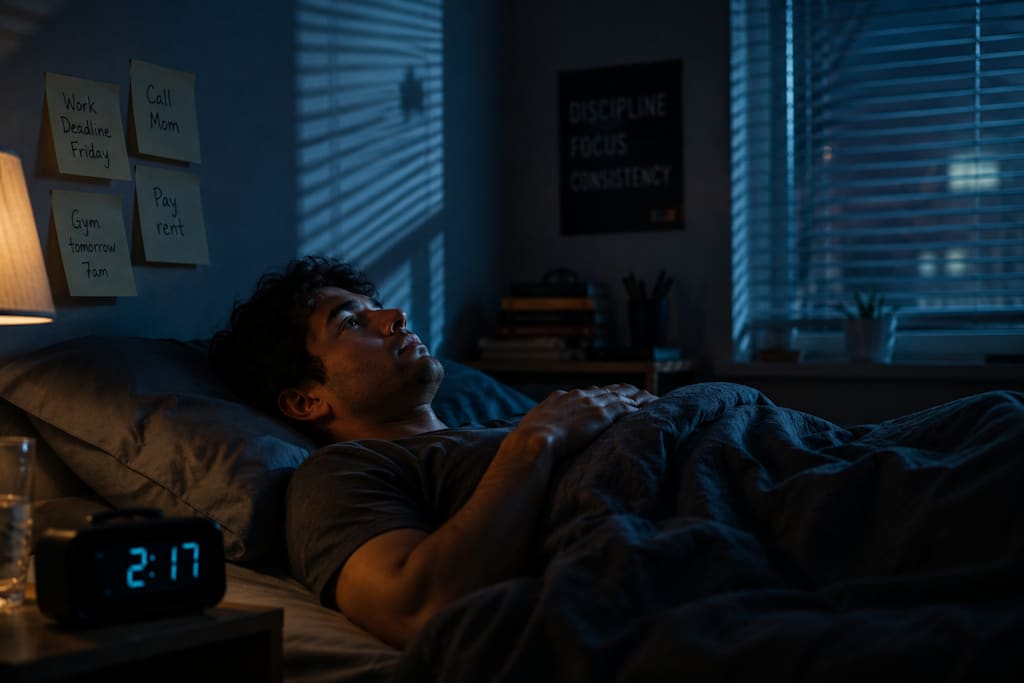
There are people who rarely feel fully at ease, even during moments that are supposed to be restful.
Nothing is technically wrong.
There is no immediate danger. No emergency. No major crisis happening in the moment.
And yet their body still feels subtly tense.
Their mind keeps scanning.
Their thoughts keep moving.
Even during quiet moments, part of them remains mentally “on.”
For many people, genuine relaxation has become surprisingly unfamiliar.
The Nervous System Learns Constant Alertness
Modern life trains people to stay mentally engaged almost all the time.
Notifications.
Deadlines.
Messages.
Financial pressure.
Noise.
Social expectations.
Constant information.
Many people spend years moving from one demand to the next without ever fully resetting their nervous system.
Over time, the body can begin treating constant alertness as normal.
Some people notice it most at night.
They finally sit down after a long day, and instead of relaxing, their thoughts suddenly become louder.
Others notice it during quiet weekends or holidays, when they realize they do not actually know how to slow down anymore.
The body has become so accustomed to stimulation that stillness almost feels uncomfortable.
Rest Is Not Always The Same As Relaxation
A person can technically be resting while their nervous system still feels tense.
Scrolling endlessly on a phone.
Watching multiple screens at once.
Thinking about tomorrow constantly.
Remaining emotionally braced for the next responsibility.
Modern life offers plenty of distraction, but not always genuine recovery.
True relaxation often requires something deeper:
* safety
* quiet
* slowness
* presence
* reduced stimulation
* emotional decompression
Many people rarely experience these consistently anymore.
Even moments that should feel peaceful are often filled with background mental activity.
Some People Carry Invisible Tension All Day
Not all stress looks dramatic.
Sometimes it appears as subtle, ongoing tension:
* shallow breathing
* jaw tightness
* difficulty switching off mentally
* constantly anticipating problems
* feeling guilty while resting
* needing constant stimulation
* struggling to sit in silence
For highly sensitive or deeply reflective people, this can become especially exhausting.
Their nervous system may process emotional, sensory, or environmental input more intensely than others around them.
Over time, they may begin feeling permanently overstimulated without fully understanding why.
Many people become so used to living in this state that they forget what genuine calm even feels like.
The Body Often Responds To Calm Slowly
One difficult reality is that the nervous system usually does not relax instantly.
People often expect calm to happen immediately:
“I took a break.”
“I rested today.”
“I had a quiet evening.”
But a nervous system that has been overstimulated for months or years often needs time to soften again.
At first, silence can feel strange.
Slowness can feel uncomfortable.
Stillness can even create anxiety because the mind is no longer distracted.
But gradually, with enough calm and consistency, the body often begins to respond differently.
Breathing deepens.
Thoughts slow down.
Muscles soften.
The constant feeling of internal urgency begins to ease.
Relearning Calm In A Fast World
The modern world often rewards productivity, speed, responsiveness, and constant engagement.
But human beings were never designed to operate in a state of endless stimulation without consequences.
Some people need more quiet than others.
More recovery.
More reflection.
More space between demands.
That does not make them weak.
It may simply mean their nervous system requires a different rhythm to remain healthy and balanced.
Learning how to protect that rhythm is not laziness or avoidance.
For many people, it is an essential form of self-preservation.
And sometimes, the people who struggle most to relax are not broken at all.
They may simply be carrying far more tension than the world can easily see.
About the Creator
Balance Holistic Wellness
Writing about overthinking, emotional exhaustion, burnout, sensitivity, and the challenges of modern life. Exploring how people can find more balance, calm, and resilience in an increasingly busy world.
Enjoyed the story? Support the Creator.
Subscribe for free to receive all their stories in your feed.
Comments
There are no comments for this story
Be the first to respond and start the conversation.