
Locked Away: Why Are People with Learning Disabilities and Autism Still Being Detained in Hospitals?
Exploring prolonged hospital detention, families’ stories and the urgent need for community support.

More than fifteen years after the Winterbourne View Scandal, people with Autism and/or Learning Disabilities are still being inappropriately detained in mental health hospitals across the UK. Through families stories, investigations, and official reports, I explore what needs to change, in order to ensure people with Autism and/or Learning Disabilities are provided the chance to live the lives they are entitled to live.
By Reece Watt | The World According to Reece | October 2026
Imagine being taken into hospital for what you're told will be a short assessment.
Perhaps you're struggling with your mental health, experiencing distress, or displaying behaviour that other people are finding difficult to manage.
You're told that professionals will assess your needs, develop a treatment plan and help you return home.
But weeks turn into months.
Months turn into years.
And eventually, you find yourself spending a significant proportion of your life behind locked doors.
You haven't necessarily committed a crime.
You may not even require hospital treatment any longer.
But you cannot leave because the support you need in the community hasn't been arranged.
Sounds frightening, doesn't it?
Unfortunately, for some people with learning disabilities and autism, this has been their reality.
Hello everyone, and welcome back to The World According to Reece!
Today, I want to discuss an issue that I find deeply troubling: the inappropriate and prolonged detention of people with learning disabilities and autistic people in mental health hospitals.
As somebody who's autistic myself, I find these stories particularly difficult to read.
Because behind every statistic is a person with a life, a family, interests, ambitions and the same fundamental human rights as everybody else.
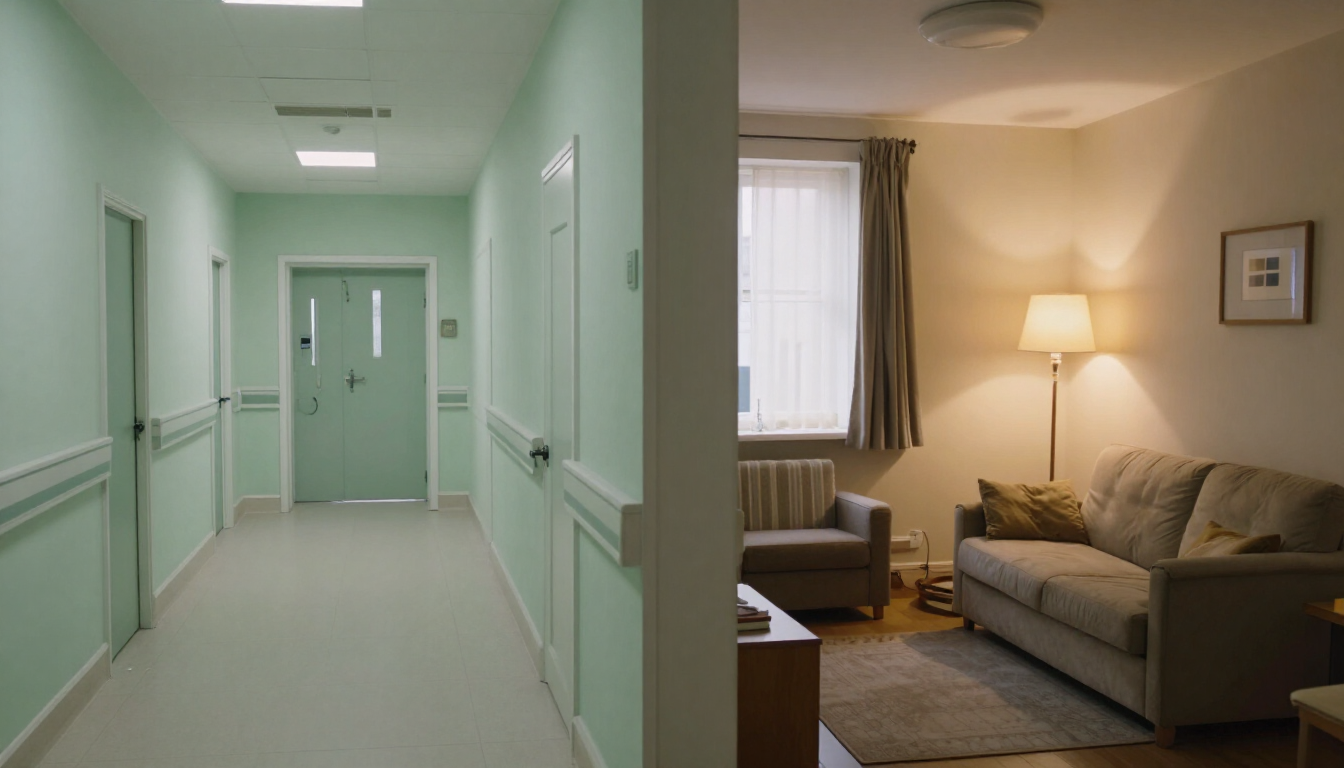
What Are Assessment and Treatment Units?
Assessment and Treatment Units, commonly known as ATUs, are specialist inpatient services intended to provide assessment and treatment for people with learning disabilities and, in some circumstances, autistic people who have complex mental health or behavioural needs.
They are not supposed to become permanent homes.
There are also psychiatric intensive care units, secure hospitals and other inpatient settings.
It's important to recognise that not everybody in these hospitals is detained inappropriately. Some people have serious mental health conditions and genuinely require specialist inpatient treatment.
And, of course, professionals have responsibilities to protect patients and others from serious harm.
However, a hospital admission should be clinically justified, proportionate and regularly reviewed.
A Learning Disability and/or Autism diagnosis should never, by itself, mean that somebody has to live behind locked doors.
Yet, investigations have repeatedly found people remaining in hospital long after the point when they could potentially have moved into suitable community accommodation.
Winterbourne View: The Scandal That Shocked the Country
In 2011, BBC Panorama broadcast an investigation into Winterbourne View, a private hospital near Bristol for people with learning disabilities and autism.
Undercover footage exposed appalling mistreatment of vulnerable patients by members of staff.
People were subjected to physical and psychological abuse, intimidation and degrading treatment.
The programme caused national outrage.
Winterbourne View subsequently closed, and the patients were moved elsewhere.
The scandal prompted government commitments to transform services and reduce inappropriate hospital placements.
But here's the question.
Why, more than fifteen years later, are we still hearing similar stories?
Moving somebody out of an abusive hospital is essential, but it doesn't automatically undo the trauma they've experienced.
And transferring someone from one institution to another isn't necessarily the same as enabling them to live independently.

BBC Panorama: Undercover Care — The Abuse Exposed (https://www.bbc.co.uk/programmes/b011pwt6)
Matthew Garnett: A Six-Week Stay That Became Six Months
In 2016, the story of Matthew Garnett attracted national attention.
Matthew was a 15-year-old autistic teenager who also had ADHD and other complex needs.
Following escalating difficulties at home, he was admitted under the Mental Health Act to a psychiatric intensive care unit in Surrey.
His family understood that this would be a temporary arrangement while appropriate specialist treatment was organised.
Instead, Matthew remained there for approximately six months.
His parents, Isabelle and Robin Garnett, launched a campaign called Make Room for Matthew, attracting widespread public support.
The family argued that the unit was unsuitable for his needs and that he wasn't receiving the specialist assessment and treatment he required.
Matthew reportedly believed he was being punished.
Imagine how frightening that must have been for a teenager already struggling to understand and manage his emotions.
Following the campaign, Matthew was transferred to St Andrew's Healthcare in Northampton.
His transfer was subsequently confirmed in Parliament.
A later ITV interview with his parents described improvements in his environment and access to ordinary activities. And, while this is encouraging, the scars of being inappropriately detained can run deep for years to come.
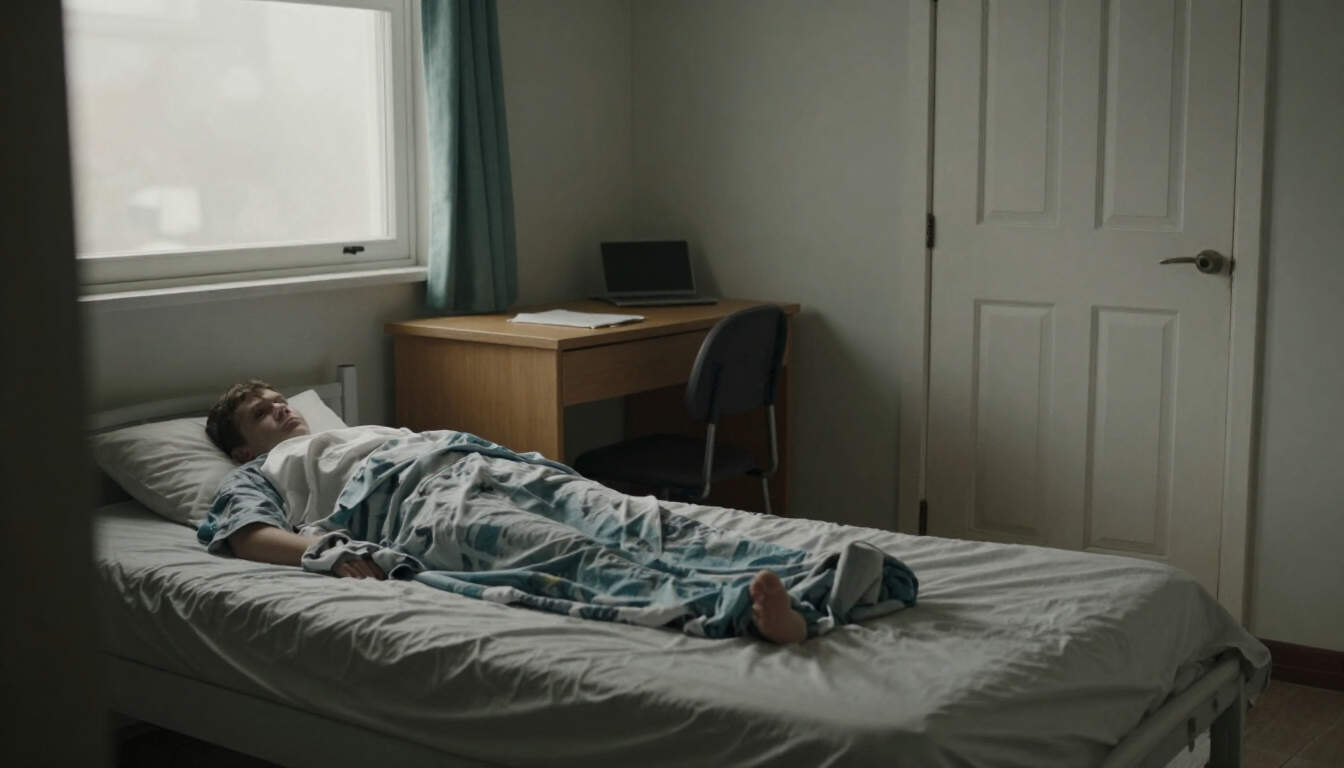
All too often, we hear about long-lasting psychological trauma as a result of inappropriate detention, for both patient and family. In some cases, the patient can be ready for discharge back into the community, however, lack of suitable placements can prolong their detention, ultimately resulting in escalating behaviours, in turn prolonging the detention further. This is a vicious cycle families witness all too often, and, in today's society, it is simply unacceptable that vulnerable people are being treated as second class citizens, hense denying them the right to the life they so rightly deserve.
BBC Panorama: Undercover Care — The Abuse Exposed (https://www.bbc.co.uk/programmes/b011pwt6)
ITV News: Matthew Garnett's Story (https://www.itv.com/news/london/2016-03-06/autistic-teenager-set-to-be-moved-after-campaign-to-end-his-six-month-jail-sentence-in-a-psychiatric-ward)
Parliamentary Record: Matthew Garnett's Transfer (https://hansard.parliament.uk/Commons/2016-05-03/debates/16050328000045/AppropriateMentalHealthTreatmentForMatthewGarnett)
Adam Downs: More Than Half His Life in Hospital
Another deeply concerning case is that of Adam Downs.
Adam was first admitted to hospital as a teenager.
According to reporting by ITV News and Mencap (https://www.mencap.org.uk/blog/adam-downs-injustice-institutional-life), his mother, Alison Rogers, was initially told that he needed an assessment and would be home after approximately six months.
Instead, he spent many years moving between secure hospital settings.
By 2022, Adam was in his early thirties, and by this point, had spent more than half his life in institutions.
He was being detained at Rampton Hospital, a high-security psychiatric hospital in Nottinghamshire, reserved only for some of Britain's most dangerous criminals.
But, Adam was not placed in Rampton because he had committed a crime. Adam was sent to Rampton for the simple reason, that he has complex Learning Disabilities, and there were no suitable community placements which could meet his needs adequately.
His mother described the distress he experienced, and the difficulties of securing an appropriate alternative.
Mencap subsequently published Alison's account, explaining how she believed prolonged institutional care had made her son's difficulties worse.
And, heartbreakingly, Adam is still detained in Rampton to this day, almost twenty years after his initial detention at the age of fifteen.
Consider the implications of that for a moment.
Someone who entered hospital as a teenager could spend the years when many people are studying, working, forming relationships and establishing their independence living within an institution.
How can somebody build an ordinary adult life when they aren't given the opportunity to experience one?

ITV News: Hundreds with Learning Disabilities Kept in Hospital (https://www.itv.com/news/2022-11-02/barbaric-hundreds-with-learning-disabilities-kept-locked-up-for-years)
Mencap: Adam Downs — The Injustice of an Institutional Life (https://www.mencap.org.uk/blog/adam-downs-injustice-institutional-life)
Bryan McCarry: Decades Behind Hospital Doors
One of the most shocking cases I've encountered is that of Bryan McCarry from Northern Ireland.
In 1988, Bryan, who has learning disabilities and autism, was admitted to Muckamore Abbey Hospital for what was supposed to be a twelve-week assessment.
But twelve weeks became years.
And eventually, decades.
In December 2022, ITV News reported that Bryan had spent almost 35 years in hospital.
His family said he had been cleared for discharge as far back as 1997, but suitable community accommodation had not been provided.
His sister described the devastating effect on Bryan and the family.
To put that into perspective, Bryan had spent virtually his entire adult life in hospital.
Not because his family wanted that for him, but because the system had failed to provide an alternative.
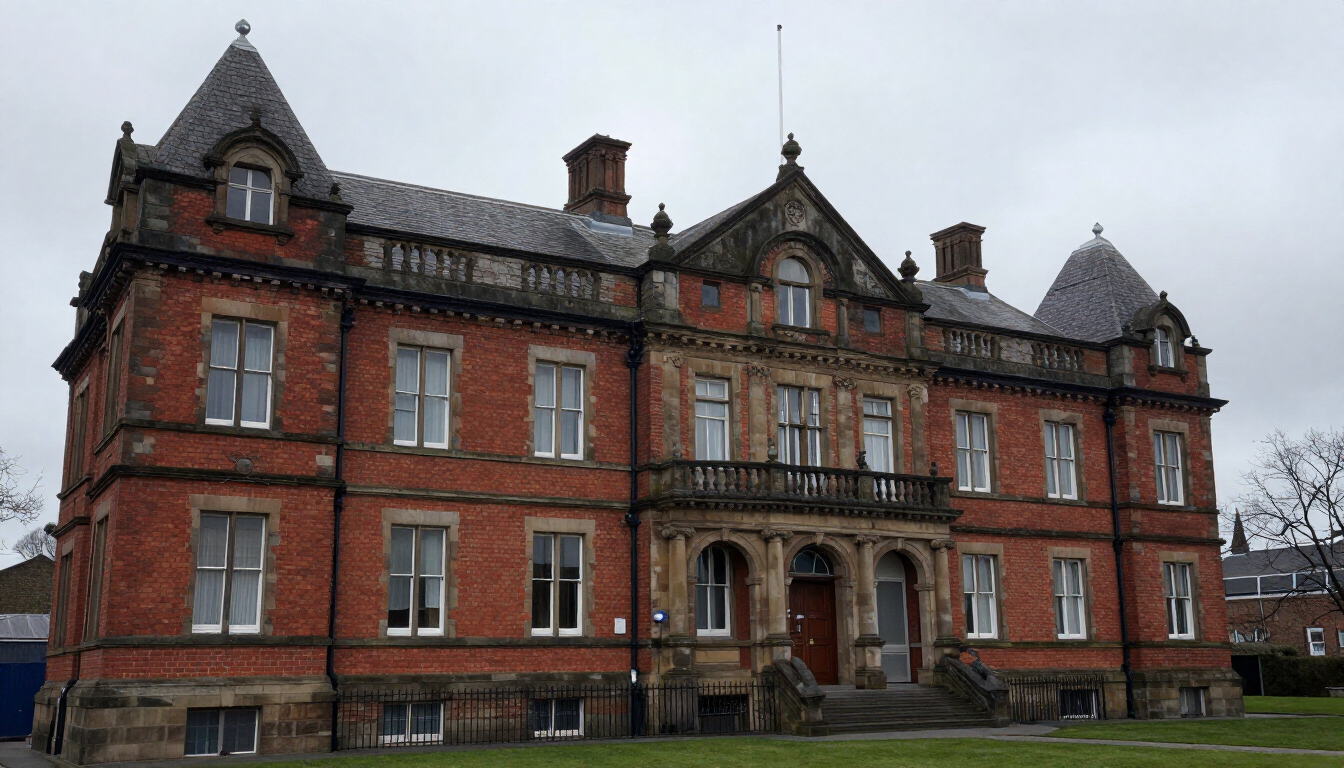
The Muckamore Abbey Abuse Inquiry
Muckamore Abbey subsequently became the subject of one of Northern Ireland's most significant investigations into the abuse and mistreatment of vulnerable patients.
A public inquiry examined serious institutional failures, including safeguarding, leadership, oversight and the treatment of patients.
Its final report was published on 18 June 2026, making 106 recommendations.
The Belfast Health and Social Care Trust acknowledged serious failures and apologised.
On a positive note, Muckamore Abbey ceases to operate as a hospital. But does this mean that Bryan and the other patients detained there for so many years, have finally been able to begin to lead the fulfilling lives they deserve to lead? I can't be sure, and while the closure of Muckamore is significant, the wider questions still remain.
What happens to people after these institutions close?
Do they receive appropriate homes and support?
And how do we ensure that the same problems don't simply reappear elsewhere?
ITV News: Bryan McCarry's Story (https://www.itv.com/news/2022-12-19/man-with-learning-difficulties-locked-up-in-hospital-for-35-years)
Muckamore Abbey Hospital Inquiry — Final Report (https://www.mahinquiry.org.uk/)
Kyle Gibbon: From Preparing for His Own Flat to Carstairs
The situation in Scotland is equally concerning.
In August 2022, BBC Disclosure investigated the experiences of people with learning disabilities and autism who had spent years in secure hospitals.
One of those featured was Kyle Gibbon.
Kyle, who has Learning Disabilities and Autism, had previously been living as an inpatient at the Royal Cornhill Hospital in Aberdeen. Despite his hospitalisation, Kyle was permitted regular leave to attend college, and to participate in social activities such as going Bowling and to the Cinema.
He was even preparing to move into his own flat.
But following an incident involving a psychiatrist, he was transferred to the State Hospital at Carstairs, Scotland's high-security psychiatric hospital.
His mother, Tracey, described the distressing circumstances surrounding his detention.
When Kyle entered Carstairs in 2009, he had not been convicted of a criminal offence.
However, following a meltdown in which Kyle attacked a nurse at the hospital, Kyle was made the subject of a Compulsion Order from the courts at the request of the hospital. In conjunction with a Restriction Order, Kyle can now be detained in Carstairs on a potentially permanent basis.
In 2022, at the time of Disclosure's investigation, Kyle had spent thirteen years at Carstairs.
Later BBC reporting confirmed that he remained there after approximately fifteen years.
And the issue is, that even if and when Kyle, and those in similar situations are freed, the central concern remains.
Kyle had been preparing for a life in the community.
Instead, he spent many years in a high-security hospital.
And the longer somebody remains institutionalised, the more difficult returning to ordinary life may become.

BBC Disclosure: The Patients Locked in Secure Hospitals for Decades (https://www.bbc.co.uk/news/uk-scotland-62477095)
Scotland's Coming Home Report
These cases are not isolated incidents.
In 2018, the Scottish Government published the Coming Home report.
It examined delayed discharges and inappropriate out-of-area placements involving people with learning disabilities and complex needs.
The report recognised that people were spending prolonged periods in hospitals or living far from their families because appropriate community support was unavailable.
It emphasised that people with learning disabilities have the same human rights as everybody else.
The report also made recommendations intended to improve planning, housing and support.
Further work followed, including the Scottish Government's Coming Home Implementation Report in 2022.
Yet subsequent investigations continued to identify people who remained in hospitals long after they should have been supported elsewhere.
And that raises an uncomfortable question.
How many reports do we need before the recommendations are fully implemented?
Scottish Government: Coming Home Report 2018 (https://www.gov.scot/publications/coming-home-complex-care-needs-out-area-placements-report-2018/)
The 2019 Human Rights Investigation
In November 2019, the UK Parliament's Joint Committee on Human Rights published its report on the detention of young people with learning disabilities and autism.
Its findings were deeply concerning.
The committee examined the use of restraint, segregation, inappropriate placements and prolonged detention.
It concluded that the human rights of many people in these settings were being breached.
Particular concerns included the right to liberty under Article 5 of the European Convention on Human Rights and the prohibition of inhuman or degrading treatment under Article 3.
The report also questioned whether existing legislation and safeguards were sufficiently protecting vulnerable people.
These are fundamental human rights.
We're not talking about optional extras or special privileges.
We're talking about the right to liberty, dignity, safety and family life.
Joint Committee on Human Rights: Detention of Young People with Learning Disabilities and Autism (https://publications.parliament.uk/pa/jt201919/jtselect/jtrights/121/12102.htm)
Channel 4 Dispatches: Another Investigation, Similar Concerns
More than a decade after Winterbourne View, Channel 4's Dispatches returned to the issue of autistic people being detained in mental health hospitals.
The documentary Locked Away: Our Autism Scandal examined experiences of institutional care and the concerns of families.
It raised further questions about the treatment of autistic people, the use of restrictive practices and the difficulties families encounter when trying to secure appropriate support.
For me, the most disturbing aspect is how familiar these concerns have become.
We hear about restraint.
We hear about segregation.
We hear about people being placed far from home.
And we hear about families struggling to get answers.
The names and institutions may change, but the underlying problems appear remarkably persistent.
Channel 4 Dispatches: Locked Away — Our Autism Scandal (https://www.channel4.com/programmes/locked-away-our-autism-scandal-dispatches)
How Many People Are Still in Hospital?
It's important to look at the current figures.
According to NHS England's official statistics (https://digital.nhs.uk/data-and-information/publications/statistical/learning-disability-services-statistics/at-august-2026-mhsds-july-2026), at the end of August 2026 there were 2,125 autistic people and people with learning disabilities in inpatient services recorded through the Assuring Transformation data collection.
Of these, 1,025 had been in continuous inpatient care for more than two years.
That's approximately 48%.
The figures cover England and don't mean that every one of those admissions is inappropriate.
However, they demonstrate the scale of prolonged inpatient care.
The Challenging Behaviour Foundation (https://www.challengingbehaviour.org.uk/what-we-do/strategic-influencing/transforming-care-data/) has also highlighted patients recorded as clinically ready for discharge who remain in hospital because of problems such as unsuitable housing and insufficient social care support.
This is particularly troubling.
If somebody no longer needs hospital treatment, why should they remain there simply because appropriate accommodation hasn't been arranged?
And what message does that send about the value placed on their independence?
NHS England: August 2026 Inpatient Statistics (https://digital.nhs.uk/data-and-information/publications/statistical/learning-disability-services-statistics/at-august-2026-mhsds-july-2026)
Challenging Behaviour Foundation: Transforming Care Data (https://www.challengingbehaviour.org.uk/what-we-do/strategic-influencing/transforming-care-data/)
What Can We Learn from Other Countries?
The UK isn't the only country to have faced the challenge of moving away from institutional care.
New Zealand, for example, has pursued deinstitutionalisation over several decades, moving away from large residential institutions towards community-based services.
Its disability policy has also emphasised greater choice and control for disabled people.
That doesn't mean New Zealand's system is perfect, or that every disabled person there receives the support they need.
But it demonstrates that large institutions don't have to be accepted as the default model.
The important question is not simply whether a country closes hospitals.
It's whether people have somewhere suitable to live afterwards, with the support, rights and opportunities they need.
The UK has made repeated commitments to transforming care.
The challenge is turning those commitments into lasting changes in people's lives.
Alexis Quinn: Life Beyond Detention
I'd also like to discuss the experiences of Alexis Quinn.
Alexis is an autistic woman who has spoken publicly about being detained in mental health hospitals, experiencing restrictive practices and struggling to obtain appropriate care.
Her experiences became widely known after she escaped from psychiatric detention and travelled abroad.
Alexis has subsequently worked to raise awareness of the treatment of autistic people in inpatient settings.
A recent Telegraph feature revisited her experiences and life beyond detention.
Her story is particularly important because it demonstrates that life after institutionalisation is possible.
But leaving hospital doesn't necessarily mean the effects of detention disappear.
Some people may experience trauma, loss of confidence, or difficulties rebuilding their lives.
And those effects deserve recognition and support.
Alexis has also written a book about her experiences.

Unbroken: Learning to Live Beyond Diagnosis
In her book, Unbroken: Learning to Live Beyond Diagnosis, Alexis tells her story from her own perspective.
I think first-hand accounts like this are incredibly valuable.
It's one thing to read a report about hospital detention.
It's another to hear directly from somebody who has experienced it.
If you're interested in reading Alexis's book, you can find it on Amazon:
Amazon Affiliate Disclosure: As an Amazon Associate, I earn from qualifying purchases. The link above is an affiliate link, and I may receive a small commission from qualifying purchases at no additional cost to you.
The Telegraph: Alexis Quinn's Experiences (https://www.telegraph.co.uk/health-fitness/wellbeing/mental-health/imprisoned-forcibly-restrained-in-multiple-mental-hospitals/)
What About the Families?
There's another aspect of this issue that I believe deserves more attention.
The impact on families.
Imagine being told that your son, daughter, brother or sister needs a short hospital assessment.
You agree because you want them to receive the right support.
But then they don't come home.
You find yourself attending meetings, challenging decisions, contacting politicians and trying to understand complicated legal processes.
Perhaps your loved one is placed hundreds of miles away.
Visits become difficult and expensive.
And you're left wondering when, or even whether, they'll be able to return home.
Some families have spent years campaigning.
Others have watched their relatives grow older in institutions.
And some parents have died before seeing their children return to community life.
That emotional toll is enormous.
Families should not have to become full-time campaigners simply to secure appropriate care for somebody they love.
Why Does This Keep Happening?
There isn't one simple explanation.
Some people have highly complex needs, and providing safe, appropriate support requires skilled staff, suitable housing and careful planning.
But investigations have repeatedly identified wider systemic problems.
These include shortages of suitable community accommodation, insufficient specialist support, fragmented responsibilities between health and social care services, and delays in funding decisions.
Sometimes, a hospital bed remains available while the community support package somebody actually needs does not.
That creates a terrible situation.
The person remains in hospital, not necessarily because hospital is the best place for them, but because no suitable alternative has been organised.
And as time passes, institutionalisation can make discharge more difficult.
It's a cycle that needs to be broken.
What Needs to Change?
I believe several things are essential.
First, hospital admission should only take place when it's genuinely necessary.
People with Learning Disabilities and/or Autism should have access to appropriate community-based support before a situation reaches crisis point.
Second, discharge planning should begin early.
Nobody should spend years waiting for suitable housing and support after being assessed as ready to leave.
Third, families and the individuals concerned must be properly involved.
Their knowledge, experiences and wishes should be central to decisions.
Fourth, restrictive practices must be carefully scrutinised.
Restraint and segregation should never become substitutes for appropriate care.
Finally, governments and public bodies must be accountable for delivering the changes they promise.
Reports and recommendations are important.
But they cannot become an endless cycle of identifying problems without resolving them.
Organisations including Mencap (https://www.mencap.org.uk/get-involved/campaign-mencap/transforming-care-homes-not-hospitals), VoiceAbility (https://www.voiceability.org/) and the Challenging Behaviour Foundation (https://www.challengingbehaviour.org.uk/what-we-do/strategic-influencing/transforming-care-data/) have continued to advocate for people's rights and appropriate community support.
Mencap: Homes Not Hospitals (https://www.mencap.org.uk/get-involved/campaign-mencap/transforming-care-homes-not-hospitals)
VoiceAbility (https://www.voiceability.org/)
Final Thoughts: A Hospital Should Never Become Someone's Forever Home
When I read stories like those of Matthew, Adam, Bryan and Kyle, I find myself asking one question.
How would we feel if this happened to somebody we loved?
Imagine watching somebody lose years of their life because the system couldn't provide appropriate support.
Imagine being told repeatedly that progress was being made, only to discover that little had changed.
And imagine the emotional consequences of living behind locked doors for years, sometimes decades.
Of course, some people genuinely require specialist inpatient treatment.
But nobody should remain in hospital simply because suitable community support is unavailable.
As somebody who's autistic, I believe this issue should concern all of us.
Because Autism and/or Learning Disabilities should never be treated as reasons to deny somebody the opportunity to live a meaningful life.
People deserve homes.
They deserve relationships.
They deserve opportunities.
And above all, they deserve dignity, safety and the same fundamental rights as everybody else.
A hospital should be somewhere people receive treatment when they need it.
It should never become somebody's forever home simply because the system has failed them.
I'd Love to Hear Your Thoughts
Have you or somebody you know experienced difficulties accessing appropriate support for a person with learning disabilities or autism?
Do you think enough has changed since Winterbourne View?
And what more should governments and health services be doing to prevent inappropriate detention?
Please feel free to share your thoughts in the comments.
I believe these stories deserve to be heard.
And, more importantly, the people at the centre of them deserve to be listened to.
Thanks for reading! For more articles about accessibility, autism and my experiences, please check out The World According to Reece: https://www.theworldaccordingtoreece.com/ . While you’re there, sign up to my mailing list using the “Stay Connected!” form so you never miss a new article or update.
About the Creator
Enjoyed the story? Support the Creator.
Subscribe for free to receive all their stories in your feed.
Comments
There are no comments for this story
Be the first to respond and start the conversation.