
I’m a Neuroscientist & I Do These 3 Overlooked Exercises Daily to Age Better
You might have never heard of them

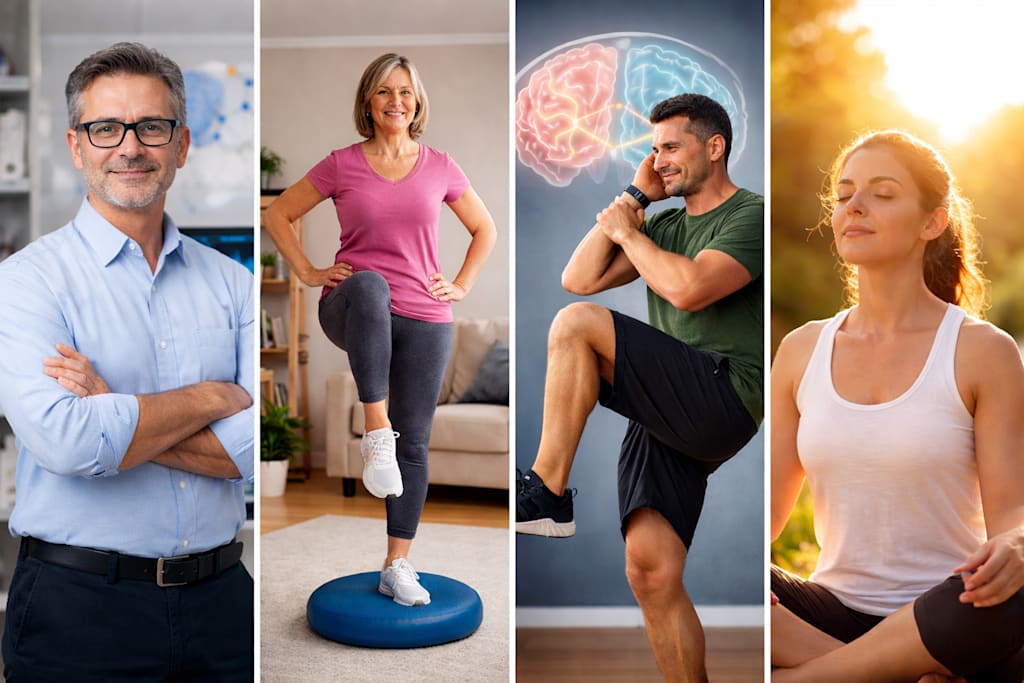
Aging is strange. When we’re young, we think aging happens all at once — wrinkles appear, energy fades, memory slips. But neuroscience tells a different story. Aging is actually a slow accumulation of tiny daily changes inside the brain and body. And surprisingly, some of the most powerful anti-aging habits have nothing to do with expensive supplements, extreme diets, or intense gym workouts. In fact, many neuroscientists focus on simple exercises that improve brain flexibility, balance the nervous system, and preserve cognitive function over time. These exercises are rarely talked about online because they don’t look flashy. You won’t see influencers making dramatic transformation videos about them. But science suggests they may matter far more than most trendy “biohacks.” Here are three overlooked exercises that many brain experts quietly practice every day to age better.
1. Balance Training — The Forgotten Longevity Exercise :
Most people think balance matters only for athletes or older adults. But neuroscientists see balance differently. Balance is actually a full-brain activity. It requires communication between your inner ear, eyes, muscles, spinal cord, and cerebellum — the part of the brain responsible for coordination and movement. The scary part? Balance begins declining much earlier than most people realize, sometimes in your 30s. And once balance deteriorates, other problems often follow: . Reduced mobility . Higher risk of injury . Slower reaction time . Less confidence in movement . Faster physical aging That’s why many experts do small balance exercises daily.
Simple Balance Exercises :
. Stand on one leg while brushing your teeth . Walk heel-to-toe across a room . Practice slow movements with eyes closed . Use a balance cushion or soft surface These tiny exercises challenge the brain’s coordination systems and strengthen neural pathways connected to movement. Research has shown that balance training may even improve attention and memory because the brain becomes more efficient at processing sensory information. And the best part? You don’t need a gym membership. Just five minutes a day can make a difference.
2. Cross-Lateral Movement — Exercise for Brain Connectivity :
This one sounds complicated, but it’s incredibly simple. Cross-lateral movement means moving opposite sides of the body together. For example: . Touching your right elbow to your left knee . Crawling patterns . Marching while swinging opposite arms . Dancing routines involving coordination Why does this matter? Because your brain is divided into two hemispheres. Cross-body movement forces both sides to communicate through a structure called the corpus callosum. In other words, coordinated movement becomes a workout for brain connectivity. Neuroscientists often use these exercises in cognitive rehabilitation because they stimulate multiple brain regions simultaneously. Children naturally do these movements while developing motor skills. But adults stop doing them — which may reduce coordination and cognitive flexibility over time.
Easy Daily Routine :
Try this for two minutes: 1. March in place 2. Lift your right knee and touch it with your left hand Alternate slowly 3. Increase speed gradually 4. It looks almost too easy to matter. But many people notice improved focus and mental alertness afterward because the brain is being activated in a more integrated way. Think of it as “mobility training” for your nervous system.
3. Controlled Breathing — Training Your Nervous System :
Most people breathe badly without realizing it. Stress, screens, anxiety, and poor posture can all lead to shallow chest breathing. Over time, this keeps the nervous system in a mild fight-or-flight state. And chronic stress accelerates aging. Scientists have linked long-term stress to: . Memory decline . Poor sleep . Increased inflammation . Weakened immune function . Faster biological aging That’s why many neuroscientists intentionally practice controlled breathing every day. Not because it’s trendy — but because breathing directly affects the nervous system. Slow breathing activates the parasympathetic nervous system, which helps the body recover and repair itself. One Simple Method Try this: . Inhale slowly for 4 seconds . Exhale slowly for 6 seconds . Repeat for 2–5 minutes Longer exhales signal safety to the brain and may reduce stress hormones. Some studies even suggest controlled breathing can improve emotional regulation and concentration. It’s one of the few exercises that can change your mental state almost immediately. And unlike many wellness trends, it costs absolutely nothing.
Why These Exercises Matter More Than Extreme Workouts :
Modern fitness culture often focuses on appearance: . Bigger muscles . Faster fat loss . Intense routines . “No pain, no gain” mentality But aging well is about something deeper: . Preserving brain function . Maintaining mobility . Protecting independence . Keeping the nervous system healthy The people who age best are often not the most extreme athletes. They’re usually the people who stay consistent with small daily habits. That’s the real secret. Tiny exercises repeated over years can reshape how the brain and body function together. And neuroscience keeps revealing the same lesson again and again: Healthy aging isn’t built in one dramatic moment. It’s built quietly, day by day.
Final Reflection:
Most anti-aging advice online focuses on products. But the brain doesn’t care about marketing. It responds to movement, recovery, coordination, and stimulation. That’s why these overlooked exercises matter: . Balance training protects mobility . Cross-lateral movement strengthens brain communication . Controlled breathing regulates the nervous system None of them are glamorous. None require expensive equipment. But together, they train some of the most important systems involved in aging well. And perhaps that’s the biggest lesson neuroscience teaches us: The habits that truly change your future are often the simplest ones people ignore.
About the Creator
Enjoyed the story? Support the Creator.
Subscribe for free to receive all their stories in your feed.
Comments
There are no comments for this story
Be the first to respond and start the conversation.