
How Constant Stimulation Is Rewiring Our Brains
Many of us haven’t been truly bored, still, or mentally quiet in years — and our nervous systems are paying the price.

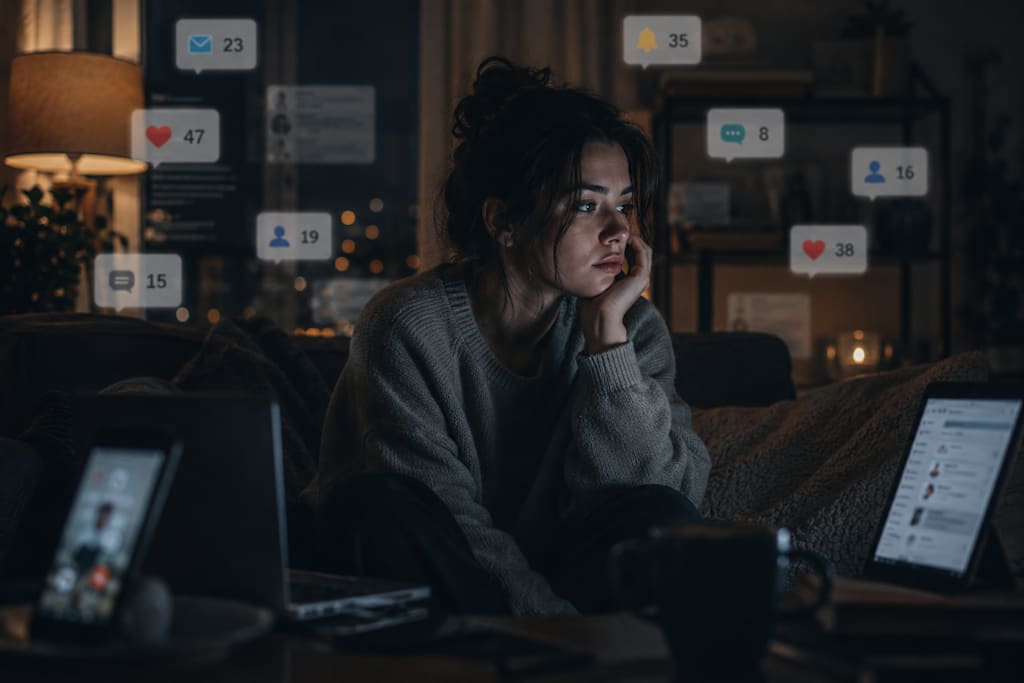
Modern life keeps us stimulated almost every second of the day.
Notifications.
Short-form videos.
News updates.
Podcasts.
Messages.
Ads.
Algorithms designed to compete for our attention every waking moment.
Even rest has become noisy.
A lot of us can’t even sit in a waiting room, stand in line, or go for a walk without reaching for stimulation immediately.
And after years of living this way, I think many of our brains have quietly adapted to constant input.
⸻
The Death of Stillness
What scares me sometimes is how rare true stillness has become.
Not productivity.
Not entertainment.
Not distraction.
Just stillness.
Moments where nothing is happening and we simply exist with our own thoughts.
For many people, that now feels unfamiliar.
Even uncomfortable.
⸻
I noticed this in myself recently.
I would pick up my phone almost automatically during tiny moments of silence.
Not because I needed anything.
Not because something important happened.
Just because my brain had become conditioned to avoid stillness.
And the strange thing is that the more stimulation I consumed, the harder it became to focus deeply on anything at all.
Books felt slower.
Conversations felt harder to stay present in.
My attention span felt fragmented.
Even relaxing became difficult.
⸻
Why Our Brains Feel So Overloaded
I don’t think we fully understand yet what constant digital stimulation is doing to our nervous systems.
Human brains evolved in environments with natural pauses.
Quiet.
Repetition.
Boredom.
Rest.
Now many people consume more information in one day than previous generations probably encountered in weeks.
And unlike physical stress, mental overstimulation is harder to recognize because it feels normal.
Everyone around us is overstimulated too.
⸻
One of the biggest consequences is emotional fatigue.
When the brain is constantly processing information, reacting to content, comparing itself to others, and switching attention rapidly, it rarely gets a chance to recover properly.
We become mentally “full” all the time.
That can show up as:
* Difficulty concentrating
* Feeling emotionally numb
* Increased anxiety
* Restlessness
* Brain fog
* Irritability
* Trouble sleeping
* Constant low-level exhaustion
And because these feelings build gradually, many people assume this is simply adulthood now.
⸻
The Problem With Constant Input
Social media especially changes the way we experience attention.
Everything becomes faster.
Shorter.
More intense.
More emotionally charged.
Our brains start expecting constant novelty.
A quiet moment suddenly feels empty instead of peaceful.
And unfortunately, algorithms are designed exactly for this.
The longer we stay stimulated, the longer we keep consuming.
⸻
I don’t think technology itself is evil.
Honestly, there are amazing things about living in a connected world.
But I do think many of us underestimate how much uninterrupted stimulation affects the human mind.
The nervous system was never designed to process endless input without recovery.
And yet most people rarely give themselves genuine mental silence anymore.
⸻
Learning To Be Still Again
Something I’ve been trying lately is intentionally creating small moments of stillness again.
Going for walks without headphones.
Leaving my phone in another room.
Sitting outside without consuming content.
Allowing boredom to happen instead of instantly escaping it.
At first, it felt strange.
Almost uncomfortable.
But eventually I noticed something surprising:
My thoughts became clearer.
My anxiety softened slightly.
I felt more present.
More grounded.
Like my brain was finally breathing again.
⸻
I also think boredom serves an important purpose that we’ve forgotten.
Some of our best ideas, reflections, and emotional processing happen during quiet moments.
But if every second gets filled with stimulation, there’s no space left for introspection.
No space to hear ourselves think.
No space to emotionally reset.
⸻
Maybe that’s why so many people feel overwhelmed now even when they technically have time to rest.
Because rest without mental quiet isn’t always real recovery.
If the brain remains overstimulated constantly, exhaustion eventually becomes unavoidable.
⸻
I don’t think the answer is abandoning technology completely.
That’s unrealistic for most people.
But I do think we need healthier relationships with stimulation.
More boundaries.
More silence.
More moments where we aren’t consuming something every second.
Because constantly feeding the mind isn’t the same thing as nourishing it.
And sometimes the healthiest thing we can do for ourselves is simply allow our brains to be still again.
About the Creator
Balance Holistic Wellness
Writing about overthinking, emotional exhaustion, burnout, sensitivity, and the challenges of modern life. Exploring how people can find more balance, calm, and resilience in an increasingly busy world.
Enjoyed the story? Support the Creator.
Subscribe for free to receive all their stories in your feed.
Comments
There are no comments for this story
Be the first to respond and start the conversation.