
Booting the past
Recovering the Fragments of Who We Were
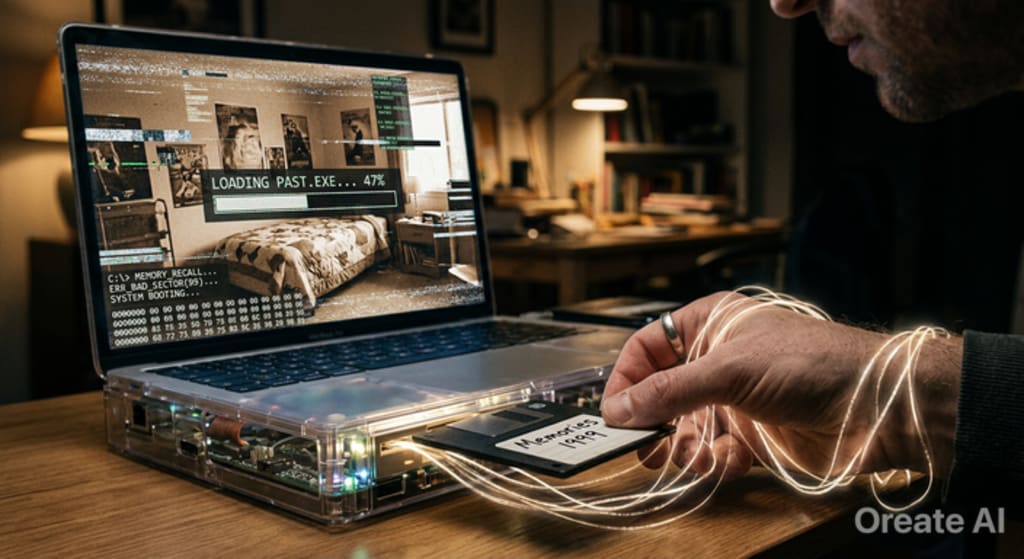
Imagine if the human mind worked exactly like a computer. Every experience, every emotion, every conversation, and every moment of joy or heartbreak would be stored somewhere deep within an invisible archive. Some memories would remain easily accessible, while others would become buried beneath years of new experiences, hidden away like forgotten files in an old hard drive. Yet, despite the passage of time, those memories never truly disappear. They simply wait for the right trigger, the right emotion, or the right moment to be loaded again. This is the idea behind Booting the Past—the process of reconnecting with memories that have shaped our identity and influenced the person we have become today. Just as a computer requires a boot sequence to load its operating system, human memory often requires its own sequence of activation. A familiar song can suddenly transport us back to a childhood afternoon. The scent of old books may remind us of a classroom from years ago. A photograph hidden inside a drawer can instantly unlock emotions we thought were long forgotten. These moments feel almost magical, as though a hidden system within our minds has awakened and begun restoring lost data. Memory is one of the most remarkable abilities possessed by human beings. It allows us to learn, adapt, and maintain a sense of continuity throughout our lives. Without memory, every day would feel disconnected from the last. Our identities are built from countless experiences woven together over time. In many ways, we are not only living in the present—we are also carrying an entire archive of the past wherever we go. However, memory is not a perfect recording device. Unlike a computer that stores information in exact form, human memory is dynamic. Every time we remember an event, we may slightly alter it. Details fade, emotions evolve, and perspectives change. This means that the past we recall today may not be identical to the past we experienced years ago. Instead, memory acts more like a living story that continues to adapt as we grow. The concept of "booting" memories becomes especially important during periods of self-discovery. Throughout life, people often search for answers about who they are and why they think the way they do. Sometimes those answers cannot be found by looking forward. They can only be discovered by revisiting experiences from the past. A person who remembers overcoming challenges as a child may regain confidence during difficult times. Someone who reconnects with forgotten dreams may rediscover passions they abandoned years ago. By loading these experiences back into consciousness, individuals can better understand the foundations of their character and purpose. Technology provides an interesting comparison. When a computer starts up, it loads essential files needed for operation. Similarly, our minds constantly load memories that influence decisions, emotions, and behavior. Many of these processes happen automatically. We may not consciously think about a particular childhood experience, yet it may still shape our reactions to situations in adulthood. This hidden influence demonstrates the incredible power of memory. The past is never completely separate from the present. Instead, it quietly operates in the background, affecting how we perceive the world. Modern neuroscience continues to reveal fascinating insights into how memories are formed and stored. Scientists have discovered that memories are distributed across complex networks within the brain rather than being stored in a single location. Every recollection involves the activation of multiple regions working together to reconstruct an experience. In a sense, remembering is less like opening a file and more like rebuilding a scene from interconnected pieces. This explains why memories can feel incomplete. Sometimes we remember a face but not a name. Other times we recall an emotion without remembering the event that caused it. These fragments are like pieces of an unfinished puzzle waiting to be connected. The digital age has also transformed how humans interact with memory. Smartphones, cloud storage, social media, and digital photographs allow people to preserve moments with unprecedented accuracy. Every day, billions of images and videos are captured around the world. Yet despite these technological advances, digital records can never fully replace human recollection. A photograph may show what happened, but it cannot completely capture how it felt. The warmth of a family gathering, the nervous excitement before a major achievement, or the comfort of a familiar voice are experiences that exist beyond pixels and data. They live within memory itself. There is also a deeper emotional dimension to revisiting the past. Not all memories are joyful. Some contain disappointment, regret, or loss. Nevertheless, these memories remain valuable because they contribute to personal growth. Challenges often teach lessons that success cannot. Moments of failure can provide wisdom, resilience, and empathy. Booting the past does not mean becoming trapped within it. Rather, it means acknowledging its presence and learning from it. Just as outdated software can be updated while preserving important information, individuals can move forward while retaining the lessons of previous experiences. The most meaningful aspect of memory may be its connection to identity. Every memory acts as a thread in the story of a person's life. Together, these threads form a narrative that explains where we have been and who we are becoming. When we revisit forgotten moments, we often gain a clearer understanding of ourselves. Sometimes the smallest memory can have the greatest impact. A simple conversation remembered years later may inspire a life-changing decision. A forgotten photograph may reignite a passion. A familiar melody may remind someone of the dreams they once held. In this way, memory is not merely a record of the past—it is a bridge between past, present, and future. The journey of booting the past is ultimately a journey of rediscovery. It is about uncovering hidden archives within the mind, reconnecting with forgotten experiences, and understanding the events that have shaped our lives. Every memory restored adds another piece to the larger picture of who we are. As we continue moving forward, the past remains quietly stored within us, waiting for the moment it is needed once again. Like a system awakening from sleep mode, our memories can illuminate forgotten paths, reveal lost possibilities, and remind us of the stories that define us. The process never truly ends. New experiences are constantly being recorded while old memories continue to influence our lives. We are both the creators and the custodians of our personal archives. Every day adds another chapter, another file, another fragment to the ever-growing collection of moments that make us uniquely human. And whenever we choose to look back, we begin the process once more—loading forgotten fragments, restoring lost connections, and booting the past.
About the Creator
Touseef Gul
If you want interesting information about psychology, astronomy and modern technology change.Then this page will provide suitable encyclopedia for curious minds.
Enjoyed the story? Support the Creator.
Subscribe for free to receive all their stories in your feed.
Comments
There are no comments for this story
Be the first to respond and start the conversation.