science
According to Chemistry, Alcohol Is a Solution; Proof explores the science of alcohol, from its production to its effect on your bloodstream, brain, body and behavior.
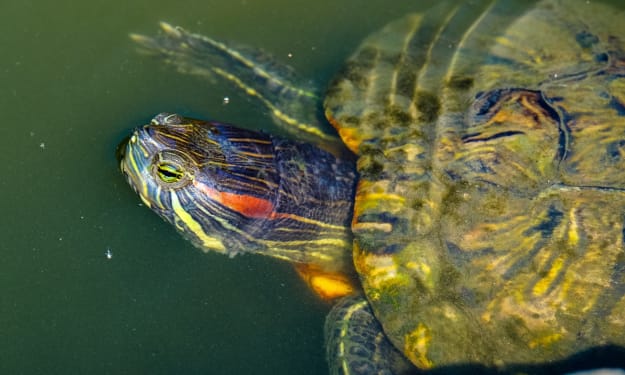
Turtle is a reptile?
Turtles are cold-blooded animals, just like reptiles. They rely on external heat sources to regulate their body temperature and metabolism. Turtles have a bony shell that covers their body, which is one of their defining characteristics. The shell is made up of two parts: the carapace (the top portion) and the plastron (the bottom portion). Turtles are ectothermic, which means that they are dependent on external heat sources to regulate their body temperature and metabolism. This is a characteristic of reptiles, as they are also ectothermic. Turtles and reptiles both have scaly skin. The scales on a turtle's skin are small and are covered by a layer of keratin, the same substance that makes up our hair and nails. Turtles, like reptiles, lay eggs. However, turtles lay their eggs on land, while most reptiles lay their eggs in water. Turtles and reptiles both belong to the class Reptilia, which is one of the five classes of vertebrates. Turtles are also a monophyletic group, which means that they share a common ancestor and are more closely related to each other than to any other group of animals. In conclusion, turtles are often considered to be reptiles due to their similarities in characteristics and classification, but they are a separate group known as Testudines or Chelonia. Turtles are unique reptiles that are known for their protective shells. The shell is actually a part of the turtle's skeleton and is made up of two parts: the carapace, which is the top portion, and the plastron, which is the bottom portion. The carapace is made up of bony plates that are covered in a layer of horny scutes, while the plastron is made up of a single piece of bone. The carapace and plastron are connected by a bridge, which is the portion of the turtle's body that allows it to move its head, tail, and legs. The shells of turtles come in a variety of shapes and sizes, depending on the species. Some turtles have smooth shells, while others have keeled or serrated shells. The head of a turtle is relatively small and is equipped with sharp beak-like jaws that allow it to bite and chew food. Turtles also have two pairs of long, thin, and sensitive tongues that they use to detect food. They have two eyes, which are located on the sides of the head, and are able to see well both in water and on land. Turtles have four limbs, which are short and stout, and are used for crawling, swimming, and grasping food. The front limbs of turtles are called flippers and the back limbs are called legs. The flippers of sea turtles are adapted for swimming, while the legs of terrestrial turtles are adapted for walking and digging. Turtles also have a tail that varies in length depending on the species. Some turtles have long tails, while others have short tails or none at all. The tail is used for balance, as well as for storing fat. In summary, turtles are unique reptiles that are known for their protective shells. The shells are made of bony plates that are covered in a layer of horny scutes and are connected by a bridge that allows movement of the head, tail and legs. Turtles have a small head with sharp beak-like jaws, two pairs of long tongues, two eyes and four limbs (flippers and legs) that are adapted for crawling, swimming, and grasping food. They also have a tail that varies in length depending on the species and is used for balance and storing fat.
By Sumit Kumar4 years ago in Proof
Group of crocodiles called
a bask or congregation. Crocodiles are a group of large, predatory reptiles that belong to the order Crocodylia, which also includes alligators, caimans, and gharials. They are found in tropical and subtropical regions around the world, primarily in freshwater habitats such as rivers, lakes, and swamps. Crocodiles are known for their powerful jaws and sharp teeth, which they use to capture and kill prey. They are opportunistic predators and will eat a wide variety of animals, including fish, birds, mammals, and even other reptiles. They are also known to scavenge on carrion when the opportunity arises. Crocodiles have a unique set of physical adaptations that make them well-suited to their aquatic lifestyle. They have webbed feet, which help them swim quickly and maneuver through water, as well as a streamlined body shape that allows them to move efficiently through the water. Additionally, they have a set of specialized glands in their skin that secrete a thick, oily substance that helps keep their skin waterproof and prevents them from drying out. Crocodiles are also known for their excellent eyesight and sense of smell, which they use to locate prey. They can see both in the water and on land, and they can detect prey from a distance using their sense of smell. They are also able to hold their breath for long periods of time, which allows them to stay underwater for extended periods while hunting or waiting for prey. Crocodiles are also known for their longevity, with some species living up to 100 years in the wild. They have a complex social structure and have been observed participating in a wide range of behaviors, including mating rituals, territorial disputes, and cooperative hunting. Despite their fearsome reputation, crocodiles are facing increasing threats from human activities such as habitat loss, hunting, and pollution. Many species of crocodiles are currently listed as endangered or critically endangered, and conservation efforts are underway to protect them and their habitats. Overall, crocodiles are fascinating and powerful animals that have adapted to their aquatic environment in unique and remarkable ways. They are an important part of many ecosystems and play a critical role in maintaining the balance of these ecosystems. However, it is important that we work to protect these animals and their habitats so that future generations will have the opportunity to continue to appreciate and study these magnificent creatures. Crocodiles are a group of large reptiles found in tropical and subtropical regions around the world. They are known for their powerful jaws, armored skin, and ability to live both in water and on land. There are two main types of crocodiles: the saltwater crocodile and the freshwater crocodile. The saltwater crocodile, also known as the estuarine crocodile or saltie, is the largest of all living reptiles and can grow up to 23 feet in length and weigh over 2,000 pounds. They are found in coastal regions of the Indian and Pacific Oceans, and have been known to swim long distances in the open sea. Freshwater crocodiles, also known as the mugger crocodile, are smaller than saltwater crocodiles and can grow up to 14 feet in length. They are found in freshwater rivers, lakes and swamps in Asia, Africa and Australia. Crocodiles have a unique set of physical characteristics that make them well-suited to their environment. Their armored skin is covered in scales that are as hard as bone, providing protection from predators. They also have powerful jaws that can exert a force of over 2,000 pounds per square inch, making them one of the strongest animals in the world. Crocodiles are also known for their excellent vision and sense of smell. They can see both above and below water, and can detect prey from far away. They are also able to hold their breath for long periods of time, allowing them to stay underwater for up to an hour. Crocodiles are apex predators, meaning they are at the top of the food chain in their environment. They prey on a wide variety of animals, including fish, birds, mammals, and other reptiles. They are also known to scavenge on dead animals. Crocodiles are also known to be very intelligent and they have a complex social structure. They communicate with each other through a variety of vocalizations and body language. They also use their powerful jaws to establish dominance and territory. The population of crocodiles has been greatly reduced due to hunting, habitat destruction and pollution. But many countries now have laws in place to protect them and their population is recovering. In conclusion, crocodiles are fascinating creatures that have adapted to survive in a variety of environments. Their unique physical characteristics and behavior make them one of the most interesting and powerful animals on the planet. It's important to conserve their habitats and protect these ancient creatures for future generations to enjoy.
By Sumit Kumar4 years ago in Proof
The 6 World's Most Innovative And Technologically Advanced Nations 2022.
Technology is described as the application of scientific knowledge to the practical goals of human life, such as the creation of goods and services or the achievement of goals. By utilizing scientific knowledge in the economy, communications, medical profession, and other areas, it is transforming the human experience. Innovation requires globalization to be successful.
By Fruits And Plants Diary - Get Insight 4 years ago in Proof
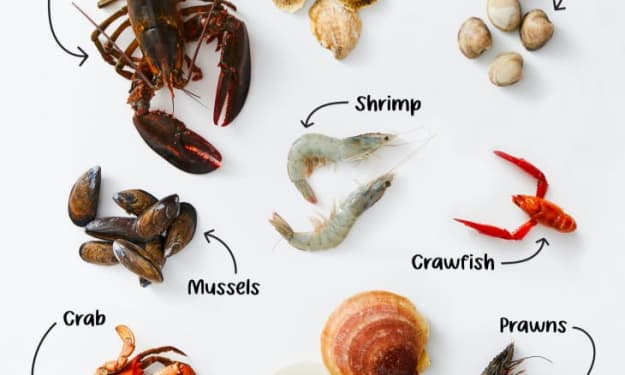
The 9 Most Well-liked Varieties of Shellfish.
When it comes to seafood, the term "shellfish" refers to a wide variety of bivalves and crustaceans (species with legs that enable them to swim or crawl) (the hard-shelled and more stationary varieties like clams, oysters, and mussels).
By Fruits And Plants Diary - Get Insight 4 years ago in Proof
Generating solar power at night, it's possible
Solar panels are becoming increasingly prevalent and are being installed on more and more roofs. However, a significant disadvantage of solar panels is that they can only produce energy during the day. Researchers have demonstrated that it is possible to produce solar energy at night, so there is yet hope. Not from sunshine, but from heat that the earth emits from the sun.
By Alex Hermes4 years ago in Proof
How blockchain technology can be used for food traceability
Blockchain can be used for food traceability Blockchain technology has transformed many sectors in terms of offering security. When this technology started to emerge, blockchain experts thought this technology was limited only to financial industries. Over time, this technology began for adoption in several industries apart from finance. The food industry is not away from embracing blockchain technology. The food blockchain initiative is enhancing the traceability of food origin and deterring fraud. If you go for a document security QR code, securing valuable documents will be easy.
By Aliasgar Abbasbhai4 years ago in Proof
A Comprehensive List of the “Best” and “Worst” Drinks for Your Smile
Do you love catching up with your friends on the weekend over a cocktail? Do you enjoy unwinding after a long day of work with a glass of wine? Don’t worry – you don’t have to stick to water for the sake of your oral health. With that being said, it can be beneficial to be aware of the “best” and “worst” drinks when it comes to your smile. To learn what they are, keep reading!
By Grand Dental4 years ago in Proof
"In What Furnace Was Thy Brain?"*. Top Story - June 2022.
*From "The Tyger" by William Blake Most amino acids build proteins. Undeniably important, they are the basis of the body's structure. Nevertheless, some amino acids have other roles, roles that help sew together the vast complex of protein structures into a seamlessly moving, thinking creature.
By D. Thea Baldrick4 years ago in Proof