science
According to Chemistry, Alcohol Is a Solution; Proof explores the science of alcohol, from its production to its effect on your bloodstream, brain, body and behavior.
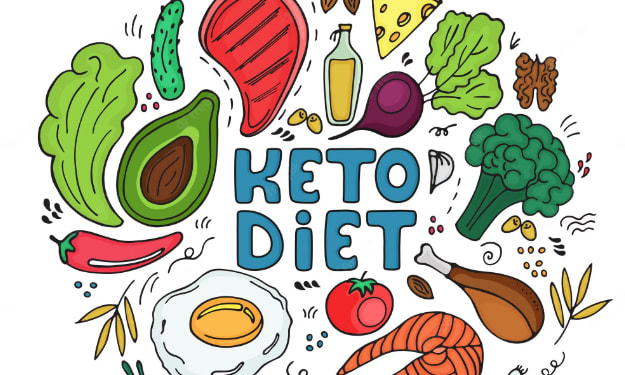
The Science Behind How the Keto Diet Can Help Control Epileptic Seizures
Understanding epilepsy and its treatment options Epilepsy is a chronic neurological disorder that affects the brain's electrical activity, causing seizures. Seizures can take many forms, from staring spells to convulsions, and can be triggered by a variety of factors, including stress, sleep deprivation, and flashing lights. While medication is the most common treatment approach for epilepsy, some patients do not respond well to medication or experience side effects that impact their quality of life. In these cases, alternative treatment options may be considered, including the keto diet.
By Enoch Yankson4 years ago in Proof
The Danger of Crime Scene Contamination: How it Affects the Integrity of Forensic Evidence
Introduction The forensic evidence collected at a crime scene is critical in the investigation and prosecution of crimes. It provides scientific and objective data that can support or refute hypotheses about what happened during the commission of the crime. However, forensic evidence is delicate, and its integrity can be easily compromised by contamination. Contamination of forensic evidence is a significant problem that can have severe consequences on the investigation and prosecution of crimes. This article will explore the impact of crime scene contamination on forensic evidence.
By Keerthana Thirumalairaj4 years ago in Proof
Is Milk A lie?
In 1981, President Reagan made a decision to provide free cheese to America's poor. The government cheese program became popular in movies and hip-hop lyrics, with artists referencing the cheese they grew up on. However, after government cheese, people were able to enjoy steak and powdered milk cheese. Despite its popularity, the story of milk in America reveals how the government often prioritizes protecting certain industries over informing the public about the food they consume. The famous "Got Milk?" ad campaign featuring celebrities with milk mustaches was part of a larger industry effort to promote milk consumption. Milk has been a key source of sustenance for centuries, particularly in regions like northern Europe where people relied on it during long, cold winters. The ability to digest milk varies around the world, with some countries being better adapted to digesting it than others.
By Prabhjot Rooprai4 years ago in Proof
Rare iPhone 4S with Steve Jobs' Signature Sells for Rs 52.47 Lakh in India
In recent news, a decade-old iPhone has been sold for a whopping Rs 52.47 lakh in India. The device in question is an iPhone 4S, which was launched by Apple in October 2011. The high price tag may come as a surprise to some, but there are several factors that contribute to the device's value.
By Rosepetalsdot4 years ago in Proof
The Science of Memory: Exploring How Our Brain Creates and Stores Memories
In the summer of 1994, a few hours after the news of O.J. Simpson's arrest hit the airwaves, a young woman named Rebecca was sitting in her living room in Los Angeles, flipping through the channels to find more information. Suddenly, she saw a news clip of Simpson's white Bronco barreling down a Los Angeles freeway. She was captivated, and even though she had no personal connection to the case, she watched the news for hours that day and many more in the weeks that followed. Over time, the events of that summer became etched in her memory: the endless news coverage, the trial, the verdict. More than two decades later, she still remembers every detail vividly. But why? Why does Rebecca remember the events of the O.J. Simpson trial so clearly, while other events from that same time period have faded from her memory? The answer lies in the way our brains create and store memories. The process of memory formation has three stages: encoding, consolidation, and retrieval. Encoding is the process by which we perceive and process information from our environment. For Rebecca, the news of Simpson's arrest and the subsequent events of the trial were encoded in her brain as visual and auditory stimuli. Consolidation is the process by which these encoded memories are stabilized and strengthened in the brain. This happens during sleep, when the brain replays the events of the day and strengthens the neural connections associated with those memories. In the case of Rebecca's memories of the O.J. Simpson trial, the intense emotions she experienced while watching the news likely contributed to the consolidation of those memories. Finally, retrieval is the process by which we access and bring back memories into conscious awareness. For Rebecca, the constant news coverage of the trial likely triggered the retrieval of her memories, causing her to remember the events of that summer so vividly. But not all memories are created equal. Some memories, like Rebecca's memories of the O.J. Simpson trial, are more vivid and long-lasting than others. This is due in part to the role of emotion in memory formation and retention. Flashbulb memories, like Rebecca's memories of the O.J. Simpson trial, are highly emotional and vivid memories of significant events. These memories are often tied to strong emotions, such as fear, surprise, or joy. The intense emotional arousal associated with these events helps to consolidate and strengthen the neural connections that form those memories, making them more vivid and long-lasting. However, not all memories are accurate. Memories can be distorted or changed over time, and false memories can even be implanted. This is due to the fact that memory is not like a video recording that can be replayed perfectly. Instead, memory is reconstructive, meaning that we often fill in gaps in our memories with information that we believe to be true, but may not actually be accurate. As we age, our memory function declines. This can lead to difficulty remembering new information, as well as a decline in our ability to retrieve older memories. However, there are strategies that can help to maintain memory function as we age, such as regular exercise, a healthy diet, and engaging in mentally stimulating activities. In conclusion, the way our brains create and store memories is a fascinating and complex process. Our memories are shaped by the events we experience, the emotions we feel, and the passage of time. Understanding how memory works can help us to better understand ourselves, and even improve our memory function as we age.
By Mystery Writer4 years ago in Proof
Does Time Actually Exist?
Time is a fundamental part of our everyday lives. We constantly think about the past, present, and future, and we use time to structure our daily routines, plan for the future, and make sense of the world around us. Yet, despite its apparent ubiquity and importance, time remains one of the great mysteries of the universe.
By Shiyad Ismail4 years ago in Proof
Get more views and subscribers on youtube
Getting more views and subscribers on YouTube can be a challenge, but there are a few strategies that can help you increase your audience and grow your channel. Here are some tips for getting more views and subscribers on YouTube:
By Nipun Chandika4 years ago in Proof