
What Megachurches Taught Me About Scale — and Who Gets Left Out
Before I studied policy systems and democratic legitimacy, I learned from inside a megachurch how institutions reach people, organize belief — and what happens when belonging asks you to hide part of yourself.

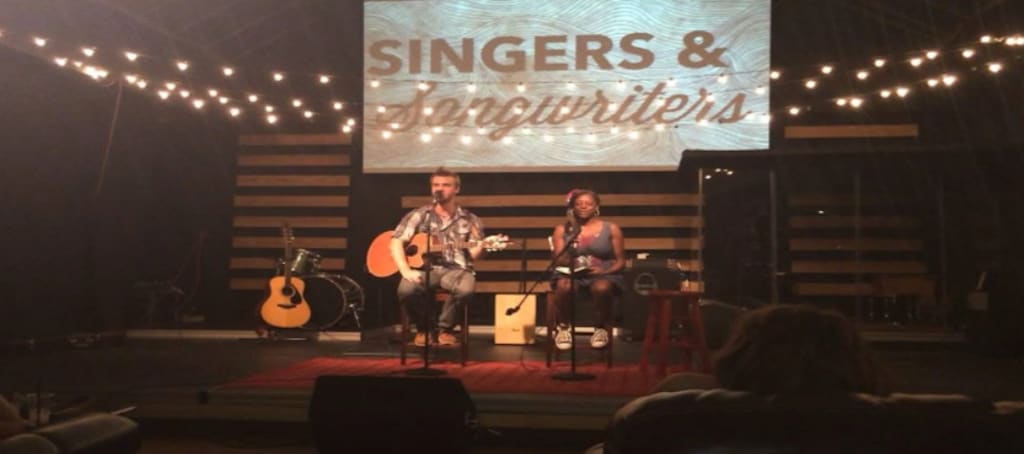
1. Before I Had the Language for Systems
Before I had the language of capacity, legitimacy, or institutional design, I learned scale from inside a megachurch.
I also learned, long before I had the language for it, how different it could feel to be welcomed by an institution and to be fully recognized by it.
I learned that scale is not accidental. It is designed.
For years, I thought my dream was to become a worship leader. Since middle school, I imagined myself helping build something from the ground up: a church plant, a worship team, a space where music could make people feel connected to something larger than themselves.
CrossPointe became the place where I got to study that dream from the inside. As the sole worship intern for that year, I learned how a church plant could become a megachurch not only through belief, but through structure: staff meetings, worship schedules, rehearsal planning, volunteer coordination, sound checks, stage lights, and the quiet operational systems that made Sunday morning feel seamless.
The goal was excellence in delivery. Remove the distractions. Eliminate the friction. Create an atmosphere where people could enter, sing, feel, listen, respond, and belong.
That was the first lesson: scale depends on more than inspiration. It depends on logistics.
2. What Megachurches Got Right About Scale
Megachurches like CrossPointe understand that reaching people requires more than sincerity. It requires infrastructure.
What went into a Sunday morning was nothing short of amazing to me as an intern. CrossPointe used a churchwide system to schedule leaders and volunteers across services: worship team, audio team, visual arts team, greeting team, children’s ministry, youth ministry, and other ministries all aligned around the church’s theme for the week. The themed sermon series would be entered in advance with the pastor’s notes, accompanying Scripture, and the flow of service.
The logistics of it were excellent to me. It took a village to make it all come together.
There was an immediate call to action built into the atmosphere. The lights were lowered for worship to minimize distractions and elicit an emotional response. The greeting team would welcome attendees with donuts and coffee. The worship team would lead three to four songs, one often tied to the offering. Then the pastor would give his sermon, followed by a time of response and a closing song. If anyone wanted to speak with someone about faith, another set of volunteers was available at the end of the service.
CrossPointe had two Sunday morning services, one at 9 a.m. and another at 11 a.m. Celebrate Recovery met on a weeknight. Youth ministry gathered on another. The college ministry, The Pointe, met on yet another night. Across all those services, the leaders shared the same goal: to lead people into worship, no matter what they looked like or where they came from, at scale.
That was the power of the model.
CrossPointe’s own language was built around welcome: “Come as a visitor, leave as family.” That promise mattered to me. It was part of why the institution felt so powerful. But years later, I find myself asking a harder question: what happens when a system can call people family while still treating parts of who they are as something to be corrected?
They understood reach. They understood something many institutions miss: meaning does not travel through sincerity alone.
It travels through systems.
3. The Machine Behind the Moment
But what formed me most was not only what happened on Sunday mornings. It was what I saw during the week.
When I was not at college, I had to be at the church by 9:30 a.m. I sat in weekly staff meetings led by Pastor David. The staff would fill a room toward the back of the church, everyone attuned to his seriousness and occasional subtle humor. He would explain why he had chosen the sermon series for the coming weeks. It was calculated, informative, and intentional. I often felt like I was supposed to leave those meetings more motivated to serve.
I spent time with Spence, the worship pastor who mentored me. He would tell me that the heart must come first, and that the singing and playing would follow. He taught me the churchwide scheduling system used to build an entire service with all the teams involved. I played keys a few times and led with my guitar at others. Timing always seemed to matter most.
I watched how worship was planned before it became emotional, how logistics became atmosphere, and how leadership decisions shaped what the congregation experienced as seamless.
Those meetings taught me that scale is not just about size. It is about coordination. It is also about cost. One week, I found out how much the monthly power bill was, and it was in the thousands. Scale required calendars, conversations, expectations, rehearsals, volunteers, timing, and the quiet discipline of making a large institution feel personal.
I was not on the outside looking in.
I was inside it, learning how reach was built.
And yet, this is where I learned that reach is not the same as recognition.
4. Reach Is Not Recognition
Megachurches taught me that scale can gather people across difference. But they also taught me that gathering people is not the same as accepting them. A system can welcome a crowd while still denying parts of the people inside it — often to the detriment of their very identity.
CrossPointe could gather people across race, class, age, and background. But gathering people is not the same as recognizing them.
The guilt and shame that come from the construct of sin were still embedded in their theology and delivery. There were reservations about who you could fully be once you had faith. When identity becomes something to be corrected rather than honored, belonging becomes conditional.
I heard it through subtle conversations, jokes, and calls to respond. I felt it even more because I was on the inside, and I knew I could never be fully myself if I stayed.
We are human regardless of who we identify as. Any system that requires people to shrink themselves in order to belong has confused reach with recognition.
CrossPointe understood reach. They understood something many institutions miss: meaning does not travel through sincerity alone.
It travels through systems.
I could admire the scale of the system and still recognize its limits. I can still reflect on the leaders I trusted to further my craft. I could see how it reached people, how it moved people, how it built meaning through repetition, music, infrastructure, and shared purpose.
But reach was not the same as recognition.
That is when I knew I was not going to live a lie about the truest part of myself.
I was going to walk away from everything I knew — and from the dream I had carried through most of my youth.
5. The Recognition Loop
Scale can gather people. Recognition determines whether they are allowed to remain whole once they arrive.
That is why I think of belonging as a loop, not a promise. First comes reach: the ability to gather people across difference. Then comes the belonging threshold, when the system becomes large enough to define who does and does not belong. Then comes the recognition audit: the moment when the institution must ask who is welcomed, who is corrected, who is excluded, and who is erased.
Accountability comes next. That means reforming leadership, language, access, and care. Only then can a community return with fuller recognition.
Recognition doesn’t just happen haphazardly or by chance. Belonging is maintained through recognition, not assumption. It must be intentional.
6. Why I Walked Away
The truth is at CrossPointe it felt like home, but there was always an element that felt off. That I would never truly be able to be my full self. That I was just walking in sin by coming out. That I could never lead worship ever again because of my true identity. I was integrated enough to see the system from the inside — and still free enough to walk away.
I could see what the system could do. I could also see what it could deny. From everything I learned, I simply could not stay and live a lie among my mentor, my friends, my church members, my pastors, and my family. I made the decision to walk away from everything I knew and cared for. It was one of the hardest things I ever have done because it felt like a part of my identity itself was being severed from me. But what felt like severing was also becoming.
It reminded me of a scene from Star Wars: The Clone Wars, when Ahsoka Tano leaves the Jedi Order after realizing the institution that formed her could no longer be trusted to recognize her truth: “The Council didn’t trust me. So how can I trust myself?”
That was how walking away felt to me. Not dramatic in the same way, but spiritually familiar. I had been formed by a system that gave me language, discipline, and purpose — and yet I could no longer stay inside it without losing myself.
7. How It Shaped My Politics Now
I no longer believe in the same way I once did. I have grown apart from the church at large, and my views are now far more humanistic and secular than they were when I was younger and serving from the inside. I see the influence they hold in our society, and my focus now is to rather integrate the good from what I learned in the church: feeding the poor, clothing the naked, giving rather than receiving, and continuously trying to be truthful.
There was one thing, more than anything else, that I carried forward from my experience with megachurches: the ability to scale through reach. It moved from church to democracy, climate, governance, and institutional legitimacy.
Today, my focus is no longer worship leadership. It sits at the intersection of democracy, climate, and governance. But the question remains familiar: how do institutions reach people without losing accountability to them?
I no longer want systems that merely reach people. I want systems that recognize them.
8. The Broader Lesson: Scale Must Answer to People
Megachurches taught me scale — the capacity to reach people through infrastructure. Walking away taught me that reach must be accountable to recognition.
Capacity matters because it allows systems the ability to act, scale and deliver outcomes. Reach matters because it can gather people across difference. Infrastructure matters because it gives systems a framework to work from. But capacity without recognition becomes exclusion. And scale without moral checkpoints becomes power protecting itself for power’s sake.
The lesson I carried with me is not that scale is bad. It is that scale must be governed. To reach people is not enough. Systems must remain answerable to the people they reach.
Megachurches taught me that scale can move people. Walking away taught me that scale must answer to them.
About the Creator
Caleb Scott Policy
Policy writer and digital strategist writing about power before it calcifies, institutions before they fail, and the choices that decide whether democracy delivers. Climate, GA politics, legitimacy, and the gap between promise and capacity.
Enjoyed the story? Support the Creator.
Subscribe for free to receive all their stories in your feed.
Comments
There are no comments for this story
Be the first to respond and start the conversation.