
Cancel Culture: Protection or Problem?
Where Accountability Meets Overreaction in the Age of Online Judgment

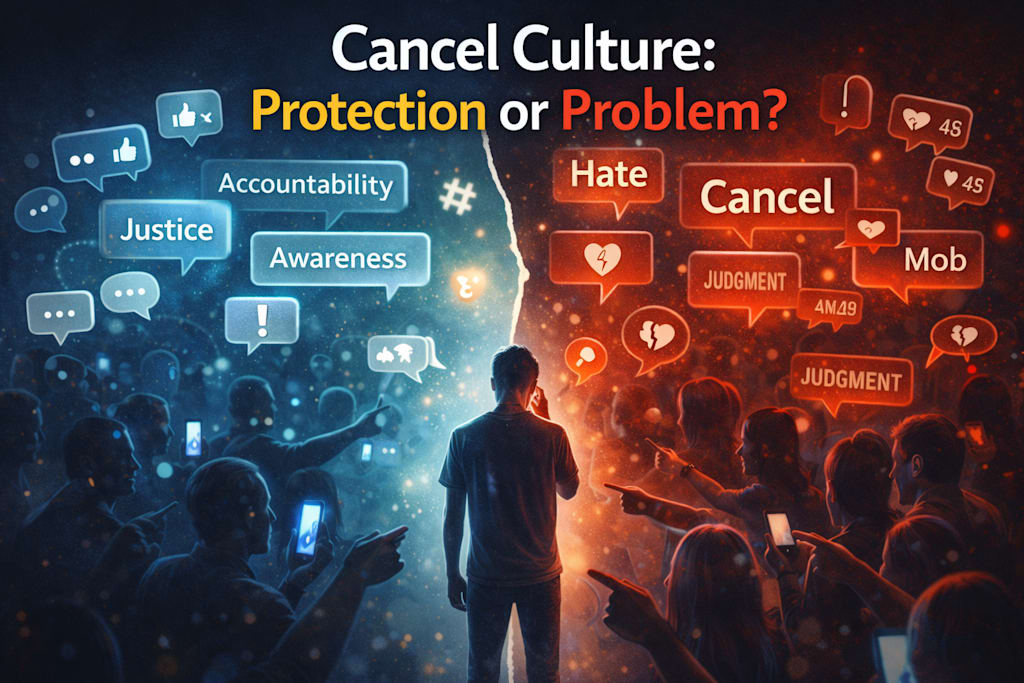
In the digital era, public opinion travels faster than ever. A single tweet, video, or statement can reach millions within minutes—and sometimes, it can just as quickly destroy reputations. This phenomenon is often referred to as “cancel culture,” a term used to describe the act of collectively calling out, boycotting, or withdrawing support from individuals or organizations for behavior deemed offensive or unacceptable.
But is cancel culture a necessary tool for accountability, or has it become a harmful form of online mob justice? The answer is more complex than it first appears.
Understanding Cancel Culture
Cancel culture is rooted in the idea that people should be held responsible for their actions—especially when those actions cause harm. In many cases, it has been used to call attention to serious issues such as discrimination, harassment, and abuse of power. Social media platforms like Twitter, Instagram, and TikTok have amplified this process. They give ordinary users a voice and the ability to hold powerful figures accountable in ways that were not possible before. At its core, cancel culture is about consequences. When someone violates social norms or ethical expectations, the public reacts—and sometimes demands change.
The Positive Side: Accountability and Awareness
Supporters of cancel culture argue that it serves an important purpose. For years, many powerful individuals and institutions operated without facing consequences for harmful behavior. Cancel culture, in some cases, has helped correct that imbalance.
1. Giving a Voice to the Marginalized
Cancel culture has empowered people who previously felt unheard. It allows individuals and communities to call out injustice and demand accountability.
2. Encouraging Responsibility
Public figures are now more aware that their actions and words have consequences. This has led to greater caution and, in some cases, more respectful behavior.
3. Raising Awareness
Many important social issues have gained attention through online movements. Topics that were once ignored are now part of global conversations.
In these ways, cancel culture can function as a tool for social progress.
The Negative Side: When Accountability Becomes Punishment
Despite its potential benefits, cancel culture has also faced significant criticism. One of the biggest concerns is that it can quickly shift from accountability to excessive punishment.
1. Lack of Context
Online outrage often spreads before all the facts are known. A short clip or quote can be taken out of context, leading to widespread judgment without a full understanding of the situation.
2. No Room for Growth
Cancel culture can sometimes treat mistakes as permanent. Instead of allowing individuals to learn, apologize, and improve, it may label them indefinitely. This raises an important question:
Should people be defined by their worst moment, or should they be allowed to grow beyond it?
3. Mob Mentality
When large groups of people join in criticism, it can create a mob-like environment. Individuals may participate without fully understanding the issue, simply following the trend. This can lead to:
- Harassment
- Threats
- Emotional harm
In extreme cases, the consequences go far beyond what may be considered fair or reasonable.
The Role of Social Media Algorithms
Another factor that fuels cancel culture is the design of social media platforms. Algorithms tend to promote content that generates strong reactions—especially outrage.
This means controversial or emotionally charged posts are more likely to spread, even if they lack accuracy or context. As a result, cancel culture can escalate rapidly, often before a situation is fully understood.
Public Figures vs. Private Individuals
There is also an ongoing debate about who should be subject to cancellation. Public figures such as celebrities, politicians, and influencers often have large platforms and influence. Holding them accountable can be seen as necessary. However, when cancel culture targets private individuals, the consequences can be severe. Someone without a public platform may suddenly face global criticism, harassment, and even threats, often without the resources to respond.This raises ethical concerns about fairness and proportionality.
Cancel Culture and Freedom of Expression
Critics argue that cancel culture can discourage open discussion. People may fear speaking their opinions, worried that a mistake or unpopular view could lead to backlash.
This creates a culture of caution where:
- People self-censor
- Conversations become limited
- Diverse perspectives are reduced
On the other hand, supporters argue that freedom of expression does not mean freedom from consequences. Words and actions still carry responsibility.
The Importance of Intent vs. Impact
One of the most debated aspects of cancel culture is whether intent or impact matters more.
Intent: What the person meant to say or do
Impact: How it affected others
Cancel culture often focuses on impact, sometimes ignoring intent. While impact is important, completely disregarding intent can lead to unfair judgments. A balanced approach requires considering both.
Is There a Better Alternative?
The challenge is finding a middle ground between accountability and fairness.
Instead of immediate cancellation, some suggest:
- Encouraging open dialogue
- Allowing space for apologies and growth
- Focusing on education rather than punishment
- Evaluating each situation individually
Accountability should not necessarily mean permanent exclusion.
A Culture of Learning vs. A Culture of Fear
At its best, society should encourage learning, growth, and understanding. When people are given the opportunity to acknowledge mistakes and improve, meaningful change becomes possible.
However, if cancel culture creates fear instead of awareness, it may discourage people from engaging in important conversations.
Final Thoughts
Cancel culture is neither entirely good nor entirely bad. It is a powerful social force that reflects the values and tensions of the modern world.On one hand, it has helped bring attention to important issues and hold people accountable. On the other, it can sometimes lead to unfair judgment, excessive punishment, and a lack of empathy.
The key lies in balance.
- Accountability is necessary—but so is fairness.
- Criticism is important—but so is understanding.
- Consequences matter—but so does the opportunity to grow.
In the end, the question is not just whether cancel culture is a protection or a problem. It’s how we, as a society, choose to use it.
About the Creator
Robert Redford
i create powerful, easy-to-read articles on everything from history and world events to technology, lifestyle, and thought-provoking ideas. If sparks curiosity, I write about it. Always exploring, always delivering something worth reading.
Enjoyed the story? Support the Creator.
Subscribe for free to receive all their stories in your feed.
Comments
There are no comments for this story
Be the first to respond and start the conversation.