slam poetry
Slam poetry: that magical mix of rhythm and rhyme.
The Art of Strategic Laziness: Redefining Productivity in a Burnout Culture
Introduction: The Productivity Paradox We live in a world obsessed with hustle. The glorification of "busyness" has led to burnout, chronic stress, and a pervasive sense of inadequacy. Yet, the 20 principles from The Art of Laziness challenge this narrative, advocating for a counterintuitive approach: working smarter, not harder. This philosophy—dubbed "strategic laziness"—isn’t about avoiding effort but channeling it intentionally. By prioritizing what truly matters, eliminating distractions, and embracing imperfection, we can reclaim our time, energy, and joy. Let’s explore how these principles dismantle toxic productivity myths and pave the way for sustainable success. 1. The 80/20 Rule: Doing Less to Achieve More The Pareto Principle (80/20 rule) is the cornerstone of strategic laziness. It teaches that 80% of outcomes stem from 20% of efforts. Yet, most people waste time on low-impact tasks—endless emails, trivial meetings, or perfectionism—that drain energy without moving the needle. Why It Works: Clarity: Identifying high-impact tasks (e.g., client acquisition, creative projects) sharpens focus. Resource Allocation: Redirect time from "busywork" to activities that align with long-term goals. Reduced Overwhelm: Narrowing priorities minimizes decision fatigue. Practical Application: Audit your weekly tasks. Which 20% drive 80% of your progress? Eliminate or delegate the rest. Use the “Two-Minute Rule”: Execute small tasks immediately to clear mental clutter. 2. The Myth of Multitasking and the Power of Single-Tasking Multitasking is a lie. Research shows task-switching can slash productivity by 40%, as the brain expends energy “rebooting” focus each time. Strategic laziness demands deep work—immersing fully in one task until completion. The Science of Focus: Cognitive Bandwidth: The brain’s prefrontal cortex thrives on undivided attention. Flow State: Single-tasking triggers flow, a state of heightened creativity and efficiency. Practical Application: Block time for priority tasks. Turn off notifications, close tabs. Schedule “focus sprints”: 90-minute sessions followed by breaks. 3. Delegation and the Art of Saying No Strategic laziness recognizes that time is finite. Saying “yes” to everything—whether trivial tasks or others’ demands—robs you of agency. Delegation and boundaries protect your most valuable resource: attention. The Cost of People-Pleasing: Energy Drain: Overcommitment fractures focus and breeds resentment. Opportunity Loss: Time spent on low-value tasks steals from high-impact goals. Practical Application: Delegate ruthlessly. Ask: "Is this task essential for me to do personally?" Politely decline non-critical requests and avoid unnecessary meetings. 4. Embracing Imperfection: The Perfectionism Trap Perfectionism is procrastination in disguise. It paralyzes progress, as fear of failure outweighs the courage to act. Strategic laziness prioritizes done over perfect. The Psychology of "Good Enough": Momentum > Stagnation: Completing tasks builds confidence and momentum. Iterative Improvement: Launch, gather feedback, refine. Practical Application: Set realistic deadlines. A finished project with flaws beats an unfinished “masterpiece.” Ask: "Will polishing this further meaningfully improve outcomes?" 5. Aligning Work with Passion: Sustainable Productivity Burnout often stems from misalignment between work and values. Strategic laziness isn’t just about efficiency—it’s about crafting a life where effort feels purposeful, not punitive. The Joy-Efficiency Loop: Intrinsic Motivation: Passion fuels perseverance. Energy Renewal: Loving your work reduces reliance on willpower. Practical Application: Audit your goals. Are they tied to your values? Gradually shift tasks toward activities that energize you. Conclusion: Redefining Success Through Strategic Laziness The principles of The Art of Laziness aren’t about apathy—they’re about liberation. By ruthlessly prioritizing, guarding focus, and embracing imperfection, we reclaim agency over our lives. Productivity becomes not a race, but a rhythm: intentional, sustainable, and aligned with purpose. In a world that equates busyness with worth, strategic laziness is rebellion. It’s the quiet assertion that how we work matters far more than how much.
By Medical Doctor 💊🏥2 years ago in Poets
One Day I…
The sun sat low in the sky, spilling its last warmth over the land. The air was still, yet my chest held a storm. I sat alone on a flat rock, toes digging into the dry earth, watching shadows stretch long across the savanna. This moment—this endless stretch of quiet—should have been enough. But I wasn’t here.
By Elsa Rose N. Cheping2 years ago in Poets
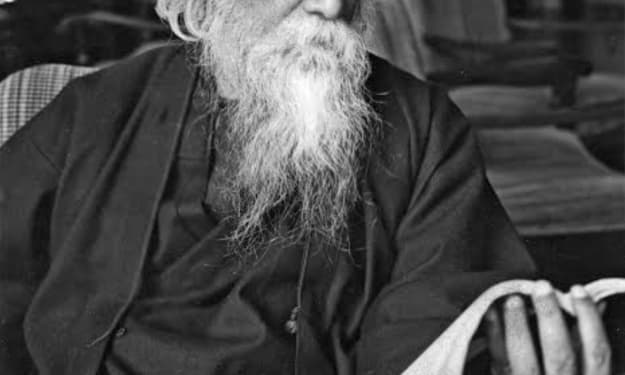
Ravindranath Tagore
Rabindranath Tagore: The Bengali Visionary Poet One of India's greatest writers, Rabindranath Tagore was a poet, philosopher, musician, artist, and educator whose work had an impact far beyond Bengal and India. He was born on May 7, 1861, in Calcutta (now Kolkata). In 1913, he became the first non-European to win the Nobel Prize in Literature, rewriting Bengali literature and music. Education and childhood Tagore was born into a prominent Bengali family with a high intellect. Debendranath Tagore, his father, was a prominent participant in the Brahmo Samaj movement, which sought to modernize and reform Hindu society. Rabindranath was exposed to literature, philosophy, and music from a young age. He was educated mostly at home, which was different from traditional education, and he had a strong dislike for formal education. Tagore went to England in 1878 to study law, but he didn't finish his degree when he got back. However, his time in Europe broadened his perspective on the world and introduced him to Western literature, music, and art, all of which would later have an impact on his own work. Achievements in literature Tagore started writing poetry when he was eight years old, and by the time he was in his teens, he had published a few of his poems. His first works were written in Bengali, and over time, he published a large number of poems, plays, essays, novels, and songs. “Gitanjali” (Song Offerings), his most well-known poetry collection, won him the Nobel Prize in Literature in 1913. He combined universal humanism with deep spiritual and philosophical ideas in "Gitanjali," which he wrote. Nature, human emotion, spirituality, nationalism, and individual struggles were common themes in Tagore's writing. In addition to poetry, his works include plays like "Dak Ghar," short stories like "Kabuliwala," novels like "Ghare-Baire" (The Home and the World), and short stories like "Kabuliwala." Art and Music Tagore was also an accomplished musician and composer. Rabindra Sangeet is a distinct musical style that combines Indian classical music with folk music and Western influences. Themes and emotions he sang about ranged from love and devotion to patriotism and sorrow. Additionally, Tagore was an accomplished painter. Even though he started painting in his 60s, his bold and abstract style earned him international recognition for his visual art. He was truly a Renaissance man of modern India because of his talent across a variety of fields. Perspectives on Politics and Social Change Tagore was in favor of Indian independence but opposed aggressive nationalism. He advocated for peaceful intercultural coexistence and humanism. Through his writings, he criticized British colonialism and even renounced his knighthood in 1919 in protest of the Jallianwala Bagh massacre. Tagore was also a social reformer who worked for rural development, women's rights, and education. He was extremely concerned about Indian society's religious divisions and rigid caste system. Education and Shantiniketan The establishment of Visva-Bharati University in Shantiniketan in 1921 was Tagore's most significant contribution to education. His idea was to combine Eastern and Western philosophies to create a learning environment where students could freely explore their creativity in close proximity to nature. Scholars, artists, and thinkers from all over the world, including Albert Einstein, Romain Rolland, and Mahatma Gandhi, flocked to Shantiniketan as a center for cultural exchange. Legacy and Death On August 7, 1941, Rabindranath Tagore, who was 80 years old at the time, passed away. His vast body of work and influence on Indian culture, literature, and education continue his legacy. His compositions "Jana Gana Mana" and "Amar Shonar Bangla" were later adopted as the Indian and Bangladeshi national anthems, respectively. --- Conclusion Not only was Rabindranath Tagore a brilliant writer, but he was also a brilliant thinker who helped shape the modern Indian cultural identity. Generations of people all over the world continue to be inspired by his contributions to poetry, music, education, and social change.
By Nabir Mondol2 years ago in Poets