Acrostic
Justice in Verse: When Karma Rhymes with Right
About poetry Justice in Verse: When Karma Rhymes with Right In the small town of Greenwood, nestled between whispering forests and sun-drenched hills, stories had a way of unfolding like poetry — some sweet, some bitter, and some with justice so fitting, it felt as though fate itself had picked up a pen. Among its residents was Elena Marlowe, a high school literature teacher known for her soft voice, fierce intellect, and unwavering belief in the power of doing what’s right. She was the kind of teacher who saw potential in every student — especially the ones others gave up on. One of those students was Chase Donovan — smart, witty, and endlessly disruptive. While others saw a troublemaker, Elena saw a mind bursting with creativity. But Chase had a habit of cutting corners, mocking classmates, and using his quick tongue to manipulate situations to his favor. One day, the school announced a prestigious poetry competition. The winner’s poem would be published nationally, and a scholarship would be awarded. Elena encouraged all her students to enter, hoping the opportunity might inspire them, especially Chase. A week before the submission deadline, Chase turned in a stunning poem — vivid, emotional, and mature beyond his years. Elena was astonished. She praised his work but asked, “Did you write this yourself, Chase?” He smirked. “Of course I did.” But something didn’t sit right. The voice of the poem — its depth, its tone — didn’t match Chase’s usual style. That night, Elena did a little research. Within minutes, she found the exact poem online, written by a lesser-known poet in a forgotten blog. Elena was torn. She believed in second chances, but also in truth. Quietly, she took the matter to the principal, presenting the evidence without shaming Chase publicly. The school disqualified his entry without making a scene, but word spread among the students. Whispers followed Chase down the halls, and respect for him faded quickly. At first, he was angry. He called Elena a snitch. He sulked. He skipped class. But as the weeks passed, something shifted. The shame turned into reflection. Meanwhile, another student — Maya Singh, shy and often overlooked — had submitted a modest poem about hope and resilience. It wasn’t flashy, but it was honest. When the judges announced her as the winner, the school was surprised, but Elena smiled knowingly. Months later, Chase stayed after class. “I was mad at you,” he admitted, eyes low. “But you were right. I didn’t write that poem. I just wanted to win… for once.” Elena didn’t scold. She nodded gently. “Wanting to win isn’t wrong. But how you get there matters more.” Chase paused. “Can I try again? I want to write something real this time.” And he did. In the following months, Chase poured himself into writing. His poems weren’t perfect, but they were raw, authentic, and undeniably his. Elena helped him revise, encouraged his voice, and when the next year’s competition came around — Chase submitted a new poem. It didn’t win a scholarship. But it was featured in the school’s literary magazine, and more importantly, it earned him the respect he’d lost. Even Maya congratulated him. “Your voice is strong,” she told him. “Don’t trade it for someone else’s again.” Elena watched from afar, heart full. She didn’t need recognition. The moment justice had been served — quietly, correctly, and with compassion — she knew she’d done her part. Years later, Chase sent her a letter from college. > Ms. Marlowe, You taught me more than poetry. You taught me that doing the right thing doesn’t always feel good at first, but it lasts. Thanks for seeing me when I couldn’t see myself. P.S. I’m majoring in English. --- Moral of the Story: Poetic justice isn’t always dramatic or loud. Sometimes, it’s quiet, slow-burning, and deeply human. It’s when the truth gently triumphs, when integrity is rewarded, and when those who stray are guided — not punished — back to their better selves. In a world quick to condemn or cancel, Elena chose correction over humiliation, guidance over revenge. And that made all the difference. Because in Greenwood — as in life — the most meaningful verses are the ones written with honesty, courage, and heart. Thank you
By Muhammad Saad about a year ago in Poets
The Poet’s Lighthouse
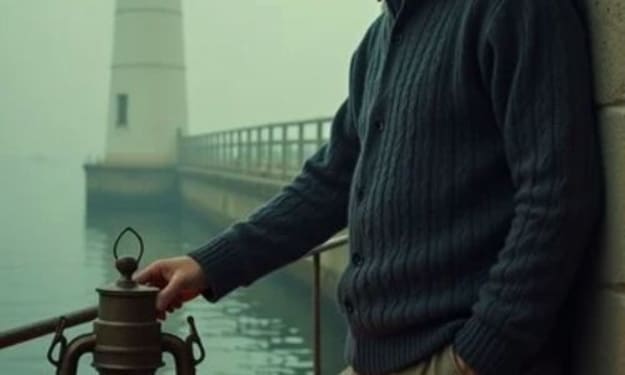
M Mehran On the edge of a jagged coastline, where waves clashed endlessly against weathered rocks, stood a lighthouse unlike any other. It wasn’t just a beacon for ships; it was a sanctuary for poets, a place where words were as vital as the wind, and silence was never empty. Evelyn, a poet with a heart that carried both joy and sorrow in equal measure, had arrived one stormy evening. She had left the city behind, the noise, the chaos, the constant rush of life that drowned out the delicate rhythms of thought. The lighthouse, with its peeling white paint and glass lantern glowing faintly against the dark sky, promised solace—and inspiration. Inside, the walls were lined with notebooks, some stacked in piles, others hung carefully on hooks like ornaments. Each notebook represented a poet who had passed through, leaving behind fragments of their soul. The caretaker, an elderly man named Simon, welcomed Evelyn with a nod. “Words find their way here,” he said simply. “Sometimes they arrive before the poet does.” Evelyn unpacked her things and sat by a window, watching the storm rage. She had been writing for years, but lately, her words felt heavy, trapped in shadow. She opened her notebook and began to write, letting the wind guide her thoughts. Her pen moved almost on its own, tracing lines about the sea, about loneliness, about longing, and hope that refused to die. That night, the lighthouse filled with other poets—some seasoned, some tentative, all seeking the same thing: a place where their words could breathe. There was Marcus, whose metaphors were sharp like the rocks below, cutting to the heart; Leila, who wrote with the gentleness of a lullaby, soothing pain with every verse; and Noah, who wielded language like a sword, confronting truths others preferred to ignore. Evelyn listened to them all, her own insecurities slowly melting in the warmth of their voices. When it was her turn, she read aloud. Her words spoke of storms, of finding light amidst darkness, of the ocean’s endless patience. As she read, the lighthouse seemed to respond—the lantern above pulsed softly, the waves softened, and a hush fell over the room. For a moment, it felt as if the world itself was listening. Simon smiled. “The lighthouse remembers,” he said quietly. “And it shares its memory with those who speak honestly.” Over the following weeks, Evelyn discovered a rhythm she had never known. Each morning she wrote, letting the sea inspire her, and each evening she shared her work with the circle. The poets became her companions, her critics, and her cheerleaders. Together, they discovered the truth that poetry was never solitary—it was a conversation, a bridge between hearts. One evening, during a particularly fierce storm, the lighthouse’s light faltered. Ships could not see its guiding beam, and fear rippled through the poets. Simon asked for volunteers to help keep the light steady. Without hesitation, Evelyn and the others climbed to the top, their poems tucked in their pockets, their hands steady against the wind and rain. As they worked, Evelyn recited a poem about resilience, about courage in the face of fear. The others joined in, each voice layering over the next, a chorus that defied the storm. The light shone again, strong and unwavering, a beacon not just for ships, but for every poet who had struggled to be heard. When the storm passed, the poets looked out at the calm sea, and Evelyn realized something profound: poetry was not merely about words on a page. It was about action, about connection, about standing firm in the face of chaos and letting your voice matter. Years later, Evelyn returned to the city, carrying the lessons of the lighthouse in her heart. She wrote with newfound confidence, sharing her words widely, yet always remembering the sanctuary by the sea. And sometimes, when the night was quiet, she would close her eyes and hear the echoes of that storm, the chorus of voices, and the gentle hum of the lighthouse that had shown her the way. The Poet’s Lighthouse, she knew, was more than a place. It was a reminder that poets are guardians of light, keepers of memory, and creators of hope. And as long as someone dared to speak, there would always be a beacon shining through the darkness. Because poetry, like the lighthouse, does not vanish. It endures, guiding hearts through storms, illuminating truths, and reminding the world that even in the darkest night, words can lead the way.
By Muhammad Mehranabout a year ago in Poets
The Last Poem of Willow Street
M Mehran Willow Street was quiet, almost too quiet. Nestled between crumbling brick buildings and fading streetlamps, it had once been alive with music, laughter, and poetry. But the world had changed, and poets—those who could see the extraordinary in the ordinary—had become rare. Among the few who remained was Ada, a young poet with ink-stained fingers and a notebook always tucked under her arm. She had grown up on Willow Street, listening to her grandmother recite verses beneath the maple tree that marked the corner of the street. “Poetry,” her grandmother had said, “is the heartbeat of life. Without it, the world forgets how to feel.” Ada wrote every day, capturing the whispers of the wind, the sighs of old buildings, and the secrets that people never spoke aloud. But she rarely shared her words. Poetry, she had learned, was a fragile thing—one misstep, one careless comment, and the beauty could shatter. One evening, the street buzzed with unusual activity. A flyer had appeared on every lamppost, announcing a poetry reading at the old community hall—the first in decades. Curiosity drew Ada there, her notebook clutched tightly. Inside, the hall smelled of dust and nostalgia. Wooden chairs, some broken, were arranged in imperfect rows. A single microphone stood on a small stage. The room filled slowly, with faces both familiar and strange. Then came the poets, each carrying their own storm of thoughts. There was Thomas, whose verses were sharp and biting, cutting through pretense; Miriam, who wrote with tenderness so profound it could heal invisible wounds; and Leo, whose words danced like fire on the floor, igniting every listener’s imagination. When Ada’s turn arrived, she hesitated. Her hands shook, and her voice caught in her throat. But then she remembered her grandmother’s words and began to read. Her poem was about Willow Street itself—a silent witness to love, loss, joy, and sorrow. She wrote of the maple tree, now old and bare, that had cradled generations of dreamers. She wrote of the laughter that once echoed in the alleyways, the conversations that had dissolved into memory, and the unspoken promise that life, despite everything, continued. As she spoke, something extraordinary happened. The room fell completely silent. People leaned in, as though the words themselves had weight, pulling them closer. Ada’s trembling voice grew steadier. The street she loved, the memories she cherished, and the poets who had come before her seemed to come alive within her verses. When she finished, there was a pause—long enough to feel like eternity. Then the applause erupted, not just polite clapping, but the sound of hearts opening, of generations reconnecting with a part of themselves they had forgotten. Ada realized she had not just shared a poem; she had breathed life back into Willow Street. After the reading, the poets lingered. They spoke in whispers, sharing stories of their own struggles and triumphs. Ada felt a sense of belonging she had never known. Poetry, she understood now, was more than words—it was community, connection, and courage. Over the next weeks, Willow Street began to awaken. People who had long ignored the faded corners of their neighborhood started leaving notes of verses in windows and on benches. The maple tree became a meeting place again, where poets, young and old, gathered to share their words. Ada and the other poets formed a small circle, teaching and encouraging anyone who wished to write. One night, as Ada sat beneath the maple tree, notebook open, she reflected on the transformation. Poetry had not only returned to Willow Street—it had restored it. The street now pulsed with a quiet energy, a rhythm only those attuned to beauty could hear. Ada wrote a final line in her notebook, looking up at the sky: “Poets are the keepers of memory, the whisperers of truth, the light in shadows. As long as we speak, no street, no heart, no life will ever truly be silent.” And with that, she closed her notebook, knowing that Willow Street would never be forgotten. It would live on in the verses of its poets, in the laughter of those who dared to remember, and in the hearts of everyone who believed in the enduring power of words. Because poetry, Ada realized, is never truly gone. It waits patiently for the next poet, the next voice brave enough to speak, to remind the world that life is meant to be felt, cherished, and remembered.
By Muhammad Mehranabout a year ago in Poets
Echoes of the Forgotten Verse
M Mehran In the heart of a city that never slept, where skyscrapers scraped the clouds and neon lights painted the night, there was a small, almost invisible alleyway. Tucked between a laundromat and a convenience store, a tiny shop called The Inked Lantern existed, a place where poets gathered to remember that words could matter more than anything else. The shop was run by an old man named Rowan, who had once been a celebrated poet. His hair was silver, his hands lined with age, and his eyes held a lifetime of verses no one had ever read. He had opened The Inked Lantern after losing faith in the world’s desire to listen. “People forget too quickly,” he would mutter, polishing the counter. “Poetry is for those who remember.” It was on a rain-soaked evening that Lila stumbled upon the shop. She was young, barely twenty-two, with a mind bursting with ideas and a heart aching with unspoken emotions. She had been wandering the city, searching for inspiration, when the flickering light of the lantern drew her in like a moth to a flame. Inside, the air was warm, filled with the scent of parchment and tea. Shelves overflowed with books, some so old the words seemed to hum with history. At the back, a small stage awaited those brave enough to speak. Rowan looked at her and nodded. “You write?” “I try,” Lila admitted, clutching her notebook. “But no one reads anymore.” Rowan smiled faintly. “Then you’ve come to the right place.” That night, Lila listened. She heard verses that were soft as whispers and others that roared like storms. Each poet bared a piece of themselves, each word a fragment of truth. When it was her turn, she hesitated. Her hands shook, her mind raced. Then, slowly, she began. Her poem was about shadows—those that haunted her in the quiet, and those that the world ignored. She spoke of love unspoken, dreams deferred, and moments lost to fear. As she read, she realized that the room was holding its breath, and when she finished, there was silence. Not uncomfortable silence, but the kind that recognizes something rare and fragile. Rowan clapped first. “There’s fire in you,” he said. “Don’t let it die in the dark.” From that night on, Lila became a part of The Inked Lantern. She met others—Jonas, whose words could cut through despair like a blade; Miriam, whose verses were petals falling softly in the wind; and Elias, a quiet poet whose silences spoke as loudly as his lines. Together, they created a tapestry of voices, each unique, each necessary. But poetry, as Lila quickly learned, was never safe. One evening, she found herself sitting alone, staring at her notebook. The words she had once relied on had abandoned her. Fear crept in—the fear that she was nothing without her poems. She closed the notebook, tears stinging her eyes, and left the shop. Rowan found her the next morning, standing under a gray sky. “You think poetry is only the words you write?” he asked. “It’s also the way you feel, the way you see the world, the way you refuse to let life silence you.” Encouraged, Lila returned to The Inked Lantern. She realized that poetry was more than ink on paper; it was courage, connection, and defiance. And when the city tried to swallow her voice, she pushed back, writing not for applause, but for the truth that refused to be ignored. Years passed, and The Inked Lantern became a legend in the city. Those who entered its doors discovered a community that embraced vulnerability and celebrated resilience. Lila, now a poet of renown, returned often to mentor others, sharing Rowan’s wisdom: “Words are eternal if you dare to breathe them into the world.” One night, as the city lights flickered outside, Lila noticed a young girl sitting in the corner, notebook in hand, hesitant and trembling. Lila smiled, remembering herself at that age. “First time?” she asked gently. The girl nodded. Lila guided her to the stage. “Poetry isn’t about being perfect,” she whispered. “It’s about being real. Speak, and the world will hear you—at least, those who need to.” And in that small, glowing shop, amidst the hum of the city, the cycle continued. Poets came and went, but their words remained. They whispered in alleys, dripped from windows, and echoed in the hearts of anyone willing to listen. Poetry, they learned, was not just a pastime—it was survival. It was the way to resist silence in a world that often demanded it. Lila looked around, seeing faces old and new, and understood the truth Rowan had tried to teach her: poets are not just writers; they are witnesses, guardians of feeling, and rebels of the heart. And as long as there were poets, there would be stories, hope, and the courage to speak when silence seemed easier. Because poetry, in the end, is not meant to be forgotten. It is meant to echo, endlessly, in the hearts of those brave enough to listen.
By Muhammad Mehranabout a year ago in Poets
The Midnight Verses
M Mehran In the heart of Crescent City, where the streets hummed with the rhythm of life, a small, dimly lit café existed almost unnoticed. Its wooden sign read The Wandering Quill, and inside, the air was thick with the scent of coffee, old books, and dreams waiting to be written. This was not a café for casual visitors. It was a sanctuary for poets—those who spoke in metaphors, who could turn pain into music, and joy into prose. Among the regulars was Samuel, a poet whose words were as sharp as a knife and as soft as silk. He had come to Crescent City years ago, carrying nothing but a suitcase full of notebooks and a heart brimming with untold stories. Samuel believed that words were alive; they breathed, they bled, they healed. But he also knew that words could betray you, slipping away when you needed them most. One night, as rain streaked the windows, Samuel noticed a newcomer. She sat alone at a corner table, a tattered notebook open before her. Her hands shook slightly, either from cold or nerves—he couldn’t tell. There was a quiet intensity about her, a presence that demanded attention even in silence. “First time here?” Samuel asked, sliding into the seat opposite her. She looked up, startled. “Yes… I—I write sometimes,” she murmured. “Sometimes is good,” he said, “but poetry happens in moments like this. When it scares you, or comforts you, or makes you cry without warning.” Her name was Elara. She confessed that she had always written in secret, her poems hidden in drawers, afraid of judgment, afraid of being misunderstood. Samuel smiled. “Poets are misunderstood by nature,” he said. “That’s what makes us necessary.” That night, the café held its usual gathering. Poets of all ages read aloud, some hesitant, others commanding attention with every syllable. Elara listened, absorbing the rhythm of voices, the cadence of vulnerability. When her turn came, she hesitated, her voice barely a whisper. But the room leaned in, urging her on. She read a poem about stars and solitude, about finding beauty in brokenness. Each line trembled with honesty, and by the end, the café was silent, not out of awkwardness, but reverence. Samuel clapped first, a slow, deliberate applause, followed by others. For the first time, Elara felt seen. In the weeks that followed, Elara returned night after night. Samuel became her mentor, guiding her to find strength in her words, to embrace the chaos of emotions that fueled her poetry. Together, they discovered a rhythm—one of collaboration, challenge, and friendship. But poetry, as they both knew, was not without its trials. One evening, Samuel announced he would leave Crescent City to teach at a university far away. Elara felt a hollow ache in her chest, fearing the silence that would follow his departure. “What will I do without you?” she asked, her voice breaking. “You will do what poets always do,” Samuel replied, placing a hand over hers. “You will write. You will bleed, you will laugh, you will fail, and you will rise. Words are never gone—they live in you.” The night of his departure, the café filled with poets and friends. They shared verses, laughter, and tears. When Samuel left, Elara felt the emptiness, yet also a spark. She realized that mentorship was not about dependence, but empowerment. Samuel had given her more than lessons—he had given her courage. Months turned into years. Elara’s poems, once hidden, began appearing in local magazines, and eventually in anthologies. She hosted open mic nights at The Wandering Quill, welcoming newcomers, guiding them as Samuel had guided her. Every time she read her own words aloud, she remembered the night she first dared to speak, and the poet who had believed in her when she could not believe in herself. Through her journey, Elara understood that poets were the quiet rebels of the world. They challenged conformity with imagery, questioned despair with hope, and reminded humanity that even the smallest word could carry immense power. They didn’t seek fame; they sought truth. And Crescent City thrived because of them. In every whispered verse, in every scribbled notebook, the city’s heartbeat intertwined with the pulse of poetry. The midnight verses became a lifeline, a reminder that emotion, when expressed, could transcend the ordinary. Elara often thought of Samuel, imagining him in a classroom full of students, nurturing words and shaping hearts. She smiled, knowing that their paths, though divergent, shared a common thread—poetry. It was a tether that bound them, across miles, across time. Poets are wanderers, dreamers, and truth-tellers. They see the world not as it is, but as it could be. And in their words, we find courage, hope, and the reminder that every story—no matter how small—is worth telling. The Wandering Quill remained, a beacon for all who dared to feel deeply. And Elara, now a voice among many, carried the legacy of the poets who had come before her. Because poetry, she learned, was eternal—it whispered in the hearts of those who listened, daring them to dream, daring them to write, daring them to live fully.
By Muhammad Mehranabout a year ago in Poets
The Whisper of Words
M Mehran The town of Eldridge had a secret. Not the kind hidden in dark corners or whispered in hushed tones, but a quiet magic that lingered in coffee-stained pages, fluttered between the lines of letters, and hummed softly in the hearts of its people. Eldridge was home to poets—real, unapologetic dreamers who believed in the power of words, even when the world outside scoffed at them. Among them was Clara, a young poet with hair the color of autumn leaves and eyes that saw beyond the obvious. She lived in a small apartment above a bookstore, where the smell of ink and paper was as comforting as sunlight. Her mornings began with the ritual of writing, though the words often refused her, hiding behind the veil of fear and doubt. Some days, her notebook remained stubbornly blank, and she would stare out the window, watching the town awaken, wondering if she was the only one who felt both too much and not enough. Then there was Elias, the older poet, whose reputation had spread far beyond Eldridge. His verses had a way of slicing through the pretense of life, leaving raw truth in their wake. He wore a coat that smelled faintly of cedar and had a habit of tapping his pen against his chin while he thought. Many admired him, but fewer understood the loneliness that accompanied genius. Poets, after all, were wanderers in their own minds. One rainy evening, Clara wandered into the little café at the edge of town, where poets often gathered to read aloud. The café smelled of coffee and rain, a combination that felt like home. She clutched her notebook tightly, unsure if she wanted to read her work or hide it forever. Elias was there, as usual, scribbling something on a napkin, his eyes reflecting the storm outside. “Your first time?” he asked, without looking up. Clara nodded, her throat tight. “I—yes, I think.” He gestured to an empty seat. “Then sit. Listen. Or speak. Or do nothing. It doesn’t matter. Here, words are free.” And so, she listened. One by one, the poets shared their hearts. There was Marla, whose poems were like gentle rain, soft and comforting. There was Jonah, whose words hit like lightning, leaving the room electrified. Each poet offered a piece of themselves, a sliver of truth that made the ordinary seem extraordinary. When it was Clara’s turn, she hesitated. Her pen trembled as she opened her notebook. The café seemed to hold its breath. And then she read. Her words were hesitant at first, fragile as glass, but soon they grew, winding around the listeners, capturing the storm outside and the quiet fear inside her. She spoke of love lost and found, of dreams deferred but not forgotten, of the invisible threads that connected strangers and friends alike. By the time she finished, the room was silent, not out of judgment, but awe. Elias leaned back, smiling faintly. “Not bad,” he said simply. It was the highest praise she could have received. After that night, Clara became a fixture in Eldridge’s poetic undercurrent. She discovered that poetry wasn’t just about rhymes or clever metaphors; it was about courage—the courage to feel, to expose, to speak even when the world seemed deaf. And Eldridge thrived because of it. But not all days were easy. Poets wrestled with shadows more often than others. Clara sometimes doubted if her words mattered, if her voice could ever be heard beyond the quiet walls of her apartment. And Elias, despite all the accolades, struggled with the fear that one day, he would run out of words entirely. It was during one particularly cold winter that Eldridge faced its greatest challenge. The town library, a sanctuary for poets and dreamers, announced it was closing due to funding cuts. The poets were heartbroken. Without the library, where would they gather? Where would the words live? Clara had an idea. “We’ll save it,” she said, her eyes blazing. “We’ll show them that words matter.” Together, the poets of Eldridge organized readings, workshops, and open mic nights. They filled the streets with words, letting poems drift from windows, hang from lamp posts, and echo in the town square. People who had never read a poem before found themselves captivated, moved, inspired. The library doors stayed open, not because of money, but because the town realized the magic it had almost lost. Years later, Clara would remember those nights as the ones that defined her, the moments when poetry was more than just ink on paper—it was rebellion, comfort, and connection all at once. Elias would pass his notebooks to her, trusting that she, too, would carry the torch. Poets, she learned, are not just writers. They are listeners, dreamers, and fighters. They are the quiet rebellion in a world obsessed with noise. And Eldridge, with all its rain, coffee, and scribbled pages, remained proof that words, when spoken with courage, could change everything. Because in the end, poetry is not about perfection. It’s about honesty. And the poets of Eldridge, ordinary yet extraordinary, had that in abundance. The town slept peacefully each night, cradled in the whispers of words, knowing that as long as there were poets, hope, truth, and beauty would never vanish.
By Muhammad Mehranabout a year ago in Poets