
Understanding the Factors of Addiction
What is Addiction?
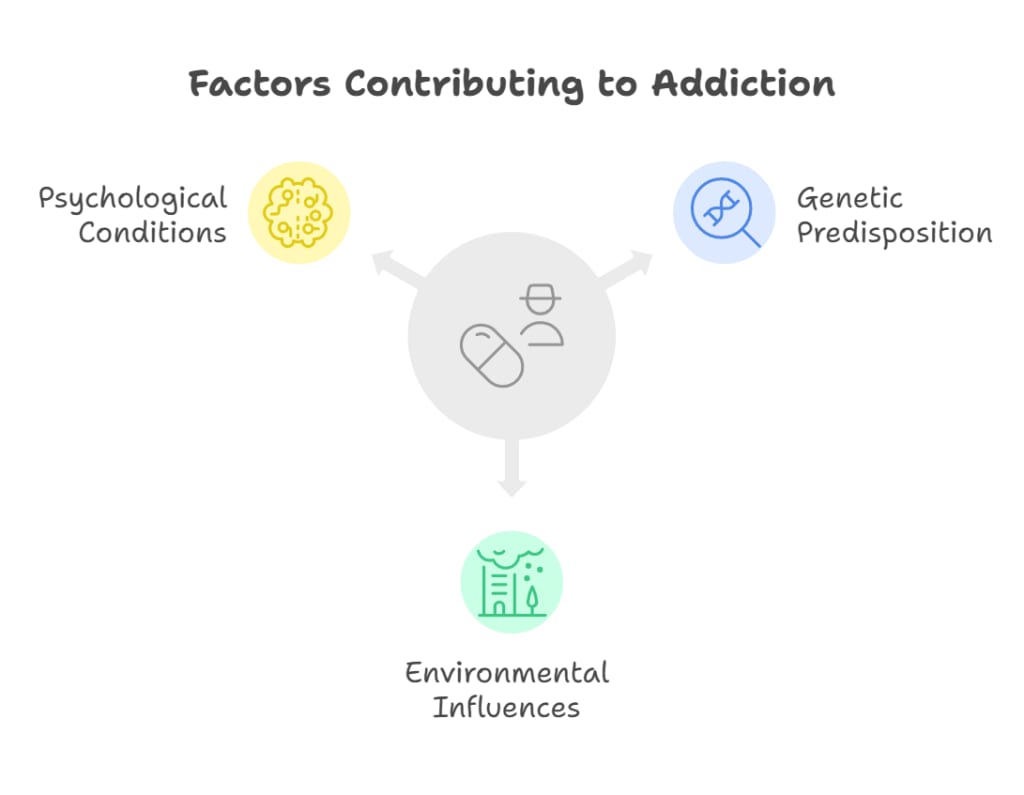
Addiction is a complex and multifaceted condition influenced by various factors, including genetics, environment, and personal experiences. Recent research has increasingly highlighted the significant role that genetic factors play in predisposing individuals to addiction. By understanding these genetic influences, we can better comprehend the nature of addiction and improve treatment strategies. This blog explores the genetic factors of addiction and emphasizes the importance of seeking help from a Rehabilitation centre in Noida
1. Biological Factors 🧬
Biological influences play a major role in addiction. Some people are more genetically predisposed to substance abuse than others.
A. Genetic Predisposition
Studies show that 40-60% of addiction risk is genetic.
If parents or close family members have a history of addiction, there is a higher chance of developing it.
B. Brain Chemistry & Neurotransmitters
Drugs and alcohol affect the brain’s reward system (dopamine production).
Over time, repeated substance use rewires the brain, making it crave the substance to feel normal.
C. Mental Health Disorders
Conditions like depression, anxiety, PTSD, and bipolar disorder increase addiction risk.
Many people use substances as self-medication for mental health struggles.
2. Psychological Factors 🧠
The way a person thinks and feels also impacts their likelihood of addiction.
A. Stress & Emotional Pain
People under chronic stress or trauma may turn to substances for relief.
Stressful jobs, financial struggles, and relationship problems increase addiction risk.
B. Low Self-Esteem & Peer Influence
Individuals with low self-worth may use drugs or alcohol to feel more confident.
Peer pressure, especially among teenagers, is a common cause of substance abuse.
C. Impulsive Behavior & Risk-Taking
Some people have higher impulsivity, making them more prone to experimenting with substances.
Those who seek thrill and excitement may develop addictions more easily.
3. Social & Environmental Factors 🌍
The society and environment a person grows up in play a huge role in addiction.
A. Family Influence & Childhood Trauma
Growing up in a household with substance abuse, neglect, or domestic violence increases addiction risk.
Lack of parental guidance and emotional support can lead to early exposure to drugs.
B. Peer Pressure & Social Circles
Friends or social groups that encourage substance use can influence addiction.
People often start drinking or using drugs to fit in with a certain crowd.
C. Media & Cultural Acceptance
Movies, music, and social media often glorify alcohol and drug use, making it seem normal or desirable.
In some cultures, drinking or smoking is deeply ingrained in traditions, making it harder to resist.
4. Environmental & Economic Factors 💰
A person’s living conditions and financial status can impact their risk of addiction.
A. Accessibility & Availability
Easy access to alcohol, tobacco, or drugs increases the likelihood of addiction.
Areas with high crime rates and drug trade have higher addiction rates.
B. Economic Hardship & Unemployment
Poverty, job loss, and financial struggles can lead to substance use as a coping mechanism.
Many people fall into addiction due to stress and hopelessness.
C. Urban vs. Rural Impact
In urban areas, party culture and fast-paced lifestyles promote substance use.
In rural areas, lack of awareness and mental health resources can lead to addiction problems.
5. How to Overcome Addiction Factors? ✅
Early Awareness: Understanding the risks can help prevent addiction.
Therapy & Counseling: Professional guidance can help address underlying causes.
Healthy Coping Strategies: Exercise, meditation, and hobbies can replace substance cravings.
Strong Support System: Family, friends, and support groups can encourage recovery.
Medical Assistance: Detox programs and medication-assisted treatment (MAT) help in severe cases.
Conclusion
Addiction is influenced by a combination of biological, psychological, social, and environmental factors. Recognizing these factors can help in prevention, early intervention, and effective treatment. Recovery is possible with the right support, medical help, and a strong will to change.
Would you like more details connect with Nasha Mukti Kendra in Noida 😊 or TAPASYA FOUNDATION.Rehabilitation Centre and Nasha Mukti Kendra
About the Creator
Enjoyed the story? Support the Creator.
Subscribe for free to receive all their stories in your feed.
Comments
There are no comments for this story
Be the first to respond and start the conversation.