
The Woman Who Received Letters Every Friday
For twenty years, mysterious letters brought joy to an elderly widow—until one Friday

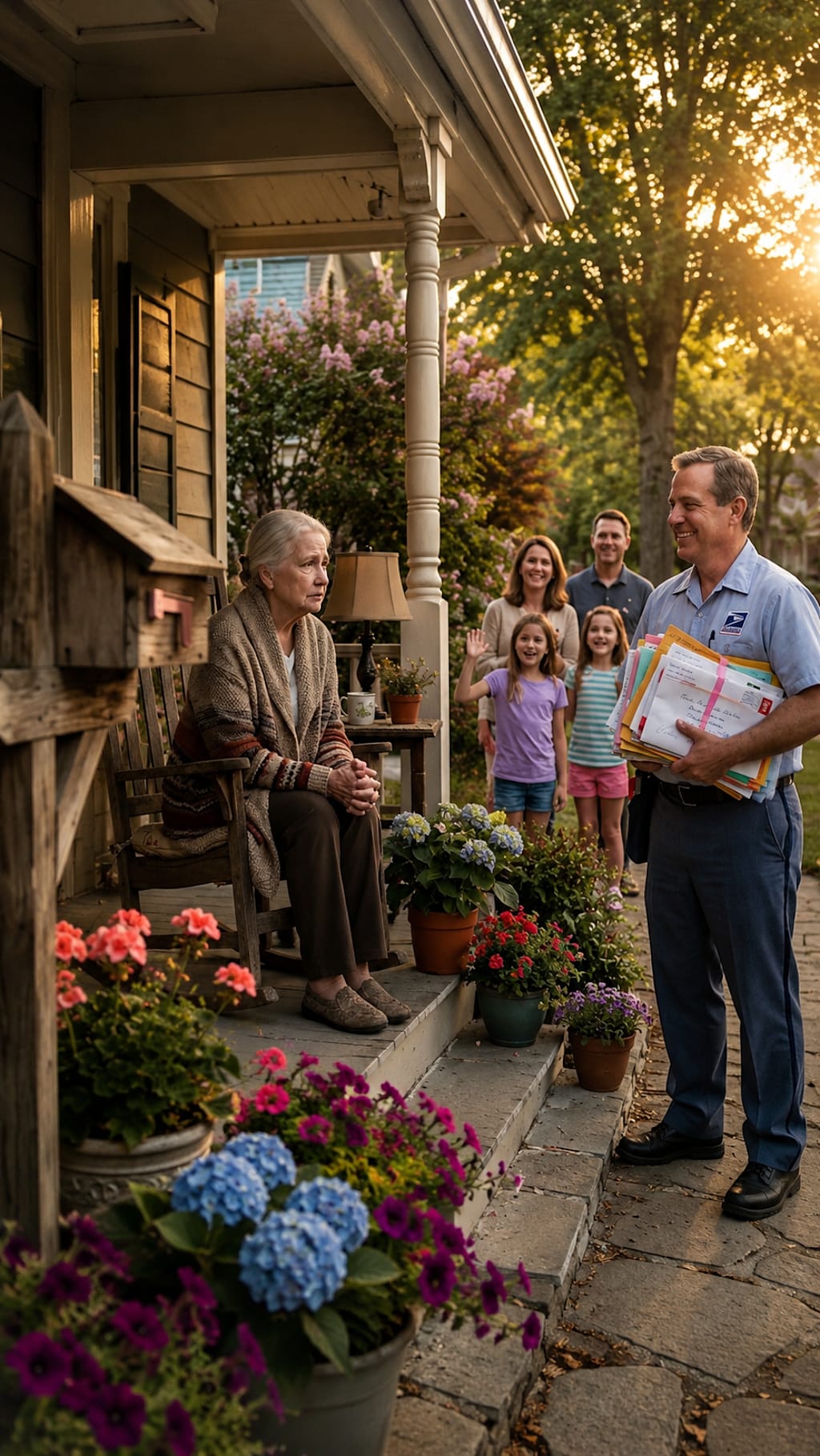
When I first moved to Maple Avenue, everyone seemed to know Mrs. Margaret Thompson. She lived alone in a small white house with bright yellow shutters and a garden full of lavender. She was kind, cheerful, and always greeted people with a smile. But there was something unusual about her. Every Friday morning, without fail, Mrs. Thompson sat on her porch with a cup of tea, waiting for the mailman. And every Friday, the mailman handed her a single letter. Not bills. Not advertisements. A handwritten letter. The ritual had continued for nearly twenty years. Naturally, people were curious. Some believed the letters came from an old friend overseas. Others thought they were written by a secret admirer. The children in the neighborhood invented wild stories about hidden treasure and forgotten royalty. But no one knew the truth. And Mrs. Thompson never spoke about it. One Friday morning, I was walking my dog when I noticed her sitting on the porch as usual. The mailman arrived. He smiled warmly. But this time, he had nothing. "No letter today, Margaret," he said gently. For the first time since I had known her, her smile disappeared. "Perhaps next week," she replied softly. But I could see the disappointment in her eyes. The following Friday, she waited again. And again, no letter came. Soon, two weeks became three. Three became four. Mrs. Thompson stopped tending her flowers. She rarely sat outside anymore. Something had changed. One evening, I decided to visit her. She welcomed me inside and offered tea. Her living room was filled with books, family photographs, and dozens of neatly tied bundles of letters. Hundreds of them. My eyes widened. "You kept every one?" I asked. She smiled sadly. "Every single one." I hesitated. "Who wrote them?" For a long moment, she stared at an old photograph resting on the table. Then she answered. "My husband." I nearly dropped my cup. "But…" "He passed away twenty years ago," she finished quietly. Seeing my confusion, she laughed softly. "Everyone reacts the same way." Then she explained. Before his death, her husband, Daniel, had been diagnosed with a terminal illness. Knowing he would not have many years left, he spent months writing letters to his wife. Letters for birthdays. Letters for anniversaries. Letters for ordinary Fridays. He wanted her to know that even after he was gone, she would never feel alone. Through tears, Mrs. Thompson handed me one of the letters. Inside, Daniel had written: "If you're reading this, my dear Margaret, then another Friday has arrived, and I hope you've remembered to laugh at least once today." Another letter contained gardening advice. Another shared jokes. One simply said: "Thank you for giving me the happiest life I could have imagined." I felt my eyes fill with tears. "For twenty years?" I whispered. She nodded. "He left enough letters to last twenty years." "And now they're gone." She smiled sadly. "Yes." For the first time since losing Daniel, she truly felt alone. I couldn't stop thinking about her. Neither could the rest of Maple Avenue. Word spread quickly. Soon, neighbors began discussing ways to help. Mrs. Parker suggested weekly dinners. The children wanted to bake cookies. Mr. Wilson offered to mow her lawn. Everyone wanted to do something. Then eight-year-old Sophie had an idea. "What if we write her letters?" The room fell silent. And suddenly, everyone smiled. The following Friday, Mrs. Thompson sat on her porch again. The mailman approached with a grin. Behind him stood half the neighborhood. And in his hands was a large stack of envelopes. Mrs. Thompson looked completely confused. "What's all this?" she asked. "Mail for you," he said. Her hands trembled as she opened the first envelope. It was from Sophie. Inside was a drawing of flowers and a message that read: "Dear Mrs. Thompson, thank you for teaching me how to grow sunflowers." The second letter came from Mr. Wilson. The third from Mrs. Parker. The fourth from the twins across the street. And the fifth was from me. By the time she reached the tenth letter, tears streamed down her cheeks. "I don't know what to say," she whispered. Sophie hugged her tightly. "You don't have to say anything." From that day forward, every Friday became special again. Neighbors took turns writing letters. Some shared funny stories. Others included recipes. Children decorated their envelopes with colorful drawings. Even people who had never spoken to Mrs. Thompson before joined in. Slowly, her laughter returned. Her garden bloomed once again. And the lonely silence that had once filled her home disappeared. Years later, Mrs. Thompson often said something that made everyone smile. "Daniel gave me twenty years of love." She would look around at the people gathered on her porch and add, "And Maple Avenue gave me the rest." When Mrs. Thompson celebrated her ninety-first birthday, the entire neighborhood came together. As she blew out the candles, she held up one of the old letters from Daniel. Then she pointed to the crowd surrounding her. "Love doesn't end," she said softly. "It simply finds new ways to arrive." And every Friday, if you walk down Maple Avenue, you might still see envelopes resting on the porch of the little white house with yellow shutters. Because some traditions are too beautiful to end. And sometimes, the greatest gift we can give another person is a reminder that they are never truly alone.
About the Creator
Nabil Ahmad
I write heartwarming stories about kindness, hope, courage, and second chances. Through inspiring animal tales and emotional life lessons, my goal is to remind readers that even the smallest act of compassion can change a life forever.
Enjoyed the story? Support the Creator.
Subscribe for free to receive all their stories in your feed.
Comments
There are no comments for this story
Be the first to respond and start the conversation.