
The Emperor’s New Clothes
52 Guiding Lights Number #36

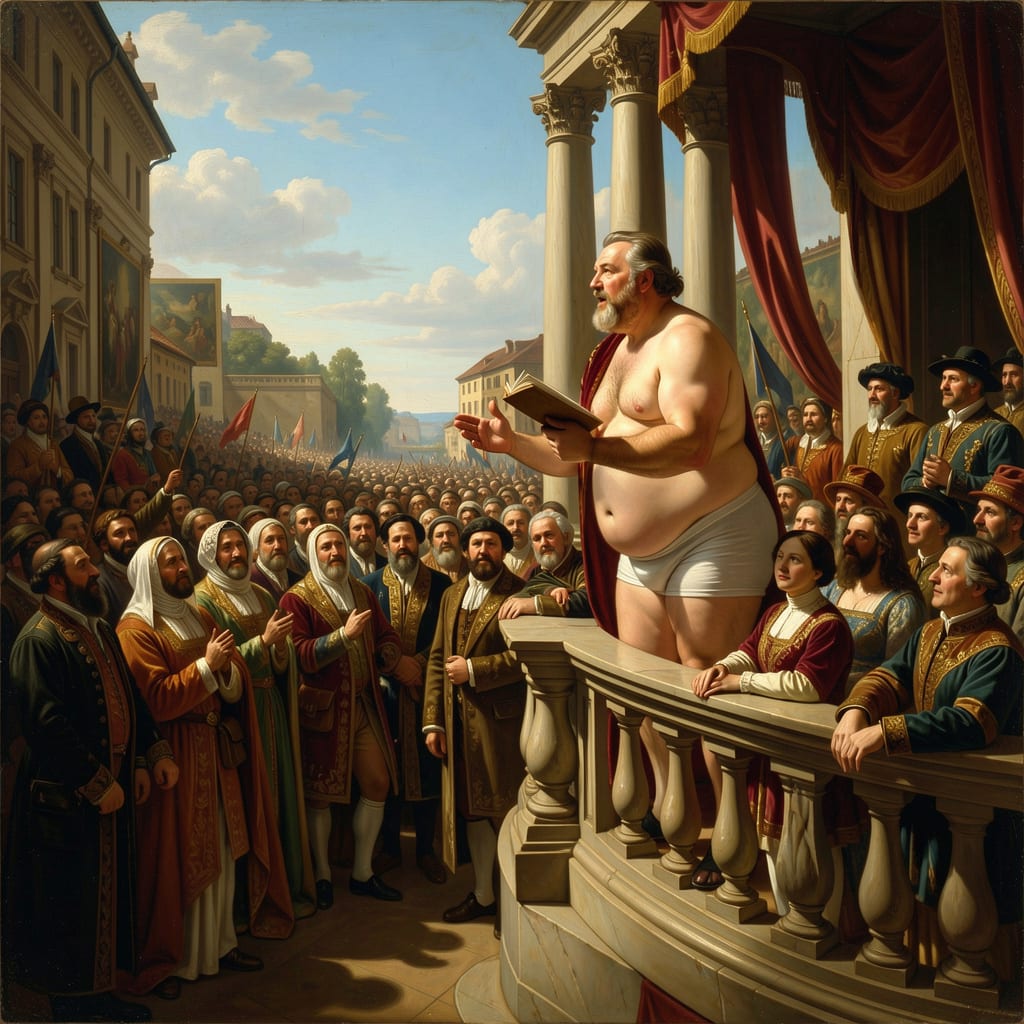
For the few of you who follow me, you will know that I write from time to time in a series that I call "52 Guiding Lights." They are stories about life lessons. When I have enough (52), one for each week of the year, I will put them out as a book. I am over halfway there. This one (# 36) looks at the lessons about deception and lying in the fairy tale about "The Emperor’s New Clothes.”
******
Hans Christian Andersen’s fairy tale, “The Emperor’s New Clothes,” has been told for many years. Like many others, these tales were used to coax their high-energy kids to go to sleep. They also offered important life lessons, not only for children but for adults.
The fable in brief, if you are not familiar with it, is about a very proud and pompous emperor. An emperor of a city is fond of clothes. Two impostor weavers came to his city. They claimed they could make a suit that only smart people could see. The weavers pretended to weave the suit. They brought the suit to the emperor on the day of a big parade. The emperor saw nothing. He didn't want to seem stupid or incompetent, so he agreed that the suit was wonderful and put it on.
Everyone who looked at the suit was troubled by what they could not see and whether they were inadequate. Everyone lies and says they can see the suit. A small child shatters the illusion by shouting, “The Emperor isn’t wearing anything!”
This fable teaches us many lessons about ethics and morality, especially lying. Everyone is confronted with a moral dilemma: do they tell the truth or do they lie?
Do they speak up and confess that they cannot see any suit and accept their own supposed inadequacy?
Do they lie and save themselves from social ridicule like everyone else?
We can all probably relate to this story because we all share a common challenge. As humans, it is not in our nature to buck the system or “go against the flow." We enjoy the safety of numbers. Only the brave dare to speak against the masses.
Is it all right to ever lie?
The trickster weavers told the initial lie at the beginning of the story. They told everyone they were making a magical suit when they were not weaving anything at all. Then they added to the first lie by telling everyone that the suit would be invisible to foolish people.
The people in the story believed these lies were true. So, they lied to back up the weavers’ falsehoods and protect their reputations. Does that mean that only the weavers were wrong in lying, or was everyone wrong in lying?
Everyone in the story deceives themselves, except for the young boy. His innocence protects him from falling into this trap. The boy frees the others from their self-deception. He boldly declares, “The emperor isn’t wearing anything at all!”
Here are three questions for you to consider
Have you ever done something just because everyone else was doing it
I know I have. If we are honest, I bet you can't honestly say that you have never done this. Next time you are out, stop and pretend to look up at something in a tree. I bet 90% of people who go past will also look up in the tree to see what it is. We are programmed to be just like lemmings in a way.
Have you ever convinced yourself that something was real even if you knew it wasn’t?
Yes. Confession time. I have been through the perils of online dating. So many times, I convinced myself I was talking to someone real, only to find out (after a lot of suffering) they weren't. I knew in my heart it wasn't real, but I wanted to believe it was.
Have you ever lied for a good reason?
Yes, I have. I am not proud of it. We disguise these lies as “white lies," trying to imply there is something good in them. Maybe there is. For example, my mother, who is in her mid-nineties, has Alzheimer's. She is always asking me how I am. I tell her I am fine, even if I am not. My rationale is that she would only worry and get upset. There is nothing she can do anyway because she lives a few thousand kilometres away. So, what is the point of telling the truth?
Vanity, pride, and the fear of social embarrassment can blind people to the truth. It can become a catalyst for lying because we panic. It takes honest courage – in this case, in the small boy – to speak reality aloud.
There is a great saying by the American author and professor Brené Brown:
“Authenticity is a collection of choices we have to make every day. It’s about the choice to show up and be real. The choice to be honest. The choice to let ourselves be seen.
Till next time,
Calvin
About the Creator
Calvin London
I write fiction, non-fiction and poetry about all things weird and wonderful, past and present. Life is full of different things to spark your imagination. All you have to do is embrace it - join me on my journey.
Enjoyed the story? Support the Creator.
Subscribe for free to receive all their stories in your feed. You could also become a paid subscriber, letting them know you appreciate their work.
Comments
There are no comments for this story
Be the first to respond and start the conversation.