Vocal
The Broken Lantern. AI-Generated.
In a quiet mountain village surrounded by mist and pine trees lived a young girl named Meera. She was known for her curious eyes and her habit of asking endless questions. Her favorite place was her grandfather’s old workshop — a little wooden shed filled with tools, glass pieces, and half-built lanterns.
By shakir hamidabout a year ago in Motivation
The Weight of a Pebble. AI-Generated.
Arjun was known in his village as a man who never smiled. Life had dealt him several harsh blows — his father’s debt, a failed harvest, and the loss of his younger brother in an accident. Over the years, his heart hardened. He believed kindness was for the weak and that the world only respected those who were tough.
By shakir hamidabout a year ago in Motivation
Beyond the Horizon: The Unseen Journey of Resilience, Hope, and Transformation. Content Warning. AI-Generated.
Life often feels like a labyrinth. You step forward, only to find new walls, unexpected turns, and obstacles you never anticipated. There are moments when you pause, doubting whether the next step is worth taking. Yet, those who reach extraordinary places are not those who never stumbled—they are those who rose again and again, with grit, hope, and vision.
By Chilam Wongabout a year ago in Motivation
AI Side Hustles 2025: Earn Money Online Using Just Your Phone. AI-Generated.
The world of freelancing is changing fast. You don’t need a fancy laptop, a professional setup, or years of experience anymore. In 2025, all you need is your smartphone and a few powerful AI tools to start earning real money online. 📱💰 From writing and design to voiceovers and videos, AI is opening up hundreds of new opportunities — especially for beginners who just want to get started. Here are 10 AI side hustles you can start today, using only your phone.
By Najeem Ullahabout a year ago in Motivation
The Treasure Across the Sea
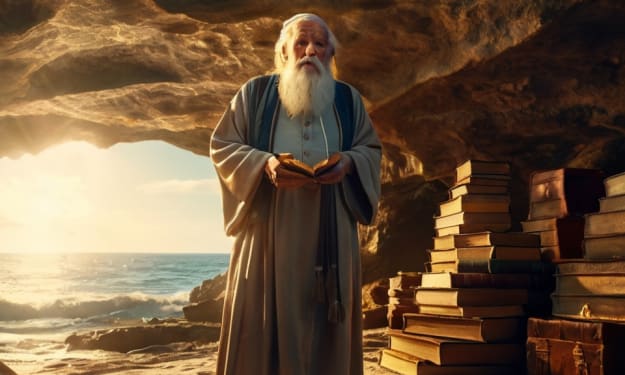
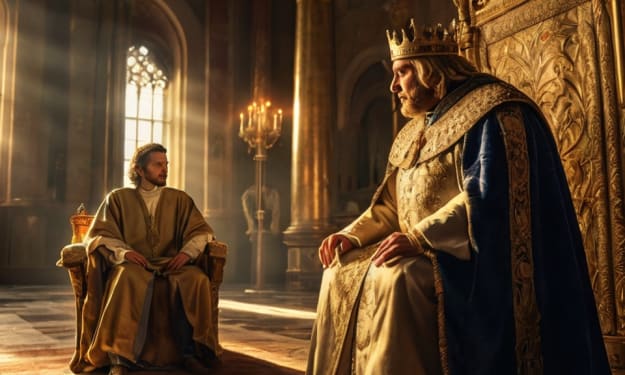
The Treasure Across the Sea BY: Ubaid Long ago, in a distant kingdom, there lived a kind and just king whose name was known far and wide for his fairness and compassion. The king had instructed his ministers to keep him informed of everything happening across the land so that no poor person would ever be deprived of justice. One day, one of the king’s ministers was traveling along the seashore with his caravan when he noticed an old man running back and forth along the edge of the water. The man kept shouting, “My treasure lies across the sea! My treasure lies across the sea!” The minister stopped in astonishment. He thought to himself, Why would an old man be running like this, shouting about a treasure? Curiosity got the better of him, and he ordered his guards to seize the old man. The minister secretly hoped that the man’s words might lead him to hidden riches. Without informing the king, the minister imprisoned the old man. Days passed, but the old man said nothing except, “My treasure lies across the sea.” The minister grew frustrated. He had imagined that once he found the treasure, he would become the richest man in the kingdom, perhaps even more powerful than the king himself. But no matter how much he threatened, questioned, or even punished the old man, he received the same calm reply: “My treasure lies across the sea.” At last, the minister began to think the old man was mad. If he really had a treasure, he thought, why would he wear tattered clothes and live by the shore like a beggar? Realizing his mistake, the minister’s conscience began to trouble him. He decided to confess everything to the king. When the king heard the story, he ordered that the old man be brought before him. “Dress him in clean clothes,” the king commanded. “Feed him well and then bring him to my court.” Soon the old man stood before the throne. The king looked at him kindly and asked, “Old father, tell me—where is your treasure?” The man bowed respectfully and said the same words again: “My treasure lies across the sea.” The king smiled gently and turned to his minister. “If that is so,” he said, “take this man wherever he wishes to go. Let us see what treasure he speaks of.” The next morning, the minister set out with the old man and a group of soldiers. They rode swiftly along the coastline, the horses’ hooves thundering against the sand. After several hours, they reached a place where the ground became soft, and one of the horses sank into the mud. The caravan was forced to camp there for the night. At dawn, they resumed their journey. Days turned into weeks as they crossed forests, climbed steep hills, and passed through narrow valleys. Finally, they reached the sea. The minister arranged for boats to carry them across the water. After many hardships, they arrived at a lonely, rocky island. There, a narrow mountain path led to a cave. The old man’s face lit up with joy. “We have arrived!” he cried. Without hesitation, he entered the dark cave, his eyes sparkling with excitement. The minister and his men followed. Inside, they saw piles upon piles of old, dusty books—pages yellowed with age, bindings torn and faded. The men looked around in disbelief. “Are these your treasures?” the minister asked in confusion. “Yes,” the old man replied proudly. “These are the treasures of my ancestors.” The minister and his men carried the books back to the palace. When they presented them to the king, he, too, was astonished. He gazed at the heaps of worn-out books and wondered silently, Can this really be the treasure the man spoke of? The king turned to the old man and asked, “Father, how much would you take for these books?” The old man smiled and shook his head. “Your Majesty,” he said, “these books are not for sale. They were passed down to me by my forefathers. They contain the knowledge and wisdom of generations. How can I sell such an inheritance?” The king was deeply moved by his words. Still, to test the man’s sincerity, he said, “What if I offer you half my kingdom in exchange for them? Would you agree then?” But the old man refused again. “Even if you give me your entire kingdom,” he said calmly, “I will not part with my ancestors’ legacy. These books are the true wealth of my family—the treasure of wisdom and learning.” The king was silent for a moment, then he rose from his throne and bowed slightly before the old man. “You have taught me a great lesson,” he said with admiration. “Gold and silver may shine, but they fade with time. Knowledge never loses its value. It is a treasure that increases the more it is shared.” From that day on, the king became the old man’s student. He spent hours learning from those ancient books and often said with pride, “It is an honor to be the disciple of a wise man.” Under the king’s rule, the kingdom prospered not just in wealth but in wisdom. Schools were built, scholars were respected, and the love of learning spread throughout the land. The story became famous for generations to come. People remembered it whenever they saw someone chasing after gold and silver, forgetting the greater treasures of the mind and heart. Indeed, just as the wise say: A tree is known by its fruit, and a person is known by his deeds.
By Ubaid about a year ago in Motivation
The Rich Father and the Son’s Eye-Opening Lesson
The Rich Father and the Son’s Eye-Opening Lesson BY:Khan A journey to a humble village teaches a wealthy boy the real meaning of richness and gratitude. In a vast and prosperous kingdom, there once lived a man of great wealth. He owned grand estates, luxurious mansions, servants at his command, and all the comforts one could imagine. There was nothing he did not possess. Yet, for all his riches, his heart carried a quiet concern — his only son. The boy had grown up surrounded by luxury. He had never known hardship or hunger. Every wish of his was fulfilled even before he asked. His clothes were made from the finest fabrics, his toys were rare and expensive, and his days were filled with ease. Though his father loved him deeply, he worried that his son was growing up unaware of the world beyond their walls — a world where people struggled simply to survive. One morning, as the father sat on his marble terrace, watching his son play with a golden ball, a thought came to him: “My son must understand how fortunate he is. He must see how others live — those who have little but still find joy. Only then will he truly value what he has.” Determined to teach his son this lesson, the father decided to take him to a nearby village, far away from the comfort of their palace. He planned for them to spend a day and night in the home of a poor farmer. --- The Journey to the Village When they arrived, the father and son were greeted warmly by the farmer’s family — a man, his wife, and their two young children. Their home was small and simple, made of mud and straw. The roof leaked a little, the furniture was worn, and the food they served was plain, yet there was love in everything they offered. The rich boy watched in amazement as the family shared their meal, laughing together though they had so little. He noticed the children playing barefoot in the open fields, their faces bright with happiness. The air smelled of earth and fresh crops, and everywhere he looked, he saw people working hard, helping each other, and smiling through their struggles. The father quietly observed his son’s expressions — curiosity, wonder, and a hint of thoughtfulness. He hoped the lesson was sinking in. That night, the boy and his father slept in the small hut. Used to sleeping on a soft bed covered in silk, the boy now lay on a rough mat under a thin blanket. Yet, as he stared through the window, he saw a sight he had never seen before — a sky full of glittering stars. There were no electric lights, no noise, no distractions. Just the sound of crickets, the gentle rustle of leaves, and the peaceful rhythm of nature. For the first time, he felt something different — a calmness that wealth had never given him. --- The Conversation on the Way Home The next morning, as they rode back to their grand estate, the father asked gently, “So, my son, how was the trip? Did you enjoy spending time in the village?” “Yes, Father,” the boy replied eagerly. “It was wonderful.” The father smiled, slightly surprised. “And did you notice how poor those people are? Did you see how they live?” “Yes, Father,” the boy said softly. The father nodded. “And what lesson did you learn from it?” The boy thought for a moment and then replied, “I learned that while we have one dog at home, they have four. We have a swimming pool that ends where our walls do, but they have endless rivers and streams. We have expensive lights that shine in our garden, but they have the stars to brighten their nights. Our lawn ends where our fence begins, but theirs stretches as far as the eye can see.” The father listened silently, his heart stirring. The boy continued, “Thank you, Father, for showing me how poor we truly are.” The father was speechless. He had taken his son to the village hoping to teach him how lucky he was — but instead, it was his son who had opened his eyes. --- The Real Meaning of Wealth That night, as the father reflected on his son’s words, he realized the truth. Richness is not measured by gold or possessions but by the heart’s capacity for gratitude. The villagers had little in material wealth, yet they were rich in contentment, love, and peace — treasures that no amount of money could buy. We often forget that true happiness lies not in what we own, but in how we see the world. As the old saying goes: “We do not see things as they are; we see them as we are.” Our lives are shaped by our thoughts. A person who lives with a positive mind and a grateful heart will always find beauty in the smallest things — a sunrise, a smile, or a simple meal shared with loved ones. If you have love, family, good health, and peace of mind, you already possess everything worth having. These are the riches that cannot be bought or stolen. Material things may bring comfort, but they do not guarantee happiness. What truly matters is how we choose to see the world. For in the end, the richest people are not those who have the most, but those who need the least.
By Khan about a year ago in Motivation
The Sword of Duty
The Sword of Duty BY:Khan Once upon a time in Italy, there lived a king who ruled over a vast kingdom. Although he was powerful and wealthy, his people did not like him much. They thought he was proud and distant. Still, there were some who never missed a chance to praise him—especially one of his ministers, a master flatterer. This minister spent his days and nights singing false praises of the king’s wisdom, justice, and kindness. Whenever he got the chance, he would say, “Your Majesty’s rule is the best in the world! People are blessed to live under your just and noble leadership.” The king, however, had a rule. He had ordered all his ministers to keep him informed about the true condition of his subjects—who was happy, who was suffering, and what people really thought of their king. “Tell me the truth,” the king would say. “Only then can I serve my people well.” But whenever the king asked, the flattering minister would respond instantly, “Your Majesty, everyone in your kingdom lives in comfort and peace. Who could ever be unhappy under your rule?” The other ministers remained silent, but this one always filled the court with empty words of praise. Over time, the king began to grow suspicious. He wondered, Perhaps this minister is not being honest. Maybe he hides the truth from me with his flattery. The king realized that if he continued to believe such lies, he might remain ignorant of his people’s real suffering. So, one day, the king decided to test the minister. At first, he tried to teach him gently. “My friend,” said the king, “there is no kingdom in the world where everyone is happy with their ruler. And no king is perfect—sometimes even a just ruler can make mistakes that hurt someone. You must always tell me the truth about my people, even if it displeases me.” But the minister, blinded by his habit of flattery, continued to shower the king with false compliments. Finally, the king said, “Since you are so loyal and faithful, I want to reward you. Tomorrow, I will make you king for one day. You will sit on my throne and rule the kingdom as you wish.” The minister could hardly believe his ears. His eyes sparkled with joy. “A day of kingship!” he thought. “What a great reward!” The next morning, the royal court was filled with noblemen, ministers, and important guests. The real king placed his own crown on the minister’s head and seated him on the grand golden throne. “Today,” the king announced, “I am no longer your ruler. This man is your king for one day.” The hall echoed with cheers. Musicians played, servants brought rich food and drink, and the one-day king began giving orders proudly. He felt like the most powerful man in the world. But then, something strange happened. As the minister looked up, his face suddenly turned pale. His body trembled with fear. Above the throne, hanging directly over his head, was a sharp, gleaming sword. It dangled by a single, thin thread—so fine it looked like a strand of hair. The real king, sitting quietly nearby, noticed his fear and smiled slightly. The minister could not take his eyes off the sword. The thought of it falling made his heart pound. What if the thread broke? What if the sword dropped on him? He tried to sit straight and calm, but his hands shook, and his voice faltered whenever he spoke. Finally, unable to bear it any longer, he turned to the real king and said in a trembling voice, “Your Majesty, please remove this sword from above my head!” The king replied calmly, “That is not possible. This sword is known as The Sword of Duty. It always hangs above the head of every ruler. As long as a king remains honest and just, this sword protects him. But the moment he neglects his duty or rules unfairly, it falls—and destroys him.” The minister’s heart sank. All his dreams of enjoying his short reign vanished. Moments ago, he had planned to pass orders that would benefit his family and friends, to grant them wealth and power. But now, he was frozen in fear. What if any of my decisions are unjust? he thought. What if the sword falls? Seeing his distress, the real king said gently, “Now do you understand what it means to be a king? The throne may look comfortable, but it carries a burden heavier than gold. Every decision affects thousands of lives. Every injustice brings danger closer. The crown is not a toy—it is a responsibility.” The minister bowed his head in shame. “Forgive me, Your Majesty,” he said. “I never understood the weight of a ruler’s duty. I thought being king meant comfort and luxury, but now I see it is a life of constant watchfulness and responsibility.” The king nodded. “Flatterers do not serve their rulers or their people. By hiding the truth, they place the king under this sword. Only honesty can keep the kingdom—and the ruler—safe.” Deeply humbled, the minister removed the crown and placed it back on the king’s head. He promised never to lie or flatter again. From that day on, he became one of the most honest and loyal advisors in the court. And so, the king’s lesson was complete: A throne is not a seat of comfort, but a seat of duty—and above every ruler’s head, there always hangs the Sword of Responsibility. Moral: Honesty is the true service to a leader. Flattery blinds both the ruler and the flatterer, but truth keeps the kingdom strong.
By Khan about a year ago in Motivation
Why the Elites Fear Creativity
Every empire in history has feared one thing above all else — not war, not rebellion, but imagination. Every generation has its creators, the people who look at a broken system and say, “We can do better.” They don’t wait for permission. They grab what’s around them and build something new. They fix, remix, and reimagine the world while others stay locked in patterns of obedience.
By DJ for Changeabout a year ago in Motivation
The Physician of Peace: A Tale of Finding Calm Within
The Search for Peace BY:Khan In this world, every human being is chasing one thing above all—peace. Some seek it in the quiet wilderness, others in the shallow comfort of sleeping pills. Some find temporary calm in music, while others lose themselves in the beauty of nature. For Karim Bakhsh, peace seemed like a distant dream. His life was filled with the constant noise of his wife and children, and though he loved them dearly, their chatter and chaos often overwhelmed him. Whenever the clamor of home became too much to bear, Karim would escape to the old wooden bridge over the river. There, he would sit for hours, staring at the waves as they danced and rippled beneath the sky, hoping the flowing water might wash away his restlessness. One evening, in a moment of despair, Karim confided in the village imam, Tabarak Ali. “Mullah sahib,” he sighed, “my heart longs for peace, but I cannot seem to find it anywhere. Tell me, what should I do?” The imam stroked his beard thoughtfully and said, “Karim, I have heard of a wise physician in the nearby village of Kesar Ganj. They call him ‘Hakim-e-Pur-Sukoon’—the Physician of Peace. Go to him, perhaps he will help you.” The very next morning, Karim saddled his humble donkey and set off for Kesar Ganj. After a long ride, he arrived at the Hakim’s clinic. To his surprise, the renowned physician was not busy treating patients but was instead lying back against a bolster, snoring peacefully. Karim coughed politely, and the Hakim stirred, lazily opening one eye. Without moving from his place, he reached out, felt Karim’s pulse, and asked in a drowsy voice, “So, you want peace?” “Yes, sir,” Karim replied earnestly. “How much of it?” Karim was startled by the question. “As much as you can give me. Complete peace, if possible.” The Hakim smirked. “Then bring me four people.” “Four people? Why?” “Because true and complete peace,” said the Hakim, yawning, “can only be found in the graveyard across the river.” Karim frowned. “No, Hakim sahib, I don’t want that kind of peace. I only wish for some relief from the constant noise of my household. Not a single moment passes in silence.” The Hakim nodded, then asked abruptly, “Do you have a rooster at home?” “No,” Karim replied, confused. “But why do you ask?” “Buy one today. Now off you go!” With that, the Hakim pulled the quilt over himself and went back to sleep. Though puzzled, Karim obeyed. On his way home, he bought a rooster from the marketplace. The children were delighted. They clapped and laughed, chasing the bird around the courtyard. But within two days, the rooster’s loud and untimely crowing had driven Karim nearly mad. At dawn, at noon, even at midnight—the bird’s voice shattered whatever calm remained. Helpless, Karim returned to the Hakim and poured out his complaint. The Hakim, half-asleep, asked, “Do you have a dog at home?” “No,” Karim replied suspiciously. “Then get one. At once.” The Hakim turned over and fell asleep again. So Karim went to the wrestler Suleman and bought a big dog. The children rejoiced even more. But now, alongside the rooster’s crowing, the dog barked at every passing shadow. Day and night, noise engulfed the house. Karim’s misery grew unbearable. Once more, he trudged to the Hakim’s clinic and recited his woes. The Hakim stretched, yawned, and asked, “Do you have a donkey?” Karim, frustrated, snapped, “Apart from myself, there’s no other donkey in my house!” “Then get one,” the Hakim said firmly. And so, Karim purchased a donkey from Bhulo the washerman. But that night, the rooster crowed, the dog barked, and the donkey brayed until even the neighbors came knocking. “Karim!” they shouted angrily. “Your animals are driving the whole street mad. Get rid of them immediately!” Karim returned once again to the Hakim, who calmly instructed, “Return the donkey.” Karim did so. The following day, he noticed a strange quiet in the house. For the first time in weeks, he slept peacefully. He hurried to tell the Hakim. “Now get rid of the dog,” the Hakim advised. “But my children love the dog,” Karim protested. “And it guards the fields at night.” “Do as I say,” the Hakim insisted. Reluctantly, Karim parted with the dog. That night, the silence felt overwhelming. The absence of barking unnerved him. Life seemed too quiet. When he reported this to the Hakim, the physician said, “Now slaughter the rooster.” Karim’s patience broke. “No, Hakim sahib! That I cannot do. My children love the bird, and its crowing greets our mornings. Without it, the day feels incomplete.” “Your treatment is not finished,” the Hakim scolded. “The rooster must go.” Defeated, Karim obeyed. But when the rooster was gone, the house felt empty and lifeless. The silence was so heavy it frightened him. For the first time, Karim realized how much those little sounds had meant. Finally, he returned to the Hakim. This time, the physician was fresh, dressed in a spotless white sherwani and a velvet cap. Smiling, he asked, “And now, how do you feel?” Karim sighed. “My home is peaceful, but it feels hollow. The silence chokes me. I realize now that my wife and children, their chatter, even their chaos—these are the true joys of my life. Without them, there is no real peace.” The Hakim placed a gentle hand on Karim’s head and said softly, “Exactly, my son. That was your cure. Peace does not lie outside—it lies within. Those who seek it only in silence or in escape will never find it. True peace is in gratitude, in family, in embracing life with all its noise and color.” Karim returned home, no longer restless. The shouts of his children, the clatter of the kitchen, even the rooster’s absence—all became part of a deeper calm. He had finally understood that peace was never about the world around him. It was always about the heart within.
By Khan about a year ago in Motivation