Vocal
The Guiding Shade: Why Respecting Our Fathers is Essential
A father is often compared to a shade of a tree under which his children find protection, comfort, and peace. Just as a tree shields us from the burning rays of the sun, a father shields his family from the hardships of life. His efforts may sometimes go unnoticed, yet every sacrifice he makes is for the betterment of his children. To respect a father is not only a moral duty but also a form of gratitude for the countless ways he contributes to our lives.
By Daily Motivation12 months ago in Motivation
Why Writers Should Keep Publishing on Vocal
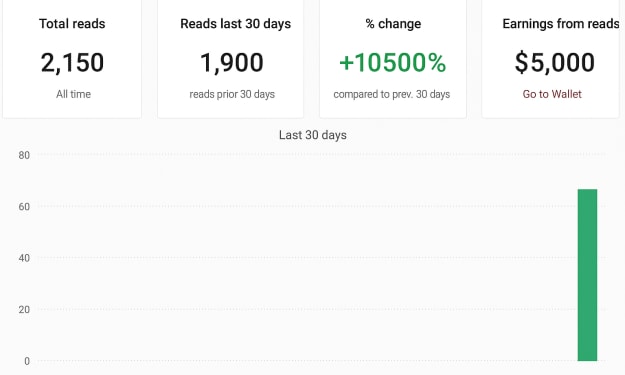
Why Writers Should Keep Publishing on Vocal Writing has always been a way to share stories, ideas, and experiences with the world. But in today’s digital age, it has also become a way to build an audience and even generate income. One of the platforms that has opened doors for countless creators is **Vocal**. If you are wondering whether it is worth continuing to publish your work here, the answer is a resounding **yes**. Here’s why. --- ## 🌍 Access to a Global Audience Unlike a personal blog that starts with zero traffic, Vocal already attracts **millions of readers every month**. Reports from analytics tools such as SimilarWeb and Semrush show that Vocal receives between **7 and 40 million monthly visits** depending on the season. This means every article you publish has the chance to be read by thousands, or even tens of thousands, of people worldwide. Publishing on Vocal isn’t just about reaching numbers; it’s about reaching the right audience. Readers come to the platform specifically looking for stories, opinions, and insights. That’s why your content has a higher chance of finding its niche audience here than on many other platforms. --- ## 👥 A Growing Creative Community When you write on Vocal, you’re not alone. The platform has a community of over **700,000 registered creators** and more than **25,000 paying subscribers**. These numbers reflect a dynamic ecosystem where writers, readers, and fans interact daily. Being part of such a community is invaluable. You not only share your work but also learn from others, discover fresh perspectives, and sometimes even collaborate with like-minded people. For many creators, the sense of belonging is just as rewarding as the exposure itself. --- ## 💰 Real Opportunities to Earn One of the strongest reasons to continue publishing on Vocal is its **monetization system**. Writers earn money based on reads, and although the rate per 1,000 views may not seem large at first, it adds up over time—especially if you publish consistently. In addition, Vocal frequently runs **writing challenges and contests** with cash prizes. These competitions not only boost your motivation but also provide recognition and visibility when your work gets featured. Many writers have reported that they first discovered their wider audience through Vocal challenges. --- ## ⏳ Content That Lasts Unlike social media posts that disappear in a few hours, a story published on Vocal has a much longer lifespan. Articles remain searchable on Google, continue to get traffic months or even years later, and keep generating income long after you hit “publish.” This means that each piece you write is more than just a story—it’s a **long-term digital asset**. The more you write, the larger your portfolio becomes, and the stronger your presence grows in search engines. --- ## 🎯 Building Your Identity as a Writer Every article you share on Vocal adds to your personal brand. Over time, readers begin to recognize your style, your voice, and your expertise. This not only builds credibility but also opens doors to future opportunities: freelance gigs, collaborations, or even book deals. Writing regularly is an investment in yourself. The more you publish, the clearer your identity as a writer becomes. --- ## ✅ Conclusion: Keep Going It can sometimes feel discouraging if you don’t see immediate results from your writing. But on Vocal, consistency truly pays off. With millions of monthly visitors, a supportive community, the chance to earn money, and the opportunity to build your reputation, there’s every reason to continue. So if you’ve ever asked yourself, *“Should I keep writing on Vocal?”* the answer is simple: **Yes. Your words matter, your audience is waiting, and your next story could be the one that changes everythi
By America today 12 months ago in Motivation
What Loving a Broken Person Taught Me About Myself
Introduction We often go into relationships hoping to fix, heal, or save the person we love. I used to believe that if I gave enough love, patience, and understanding, I could help someone put their broken pieces back together. But what I didn’t realize at the time was that in trying to heal someone else, I would end up confronting the broken parts of myself. Loving a broken person didn’t just change the way I saw them—it changed the way I saw me. --- The Allure of Wanting to “Save” Someone When I first met them, I could sense their pain. It was in the way they hesitated before trusting, in the walls they built around their heart, and in the silence they carried like a shadow. Something inside me wanted to be the one to fix it. I thought if I just loved hard enough, I could fill the cracks and erase their hurt. There’s a strange kind of pride that comes with believing you can rescue someone from their own darkness. But loving someone who is broken is not about saving them—it’s about learning what love really means when it isn’t simple. --- Patience Has Limits At first, I poured myself into the relationship with patience. I listened to their fears. I stayed up late when they needed reassurance. I forgave things that hurt me because I thought their wounds explained their actions. But as time went on, I realized patience without boundaries can become self-neglect. In trying to hold them together, I was letting myself fall apart. Loving a broken person taught me that while patience is powerful, it has to be balanced with self-respect. Love should not mean abandoning yourself. --- Love Alone Isn’t Enough This was the hardest lesson. I wanted to believe that love could fix everything. That if I just gave more of myself, they would heal, and things would be better. But love is not a magic cure. Brokenness doesn’t disappear just because someone cares for you. Healing requires personal effort, not just external affection. What I learned is that you cannot carry someone through their healing journey—they have to walk that path themselves. And no matter how much you love, it won’t be enough if they aren’t ready to love themselves. --- I Saw My Own Reflection in Their Pain The more I tried to help them, the more I realized how much of myself I had been ignoring. Their fears mirrored my own insecurities. Their walls reminded me of the ones I had built long before. Loving them forced me to look at my own broken pieces. I had to admit that I wasn’t just a healer—I was also someone in need of healing. In that sense, they became a mirror. And though it was painful, it was also the beginning of my own growth. --- Boundaries Are an Act of Love For a long time, I thought setting boundaries meant I didn’t care enough. I believed that saying “no” or pulling back was selfish. But I eventually learned that boundaries are not walls—they are healthy lines that protect both people. Without them, resentment grows, and love starts to feel like sacrifice instead of choice. By setting boundaries, I realized I wasn’t just protecting myself—I was also giving them the space to take responsibility for their healing. That, in itself, was an act of love. --- Strength Comes From Letting Go Perhaps the hardest part of loving a broken person is realizing that sometimes, love means letting go. It doesn’t mean you stop caring. It means you recognize that staying might cause more harm than good. It means you value your own well-being enough to walk away when love turns into constant pain. Letting go taught me that my worth isn’t defined by how much I can endure, but by how much I can honor myself. --- The Lessons I Carry Forward Looking back, here’s what I learned about myself from loving someone who was broken: 1. I am not a savior. I can love deeply, but healing has to come from within. 2. My patience has value. It should never come at the cost of my own peace. 3. Boundaries are necessary. They are not selfish—they are healthy. 4. Love must be mutual. It can’t just flow one way and still survive. 5. Walking away is strength. Sometimes, it’s the most loving choice you can make. --- Final Thoughts Loving a broken person wasn’t easy. It left me with scars and questions, but it also gave me clarity. It forced me to see myself in ways I had been avoiding. In the end, the most important thing I learned is this: love is powerful, but it is not about fixing—it’s about growing. And sometimes, the greatest growth happens not in the person you tried to save, but in yourself. Loving a broken person didn’t heal them. But it did teach me how to heal myself.
By Akhtar ali12 months ago in Motivation
Time Management Techniques That Naushad Parpia Uses To Lower Stress
According to Naushad Parpia, organized time use allows individuals to maintain focus and calmness. Proper planning creates structure, helps prioritize tasks, and prevents overwhelming pressure constantly. Managing time intentionally supports mental clarity, better decision-making, and emotional balance daily. When tasks are tracked effectively, individuals gain control, confidence, and efficiency consistently over time. Structured schedules reduce last-minute rushes, allowing space for reflection and strategic thinking. Combining discipline with flexibility ensures smoother workflows and minimizes unnecessary stress continuously. Understanding the link between time management and stress reduction empowers both personal and professional growth.
By Naushad Parpia12 months ago in Motivation
The Mistake That Almost Cost Me the Love of My Life
Introduction We all make mistakes in relationships. Some are small—like forgetting a date or saying something careless. Others are bigger, the kind that leave scars and test the very foundation of love. I made one of those mistakes. And for a while, I thought it had cost me the love of my life. But through that painful experience, I learned lessons about honesty, forgiveness, and the effort it takes to make a relationship truly last. --- When Things Were Perfect In the beginning, everything felt effortless. We laughed until our stomachs hurt, stayed up late dreaming about the future, and supported each other through life’s challenges. I genuinely believed I had found the person I wanted to spend the rest of my life with. But comfort can sometimes lead to carelessness. I began to take what we had for granted, assuming that love was strong enough to survive anything. I didn’t realize how fragile even the deepest love can be when it’s not nurtured every day. --- The Mistake My mistake wasn’t a single dramatic betrayal—it was something more subtle, but just as damaging. I stopped showing up the way I used to. I got lazy with communication. I brushed off small arguments instead of addressing them. I became distracted with work, friends, and my own stress, and I stopped prioritizing our relationship. The love was still there, but my actions didn’t always reflect it. And love without effort eventually starts to feel empty. One night, after yet another conversation where I was half-listening and glued to my phone, my partner looked at me and said: > “I don’t feel like you really see me anymore.” That sentence hit me like a punch in the chest. --- The Consequences I had always thought that as long as I loved them, they would “know.” But what I hadn’t realized was that love isn’t just a feeling—it’s a choice, expressed in daily actions. My mistake had made them feel invisible, undervalued, and alone—even while standing right next to me. And for the first time, I saw the possibility that I could lose them. We nearly broke up that night. The trust we had built felt shaken, not because of infidelity or betrayal, but because of neglect. --- The Wake-Up Call In the days that followed, I thought deeply about what had gone wrong. The truth was simple but painful: I had taken love for granted. Love isn’t a permanent guarantee. It requires care, attention, and intentional effort. By neglecting the little things—listening, being present, showing gratitude—I had created distance between us without even realizing it. I knew if I didn’t change, I really would lose them. --- The Work of Repairing Love Winning back their trust wasn’t easy. Apologizing was just the first step—I had to prove through consistent action that I was willing to do better. I started putting away distractions when we talked. I made time for us, even on busy days. I expressed gratitude out loud, instead of assuming they already knew how much I cared. Most importantly, I listened—not just to their words, but to their feelings behind them. Slowly, things began to heal. It wasn’t overnight, but step by step, we rebuilt what I had almost broken. --- What I Learned Looking back, I see that my mistake wasn’t about one moment—it was about forgetting that love is a verb, not just a noun. It’s not enough to feel love; you have to show it, every day. Here’s what I carry with me now: Never stop choosing your partner. Even in the comfort of long-term love, effort matters. Small actions add up. A hug, a kind word, undivided attention—these tiny choices build trust and closeness. Love can survive mistakes. If both people are willing to work through the pain, love can come out stronger on the other side. --- Final Thoughts The mistake I made nearly cost me the love of my life. But instead of ending us, it became the turning point that reminded me never to take love for granted. Relationships aren’t destroyed only by big betrayals—they can crumble from neglect just as easily. But with honesty, humility, and effort, they can also be rebuilt. I’m grateful every day that we didn’t give up on each other. That mistake changed me—and it taught me that the greatest way to honor love is to never stop showing up for it.
By Akhtar ali12 months ago in Motivation
Most Men Are Faking Confidence
Most men are performing a version of themselves that’s slowly killing them. They’ve mastered the art of appearing confident, composed, in control — but inside, they’re anxious, angry, or numb. Not because they’re broken. Not because they’re weak. But because no one ever taught them how to love themselves.
By Randolphe Tanoguem12 months ago in Motivation
Nobody Tells You This Truth About Women’s Love, Respect
Nobody tells you this, but here’s the truth: the more a woman thinks she needs you, the more she loves you. The moment she believes you need her, her love starts dying. She wants your obsession, but not your dependence. She craves to be useful to your life, not to carry it. And that distinction—between being wanted versus being leaned on—is the line between respect and rejection, love that grows and love that withers.
By Randolphe Tanoguem12 months ago in Motivation
What To Do When There Are Too Many Causes To Help
I think We are All Well Aware... The World... Is a Mess. You cannot be On Social Media... Or Watch the Television... For Longer than 5 Minutes before You are Struck with All of the Worst that Humanity is Offering in Today's World.
By H.E. Dr. Cody Dakota Wooten, COIE, DFM, DHM12 months ago in Motivation
Why We Broke Up Even Though We Still Loved Each Other
Introduction People often think love is the only ingredient needed to make a relationship last. Movies, books, and songs all tell us the same story: if two people are in love, they’ll find a way to be together. But real life is rarely that simple. I learned this truth in the hardest way possible—by ending a relationship with someone I still loved deeply. We didn’t walk away because of a lack of feelings. We walked away because sometimes love, on its own, isn’t enough. --- The Beginning: A Love That Felt Unstoppable When we first met, everything felt effortless. We clicked instantly—long conversations, laughter that never seemed to end, and the kind of spark that made even ordinary moments feel special. Friends told us how “perfect” we seemed together. And for a while, it felt true. Love was the center of our world, and I genuinely believed that as long as we had that, nothing could break us apart. But what I didn’t understand back then was that love is only the foundation. A strong house needs more than a foundation—it needs walls, structure, and care. --- The Cracks We Tried to Ignore The first cracks in our relationship didn’t appear because we stopped caring about each other. They appeared because of the things we couldn’t agree on. Our future visions clashed. I dreamed of building a life in one place, while they longed for constant change and travel. Our communication faltered. Instead of addressing disagreements openly, we sometimes shut down or brushed issues aside, telling ourselves “love will fix it.” We had different needs. I needed stability and reassurance; they needed freedom and space. At first, these differences felt small, almost insignificant compared to how much we loved each other. But over time, ignoring them created tension that love alone couldn’t dissolve. --- The Hardest Realization The turning point came during a long conversation one evening. We both admitted something we had been afraid to say out loud: We still loved each other, but we weren’t making each other happy anymore. It was devastating to hear. How could two people who cared so deeply fail at being together? Weren’t we supposed to fight for love no matter what? But in that moment, I realized something: staying in a relationship where love is present but compatibility is missing can be just as painful as not being loved at all. --- Why Love Alone Wasn’t Enough Here’s what I learned the hard way: 1. Love doesn’t erase differences. We thought our love would “cover” our opposing goals and personalities. It didn’t—it just delayed the conflict. 2. Love can’t replace communication. When we avoided tough conversations, resentment quietly built up between us. 3. Love doesn’t guarantee growth together. Sometimes two people grow in different directions, even while holding onto each other tightly. 4. Love can turn heavy when it’s not balanced. What was once joyful began to feel like a weight—because love without alignment can feel more like a struggle than a gift. These lessons were painful to accept, but they were real. --- The Breakup: Choosing to Let Go When we finally decided to end things, it wasn’t a screaming match or a dramatic explosion. It was quiet. Tearful. Almost tender. We sat together, acknowledging how much we meant to each other—and how much it hurt to admit we couldn’t keep going. It was one of the most heartbreaking things I’ve ever done, because it felt like choosing pain in the short term to avoid a bigger heartbreak in the long run. Walking away from someone you still love is like leaving behind a part of yourself. But staying would have meant betraying both of our needs for growth and peace. --- What I Learned After the Breakup In the months after, I went through all the emotions—grief, regret, anger, longing. But slowly, I began to understand that breaking up didn’t mean our love was worthless. It meant that sometimes the bravest thing you can do is let go. Here’s what I took away from that experience: Love is powerful, but it needs partnership. Without communication, respect, and shared goals, love struggles to survive. Letting go doesn’t erase love. I will always hold a soft spot for them, even if we’re no longer together. Breakups can be acts of love too. Walking away gave both of us the chance to grow, heal, and find happiness in ways we couldn’t have together. You can love someone and still not be “right” for them. This was the hardest truth of all—but also the most freeing. --- Final Thoughts We’re taught to believe that true love conquers all. But the reality is, sometimes love exists alongside incompatibility, miscommunication, and diverging life paths. And when that happens, holding on can cause more harm than letting go. I’ll never forget the person I loved, and I’ll never regret the time we shared. But I also won’t regret the choice to walk away. Because sometimes, the kindest thing you can do for both yourself and the person you love is to accept that love is not always enough—and that’s okay. Love is a gift, but it’s not always the whole story. And sometimes, the most loving act is to set each other free.
By Akhtar ali12 months ago in Motivation