book review
Book reviews for the self-help enthusiast to help you conquer obstacles and achieve goals.
The Return of the Outsider: A Story of Donald Trump's Relentless Rise
Donald John Trump is one of the most controversial, disruptive, and unforgettable figures in American political history. Long before he stepped into the White House, his name was already a brand — of luxury, excess, and media spectacle. But when he entered politics, he didn’t just run a campaign; he launched a cultural earthquake. Born in Queens, New York, in 1946, Trump grew up in wealth and ambition. His father, Fred Trump, was a successful real estate developer. Young Donald studied business, graduating from the Wharton School, and soon took over his father’s empire. Unlike his father, Donald wanted fame along with fortune. In the 1980s and 1990s, his name began appearing on casinos, hotels, airplanes, even steaks. Trump wasn’t just building properties — he was building a personality. Loud, confident, and unapologetic. In time, he became a media fixture, famously hosting the reality TV show The Apprentice. His catchphrase — “You’re fired!” — became part of pop culture. But behind the glamour were bankruptcies, legal battles, and relentless headlines. Yet none of it stopped him. In 2015, Donald Trump announced his candidacy for President of the United States. Pundits laughed. Analysts dismissed him. But the people listened. His speeches were raw and unscripted. He didn’t speak like a politician. He attacked political correctness, mocked opponents, and promised to “Make America Great Again.” To many, he was a voice against the establishment. A billionaire who said what others wouldn’t. His rallies were massive, emotional, and sometimes chaotic. He built a loyal base not with policy papers but with slogans and fury. In 2016, he stunned the world by defeating Hillary Clinton. It was a political upset unlike any other. Donald Trump, a man with no political or military experience, had become the 45th President of the United States. His presidency was a whirlwind. He pulled out of international agreements, enforced harsh immigration policies, clashed with allies, and redefined diplomacy — meeting with North Korea’s Kim Jong-un, praising authoritarian leaders, and calling the media “the enemy of the people.” He appointed conservative judges, including three Supreme Court Justices, shifting America’s legal landscape for generations. Every day under Trump felt like a new headline. His Twitter account became a tool of direct governance, insults, and unpredictable announcements. The traditional rules of politics no longer applied. He didn’t pivot, apologize, or conform. He reigned through disruption. But his presidency also deepened America’s political divide. Racial tensions flared. Institutions were tested. The pandemic response in 2020 was criticized as disorganized. And when he lost the 2020 election to Joe Biden, Trump refused to concede, claiming widespread fraud. The tension culminated on January 6, 2021, when a violent mob stormed the U.S. Capitol — a dark day in American democracy. Trump was impeached for the second time, becoming the only U.S. president to face impeachment twice. Yet even after all this, he remains a dominant force in American politics. To his supporters, Trump is a warrior — someone who stood against corrupt elites, protected American jobs, and put “America First.” To his critics, he is a danger to democracy, a narcissist whose leadership was reckless and divisive. But beyond love or hate, one thing is undeniable: Donald Trump changed the way politics is done in America. He proved that media dominance could outweigh traditional qualifications. He showed how one man’s personality could reshape a party. And he ignited movements that continue to ripple through the nation. As he eyes a return to politics, the world watches. Can he regain the throne? Or has his fire faded? Whatever happens next, the Trump era has already carved its mark deep into the pages of American history. His legacy is still a battlefield — between those who saw him as a savior and those who saw him as a threat. But Donald Trump doesn’t wait for history’s judgment. He creates his own.
By Noman Afridiabout a year ago in Motivation
Frozen Moments: The Magic of Antique Cameras
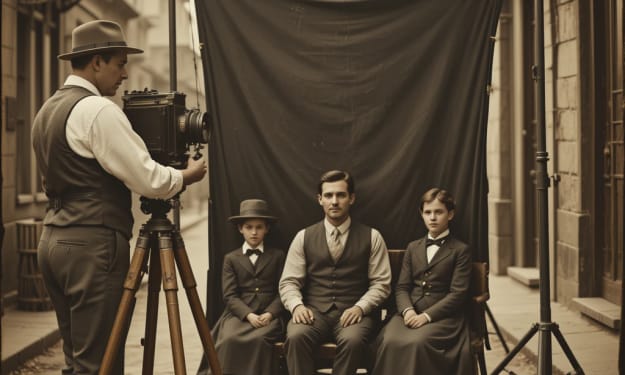
In an era where every smartphone captures high-definition memories with a tap, it’s easy to forget the roots of photography—the bulky, mechanical, and magical antique cameras that once defined human memory. Before digital pixels and instant selfies, there was patience, passion, and an almost sacred silence surrounding the act of taking a photograph. Let’s rewind to the late 19th and early 20th centuries, when photography was a mysterious art form. Cameras weren't carried in pockets; they were revered instruments—made of polished wood, leather bellows, and gleaming brass. The process was as much about craftsmanship as it was about science. Every click was a commitment. These early cameras, like the Daguerreotype, Box Brownie, and Large Format Bellows Camera, were more than tools. They were portals through which life was frozen, one exposure at a time. Back then, having a photograph taken was a serious event. Families dressed in their finest clothes. They sat stiffly under the open sky or in candle-lit parlors, trying to remain perfectly still. Why? Because the exposure time could take several minutes! A blink or a smile could blur the face. That’s why most portraits from that time look so still, so serious. The photographers themselves were artists, engineers, and inventors rolled into one. They worked with chemicals like silver nitrate and collodion, mixing solutions under red lanterns in darkrooms. They loaded glass plates carefully and used tripods to steady their cameras. One wrong move, and the whole shot was lost. Some of the most iconic photographs in history—Abraham Lincoln’s portraits, war-time images, early cityscapes—were taken with these antique machines. Each frame told a thousand stories. Unlike today, you couldn’t take 20 pictures and delete the bad ones. You had one chance, and that made it priceless. One fascinating aspect of old cameras was their ability to surprise. The long exposures sometimes caught faint movements—ghostly hands, blurred footsteps, or whispering leaves—adding an eerie charm. In some cultures, these blurry anomalies were believed to capture spirits or unseen energies. Antique cameras also had unique aesthetics. The images they produced were rich in contrast, deep in shadow, and full of character. Sepia tones added a nostalgic warmth, while the imperfections—light leaks, vignetting, grain—gave the pictures soul. Perhaps the most charming element was the box camera photographer on the streets. You might find him in old cities, sitting beside a tripod-mounted wooden camera, with a black cloth draped over his head. For a few coins, he would capture your image, dip it in chemicals, and give you a photo minutes later—freshly printed and wet to the touch. Such photographs weren’t just memories; they were milestones. A child’s first photo. A wedding portrait. A last goodbye. Every image had weight, meaning, and permanence. Today, these vintage cameras are collectors' dreams and history buffs' treasures. They remind us of a time when photography wasn’t just about clicking—it was about connecting. With each image, we see not only the faces of the past but the soul of a moment. In the age of digital abundance, where thousands of images are stored and forgotten, the antique camera teaches us something precious: the value of a single, well-taken photograph. These old machines, with their ticking timers and wooden bodies, whisper stories to those who listen. They remind us that sometimes, the slower you go, the deeper you feel. In their silent frames lie entire lifetimes—paused, remembered, and revered. --- AI Image Prompt (for matching image generation): A vintage photography scene showing a 1900s box camera on a wooden tripod. A man in old-fashioned clothing (vest, pocket watch, round hat) is standing under a black cloth, taking a picture. A serious-looking family sits still in front of the camera—father, mother, children in formal 1900s attire. Background shows a dusty street or old studio setting with soft natural light and sepia tones. The atmosphere is quiet, nostalgic, and timeless.
By Noman Afridiabout a year ago in Motivation
The Question of the Silent Chair
The golden light of evening slowly crept across the faded walls of a small, quiet room. In one dimly lit corner stood an old wooden chair — silent, weathered, and heavy with the weight of untold stories. And there, on that very chair, Ahmed sat every evening. His arms folded tightly, his brows furrowed, and his eyes fixed on the ground as if searching for answers buried deep beneath the floor. On the desk beside him lay a pile of scattered books. Some were open, their pages curling with age; others lay shut, untouched for weeks. One book’s page fluttered faintly in the soft breeze from a closed window, moving just enough to seem alive — like it was sighing from neglect. The room smelled of dust and old paper, a quiet echo of days when learning had meant something. Ahmed had once been a bright, cheerful child, full of laughter and endless questions. But life had taken unexpected turns. His mother had passed away when he was just ten, leaving behind memories in the form of bedtime stories and warm hugs. His father, heartbroken and buried in long hours of labor to keep the home afloat, had little time left to comfort a grieving son. With time, Ahmed's laughter faded. His questions ceased. He started saying things like, "What good are books, when they don’t understand how I feel?" and "No one cares what I learn or don’t learn." Slowly, he built walls — not from bricks, but from silence, stubbornness, and solitude. Then, one evening — just like all others — something changed. His father came home a little earlier than usual. Without a word, he walked into the room and sat down beside Ahmed. The chair creaked under his weight, but Ahmed didn’t look up. The silence between them was thick, but his father let it linger for a moment before gently speaking: "If you turn away from knowledge today, son, then when life asks you difficult questions tomorrow, will you sit in silence like this?" The words hit Ahmed like a soft knock on a closed door. He didn’t reply. But something inside him stirred — a quiet tremble, as if a locked drawer in his heart had shifted. That night, after dinner, Ahmed returned to his room. He stood for a moment beside his desk, looking at the old stack of books. He reached out and picked up one — a storybook with a torn cover, its pages slightly yellowed. It was the very book his mother had given him years ago. He had never opened it. As he turned the first page, he felt a strange warmth. The words felt familiar, almost like whispers from his past. He imagined his mother’s voice reading to him, and for the first time in years, a faint smile crossed his lips. The days that followed were no longer the same. Ahmed began to read again. He started with one book, then another, and soon the once-abandoned desk had become his place of discovery. He started answering questions in class. He spoke to his teachers — even asked for extra notebooks. His old wooden chair, once a throne of anger and silence, was now his anchor — a silent witness to his change. At night, his father would watch him from the doorway, too proud to interrupt, too moved to speak. He saw something in his son he hadn’t seen in a long time: hope. But this isn’t where the story ends. One day at school, Ahmed noticed a younger boy sitting alone under the staircase, his face hidden behind his arms. His books lay beside him, untouched. His eyes, when he looked up, held the same storm Ahmed had once known. Ahmed sat beside him quietly. After a pause, he said: "You know, not every answer is written in a book. Some answers come when someone asks the right question." The boy looked at him, confused but curious. Ahmed smiled. "I used to think books didn’t understand me. But the truth is — I didn’t let them try." The boy didn’t say much. But he didn’t turn away either. That moment — that quiet connection — marked a new beginning for someone else.
By Kaleem Ullah about a year ago in Motivation
Top 5 Books That Will Shift Your Mindset Forever
Let’s be real: most of us have at least one self-help book collecting dust on the shelf. Maybe you bought it during a New Year’s resolution spree. Perhaps it was a gift from that friend who’s always “manifesting.” Either way, not all mindset books are created equal. Some are fluffier than a motivational cat poster. Others? They struck you with truth bombs, you start questioning your entire life while sipping coffee.
By Chinedum Johnabout a year ago in Motivation
"Lessons from the Pitch: Leadership, Teamwork, and Heart in Ted Lasso"
The world of soccer is not just a game—it’s a canvas for stories of transformation, leadership, identity, and connection. Ted Lasso, the hit television series centered around a small English football club and its unlikely American coach, takes the foundational principles of the sport and turns them into universal lessons on life, character, and relationships. At the heart of the show lies a rich interplay between soccer as a professional environment and Ted’s evolving role as a leader unfamiliar with the game but deeply in tune with people. Let’s dive into five powerful lessons drawn from the series—lessons that are as important to Ted’s journey as they are to anyone navigating the complexities of leadership and collaboration in any field.
By Nasir Khanabout a year ago in Motivation
The Bridge of Second Chances
In a quiet town nestled between golden hills and silent rivers, lived a young man named Rayan. At seventeen, he was known more for what he didn't do than what he did. He had dropped out of school, drifted through part-time jobs, and spent his nights staring at the stars, wondering what it all meant.
By Rahimullah Mohmandabout a year ago in Motivation
His Secret Obsession Review- James Bauer. AI-Generated.
Are you tired of relationship advice that doesn’t deliver real, measurable improvements in your romantic connections? Many traditional relationship books provide generic tips with little substance, unfairly misleading readers into thinking they’ve gained valuable insights — even if the advice is impractical or ineffective.
By Anthony mwewaabout a year ago in Motivation
The Power of Journaling: How Writing Can Transform Your Mental Health
In a world that often feels chaotic, where thoughts swirl like a constant whirlwind in our minds, we all need a space to make sense of it all. Some people turn to friends, others to hobbies, but what if the answer to feeling more centered and less overwhelmed was something as simple as writing? Journaling—something that may seem like an outdated or basic task—has gained recognition as one of the most powerful tools for mental well-being in recent years. It’s not just about writing down your day, but about using the written word as a way to reflect, release, and heal.
By Noman Khan about a year ago in Motivation
Authenticity Is Your Superpower: The Most Underrated Business Advantage
Authenticity Is Your Superpower: The Most Underrated Business Advantage In a world full of filters, polished pitches, bots, and curated personas, there’s one trait that quietly beats them all: authenticity.
By Andrea Zanonabout a year ago in Motivation
Small Habits, Big Change: How Tiny Daily Actions Transform Your Life. AI-Generated.
We often chase massive transformations—radical diets, dramatic career moves, or sweeping lifestyle overhauls—believing real change must be big, bold, and immediate. But the most sustainable and impactful transformations usually don’t start with major overhauls. They begin with something much smaller: micro-habits.
By Voice of Simplicityabout a year ago in Motivation
The Light of Hope
In a small village nestled among the mountains, there lived a young boy named Ahmad. From an early age, life tested him in every way. He lost his father when he was just a child, and his mother, a brave and hardworking woman, raised him alone. Every night before bed, she would whisper in his ear, “My son, life may be dark, but you must be the light that shines through it.”
By Rahimullah Mohmandabout a year ago in Motivation
The Goldilocks Rule: How to Stay Motivated in Life and Business
This article is an excerpt from Atomic Habits, my New York Times bestselling book. In 1955, Disneyland had just opened in Anaheim, California, when a ten-year-old boy walked in and asked for a job. Labor laws were loose back then and the boy managed to land a position selling guidebooks for $0.50 apiece.
By Farhan Rafidabout a year ago in Motivation