
Scientific Perspectives on Slow-living
A slow-living lifestyle brings you closer to a happy life

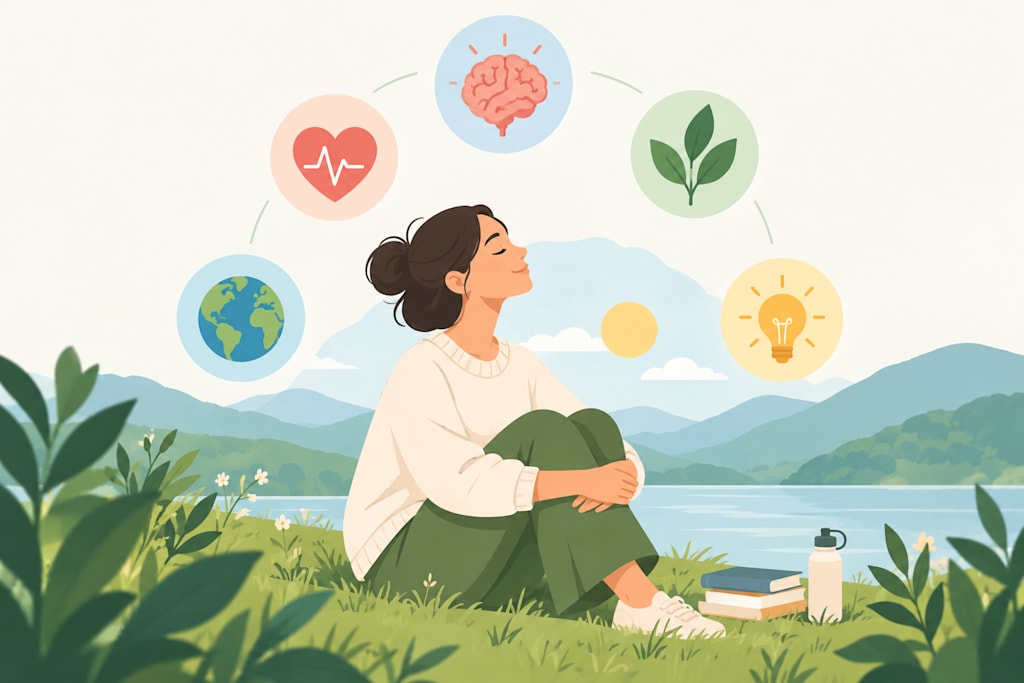
We are all searching for a happy life.
But where does happiness really come from?
In fact, no one has a clear answer to what happiness truly is.
Will you be happy when you have enough money?
Ask Elon Musk, the richest man in the world. He recently shared his conclusion on X (formerly Twitter) as “Whoever said, ‘money can’t buy happiness’ really knew what they were talking about.”
It amused many people, but it is true.
In reality, many people dream of wealth, a luxurious house, a stylish car and an extravagant life in today’s world.
Because society glorifies wealth, productivity and consumerism.
There is constant competition to produce more and consume more.
Those who win in this race are the ones society praises and appreciates.
As a result, we compare ourselves with others and see people around us getting richer.
When you chase material things, you postpone happiness to the future. That future never truly arrives.
And by the time you wake up to this reality, you may realise that you have already lost some of the most important parts of your life.
Chasing after material things is like running on a treadmill; once you start, it becomes difficult to get off.
Productivity often means being busy, exhausted and stressed.
Stress is closely related to anxiety and fatigue, which ultimately affect your health and even your lifespan.
A busy life disrupts your work-life balance.
You are left with no time for socialising, reading, exercising or recreation.
Experts say that a slow-living lifestyle brings you closer to a happy life.
When you choose less, but with quality, life becomes easier and happier.
Slow-living means choosing minimalism over extravagance.
By choosing to consume less and living more mindfully, you lower your carbon footprint, a small but meaningful step toward saving the planet.
A ‘carbon footprint’ is the amount of greenhouse gases (GHGs) released into the atmosphere by our activities (by an individual, company, city or state). These emitted gases accumulate in the environment and lead to global warming and climate change.
Climate change poses a serious threat to the future of our planet, and even now, its impacts are disproportionately affecting people of colour, women, and low-income communities.
Slow means long.
When you reduce your speed, it naturally takes more time to reach your destination.
Slow also means sure. As the saying goes, ‘Slow and steady wins the race.’
Do you remember Aesop’s fable of the ‘Tortoise and the Rabbit’?
In the end, the tortoise wins the race, despite being far slower than the Rabbit.
Why do tortoises have a long life expectancy?
Is it because they are slow?
Maybe.
According to science, this idea actually makes some sense.
The “rate-of-living” theory suggests that slow-moving animals have a higher life expectancy.
Reason?
This is because they have a low metabolism and a slow-paced, energy-conserving lifestyle, which contributes to a slower ageing process.
Some tortoises can live up to 200 years, certain species of sharks live up to 400 yrs, and deep-sea sponges can survive for more than 2000 yrs.
They are all slow-moving.
Why do we keep fruits and vegetables in the fridge?
It is to prolong their lifespan.
Fruits and vegetables continue to respire, releasing carbon dioxide, even after they are harvested. Low temperature in the fridge reduces the rate of respiration, helping the food stay fresh and last longer.
When you slow down your life or choose a minimalistic life, you avoid hoarding unnecessary things, and in doing so, you help save the planet.
But how?
Frequent shopping often leads to hoarding food, clothes, and other items. We buy many things we don’t truly need, just because they look appealing in the stores.
Imagine you bought one extra item, and like you, one million other people also bought the same thing from elsewhere. This trend forces factories to produce more.
Manufacturing requires burning fossil fuels, which releases carbon dioxide.
On the other hand, having more stuff in the house means producing more waste, which eventually has to be processed, decomposed, and burned.
These processes require energy, and that ultimately releases greenhouse gases.
More production and more decomposition mean more GHGs in the atmosphere, and the buildup of GHGs is one of the main causes of climate change.
How is slowness better?
Let’s look at a few examples from our daily lives.
There is a simple traffic rule: If you drive too fast, there is no guarantee you will reach the destination. Overspeeding is always risky.
When you climb mountains, a fast pace is not recommended. You need to hike slowly and take frequent breaks.
If you ascend too quickly, you risk altitude sickness, a condition that can even be life-threatening. But if you go slowly, you stay much safer.
Our society often appreciates intelligent, efficient, and smart people.
Efficient means productive.
Intelligent and smart indicate performing fast.
However, I choose to be calm, thoughtful, compassionate, wise and empathetic rather than simply becoming intelligent, efficient, or smart.
My slowness is a choice, an intentional way of living.
I choose to work at a slow, steady pace, but with care and confidence.
Embracing slow living is, in many ways, an act of wisdom.
If you found this worth reading, even a small gesture of support means a lot.
(This story was originally published on Medium.com)
About the Creator
Krishna Babu Shrestha
Ecologist by training, nature lover by instinct. Trying—always—to live with empathy and ethics.
I write about personal growth, happiness, and human potential, as well as the environment and ecology.
Enjoyed the story? Support the Creator.
Subscribe for free to receive all their stories in your feed.
Comments
There are no comments for this story
Be the first to respond and start the conversation.