
A Bully, a Fable, and the Early Internet: How an Author Was Born
Why the world still needs Diamonds in the Rough

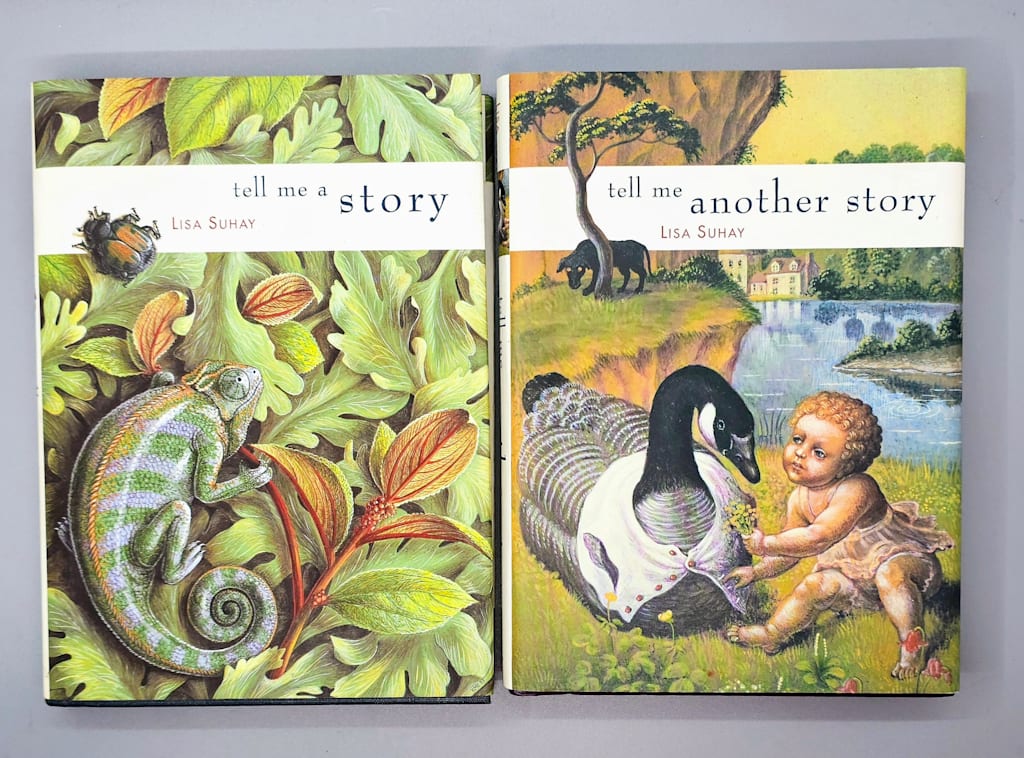
When my family moved from living aboard a sailboat on Florida's Gulf Coast to a log cabin in New Jersey in 1998, the World Wide Web and my oldest son had both turned seven in a new world. I needed an outlet to share the life-lesson fables I was writing for my boys to help them cope with being bullied by their new peers. I found a coping tool, and the internet made me the author of 10 children’s books, a symphony piece, and a CNN livestream interview. Here’s how it unfolded.
Books don’t fare well aboard a boat. Dampness, mildew, and sticky fingers take a toll. My solution for bedtime was old school: make something up on the spot using Floridian creatures they had seen that day, like a Great Blue Heron, tarpon, or dolphins.
On land in New Jersey, the bullies included their school principal, who wasn't being a “pal” and mocked them in front of classmates for not knowing that rooting for “the Dolphins” didn't mean cheering for a passing pod in the Gulf of Mexico, but a team. He had approved their enrollment over the Summer by testing them himself. When his teachers arrived the first week of school, they were offended that he had not called in their team to do the evaluation and insisted he not be enrolled.
During the first week of school, all the other children were given an assignment sheet of a clown spilling apples down a hill. Each apple has a capital “R” or “G” indicating which color the student should use: Red or Green.
My eldest, Zoltan, then in First Grade, colored them all perfectly. However, the teacher gave the other students in the class a different coloring challenge every day, while my son got the same sheet every day for two weeks until he scribbled all over it in frustration. Zoltan didn’t want to go to school anymore. My little extrovert morphed into a sad, silent introvert.
Then the principal called to ask me to come in for a meeting with him and the teacher, where they told me my son was “violent, clearly dangerous, and a bad fit for First Grade.”
He was being expelled. The happiest child ever. The boy who would race to every new person to shake hands, introduce himself, and tell of his adventures?
Out came my reporter’s notebook to save their take for posterity. That’s how, over 20 years later, we can recall it with accuracy and a wee smirk.
“I asked him if he liked Barney. Do you know what your son answered, Mrs. Suhay,” the principal said with his whole chest. “He said you need to put on a mask, grab a knife, and get rid of them! Do you see now? Violent. Dangerous. We have a Zero Tolerance Policy. He will no longer be attending here. My hands are tied.”
They didn't expect me to laugh or look relieved. “You are fully aware he has spent his entire life living aboard a sailboat in Florida without TV, a phone, or a computer? Barneys are barnacles. The mask is a dive mask. His father used a scraper ‘knife’ to ‘Get rid of the Barneys.’”
Then I put the folder, filled with the same coloring page, on the conference table, and the tone shifted dramatically. My son was allowed to continue in another class with a different teacher.
Yet, I still had to find a way for my son and his little brother to understand what had happened. I taught life lessons through stories. I converted the principal into a jeweler and my son into a diamond.
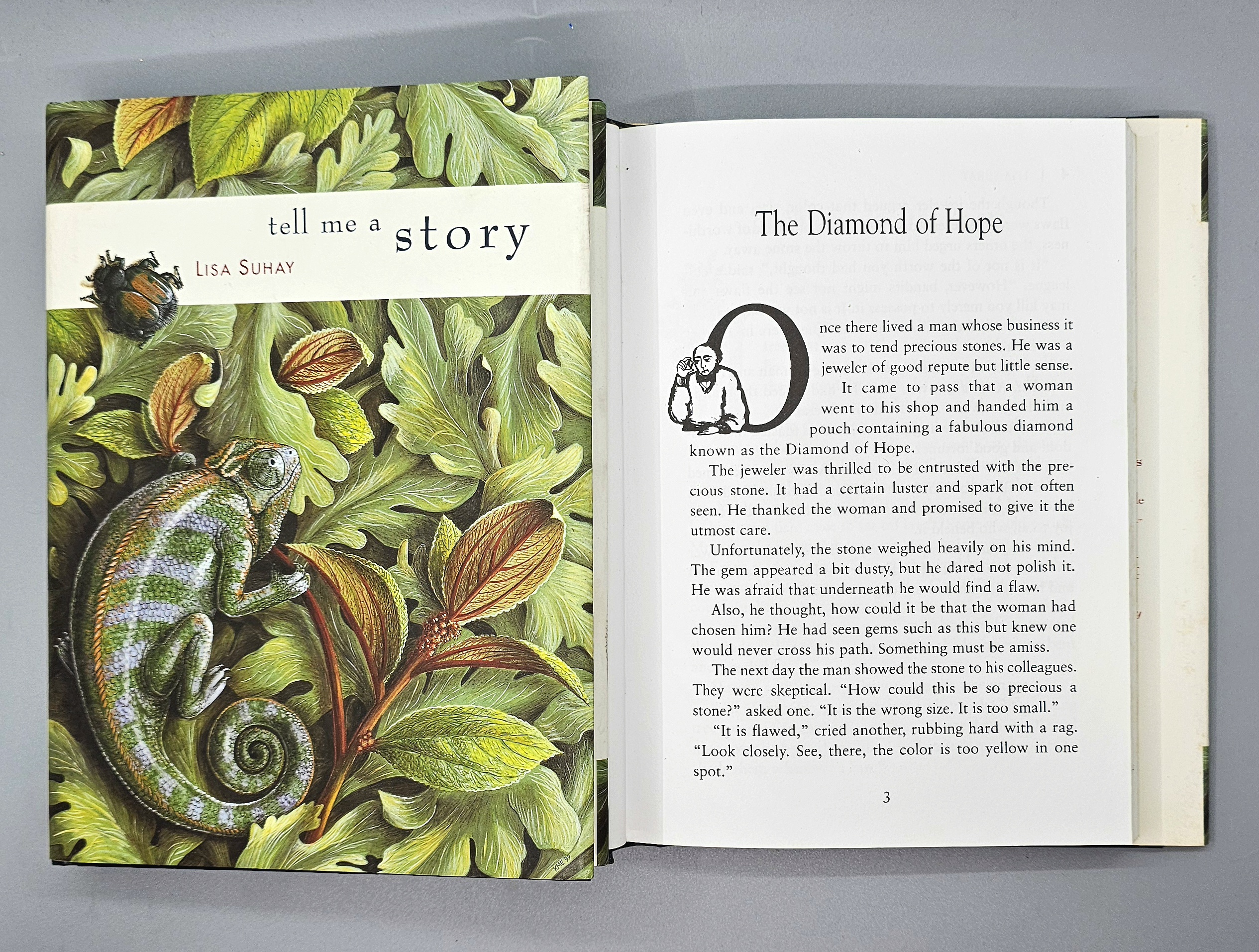
The story was called “The Diamond of Hope.” A jeweler was given a precious stone, which he greedily accepted until his peers chided him, saying it was likely a fake and that accepting it risked his reputation. Then they scared the jeweler into an about-face by saying that even if it was genuine, bandits could kill him to possess it. Then it was no longer seen as a diamond, but a bad rock. They call the woman in to “take back the rock.” She takes it to another jeweler who recognized the true value, and the stone shines in every facet once placed in a new setting by wiser folk. The Jeweler and his colleagues lose their reputation.
The fable worked so well that I decided to search this new World Wide Web thingy for a space for the new tale to reach others who might not have the wherewithal to make up their own story.
The website was Daily Wisdom, a new thing called a website. It let you post stories with uplifting or spiritual content. Readers couldn't leave comments at that time, so they emailed you through your hyperlinked byline.
I was unprepared for what happened next. My sons and I sat and read as hundreds upon hundreds of people from all over the planet responded with positivity.
These weren't local readers, nor were they American. I posted in the evening and woke to find myself watching, fascinated, as emails poured in from around the globe as the sun rose and set in their time zones.
Because it was so validating, I began writing down the other life-lesson fables I had told the boys and posted them next. The emails caused me to pay for online storage for the first time. Talk about life lessons and foreshadowing!
Shortly after I began posting the fables, a self-described “shut-in” emailed me that she shared my fables with the nice lady who brought her Meals on Wheels weekly. That lady turned out to be Lilian Miao, publisher for Paraclete Press in Massachusetts. She wanted to know if I had more stories and if I would like to collect them all and send them to her as my first book titled “Tell Me a Story.”
It all happened so fast. It took me another three months to fill up a book with more fables. A year later, CNN reviewed me and Deepak Chopra flew me to La Jolla, California, as his guest to record what was one of the earliest podcasts at the Chopra Center for Wellbeing on the “Power of Storytelling.” That recording still occasionally plays on his current SiriusXM show. I was writing the second book on the plane.
I needed an audience. The Internet needed hope, uplift, and courage in the form of misunderstood minerals, brave monkeys, a Tree Dragon, and a Grackle.
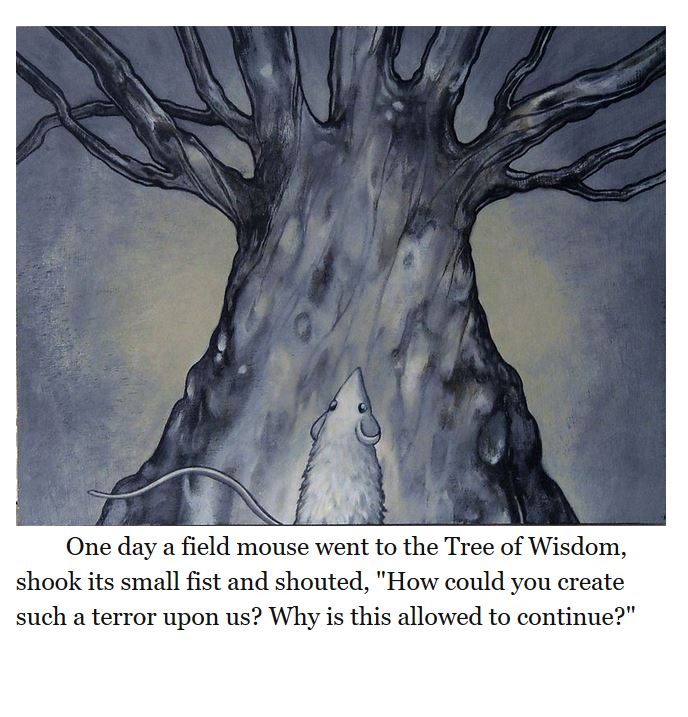
Case in point: After the attacks on my hometown of Manhattan, NYC, I wrote The Mouse and the Light as a fable inspired by a piece in The New York Times about child soldiers in Pakistan. While it has never been published as a book, composer Eric Chappelle read it online and turned it into a symphony performed in schools in Islamabad, New York, and other places. The composer is re-releasing it this month.
During the global pandemic, I read the stories online to bring back some comfort.
Writing this story reminded me of where I began. Starting today, I'll post a new series of fables here. The Hedigcorn (hedgehog/unicorn) fable is already posted to Vocal Media to help my adult transgender daughter cope with bullies.
The Internet has become a far more negative place since those magical early days. Yet, the life lesson it taught me over the past 25+ years is that we need hope available on demand at every age.
It gave back in the form of validation and a belief that we are bound together by the common thread woven through storytelling in all its forms.
I believe we are still more alike than we are different. My mission is to keep meeting you here to tell you a story.
About the Creator
Lisa Suhay
Journalist, Fairy Tree Founder, Op-Ed and children’s book author who has written for the New York Times, Christian Science Monitor, NPR and The Virginian-Pilot. TEDx presenter on chess. YouTube Storytime Video playlist
Enjoyed the story? Support the Creator.
Subscribe for free to receive all their stories in your feed. You could also become a paid subscriber, letting them know you appreciate their work.
Comments
There are no comments for this story
Be the first to respond and start the conversation.