
World’s Most Heavily Armed Submarines Fortified With New Anti-Drone Protection at Russia’s Key Pacific Base
Russia is strengthening protection around its strategically important Pacific submarine facilities as the growing threat from drones reshapes modern naval security.
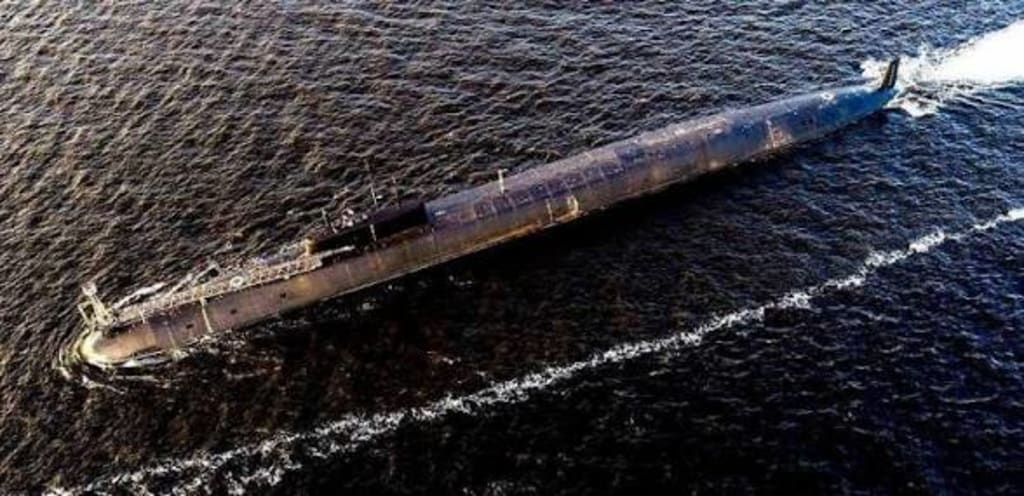
Russia's Pacific naval infrastructure is facing a new kind of security challenge as unmanned aerial systems become an increasingly important feature of modern warfare. Reports that additional anti-drone measures are being introduced around a key Russian Pacific submarine base highlight how quickly military planners are adapting to the changing threat environment.
The development is particularly significant because Russia's Pacific Fleet operates some of the country's most powerful submarines. These vessels form an important part of Moscow's strategic military capability and are designed to operate in environments where survivability, concealment and long-range weapons are central to their missions.
The arrival of stronger counter-drone protection demonstrates that even heavily fortified naval facilities can no longer rely solely on traditional air-defense systems, physical barriers and geographic isolation.
Why Russia's Pacific Submarine Base Matters
Russia's Pacific Fleet is headquartered around Vladivostok and nearby naval facilities in the Russian Far East. The region provides Moscow with access to the Pacific Ocean and plays an important role in Russia's broader maritime strategy.
Among the fleet's most important assets are nuclear-powered submarines, including modern ballistic-missile submarines and attack submarines.
These vessels represent a major component of Russia's naval deterrent. Their strategic importance means that the infrastructure supporting them is considered highly sensitive.
Protecting submarine bases is therefore about more than defending ships while they are in port. It involves protecting communications, maintenance facilities, weapons infrastructure, personnel and logistics networks that allow submarines to remain operational.
The growing use of drones has complicated that mission.
The Drone Threat Is Changing Naval Security
Unmanned aerial vehicles have become increasingly common in conflicts around the world. Relatively inexpensive drones can provide surveillance, identify targets and, in some circumstances, carry explosive payloads.
This creates an unusual challenge for military installations.
Traditional air-defense systems were often designed to counter aircraft, helicopters, cruise missiles and other high-value threats. A small drone may be considerably cheaper than the weapon used to intercept it.
For military planners, that creates an economic and operational problem: how can a strategically important facility be protected against large numbers of inexpensive unmanned systems without exhausting expensive defensive resources?
The answer increasingly involves layered counter-drone defenses.
What Anti-Drone Protection Can Include
Counter-drone security does not necessarily mean one particular weapon system.
Modern defenses can combine radar and other sensors, electronic warfare equipment, visual observation, physical barriers and conventional short-range air-defense systems. Some systems are designed to disrupt a drone's communications or navigation, while others attempt to detect and physically intercept the aircraft.
At major naval facilities, these technologies can be combined into a broader security network.
The goal is to detect suspicious activity early, determine whether a drone represents a genuine threat and respond before it can approach sensitive infrastructure.
The exact configuration of defenses around Russia's Pacific facilities is not publicly clear, and details about operational deployments should be treated cautiously.
Why Submarines Are Particularly Important
Submarines occupy a unique position in modern naval warfare because their greatest advantage is their ability to operate without being easily detected.
Strategic ballistic-missile submarines are particularly important because they can provide a survivable nuclear deterrent. Their ability to remain hidden means that an adversary cannot easily eliminate them in a first strike.
Attack submarines have a different mission profile. They can conduct intelligence operations, hunt enemy submarines and surface ships, support naval forces and potentially launch long-range weapons.
Protecting these vessels while they are in port is therefore essential.
A submarine that is extremely difficult to locate at sea can nevertheless be vulnerable when undergoing maintenance or preparing for deployment at a fixed naval facility.
Lessons From the Ukraine War
The increased emphasis on counter-drone protection is closely connected to lessons emerging from the war in Ukraine.
Both sides have demonstrated how drones can be used against military targets, infrastructure and logistical facilities. Naval assets have also been affected by unmanned systems, particularly in the Black Sea.
Ukraine has demonstrated the potential of relatively inexpensive unmanned platforms to challenge much larger and more expensive military assets.
For Russia, these developments have created an obvious incentive to strengthen defenses around important installations far beyond the immediate battlefield.
The Pacific Fleet is geographically distant from the main fighting, but military planners cannot ignore the possibility that similar technologies could eventually threaten strategic infrastructure elsewhere.
A New Layer of Protection
The introduction of anti-drone systems does not mean that submarines themselves have suddenly become vulnerable to every unmanned aircraft.
Instead, it reflects a broader transformation in military security.
Modern naval bases increasingly need protection against multiple types of threats at the same time. Aircraft, missiles, cyberattacks, sabotage, surveillance drones and attack drones can all create different security challenges.
A layered defense allows commanders to respond to different threats without relying on a single system.
Physical security remains important, but it is increasingly being combined with electronic and sensor-based defenses.
The Strategic Message
Strengthening defenses around Russia's Pacific submarine infrastructure also carries a broader strategic message.
Moscow wants potential adversaries to understand that its strategic naval assets remain protected even as warfare becomes more technologically complex.
The Pacific is already an increasingly competitive military environment. Russia operates alongside major regional powers, while the United States, China and Japan maintain significant naval capabilities in the wider Indo-Pacific.
Russia's Pacific Fleet therefore has importance beyond its immediate geographical area.
The modernization of base security is one part of Moscow's effort to maintain the credibility and survivability of its naval forces.
The Cost of Modern Protection
There is, however, a significant challenge involved in counter-drone warfare.
Drones are relatively inexpensive and can be produced in large quantities. Sophisticated detection and interception systems can cost substantially more.
This means military organizations must develop cost-effective defensive strategies.
Electronic warfare may offer one option, while conventional short-range weapons, automated detection systems and physical defenses can provide additional layers.
The future of military base protection is likely to involve a combination of these approaches rather than dependence on one technology.
What This Means for Future Naval Warfare
The reported strengthening of anti-drone protection at a Russian Pacific submarine facility illustrates a larger transformation taking place across the world's militaries.
Naval warfare is no longer defined only by battleships, submarines, aircraft and missiles. Small unmanned systems can now influence the security calculations surrounding extremely expensive strategic platforms.
For Russia, protecting its submarine fleet is particularly important because those vessels form part of the country's wider strategic deterrent.
For other military powers, the lesson is equally clear: valuable ships and submarines require protection not only from traditional weapons but also from emerging low-cost technologies.
Conclusion
Russia's move toward stronger anti-drone protection around its Pacific submarine infrastructure reflects the rapidly changing nature of modern warfare. The country's most heavily armed submarines remain among its most strategically important military assets, but their protection increasingly depends on technologies designed to counter small and relatively inexpensive unmanned systems.
The development also demonstrates an important reality of contemporary defense planning: geographic distance no longer guarantees security.
As drone technology becomes cheaper, more capable and easier to deploy, naval bases around the world are likely to invest more heavily in detection, electronic warfare and layered counter-drone defenses.
For Russia's Pacific Fleet, the priority is clear—ensure that its most valuable submarines remain protected while in port so they can continue to perform their strategic missions when deployed at sea.
About the Creator
Enjoyed the story? Support the Creator.
Subscribe for free to receive all their stories in your feed.
Comments
There are no comments for this story
Be the first to respond and start the conversation.