
Why Modern Life Is Making Work-Life Balance So Difficult
Real Factors Driving Burnout and Blurring Personal Boundaries

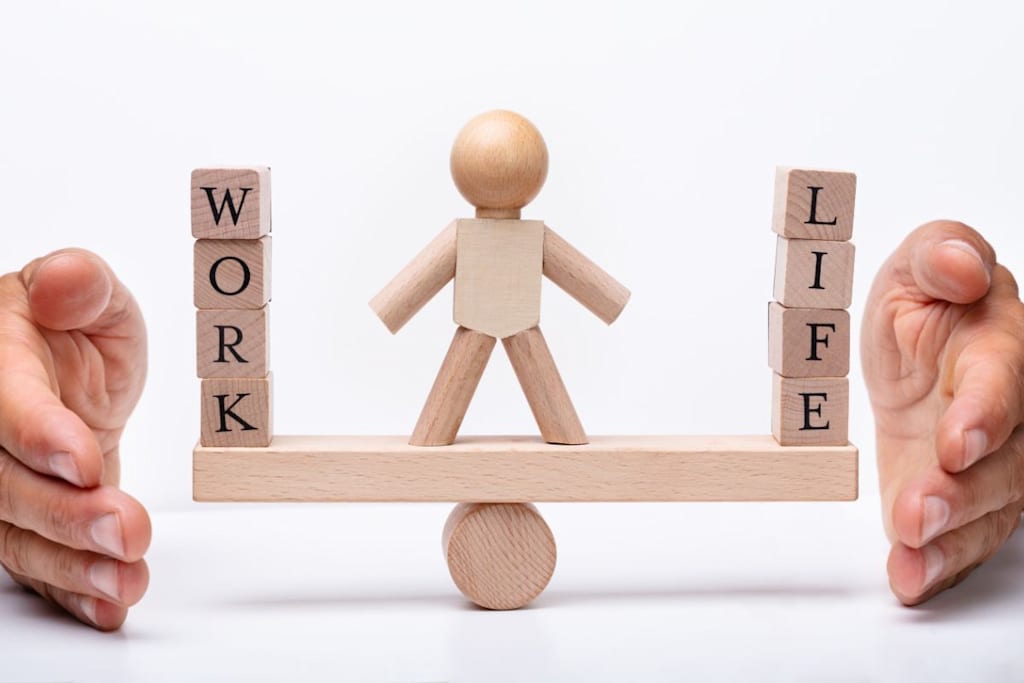
Work-life balance used to sound simple: finish work, go home, and switch off. But in today’s world, that line has become increasingly blurred. Even when the workday officially ends, most people still feel “on duty” through notifications, emails, and constant digital pressure. The result is a growing sense that true rest is harder to achieve than ever before.
So what changed? Why does balancing work and personal life feel more difficult now than it did even a decade ago?
Let’s break it down.
1. The Rise of Always-On Digital Culture
The biggest shift has come from technology. Smartphones, laptops, cloud tools, and messaging apps have made it possible to work from anywhere—but they have also made it harder to truly disconnect.
Apps like email, Slack, WhatsApp, and Teams keep employees mentally tied to work long after office hours. Even a “quick reply” at night can turn into an expectation of availability.
In 2026, many companies still promote flexibility and remote work, but the hidden cost is constant accessibility. The office no longer has walls—it lives in your pocket.
2. Remote and Hybrid Work Blur Boundaries
Remote work was supposed to improve balance. In many ways, it did. No commuting, more time at home, and flexible schedules sound ideal.
But the downside is the loss of separation between work and personal space.
When your bedroom or living room becomes your office, your brain struggles to switch off. Many people now report working longer hours unintentionally, simply because there is no clear “end of the day” signal.
Hybrid work has also created uneven expectations. Some employees feel they must prove productivity by being constantly active online, even when not required.
3. Increased Job Pressure and Economic Uncertainty
Another major factor is rising workplace pressure. Global competition, automation, and AI-driven productivity expectations have changed how work is measured.
Many industries now expect faster output, more multitasking, and higher efficiency from smaller teams. This creates a cycle where employees feel they must always do more just to stay stable.
At the same time, economic uncertainty and cost-of-living pressures make people reluctant to “switch off.” Many fear falling behind or losing opportunities if they are not constantly visible and productive.
4. The Culture of Hustle and Overachievement
Social media has played a huge role in reshaping attitudes toward work. Platforms like LinkedIn, Instagram, and YouTube often highlight extreme productivity lifestyles—early mornings, side hustles, multiple income streams, and constant self-improvement.
While inspiring for some, this “always grinding” culture can be exhausting. It creates pressure to turn every free hour into productive time.
Rest is often misinterpreted as laziness, even though it is essential for long-term performance and mental health.
5. Mental Load Has Increased Beyond Work Tasks
Work-life balance is not just about hours—it’s also about mental energy.
Today, people are juggling more than just jobs. They are managing digital identities, learning new tools, handling financial stress, and staying updated with rapidly changing industries.
Even outside work, the mind rarely rests. Scrolling social media, checking notifications, or thinking about unfinished tasks keeps the brain in a constant state of partial work mode.
This “mental load” is one of the biggest hidden reasons burnout is rising globally.
6. AI and Automation Are Changing Work Expectations
Artificial intelligence has made many tasks faster, but it has also raised expectations. If something can be done in minutes using tools, employers often expect it to be done immediately.
This creates a new kind of pressure: speed expectation inflation.
Workers are now expected to do more in less time, often with fewer resources. Instead of reducing workload, technology sometimes increases it.
7. Weak Boundaries in Modern Work Culture
In many workplaces, especially digital and global teams, boundaries are not clearly defined. Meetings are scheduled across time zones, messages come at all hours, and “urgent” tasks are often unclear.
Without strong personal boundaries or company policies, employees end up responding whenever work arrives—day or night.
This gradually erodes personal time and makes recovery difficult.
8. Lack of Real Recovery Time
Even when people are not working, they are often not truly resting. Passive consumption—scrolling, binge-watching, or multitasking—does not fully recharge the brain.
Real recovery requires downtime without stimulation, but modern lifestyles rarely allow it. As a result, many people start the next workday already mentally tired.
9. The Emotional Side: Guilt and Pressure
One overlooked reason work-life balance feels harder today is emotional pressure.
People often feel guilty for resting or taking breaks. On the other hand, they feel stressed when working too much. This creates a constant internal conflict where neither work nor rest feels fully satisfying.
10. What Can Actually Help Today
Improving work-life balance in 2026 is less about strict rules and more about intentional habits:
Setting clear digital boundaries (like no-work hours)
Turning off non-essential notifications
Creating physical separation between work and rest spaces
Scheduling real breaks, not just screen time
Learning to disconnect without guilt
Prioritizing sleep and offline time
Companies also play a big role by encouraging realistic workloads and respecting off-hours communication norms.
Final Thoughts
Work-life balance is harder today not because people are weaker or less disciplined, but because the structure of work itself has changed. Technology, expectations, and culture have merged work into everyday life.
The challenge now is not just managing time—but managing attention, energy, and boundaries in a world that never truly switches off.
And in this environment, balance is no longer automatic. It has to be actively created.
About the Creator
Yuvraj Singh
Passionate about uncovering meaningful stories and delivering trusted insights. I transform complex topics into clear, engaging content, covering technology, business, lifestyle, and global trends with accuracy and purpose.
Enjoyed the story? Support the Creator.
Subscribe for free to receive all their stories in your feed.
Comments
There are no comments for this story
Be the first to respond and start the conversation.