
When a Blood Test Becomes a Lifeline: Understanding Global Medical Diagnostics
How modern diagnostic tools are quietly saving lives across the world — including right here in the UK
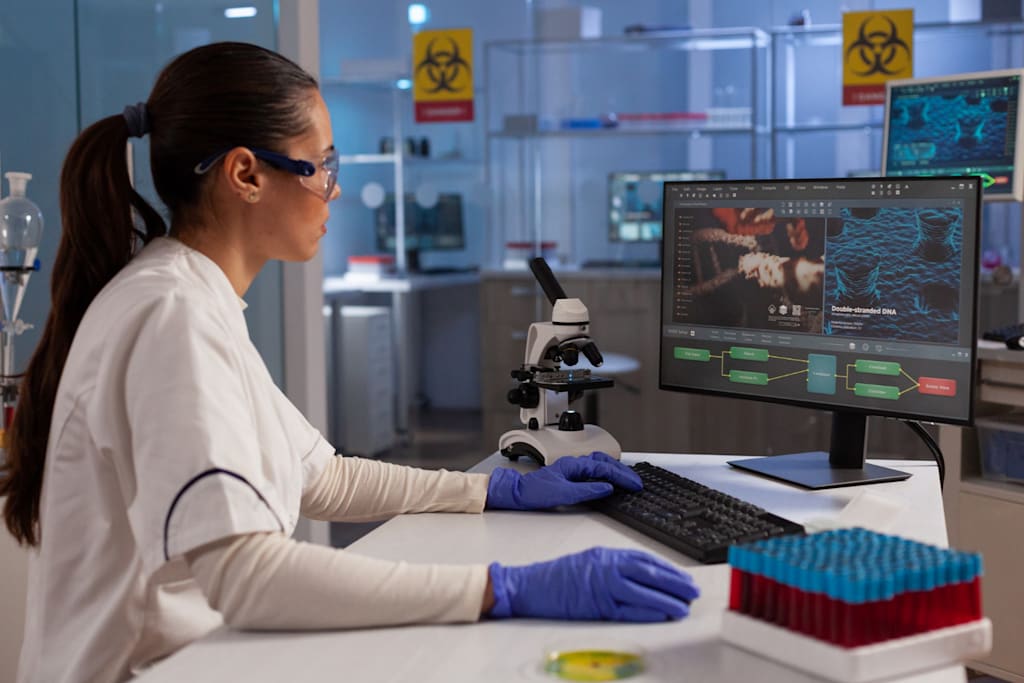
My grandmother used to say the doctor "just knew" what was wrong with you. He'd press your stomach, ask a few questions, and write a prescription. No scans. No lab reports. No waiting.
That world is long gone.
Today, a single drop of blood can reveal dozens of hidden conditions. A scan can detect cancer before you feel a single symptom. And results that once took weeks can arrive in hours — or even minutes.
This shift didn't happen overnight. It's the result of decades of progress in global medical diagnostics — a field that most of us don't think about until we're sitting in a GP waiting room, nervously staring at a form.
But it's worth understanding. Because these tools don't just detect illness. They shape how — and how quickly — you get better.
What Does "Medical Diagnostics" Actually Mean?
At its simplest, medical diagnostics is the process of identifying what's wrong with a patient.
That could be a urine test at your local NHS clinic. It could be an MRI scanner at a hospital. Or it could be a rapid blood test sent off to a specialist laboratory. All of these fall under the broad umbrella of diagnostics.
What makes it global is the shared science behind it — the technology, the standards, and the research that connect healthcare systems from Manchester to Mumbai.
Why It Matters More Than You Might Think
Here's something worth sitting with: many serious conditions — heart disease, diabetes, certain cancers — can be managed or even reversed if caught early enough.
Diagnostics is the thing that catches them.
For people in the UK, access to NHS diagnostic services has never been more important. Waiting times for scans and tests have been a real challenge in recent years, and many people have felt the anxiety of uncertainty — not knowing what's wrong, or how serious it might be.
Understanding the role of global medical diagnostics helps us appreciate not just the technology, but the human stakes behind it.
How the Technology Has Changed
Not long ago, many tests required large machines, specialist staff, and days of waiting.
Now, point-of-care testing allows results to be produced at the bedside, in a pharmacy, or even at home. Portable devices can monitor blood sugar, oxygen levels, and heart rhythms in real time.
Imaging technology has also advanced dramatically. Modern scanners produce incredibly detailed pictures of the body's internal structures, helping doctors spot problems that previous generations simply couldn't see.
And behind all of this is data vast amounts of it being processed faster and more accurately than ever before.
The Role of Global Collaboration
One of the most important and least discussed aspects of modern diagnostics is how international it truly is.
Research conducted in Japan influences testing protocols used in a Birmingham hospital. Equipment designed in Germany might be used in a GP surgery in Edinburgh. Labs in the UK may process samples using methods developed in the United States.
Global medical diagnostics is, at its core, a shared human project. And that collaboration genuinely saves lives.
What This Means for Patients in the UK
If you've recently been referred for a test, or you're managing a long-term condition that requires regular monitoring, you're already part of this story.
The tests you take are backed by international science. The machines used to read them often come from global research programmes. And the standards your results are measured against have been shaped by decades of worldwide clinical study.
That's not a small thing. It means the care you receive — even through a stretched NHS — is built on a truly remarkable foundation.
Conclusion
We often think of healthcare as something very local — our GP, our hospital, our postcode.
But the science beneath it is global. The diagnostics keeping people alive in the UK today reflect a worldwide effort to understand the human body better, detect illness earlier, and give patients the best possible chance.
Next time you hand over a blood sample or sit in a scanner, it's worth remembering — you're benefiting from something much larger than you might realise.
And that's a genuinely reassuring thought.
About the Creator
Enjoyed the story? Support the Creator.
Subscribe for free to receive all their stories in your feed.
Comments
There are no comments for this story
Be the first to respond and start the conversation.