
United States Medical Gas Market to Reach US$ 8.01 Billion by 2033 as Healthcare Infrastructure and Respiratory Care Demand Accelerate
Growing hospital investments, expanding home healthcare adoption, and rising pharmaceutical research activities are fueling sustained growth across the U.S. medical gas industry

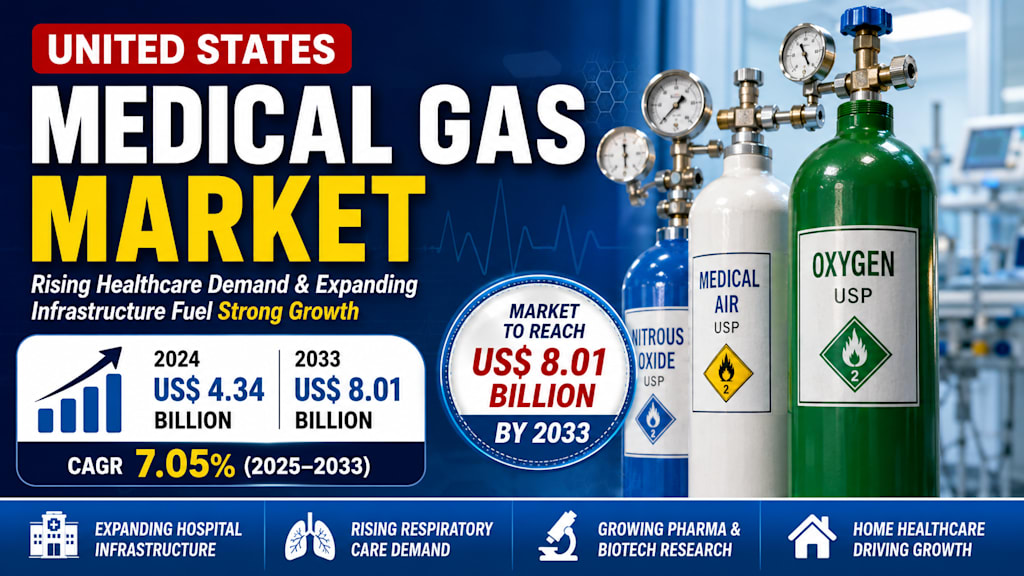
United States Medical Gas Market Size and Forecast 2025–2033
The United States Medical Gas Market is projected to grow from US$ 4.34 billion in 2024 to US$ 8.01 billion by 2033, expanding at a CAGR of 7.05% between 2025 and 2033. The market's steady growth is being supported by rising healthcare demand, expanding hospital infrastructure, increasing respiratory disease prevalence, and broader applications of medical gases in therapeutic, diagnostic, and surgical procedures.
Medical gases have become an indispensable part of modern healthcare systems. Whether used for oxygen therapy in critical care units, anesthesia during surgery, or advanced pharmaceutical manufacturing, these gases support millions of patients and healthcare professionals every day. As healthcare delivery evolves and patient care standards continue to improve, the demand for reliable medical gas solutions is expected to remain strong throughout the forecast period.
Medical Gases: The Invisible Backbone of Modern Healthcare
While patients may rarely think about them, medical gases are among the most critical resources within healthcare facilities. Oxygen, nitrogen, nitrous oxide, carbon dioxide, and medical air support a wide range of clinical functions, including respiratory therapy, anesthesia administration, diagnostic imaging, laboratory testing, and pharmaceutical production.
Hospitals, ambulatory surgical centers, diagnostic laboratories, and home healthcare providers depend heavily on uninterrupted medical gas supplies. The growing complexity of healthcare services has increased the need for advanced gas delivery systems, storage infrastructure, and safety monitoring technologies.
As healthcare providers continue modernizing facilities and adopting advanced treatment protocols, medical gas systems are becoming more sophisticated, reliable, and efficient.
Rising Respiratory Disease Burden Driving Market Expansion
One of the strongest growth drivers for the U.S. medical gas market is the increasing prevalence of respiratory illnesses.
Millions of Americans suffer from chronic respiratory conditions such as Chronic Obstructive Pulmonary Disease (COPD), asthma, sleep apnea, and pulmonary fibrosis. These conditions often require long-term oxygen therapy and continuous respiratory support, creating sustained demand for medical oxygen and related gas systems.
The aging U.S. population further amplifies this trend. Older adults are more vulnerable to respiratory and cardiovascular diseases, increasing hospital admissions and oxygen therapy requirements. Respiratory care remains one of the most common treatments in acute care facilities, rehabilitation centers, and home healthcare environments.
The lessons learned from recent public health emergencies have also encouraged healthcare providers to strengthen oxygen infrastructure, maintain larger reserves, and improve emergency preparedness measures.
Hospital Infrastructure Development Supporting Growth
Healthcare infrastructure investments across the United States continue to create significant opportunities for medical gas suppliers and system providers.
Hospitals are expanding intensive care units, emergency departments, surgical suites, and specialty treatment centers to accommodate growing patient volumes. Each new healthcare facility requires sophisticated medical gas pipeline systems, monitoring technologies, storage units, and distribution networks.
Advanced healthcare facilities increasingly prioritize automated monitoring systems that ensure gas purity, pressure control, and regulatory compliance. These upgrades not only improve patient safety but also enhance operational efficiency.
Additionally, ambulatory surgical centers are experiencing rapid growth due to increasing demand for cost-effective outpatient procedures. These facilities require reliable access to anesthesia gases and medical air systems, further contributing to market expansion.
Home Healthcare Revolution Creating New Opportunities
The healthcare industry is witnessing a major shift toward home-based treatment and patient-centered care.
Home healthcare services have become increasingly popular due to rising healthcare costs, technological advancements, and patient preference for receiving treatment in familiar environments. Portable oxygen concentrators, lightweight cylinders, and advanced respiratory support systems are transforming the way patients manage chronic conditions outside traditional healthcare settings.
Patients suffering from COPD, chronic respiratory failure, and sleep-related breathing disorders often rely on home oxygen therapy for long-term treatment. The growing adoption of these solutions has created a rapidly expanding market segment for medical gas providers.
Manufacturers are investing heavily in compact, user-friendly devices that improve mobility, convenience, and treatment adherence. As healthcare systems continue prioritizing home-based care models, demand for portable medical gas solutions is expected to increase substantially.
Pharmaceutical and Biotechnology Industries Strengthen Demand
Medical gases are no longer limited to clinical healthcare applications. The pharmaceutical and biotechnology sectors have emerged as major consumers of specialized gases.
Nitrogen and carbon dioxide play critical roles in drug manufacturing, cryopreservation, laboratory research, quality testing, packaging, and sterilization processes. The rapid growth of biologics, cell therapies, gene therapies, and personalized medicine has increased demand for highly pure medical gases across research and manufacturing environments.
Research institutions and biotechnology companies depend on precise gas control systems to ensure product quality and scientific accuracy. As pharmaceutical innovation accelerates across the United States, medical gas suppliers are becoming strategic partners in supporting advanced research and production activities.
This expanding role within life sciences significantly broadens the industry's growth potential beyond traditional hospital settings.
Technology and Sustainability Reshaping the Industry
Innovation is becoming a defining characteristic of the U.S. medical gas market.
Leading companies are investing in smart gas monitoring systems, digital tracking technologies, predictive maintenance solutions, and environmentally sustainable production methods. These innovations help improve efficiency, reduce waste, and ensure uninterrupted supply.
Artificial intelligence and Internet of Things (IoT) technologies are increasingly being integrated into gas management systems. Hospitals can now monitor gas usage in real time, identify potential leaks, optimize inventory management, and improve overall safety.
Sustainability initiatives are also gaining momentum. Manufacturers are adopting energy-efficient production processes and exploring environmentally responsible transportation methods to reduce carbon emissions throughout the supply chain.
These technological advancements are expected to enhance market competitiveness while supporting long-term industry growth.
Regulatory Compliance Remains a Key Challenge
Despite strong growth prospects, regulatory compliance continues to present significant challenges for market participants.
Medical gases are classified as regulated healthcare products and must meet strict standards established by agencies such as the U.S. Food and Drug Administration (FDA), Occupational Safety and Health Administration (OSHA), and National Fire Protection Association (NFPA).
Manufacturers and distributors must comply with extensive requirements governing production, labeling, storage, transportation, and quality control. Maintaining compliance often requires substantial investments in infrastructure, employee training, documentation systems, and monitoring technologies.
Failure to meet regulatory requirements can result in financial penalties, operational disruptions, and reputational damage. Smaller suppliers, in particular, may face difficulties managing the costs associated with ongoing compliance obligations.
While these regulations help ensure patient safety, they also create barriers to market entry and expansion.
Supply Chain Challenges Continue to Impact Operations
Efficient transportation and distribution remain critical to the success of the medical gas industry.
Medical gases require specialized storage cylinders, cryogenic containers, transportation equipment, and distribution networks. Any disruption in logistics can directly impact healthcare providers and patient care.
Supply chain challenges include transportation delays, equipment shortages, workforce constraints, fluctuating raw material costs, and increasing fuel expenses. Rural healthcare facilities often face additional challenges in securing reliable and cost-effective gas deliveries.
The industry has responded by strengthening supply chain resilience through strategic inventory management, regional distribution centers, and advanced logistics planning.
As healthcare demand continues growing, maintaining secure and uninterrupted supply chains will remain a top priority for manufacturers and distributors.
Regional Analysis: Key State Markets Driving Growth
California
California remains the largest and most influential medical gas market in the United States. Its extensive healthcare infrastructure, world-renowned hospitals, biotechnology clusters, and pharmaceutical research centers generate substantial demand for oxygen, nitrogen, and specialty gases.
The state's strong focus on innovation and healthcare modernization further supports market growth.
Texas
Texas continues to emerge as one of the fastest-growing regional markets. Major healthcare hubs in Houston, Dallas, and Austin drive demand across hospitals, surgical centers, research institutions, and pharmaceutical facilities.
The state's growing population and expanding healthcare investments make it an attractive destination for medical gas providers.
Pennsylvania
Pennsylvania benefits from a robust healthcare network and thriving life sciences ecosystem. Hospitals, research institutions, and pharmaceutical manufacturers contribute significantly to medical gas consumption across the state.
Its strategic geographic location also supports efficient distribution throughout the northeastern United States.
Washington
Washington's expanding biotechnology sector and advanced healthcare infrastructure are strengthening its position within the medical gas market. Growing investments in research, pharmaceutical development, and patient care facilities continue driving demand for specialized gas solutions.
Market Segmentation
By Product
Pure Gases
Gas Mixtures
By Application
Therapeutics
Diagnostics
Others
By End Use
Hospitals
Pharmaceutical & Biotechnology Companies
Ambulatory Surgical Centers
Diagnostic & Research Laboratories
Academic & Research Institutes
Home Healthcare
By State
California
Texas
New York
Florida
Illinois
Pennsylvania
Ohio
Georgia
New Jersey
Washington
North Carolina
Massachusetts
Virginia
Michigan
Maryland
Colorado
Tennessee
Indiana
Arizona
Minnesota
Wisconsin
Missouri
Connecticut
South Carolina
Oregon
Louisiana
Alabama
Kentucky
Rest of United States
10 Recent Developments from Leading Medical Gas Industry Companies
1. Air Liquide
Air Liquide has continued expanding digital healthcare services and remote patient monitoring solutions to support home oxygen therapy and chronic disease management programs across North America.
2. Linde PLC
Linde strengthened its healthcare portfolio through investments in advanced medical gas distribution technologies and sustainable production facilities designed to improve supply reliability.
3. Atlas Copco Group
Atlas Copco introduced energy-efficient medical air systems and vacuum technologies aimed at improving operational performance in hospitals and healthcare facilities.
4. INOX-Air Products Inc.
INOX-Air Products expanded production capabilities and enhanced medical oxygen supply infrastructure to support growing healthcare demand and emergency preparedness initiatives.
5. TAIYO NIPPON SANSO CORPORATION
The company increased investments in specialty gas solutions for biotechnology research, pharmaceutical manufacturing, and advanced healthcare applications.
6. MATHESON TRI-GAS, INC.
MATHESON TRI-GAS expanded its specialty gas portfolio while strengthening supply chain capabilities for healthcare and life sciences customers.
7. HORIBA Group
HORIBA advanced gas analysis and monitoring technologies that improve quality assurance and regulatory compliance within healthcare and pharmaceutical environments.
8. Air Liquide Healthcare
The healthcare division introduced innovative respiratory care solutions and expanded partnerships supporting home healthcare patients requiring oxygen therapy.
9. Linde Healthcare
Linde Healthcare continued enhancing digital cylinder tracking systems and smart gas management technologies for hospitals and healthcare networks.
10. Atlas Copco Medical Solutions
Atlas Copco broadened its healthcare offerings with next-generation compressed air and vacuum systems designed to improve efficiency and patient safety.
Competitive Landscape
The U.S. medical gas market remains highly competitive, with global industrial gas leaders and specialized healthcare suppliers focusing on innovation, sustainability, and supply reliability.
Major companies are investing in digital technologies, advanced storage solutions, home healthcare products, and strategic partnerships to strengthen their market positions. Increasing demand from hospitals, pharmaceutical manufacturers, biotechnology firms, and research institutions continues to create opportunities for both established players and emerging participants.
As healthcare systems become more technologically advanced, suppliers capable of delivering integrated, compliant, and reliable gas solutions are expected to gain a significant competitive advantage.
Final Thoughts
The United States Medical Gas Market is entering a period of sustained and meaningful growth. Rising respiratory disease prevalence, expanding healthcare infrastructure, increasing surgical procedures, and growing pharmaceutical research activities are creating strong demand across multiple end-use sectors.
With the market expected to reach US$ 8.01 billion by 2033, industry participants have significant opportunities to capitalize on evolving healthcare needs. While regulatory compliance and supply chain challenges remain important considerations, technological innovation, home healthcare expansion, and life sciences growth continue to support a positive long-term outlook.
Medical gases may operate behind the scenes, but their role in modern healthcare is more important than ever. As hospitals, researchers, and patients increasingly depend on these essential resources, the industry is poised to remain a vital pillar of the U.S. healthcare ecosystem for years to come.
About the Creator
Enjoyed the story? Support the Creator.
Subscribe for free to receive all their stories in your feed.
Comments
There are no comments for this story
Be the first to respond and start the conversation.