
United States Durable Medical Equipment Market Set to Reach US$ 97.10 Billion by 2033 as Home Healthcare and Aging Population Drive Demand
Rising chronic disease prevalence, expanding home-based care, and technological innovation are reshaping the future of durable medical equipment across the United States

The United States healthcare industry is undergoing a major transformation as patient care increasingly shifts beyond traditional hospitals and clinics. One of the most important contributors to this change is the Durable Medical Equipment (DME) market, which provides essential devices that help patients maintain mobility, monitor health conditions, and recover safely in home and clinical environments.
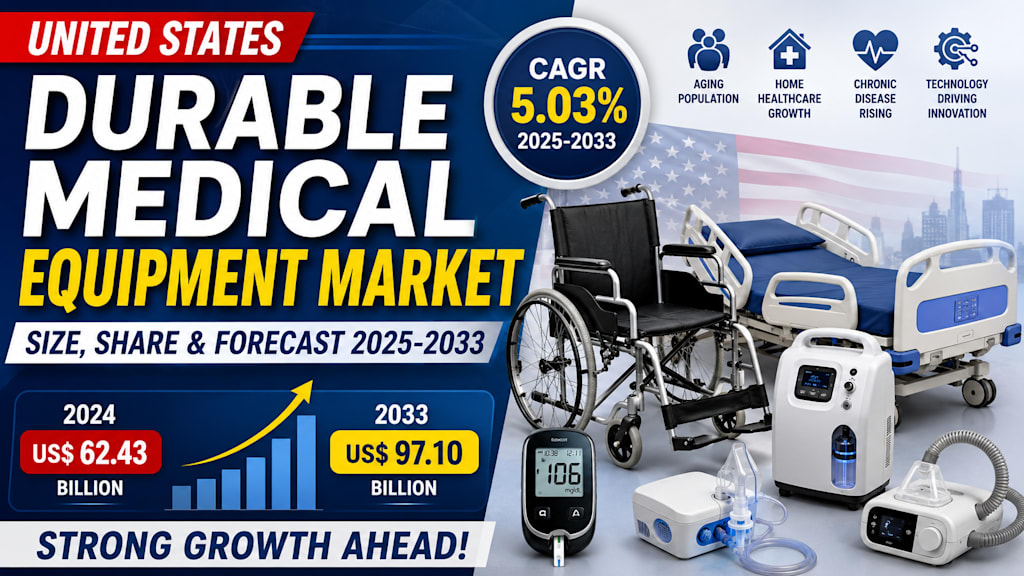
According to Renub Research, the United States Durable Medical Equipment Market is projected to grow from US$ 62.43 billion in 2024 to US$ 97.10 billion by 2033, expanding at a CAGR of 5.03% during the forecast period from 2025 to 2033. Rising healthcare needs among older adults, increasing chronic disease prevalence, advancements in medical technologies, and growing acceptance of home healthcare services continue to fuel market expansion.
As healthcare systems focus more on patient-centered care and cost-effective treatment models, durable medical equipment has become an indispensable component of modern healthcare delivery.
Understanding Durable Medical Equipment
Durable Medical Equipment refers to medical devices designed for long-term use and repeated application in treating, monitoring, or managing health conditions. These products are prescribed by healthcare professionals and are built to withstand prolonged usage while delivering therapeutic benefits.
Common examples include wheelchairs, walkers, oxygen concentrators, hospital beds, blood glucose monitors, nebulizers, CPAP devices, suction pumps, and mobility scooters.
Unlike disposable medical products, DME supports ongoing patient care and helps reduce hospital admissions while improving quality of life. For patients recovering from surgery, managing chronic illnesses, or living with disabilities, these devices often provide the independence needed to carry out everyday activities safely and comfortably.
The growing importance of DME is directly linked to healthcare trends emphasizing preventative care, remote monitoring, and home-based treatment.
Aging Population Continues to Fuel Market Growth
One of the strongest growth drivers in the United States Durable Medical Equipment Market is the rapid expansion of the aging population.
Millions of baby boomers are entering retirement age, creating increased demand for healthcare services and medical support devices. Older adults frequently experience mobility limitations, arthritis, osteoporosis, cardiovascular diseases, diabetes, and respiratory disorders that require ongoing medical assistance.
Devices such as wheelchairs, walkers, mobility scooters, hospital beds, and monitoring equipment enable seniors to maintain independence while reducing dependence on institutional care.
Healthcare providers and insurance programs increasingly recognize the value of DME in supporting aging-in-place initiatives. Rather than moving into long-term care facilities, many seniors prefer to remain in their homes while using advanced medical equipment to manage health conditions.
This demographic shift is expected to remain a primary market catalyst throughout the forecast period.
Growing Burden of Chronic Diseases Expands Equipment Demand
The prevalence of chronic diseases continues to rise across the United States, creating substantial opportunities for DME manufacturers.
Conditions such as diabetes, chronic obstructive pulmonary disease (COPD), cardiovascular disorders, obesity, and sleep apnea require continuous monitoring and treatment. Patients often rely on durable medical devices to maintain health and prevent complications.
Blood glucose monitoring systems, oxygen therapy equipment, CPAP machines, nebulizers, infusion pumps, and respiratory support devices have become essential tools in disease management.
As healthcare providers prioritize preventive care and long-term disease management strategies, the demand for reliable, user-friendly, and technologically advanced equipment continues to grow.
The increasing number of patients living with multiple chronic conditions further strengthens the need for integrated medical equipment solutions.
Home Healthcare Emerges as a Major Market Opportunity
Home healthcare has become one of the fastest-growing segments of the American healthcare system.
Rising hospitalization costs, improvements in remote monitoring technologies, and patient preference for receiving care at home have accelerated adoption of home-based healthcare services.
Durable medical equipment serves as the foundation of this healthcare model. Hospital beds, oxygen concentrators, mobility aids, nebulizers, suction pumps, and monitoring devices allow patients to receive high-quality care outside traditional healthcare settings.
Government support through Medicare and Medicaid reimbursement programs has also enhanced accessibility to home healthcare equipment.
As healthcare systems continue to focus on reducing readmissions and lowering treatment costs, home healthcare is expected to remain one of the most influential factors driving DME market growth through 2033.
Technology Revolutionizing Durable Medical Equipment
Technological innovation is transforming the DME landscape.
Modern equipment is becoming smarter, lighter, more portable, and easier to use. Today's devices increasingly integrate digital health features, wireless connectivity, cloud-based monitoring, and smartphone applications.
For example, advanced glucose monitoring systems now provide real-time readings and predictive alerts. Smart wheelchairs offer navigation assistance and customizable mobility settings. Portable oxygen concentrators have significantly improved patient mobility and convenience.
Telehealth integration allows healthcare providers to remotely monitor patient conditions, enabling timely interventions and improved treatment outcomes.
Manufacturers are investing heavily in research and development to create next-generation products that enhance patient comfort while delivering superior clinical performance.
These innovations are expected to generate significant growth opportunities throughout the forecast period.
Market Challenges Remain Significant
Despite favorable growth prospects, the DME industry faces several challenges.
One major obstacle is the high cost associated with advanced medical equipment. While insurance programs cover many products, reimbursement procedures can be complex and time-consuming.
Patients may face significant out-of-pocket expenses for premium or non-covered devices. Healthcare providers also encounter financial pressures due to reimbursement limitations and changing policy requirements.
Regulatory compliance represents another challenge. Manufacturers must meet strict standards established by federal and state agencies regarding product safety, quality assurance, labeling, and reporting.
Compliance costs can be substantial, particularly for smaller manufacturers attempting to compete with established industry leaders.
Balancing affordability, innovation, and regulatory requirements will remain a critical priority for market participants.
Product Segment Analysis
Personal Mobility Devices
Personal mobility devices represent one of the largest segments within the DME market.
Wheelchairs, scooters, walkers, rollators, canes, and crutches play a vital role in supporting mobility-impaired individuals. Growing elderly populations and rising disability rates continue to increase demand for these products.
Advancements in lightweight materials, battery technology, and ergonomic design have significantly enhanced product functionality and user experience.
Bathroom Safety Devices and Medical Furniture
Bathroom safety equipment and medical furniture improve patient safety and comfort in both healthcare facilities and home environments.
Products such as commodes, adaptive toilets, mattresses, and hospital beds are increasingly used in aging-in-place and home healthcare settings.
As patient independence becomes a healthcare priority, demand for these products is expected to continue growing steadily.
Monitoring and Therapeutic Devices
Monitoring and therapeutic equipment represent one of the fastest-growing categories.
Blood sugar monitors, infusion pumps, nebulizers, oxygen therapy systems, and continuous passive motion devices help patients manage chronic conditions and recovery processes effectively.
Increasing adoption of connected healthcare technologies further supports segment expansion.
Key Equipment Markets Driving Growth
The U.S. medical wheelchair market continues to benefit from rising mobility challenges among elderly and disabled populations. Enhanced functionality, customization options, and insurance support contribute to growing adoption.
The blood sugar monitoring equipment market remains highly attractive due to increasing diabetes prevalence. Continuous glucose monitoring systems are revolutionizing diabetes management through real-time health insights.
Nebulizers are witnessing strong demand because of rising respiratory disease incidence, including asthma and COPD. Portable and battery-powered models have gained popularity among home healthcare users.
Suction pumps continue to see increasing adoption in surgical, emergency, and home care applications. Improved reliability and portability have expanded their use across multiple healthcare settings.
Home Healthcare and Hospitals Lead End-User Demand
Hospitals remain the largest consumers of durable medical equipment due to their extensive requirements across inpatient, outpatient, surgical, and intensive care departments.
Healthcare institutions rely heavily on ventilators, hospital beds, mobility equipment, monitoring devices, and therapeutic systems to support patient care.
However, home healthcare is emerging as the fastest-growing end-user segment.
Patients increasingly prefer receiving care in familiar home environments, particularly during post-operative recovery and chronic disease management. Home healthcare agencies depend on DME products to deliver cost-effective and patient-centered services.
The shift toward value-based care models is expected to strengthen demand from both hospitals and home healthcare providers.
State-Level Market Insights
California remains one of the most influential DME markets in the country. A large aging population, advanced healthcare infrastructure, and strong home healthcare adoption create favorable market conditions.
The state's focus on innovation has encouraged the development of technologically advanced medical equipment solutions.
New York also represents a significant market due to its large population, extensive healthcare network, and substantial Medicaid coverage.
Demand remains strong across hospitals, specialty clinics, rehabilitation centers, and home healthcare providers. The state's commitment to healthcare accessibility and technology adoption supports continued market growth.
Other major states contributing significantly to revenue generation include Texas, Florida, Illinois, Pennsylvania, Ohio, Georgia, Washington, and New Jersey.
Competitive Landscape
The United States Durable Medical Equipment Market is highly competitive and characterized by the presence of global medical technology leaders and specialized equipment manufacturers.
Leading companies focus on product innovation, strategic partnerships, acquisitions, and digital healthcare integration to strengthen market positions.
Key players operating in the market include Invacare Corporation, NOVA Medical Products, Inogen Inc., Thermo Fisher Scientific Inc., Abbott, Medtronic, Baxter, B. Braun SE, Boston Scientific Corporation, and BD.
As competition intensifies, manufacturers continue investing in advanced technologies and patient-focused solutions to capture emerging growth opportunities.
10 Recent Developments from Leading Companies
Abbott expanded its continuous glucose monitoring portfolio, enhancing remote diabetes management capabilities.
Medtronic introduced next-generation connected healthcare technologies designed to improve chronic disease monitoring.
Baxter strengthened its home healthcare offerings through investments in advanced infusion therapy solutions.
BD expanded its smart medication management systems to improve healthcare efficiency and patient safety.
Boston Scientific increased investment in digital health technologies supporting remote patient monitoring.
Inogen continued expanding its portable oxygen concentrator product line to serve growing home healthcare demand.
Thermo Fisher Scientific increased manufacturing capabilities to support growing healthcare equipment requirements.
B. Braun advanced infusion pump technologies focused on improving precision and patient outcomes.
Invacare introduced enhanced mobility products emphasizing comfort, safety, and independence for aging populations.
NOVA Medical Products expanded its range of mobility aids and home safety products targeting the rapidly growing senior care market.
Final Thoughts
The United States Durable Medical Equipment Market stands at the intersection of healthcare innovation, demographic transformation, and patient-centered care. Rising chronic disease prevalence, expanding home healthcare services, and a rapidly aging population are creating sustained demand for advanced medical equipment solutions.
With the market expected to grow from US$ 62.43 billion in 2024 to US$ 97.10 billion by 2033 at a CAGR of 5.03%, opportunities remain significant for manufacturers, healthcare providers, and investors alike.
Organizations that prioritize technological innovation, affordability, regulatory compliance, and patient convenience will be best positioned to capitalize on the next decade of growth in the U.S. durable medical equipment industry.
About the Creator
Enjoyed the story? Support the Creator.
Subscribe for free to receive all their stories in your feed.
Comments
There are no comments for this story
Be the first to respond and start the conversation.