
The Mystery of Antarctica: Secrets Beneath the Ice
Scientists are discovering a hidden world beneath Antarctica’s ice sheet, including ancient landscapes, buried mountains, deep valleys and hundreds of subglacial lakes that could reveal Earth’s climate history.
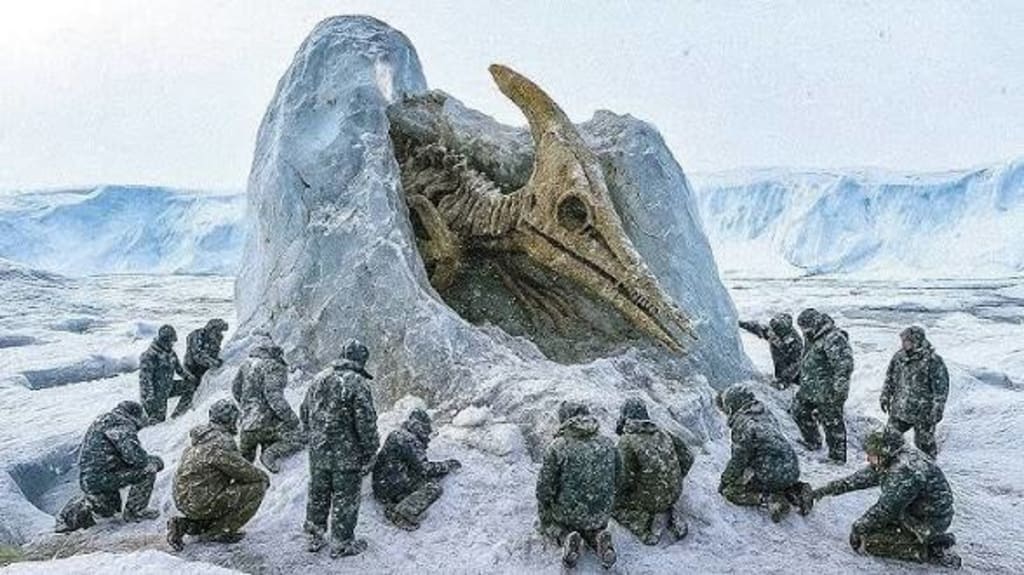
Antarctica is often imagined as a vast, empty continent covered by an enormous blanket of ice. But beneath that frozen surface lies a completely different world—one that includes mountains, valleys, lakes, canyons and landscapes that have remained hidden for millions of years.
Modern science is beginning to reveal this mysterious environment. Using satellites, radar surveys and sophisticated computer models, researchers are mapping parts of Antarctica that humans have rarely, if ever, seen directly.
The discoveries are changing how scientists understand the continent and could also improve predictions about future sea-level rise.
A Hidden Continent Beneath the Ice
Antarctica's ice sheet can reach several kilometres in thickness. Because of this enormous layer of ice, studying the ground beneath it is extremely difficult.
Scientists cannot simply travel across the continent and examine the bedrock. Instead, they use technologies such as ice-penetrating radar, satellite measurements and gravitational and magnetic observations.
In January 2026, researchers published a detailed map of Antarctica's subglacial landscape that revealed thousands of previously undetected hills along with mountains, valleys, canyons and plains. The mapping technique used subtle changes in the ice surface caused by the terrain underneath.
The result is effectively a new view of Antarctica—a landscape that has been hidden from human eyes by kilometres of ice.
Mountains That Nobody Can See
One of the most fascinating discoveries beneath Antarctica is that the continent is far from flat.
The bedrock contains extensive mountain systems and rugged terrain. Some of these features influence how glaciers move across the continent.
Scientists have discovered that the ice above a mountain can sometimes preserve a subtle signature of that mountain on the surface. Radar and satellite observations can therefore be used to work backwards and reconstruct the landscape beneath the ice.
This matters because the shape of the bedrock affects the movement of ice. A steep ridge can slow ice flow, while valleys and channels can guide it toward the coast.
Understanding these hidden features is therefore essential for predicting how Antarctica could respond to a warming climate.
Hundreds of Lakes Beneath the Ice
Perhaps the strangest feature of Antarctica's hidden world is its network of subglacial lakes.
Scientists have identified more than 600 subglacial lakes beneath the Antarctic ice sheet, including active lakes that periodically fill and drain.
These lakes exist because pressure from the enormous weight of the ice, geothermal heat from Earth's interior and other physical processes can keep water liquid beneath the frozen surface.
Some lakes are isolated beneath kilometres of ice.
The British Antarctic Survey has documented research into Lake Ellsworth, a subglacial lake lying beneath roughly 3.2 kilometres of ice. Scientists have investigated such environments because they may contain unusual ecosystems and valuable records of past environmental conditions.
These hidden bodies of water are also scientifically interesting because they provide clues about how water moves beneath glaciers.
Could Life Exist Beneath Antarctica?
The possibility of life beneath the ice has fascinated scientists for years.
Subglacial lakes are extremely cold, dark and isolated. They receive no sunlight, yet some may contain chemical energy sources capable of supporting microorganisms.
Scientists are interested in these environments partly because they could help answer questions about how life survives under extreme conditions.
Antarctic subglacial environments have also been studied as possible analogues for icy worlds elsewhere in the Solar System. Jupiter's moon Europa, for example, is believed to contain an ocean beneath an icy exterior.
If life can survive in Earth's extreme subglacial environments, researchers may gain useful insights into where to look for life beyond our planet.
That does not mean scientists have discovered alien life in Antarctica. It means the continent provides a natural laboratory for studying environments that resemble those potentially found elsewhere.
An Ancient Landscape Frozen in Time
The ground beneath Antarctica also contains clues about a much warmer and very different Earth.
Research has identified ancient landscapes beneath the East Antarctic Ice Sheet that include evidence of old river systems and relatively flat terrain. One major study described a vast ancient landscape that may have formed before the region became covered by permanent ice.
This is significant because Antarctica was not always the frozen continent we know today.
Millions of years ago, parts of Antarctica experienced very different climates. Before the development of the modern ice sheet, rivers and other geological processes shaped the land.
Some of these ancient features survived beneath the ice because the ice did not completely erase them.
In a sense, Antarctica's ice sheet has acted like a gigantic protective cover, preserving pieces of Earth's geological history.
Why Antarctica's Hidden Landscape Matters
Scientists are not exploring Antarctica simply because the discoveries are fascinating.
The hidden landscape directly affects the stability and movement of the ice sheet.
Water beneath glaciers can act as a lubricant, changing how quickly ice moves. Mountains and valleys can slow or redirect ice flow. Subglacial channels can transport water toward the ocean.
These processes influence how quickly ice can be lost from Antarctica.
That is particularly important because Antarctica contains enough frozen water to make a major contribution to global sea-level rise if large portions of its ice sheet were eventually lost.
Better maps of the bedrock can therefore improve computer models used to predict future ice-sheet behavior.
Antarctica Was Once Part of Gondwana
The continent's hidden geology also tells the story of Earth's ancient supercontinents.
Antarctica was once part of Gondwana, a huge landmass that also included what are now Africa, South America, Australia, India and other regions.
As Gondwana broke apart, geological forces reshaped Antarctica.
Some of the landscapes now buried under ice are remnants of geological processes that occurred tens of millions of years ago.
Scientists continue to study these structures to understand how Antarctica evolved and how its geology influenced the later development of the ice sheet.
More Questions Than Answers
Despite remarkable technological advances, scientists still do not have a complete picture of what lies beneath Antarctica.
Large areas remain poorly mapped compared with the continents people live on.
Every improvement in satellite technology, radar surveying and computer modelling reveals additional details—and often raises new questions.
Could more ancient lakes exist beneath unexplored regions? How old are some of the buried landscapes? How does water move through the hidden networks beneath the ice? And how will these systems respond as Antarctica warms?
These are active areas of scientific research.
The Future of Antarctic Exploration
Future research will likely combine satellite observations with aircraft surveys, radar measurements, drilling and advanced modelling.
Scientists are becoming increasingly capable of studying environments without physically removing the ice above them.
This is important because Antarctica is difficult, expensive and dangerous to explore directly.
Technology effectively allows researchers to "see" through kilometres of ice.
As these methods improve, the map of Antarctica beneath the ice will become increasingly detailed.
Conclusion
Antarctica may look like a frozen wilderness, but beneath its surface exists a hidden world of remarkable complexity.
There are mountains, ancient valleys, buried river landscapes and hundreds of subglacial lakes. Some features may have survived for millions of years beneath the ice, preserving evidence of a dramatically different Antarctic past.
The discoveries are not only scientifically fascinating. They could help researchers understand how Antarctica's ice sheet moves, how it responds to climate change and how future sea-level rise might unfold.
The greatest mystery of Antarctica may therefore not be something hidden in the sky or a secret structure buried beneath the snow.
It is the continent itself.
Beneath the ice, Antarctica is still revealing a world that scientists are only beginning to understand.
About the Creator
Enjoyed the story? Support the Creator.
Subscribe for free to receive all their stories in your feed.
Comments
There are no comments for this story
Be the first to respond and start the conversation.