
The Lost Ship Found After Decades: The Incredible Discovery of the SS Central America
More than a century after disappearing beneath the Atlantic, the wreck of the SS Central America revealed a remarkable story of disaster, survival and lost treasure.
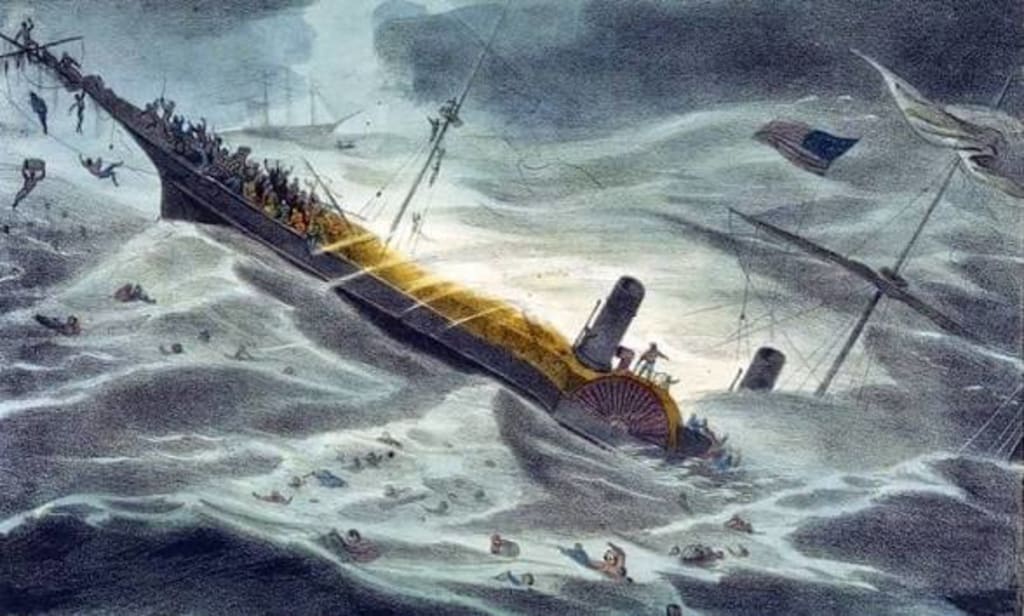
For decades, the ocean floor can hide stories that seem impossible to recover. One of the most fascinating examples is the SS Central America, a steamship that sank in 1857 while carrying passengers, crew members and a large shipment of gold.
The ship disappeared beneath the Atlantic Ocean during a powerful hurricane. For generations, its exact location remained uncertain. Then, more than a century later, explorers located the wreck and began recovering evidence from one of the most famous maritime disasters in American history.
The discovery became a remarkable combination of history, exploration and underwater archaeology.
A Ship Carrying Gold
The SS Central America was a large steamship that operated between New York and Panama during the 19th century.
At the time, ships traveling between the East Coast and California were an important part of America's expanding transportation network. The SS Central America was also carrying a valuable cargo of gold that had been shipped from California.
In September 1857, the ship was sailing north toward New York when it encountered a powerful hurricane.
The storm became increasingly dangerous, and the ship struggled against the enormous waves and strong winds.
The Disaster of 1857
The SS Central America eventually suffered severe damage and began taking on water.
Captain William Lewis Herndon and his crew attempted to keep the ship afloat while passengers faced increasingly dangerous conditions.
Several vessels were operating in the region, and rescue efforts eventually saved some passengers.
However, the SS Central America could not survive the storm.
The ship sank in the Atlantic, taking hundreds of people with it.
The disaster became one of the deadliest maritime tragedies in the United States during the 19th century.
The loss was also economically significant because the ship was carrying a substantial quantity of gold.
A Wreck Lost to History
After the sinking, the exact location of the ship became a mystery.
For more than a century, the wreck remained undiscovered.
The ocean is an enormous environment, and locating a specific shipwreck in deep water can be extraordinarily difficult. In the 19th century, there was no technology capable of accurately mapping the deep seabed.
As decades passed, the SS Central America became almost legendary.
People knew where the ship had disappeared approximately, but the wreck itself remained hidden.
The Discovery More Than 130 Years Later
In 1988, an expedition led by researchers and treasure hunters located the wreck of the SS Central America off the coast of the United States.
The discovery was significant because it confirmed the location of one of the most famous lost ships in American history.
Advanced underwater technology allowed explorers to locate and examine the wreck in a way that would have been impossible when the ship sank.
The expedition used sophisticated equipment to search the deep ocean and identify the remains of the vessel.
Finding the ship was only the beginning.
The next challenge was determining what could safely be recovered and preserved.
Gold Returns From the Ocean
The wreck contained gold that had remained underwater for more than a century.
Among the recovered objects were gold coins, gold bars and other historical artifacts.
The discovery attracted enormous public attention because of the value of the treasure and the story behind it.
But the artifacts were more than valuable objects.
They provided a physical connection to the people, economy and transportation networks of 19th-century America.
Each recovered item helped researchers understand what the ship was carrying when it disappeared.
More Than a Treasure Hunt
The SS Central America story is often described as a treasure discovery, but its historical significance goes far beyond gold.
The shipwreck provides evidence about life during the California Gold Rush and the dangers faced by people traveling across the country and oceans during the 19th century.
The gold aboard the ship had been part of the enormous economic movement created by the California Gold Rush.
When the ship sank, its cargo disappeared into the sea. Its recovery more than a century later effectively reopened a chapter of American history that had been sealed underwater.
Technology Made the Discovery Possible
The discovery also demonstrated how dramatically underwater exploration had changed.
In 1857, locating a ship on the deep ocean floor was practically impossible.
By the late 20th century, sonar, remotely operated equipment and other technologies had transformed deep-sea exploration.
Researchers could search areas of the ocean systematically rather than relying solely on estimates and surface observations.
Modern technology also made it possible to document underwater archaeological sites and recover selected objects while preserving important historical information.
Why the SS Central America Still Fascinates People
The SS Central America remains fascinating because it combines several elements that have captured human imagination for centuries: a dangerous voyage, a catastrophic storm, a lost ship, valuable cargo and a discovery more than 100 years later.
But perhaps the most compelling part is the connection between the past and the present.
When researchers recovered objects from the wreck, they were not simply finding old gold. They were uncovering physical evidence from a moment in history when the United States was rapidly changing.
The ship's final journey reflected the ambitions, risks and opportunities of the Gold Rush era.
A Lost Story Brought Back to Life
The rediscovery of the SS Central America demonstrates that the ocean can preserve history for generations.
For more than a century, the ship was remembered primarily as a tragic maritime disaster. Its eventual discovery allowed researchers to examine the wreck and recover artifacts that helped tell a much more detailed story.
The SS Central America may have disappeared beneath the Atlantic in 1857, but its story did not disappear with it.
More than a century later, technology brought the lost ship back into the public eye—and transformed an old maritime mystery into one of the most remarkable underwater discoveries in American history.
About the Creator
Enjoyed the story? Support the Creator.
Subscribe for free to receive all their stories in your feed.
Comments
There are no comments for this story
Be the first to respond and start the conversation.