

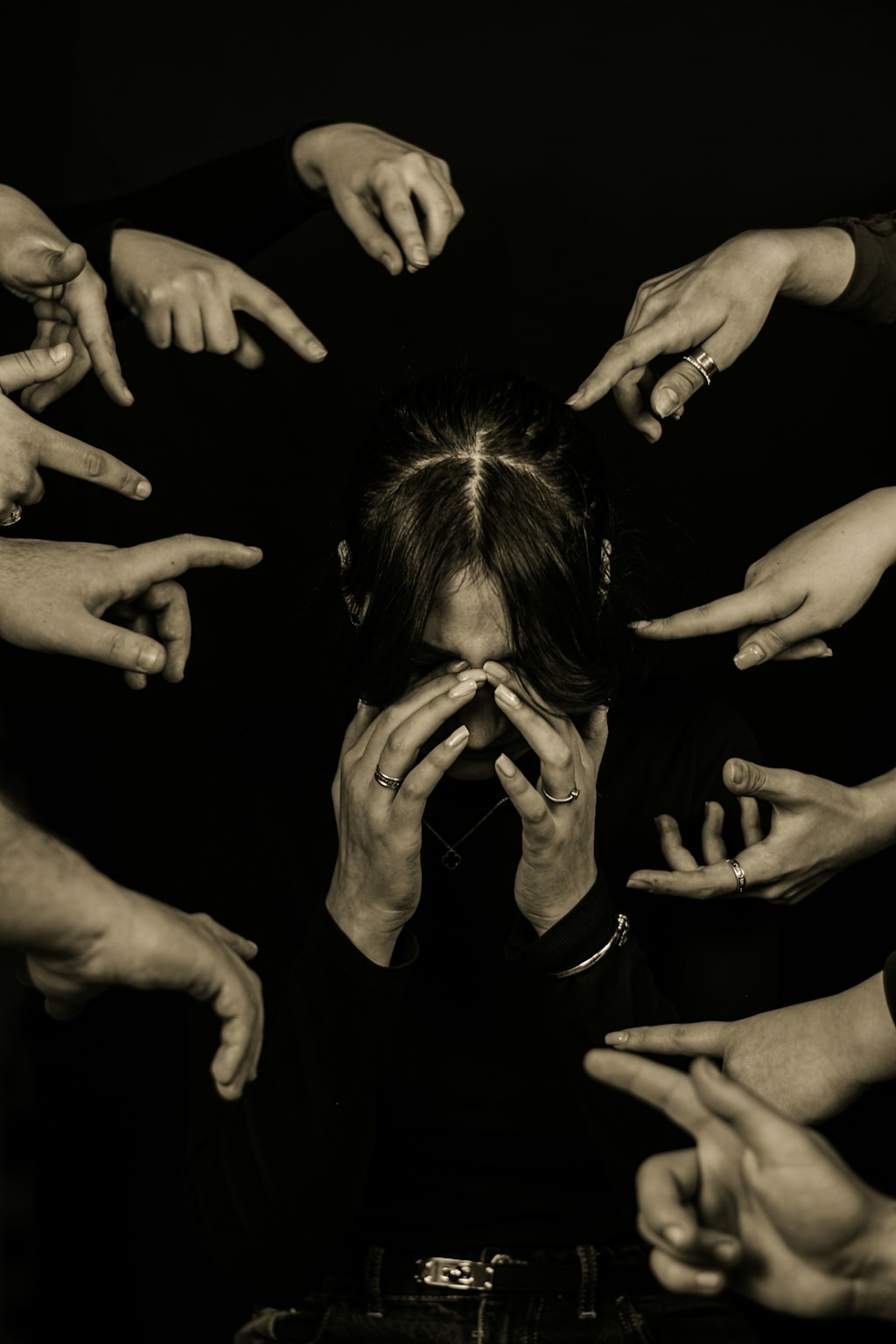
Shame has been consistent in meaning throughout the ages, whether it was Hester Prynne in The Scarlet Letter being publicly shamed for adultery or Cersei being forced to walk the streets of her homeland while a woman yells shame while ringing a bell because Cersei defied the church. What do both of these have in common, though? They defied the societal norms. We can find them ridiculous and cruel now, but back then, it was normal to mark people who didn’t follow the rules.
It is not fun being considered not normal in society. I should know. I lived it my whole life. My disability always made me feel small and disappointed for the majority of my life. I knew I was different. While playing with the other kids, none of them got tired as I did. None of them fell and knocked themselves unconscious on a regular basis.
When I was diagnosed with muscular dystrophy (weakening and deterioration of the muscles), I shared with all the other kids what I had. Finally, a reason why I was so different from them. However, I had a first-grade vocabulary when I found out, so explaining it to my classmates went over their heads. It kind of went over my head back then, if I am being honest. My understanding was that once you have a diagnosis, you are treated and made better. It took me a couple of years to realize that muscular dystrophy wasn’t the type of disease that just magically goes away. My muscles were slowly disappearing, and unless there is a cure in my lifetime, it will continue to do that until I’m dead.
Pretty dark thoughts for a grade schooler. At first, I tried to be ignorant about the situation. There is a reason why they call it blissful. I didn’t like to think about what the disease would do to me. However, diseases don’t wait for you to get with the program of what they entail. I didn’t figure that out until the fifth grade.
My fifth-grade teacher had us gather together in the back of the room and sit on the floor while she read us a story from a novel. I enjoyed listening to her every day and being absorbed in the worlds that were different from my own. Unfortunately, that feeling didn’t last.
One day, after she finished reading and everybody went back to their desks, I realized I couldn’t get up by myself. It felt like hours, but it was actually 10 minutes while I struggled to get up, and no one said anything, not even the teacher. She went on with her lesson plan while I was in the back, feeling ashamed that I wasn’t able to get up by myself. It forced me to get creative and realize that I would need to use the piano bench in the room to leverage myself up. Once I did that, I went back to my desk with my head hanging down. I didn’t speak of it to anyone at school about what happened, but I told my parents. The next day, my parents made my teachers swear never to let me sit on the floor anymore.
Every time I tell myself that this is the worst it would get, I am always proven wrong. When I was in high school, I slipped and fell backwards on my way to class and landed right in front of my Spanish teacher’s room. I felt mortified lying there because I had no idea how to get up on my own. My Spanish teacher knew about my disability, and when she saw me fall, she went screaming to anyone around who would listen that I was disabled and needed help getting back up.
I wanted to crawl into a ball and disappear. I hated being that vulnerable among my peers. It was terrifying. Because of my teacher’s screams, two students I had never seen before pulled me up. I walked quickly to my next class, but by the time I got there, word had spread quite fast.
My literature teacher asked me if I was hurt and needed to go home. I quickly told her I was fine. I had landed on my butt, so I didn’t really hurt anywhere. Before that class ended, I got a note from the nurse’s office saying that I could go home if I wasn’t up to continuing to go to classes. By the end of the day, my younger sister, who went to the same school as me, came to me upset and asked if I was okay. Apparently, the rumor of me falling had spread to me breaking my legs. I didn’t realize the school took the extra effort of calling my parents because, when they picked me up, they asked about the messages from the school left on their phones about me being injured. I assured them that I was okay.
However, I hated the extra attention. Above all, I hated the fact that I couldn’t pretend my life was normal like other kids. They didn’t have people freaking out over them falling. It felt like I had, like Hester, a scarlet letter on my forehead, but it was an invisible D (disability). Being seen as an outsider made me feel worse. I know people were just trying to make sure I felt better and was seen, but it made me feel that the invisible D would be the only thing I would be known for. I jokingly thought that it wouldn’t get worse than this. In hindsight, I realized I just jinxed myself.
2025 happened, and my entire world changed. I went from having a semi-independent lifestyle to being bedbound and on a ventilator in a matter of weeks. I had nurses and doctors running constant tests and bloodwork. I have to have help getting dressed, cleaning myself, doing my hair, getting my diaper changed, and moving around. As a general rule, I hate being touched, but now I really didn’t have a choice in the matter. If people are going to take care of me, they would have to touch and see aspects of my body that I would rather keep to myself (I mean, does anyone really want their relatives cleaning the poop from their butt?).
The weirdest thing about the whole process is time. I can never be alone because I randomly get mucus in my lungs that needs to be cleared out, or the tubing for the ventilator randomly pops out without me doing anything. I can’t go anywhere by myself either for the same reason.
The invisible D feels like it is branded deep in my skin now. I know my family loves me and would make the decision to take care of me over and over again, but I still feel bits of guilt about it because of the changes they had to make to their life. I feel bad about asking about every little thing I need, like mucus being cleared out or food and water. It is not them making me feel bad about it, though. It is a struggle within myself, and being scared of what the future holds for me. I want to be like my classmates and start new hobbies, go on vacations, date, have kids, and be a success in business. I don’t want to have to worry about this brand on my forehead and try to plan for a disease where I have no idea which part of my body it is going to affect next.
I think that is why I sympathized with Hester and Cersei (even though Cersei is a sociopath). It is never fun to be seen as other, something that is different from the everyday humans. But what I am slowly coming to terms with is that despite the shame that I feel with this disease, I can’t let it control every aspect of my life. That is kind of hard to do because each day is a new challenge with this disease. Despite all of that, I am more than my muscular dystrophy. I am a daughter, sister, friend, writer, reader, and anime lover. All I can do is hold onto the things that make me me as long as I can before different aspects of muscular dystrophy strike and change my life once again.
About the Creator
Enjoyed the story? Support the Creator.
Subscribe for free to receive all their stories in your feed. You could also become a paid subscriber, letting them know you appreciate their work.
Comments (2)
Ten minutes on the floor after story time, nobody saying a word, and you using the piano bench to get yourself up. I keep thinking about that fifth grader. Your younger sister coming to ask if you were okay after the fall outside the Spanish room got me. Glad you're writing the memoir.
Thank you for sharing your story.