
The Hidden Biology of Sugar Cravings: Biofilms, Microbes, and the Gut-Brain Question
What if the urge for sugar isn't just in your head — but in your gut?

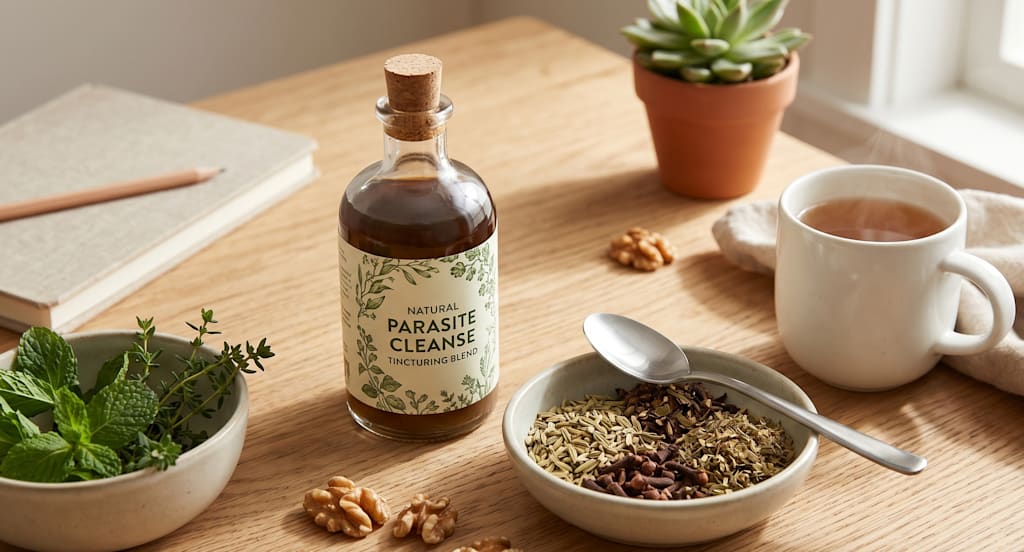
The craving arrives without warning. You've spent weeks eating well — less sugar, fewer processed foods, more discipline than you've managed in years. Then one day, out of nowhere, the pull hits: not a mild preference but something that feels insistent. Specific. Candy, something sweet, a hit of fast carbohydrate, right now.
Most people reach for a psychological explanation. Habit. Stress. Willpower running out. The familiar self-criticism.
But a growing body of research in microbiology and gut-brain neuroscience suggests that cravings may have a biological dimension most of us haven't considered — one rooted not in the mind, but in the complex ecosystem living inside the digestive tract.
Part One: Why Some Interventions Don't Stick — Biofilms and Life Cycles
For people who have experimented with gut-focused interventions, a frustrating pattern can emerge: the program seems to work, symptoms improve, and then — sometimes right as the protocol concludes — things slide back.
Part of the explanation may lie in how certain pathogenic organisms protect themselves.
Biofilms are a well-documented survival strategy used by many pathogenic microorganisms. Rather than remaining exposed, these organisms secrete a sticky extracellular matrix that adheres to surfaces and encases the community within it. Research from the CDC's Emerging Infectious Diseases and Frontiers in Microbiology confirms that organisms within a mature biofilm show dramatically reduced susceptibility to antimicrobial agents compared to their free-floating counterparts — the physical matrix restricts penetration, and the altered metabolic state of biofilm-embedded cells changes how they respond to compounds that would otherwise be effective. Candida albicans, present in the gastrointestinal tract of an estimated 40–80% of healthy adults, is among the most extensively studied examples: multiple NIH-catalogued reviews identify the biofilm matrix as a primary resistance mechanism across conventional antifungal agents.
Biofilms may also help explain why some interventions produce only temporary improvements. Organisms at different developmental stages can respond differently to treatment, and if a protocol ends before all vulnerable stages are exposed, a new active population can emerge right as the intervention concludes. The specifics vary enormously between species — there is no single "parasite strategy" — but the broader principle, that biological timelines do not always align with treatment timelines, is well recognized in the clinical literature.
Part Two: The Microbiome, Disruption, and the Question of Candida Overgrowth
This is where the science becomes both more interesting and more honestly uncertain.
The gut microbiome is an extraordinarily complex ecological system — an estimated 38 trillion microorganisms across thousands of species, in dynamic equilibrium shaped by diet, genetics, immune function, medications, stress, and environmental factors we haven't fully mapped. One principle that does hold across the research is that significant disruption to an established microbial community creates opportunity for other organisms to expand.
Candida albicans is the clearest example of this dynamic. It is normally kept at low population levels by competition from resident bacterial communities and by immune surveillance. When those competitive pressures are removed, Candida can expand. Research published in npj Biofilms and Microbiomes (2025) found that C. albicans colonization in the human colon correlates with reduced levels of acetate- and butyrate-producing bacteria — microbes that normally help hold it in check. Antibacterial use is the most extensively documented trigger for this kind of dysbiosis, and its role in Candida overgrowth is well-supported in the clinical literature.
Whether a parasite cleanse or herbal protocol triggers similar disruption is a more open question. The evidence chain is less established: you would need to demonstrate that the specific intervention disrupts the bacterial communities that normally constrain Candida, that Candida consistently expands following that disruption, and that this expansion produces downstream effects on appetite. Each of those steps has some support in isolation; the full chain, applied specifically to this context, hasn't been established cleanly.
What is reasonable to say is that any significant disruption to gut ecology carries the possibility of shifting microbial balance in unpredictable directions, and that actively supporting beneficial colonization during and after a protocol may matter more than most frameworks acknowledge. The principle here — competitive exclusion, supporting the organisms you want so that organisms you don't want have less room to expand — is sound microbiome management even if the precise mechanics in any given scenario remain under investigation.
Part Three: The Gut-Brain Axis and the Question of Cravings
Here the science is simultaneously most promising and most frequently overstated.
The gut-brain axis is real. It's one of the most actively researched areas in neuroscience and gastroenterology today. The gut communicates with the brain through multiple channels: the vagus nerve, hormonal signaling, immune pathways, and microbial production of neurotransmitter precursors. A 2018 review in the Journal of Neuroendocrinology by Cork et al. established that gut hormones secreted by enteroendocrine cells signal substantially through the vagus nerve, with vagal sensitivity itself regulated by feeding status. A 2024 review in Sage Journals documented the vagus nerve's role in food intake, fat metabolism, and appetite regulation across the gut-brain pathway.
Critically, the relationship runs in both directions. Most vagal fibers carry sensory information from the body to the brain — making the gut, in a meaningful sense, upstream of much of our conscious experience of hunger and appetite. The gut is not simply responding to the brain's instructions; it is actively informing them.
On the microbial side, the evidence is growing more specific. A 2022 study in Proceedings of the National Academy of Sciences (Trevelline and Kohl) demonstrated that the gut microbiome influences host diet selection behavior. A 2023 study in Cell Metabolism showed that manipulating gut microbiota in mice led to changes in their feeding preferences — and that mice transplanted with microbiota from sugar-craving mice began to prefer high-sugar foods. Human research, while more difficult to conduct rigorously, shows parallel patterns: a 2022 clinical trial found that patients with higher levels of Prevotella in their gut microbiota reported stronger cravings for carbohydrates, while those with more Bacteroidetes showed reduced sugar cravings.
Recent research has also identified more specific molecular pathways. Work published in early 2025, reviewed in Eric Topol's Ground Truths newsletter, pinpointed a specific bacterial species (Bacteroides vulgatus), its metabolite, and a downstream chain involving GLP-1 and liver-produced FGF21 that appears to influence sugar craving via the brain's ventrolateral medulla — a level of mechanistic specificity the field has rarely achieved before.
What the evidence does not support is the claim that microbial populations intentionally manipulate their hosts. Microbes do not strategize. They evolve — traits that improve survival get selected for, and over millions of generations those traits can produce what looks, from a certain angle, remarkably like purposeful behavior. A microbial population that produces metabolites nudging a host toward its preferred fuel substrate has a survival advantage. But that is selection pressure producing a behavioral outcome, not a coordinated transmission.
The honest summary of where the science stands: shifts in microbial populations may contribute to changes in appetite and food preferences, including cravings for sugar, through mechanisms involving the gut-brain axis. The evidence is real, growing, and genuinely interesting. It is not yet complete enough to make any single craving the certain product of any single microbial cause.
Part Four: Reframing the Craving
None of the caveats above undermine the central point worth making here — which is genuinely worth making.
The dominant cultural narrative around food cravings locates the problem entirely in the individual. You want sugar because you lack discipline. You broke the streak because your willpower failed. The failure is personal, psychological, a deficit of character requiring more determination next time.
There are good reasons to challenge that story — not because biology excuses us from agency, but because it is almost certainly not the complete picture. Appetite is not a purely psychological phenomenon. It is shaped by hormones, sleep, stress, prior dietary patterns, and — increasingly, the research suggests — by the microbial ecology of the gut. When we flatten this complexity into a willpower narrative, we misattribute the cause and misdirect the response.
If post-protocol cravings do involve shifts in microbial populations influencing appetite signaling through the gut-brain axis, then responding with more discipline is targeting the wrong variable. Addressing the microbial ecology — through dietary support for beneficial organisms, deliberate probiotic recolonization, and sustained changes that don't create favorable conditions for opportunistic expansion — targets what may actually be generating the signal.
That isn't settled as the mechanism. But it is a frame that points toward more useful interventions than "try harder."
The craving becomes data worth investigating, rather than a moral failing to overcome.
The Takeaway
The gut is not a passive container. It is an active ecological system communicating continuously with the brain in ways we are only beginning to map.
Biofilm-forming organisms — including Candida — show documented resistance to interventions that would otherwise clear them. Life cycle timing can allow developmental stages to re-emerge after a protocol ends. Disruptions to the gut ecosystem may create conditions favorable for opportunistic colonizers. And growing research confirms that gut microbial populations can influence appetite, food preferences, and possibly sugar cravings through real, measurable mechanisms in the gut-brain axis.
The full picture is incomplete. The mechanisms are being worked out. The chains of causation that wellness content sometimes presents as settled are, in many cases, still being established.
While many questions remain unresolved, the emerging evidence suggests that cravings are not purely psychological events, the microbiome is a plausible and underappreciated contributor, and conversations that skip straight to willpower are probably missing something important.
Understanding cravings may require looking beyond psychology and into the ecology of the gut.
This article is for informational and educational purposes and reflects an evolving area of scientific research. It does not constitute medical advice. If you are experiencing digestive symptoms or considering a therapeutic protocol, consult a qualified healthcare practitioner.
About the Creator
Khali Sollis
Khali Sollis is a writer and independent researcher exploring the science of the human mind and behavior. Her work examines questions at the intersection of neuroscience, psychology, cognition, mental health, and everyday human experience.
Enjoyed the story? Support the Creator.
Subscribe for free to receive all their stories in your feed.
Comments
There are no comments for this story
Be the first to respond and start the conversation.